Product Description
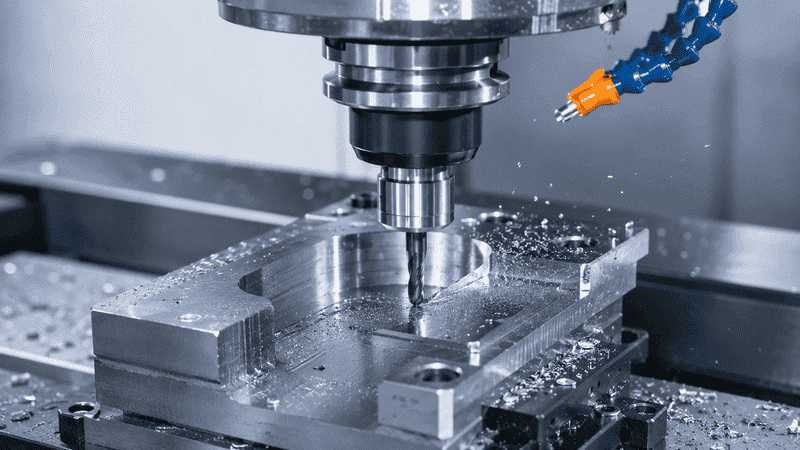
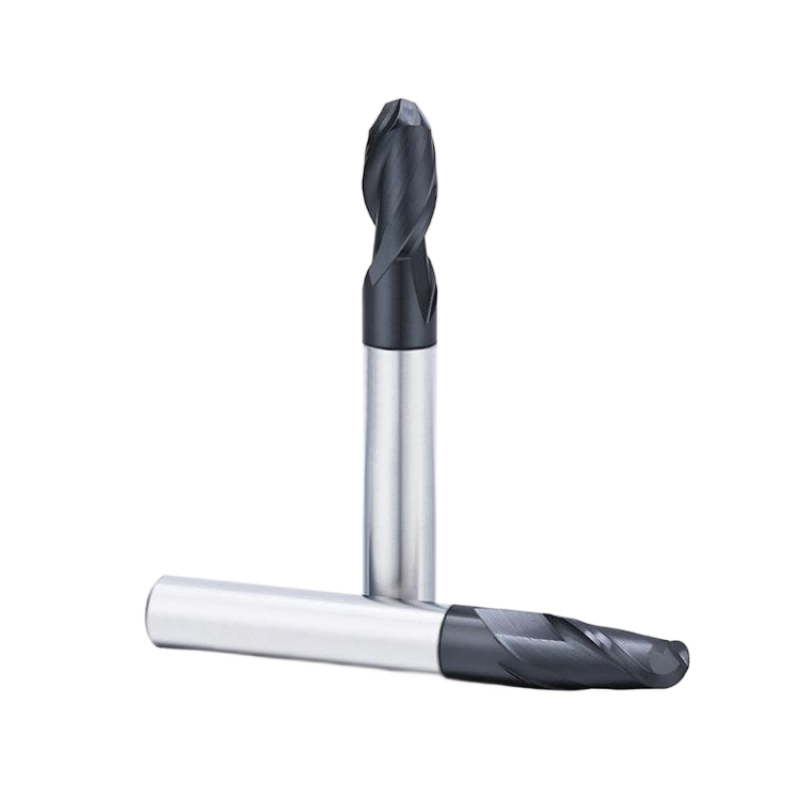
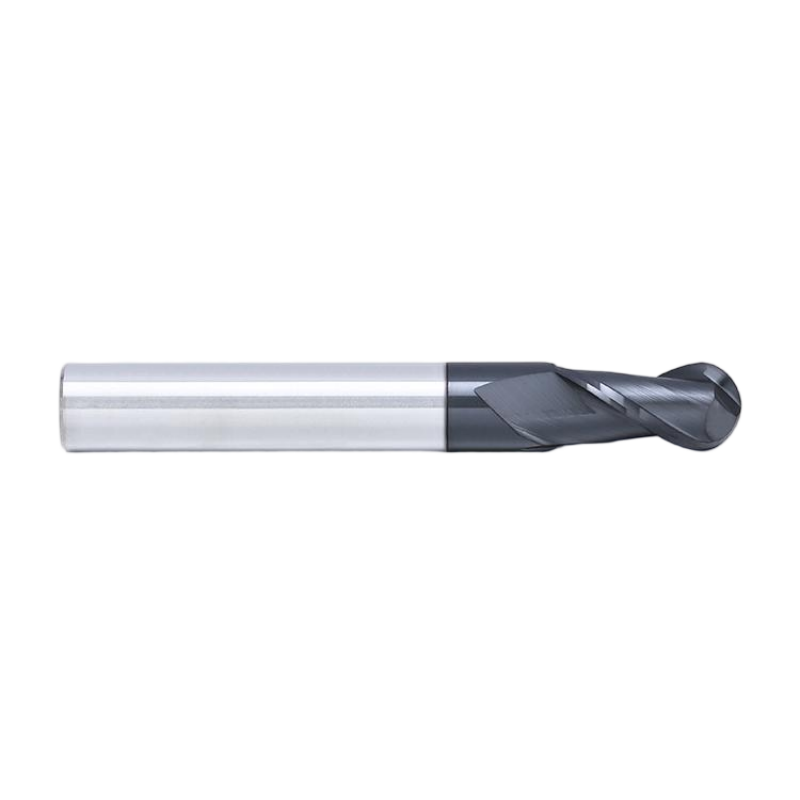
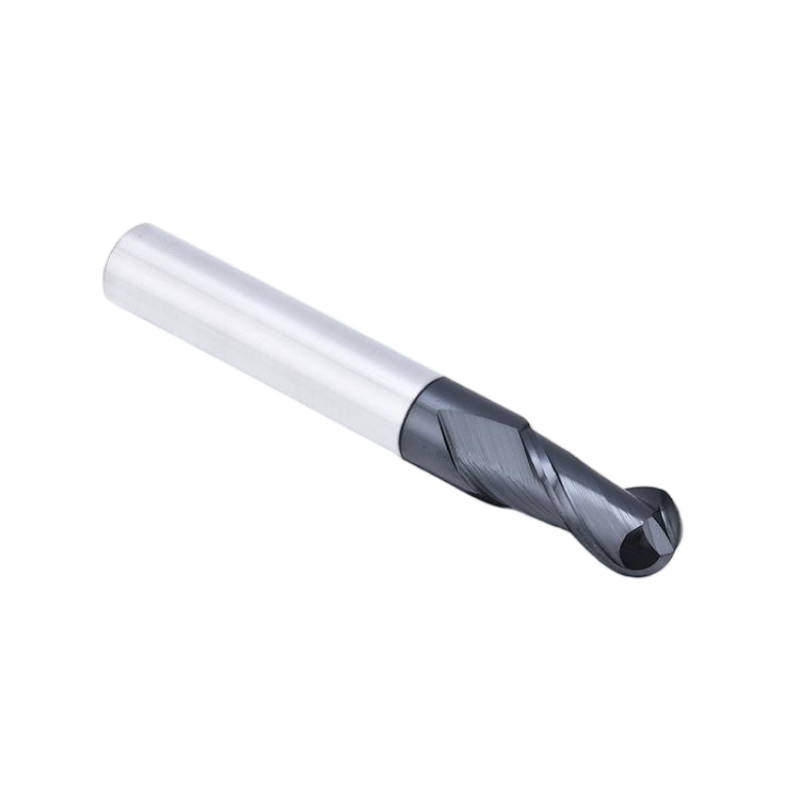
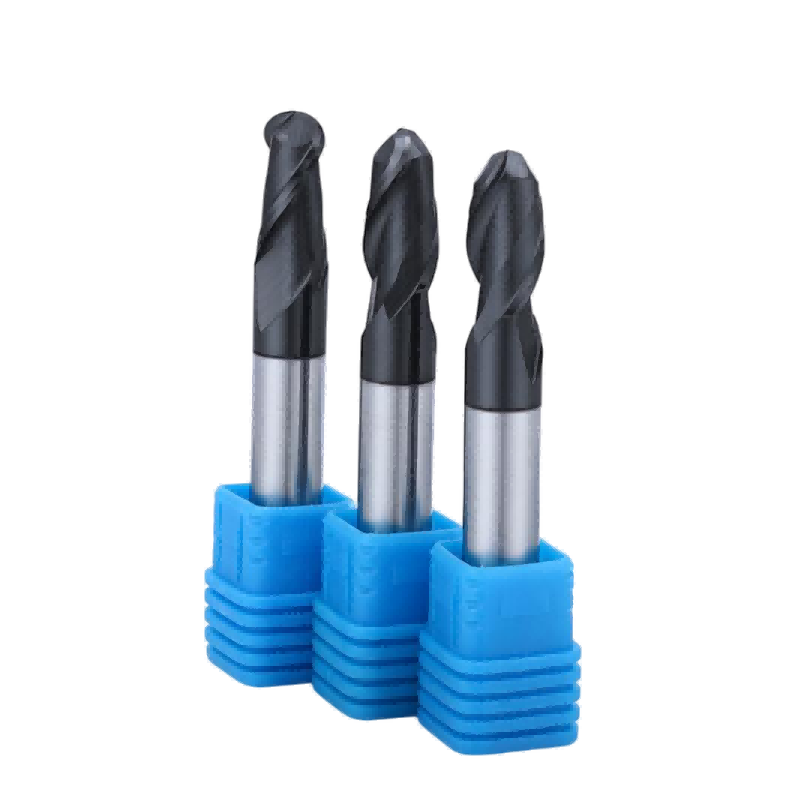
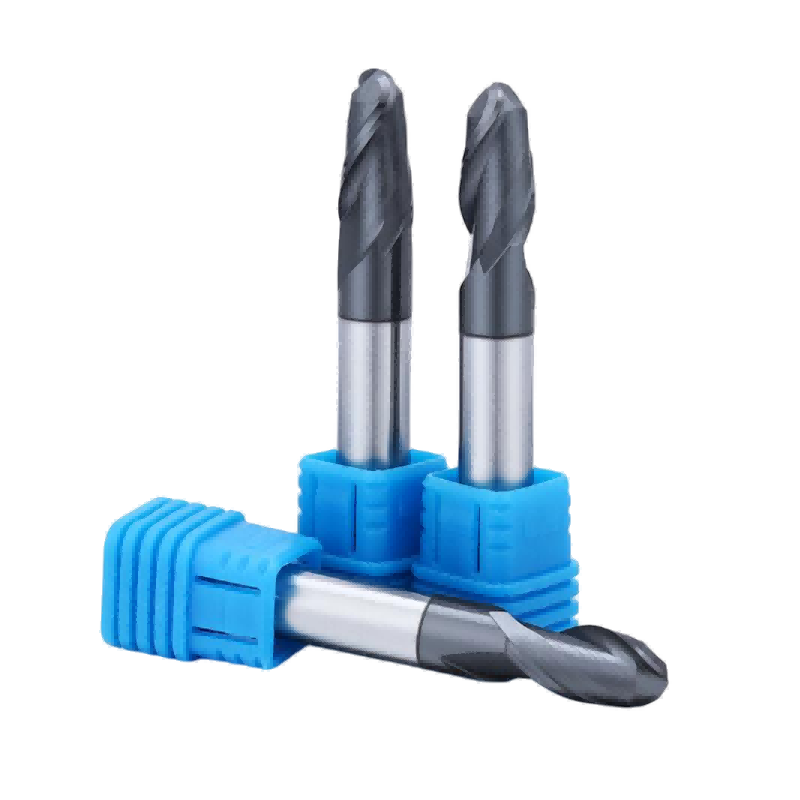
The Dohre PEX Series ball nose end mill is a solid carbide milling tool designed for steel machining up to HRC55, including carbon steel, alloy steel, cast iron, ordinary mold steel, and general steel materials.
As a ball nose end mill, this tool is mainly used for curved surface finishing, 3D contour machining, mold profile finishing, arc surface machining, and smooth transition areas. It is suitable when the workpiece requires stable profile accuracy, smoother tool marks, and consistent surface quality on curved or contoured surfaces.
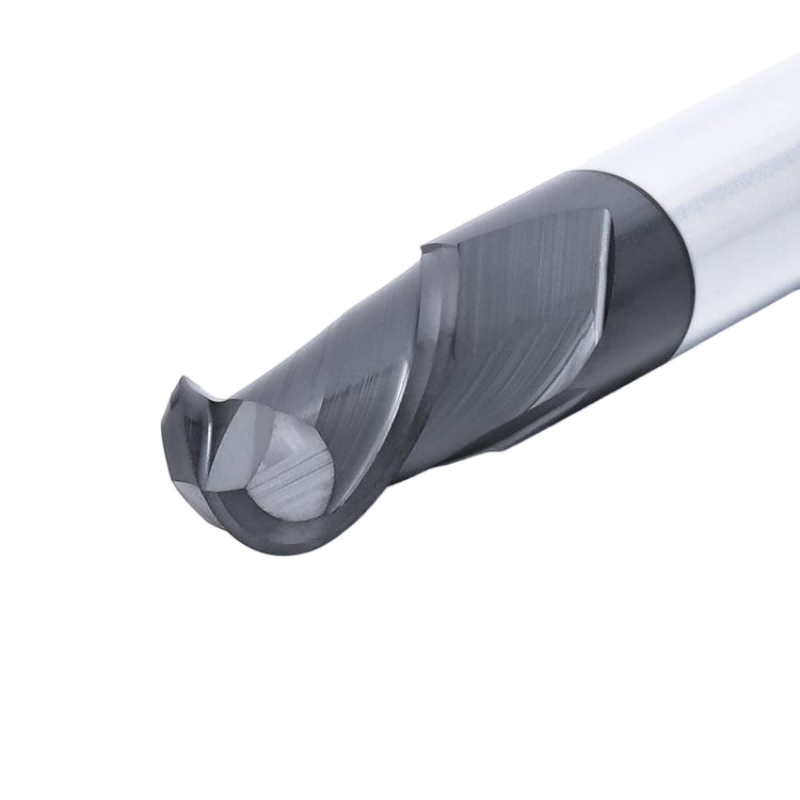
With ultra-fine carbide, AlTiN nano composite coating, a 6° positive rake angle, a 35° helix angle, and controlled ball radius accuracy, the PEX ball nose end mill helps improve cutting stability and surface consistency in general steel finishing and semi-finishing applications.
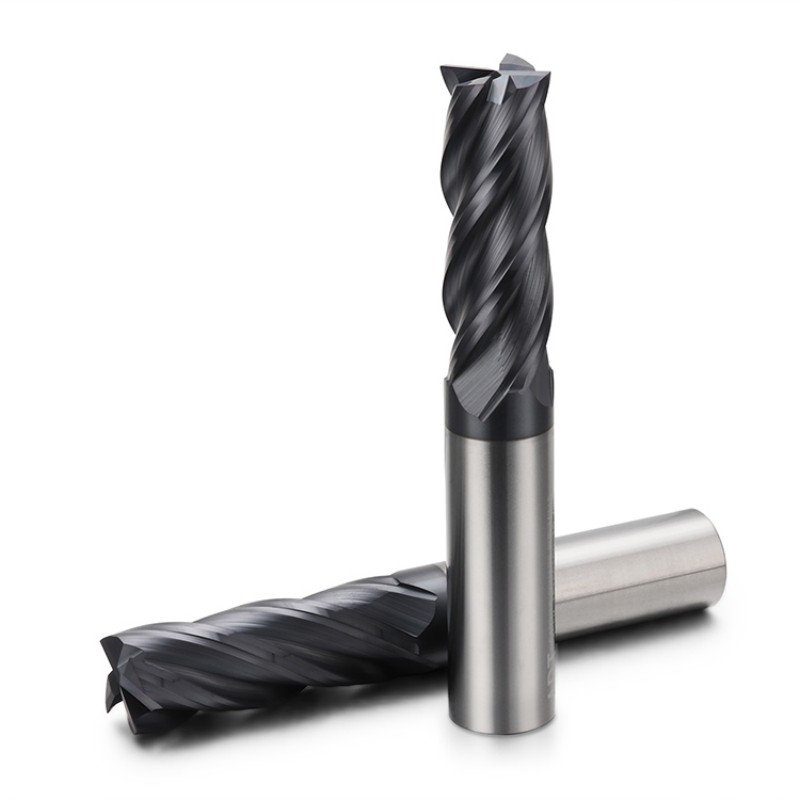
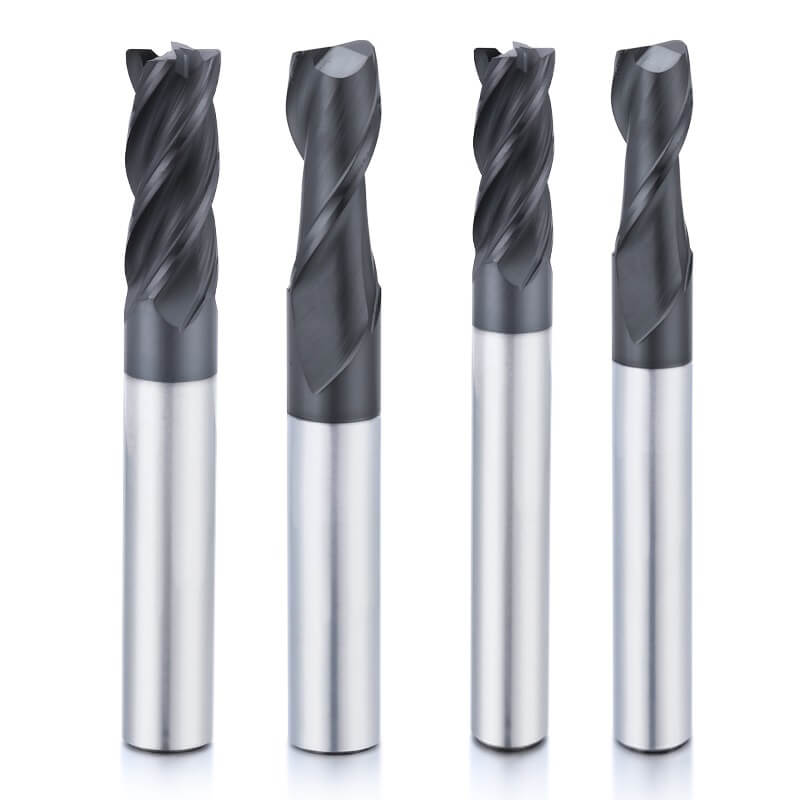
For flat surface, slotting, and step machining, a PEX square end mill is usually more suitable. For shoulder milling and stronger corner protection, a PEX corner radius end mill is a better choice.
Product Features
Ultra-Fine Carbide for HRC55 Steel Machining
The PEX ball nose end mill is made from ultra-fine carbide with 10% cobalt content. This carbide substrate provides a balanced combination of hardness, toughness, and wear resistance for carbon steel, alloy steel, cast iron, and general steel machining up to HRC55.
For curved surface finishing and mold profile machining, stable carbide quality helps reduce edge wear and supports consistent dimensional accuracy during repeated cutting.
AlTiN Nano Composite Coating
The tool uses AlTiN nano composite coating to improve wear resistance and heat resistance during steel machining. This coating helps protect the cutting edge under higher cutting temperature and continuous finishing conditions.
It is suitable for general steel machining, semi-dry machining, and finishing operations where cutting stability and tool life are important.
Ball Nose Geometry for Curved Surface and 3D Profile Finishing
The ball nose geometry is designed for curved surface machining, 3D contour finishing, mold profile finishing, arc surfaces, and smooth transition areas.
This geometry is especially useful for:
•3D contour finishing
•Mold profile machining
•Curved surface finishing
•Arc surface machining
•Smooth transition areas
•Freeform profile finishing
•General steel mold finishing
Compared with a square end mill, a ball nose end mill is more suitable for curved and contoured surfaces. Compared with a corner radius end mill, it performs better when the cutting contact area changes continuously along a 3D profile.
6° Positive Rake Angle and 35° Helix Angle
The 6° positive rake angle helps reduce cutting resistance and supports smoother cutting in steel machining. The 35° helix angle helps improve chip evacuation, reduce vibration, and maintain stable cutting performance.
This design helps the tool perform well in finishing and semi-finishing applications where surface quality, tool stability, and profile accuracy are important.
High Radius Accuracy for Stable Profile Consistency
For ball nose end mills, radius accuracy directly affects curved surface quality, profile consistency, and dimensional control. Dohre controls ball radius accuracy to support stable 3D finishing performance in mold and general steel machining.
This is especially important for mold profile finishing, curved transition areas, and parts that require consistent surface marks after CNC machining.
Applications for Steel Mold and Curved Surface Finishing
Dohre PEX ball nose end mills are suitable for general CNC machining, steel mold finishing, curved surface machining, and semi-finishing applications up to HRC55.
| Machining Need | Why Choose PEX Ball Nose End Mill |
|---|
| Curved surface finishing | Ball nose geometry supports smooth surface transitions |
| 3D contour machining | Suitable for complex profiles and curved toolpaths |
| Mold profile finishing | Helps maintain profile consistency and surface quality |
| Arc surface machining | Suitable for rounded and transition areas |
| Semi-finishing | Stable cutting geometry supports controlled material removal |
| General steel finishing | Suitable for carbon steel, alloy steel, and ordinary steel |
| Batch machining | Stable carbide and coating help reduce tool changes |
Suitable workpiece materials include:
Typical applications include mold profile finishing, curved surface machining, automotive component machining, general machinery parts, fixture machining, and CNC job shop production.
Manufacturing & Quality Control
Dohre focuses on stable carbide tool manufacturing, precision grinding, ball radius accuracy, and cutting edge consistency. For ball nose end mills, radius precision and edge quality directly affect 3D contour accuracy, surface finish, and tool life.
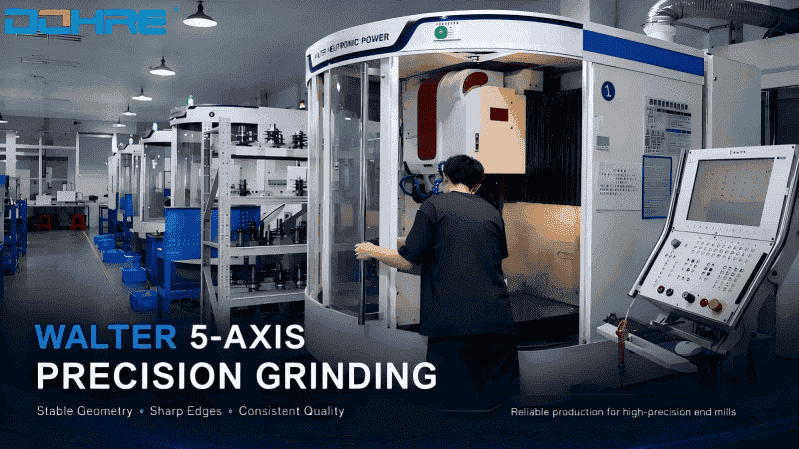
German Walter 5-Axis Grinding Machines
PEX ball nose end mills are produced using German Walter 5-axis high-precision grinding machines. This helps maintain stable flute geometry, accurate ball radius, and consistent cutting edge quality.
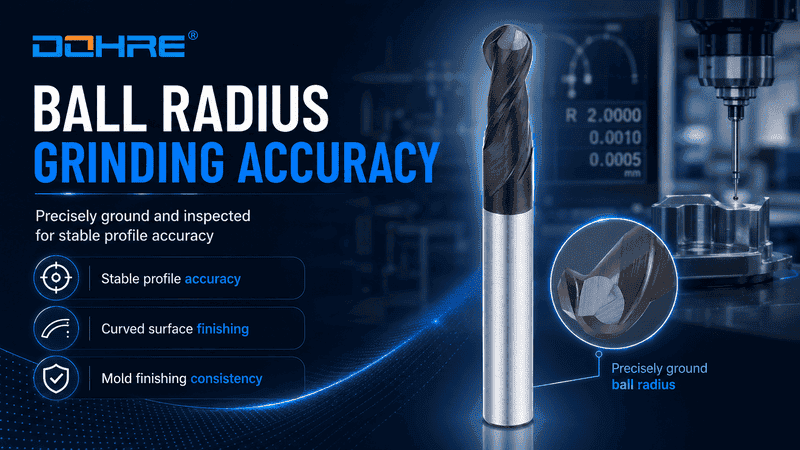
Ball Radius Grinding Accuracy
The ball radius is precisely ground and inspected to support stable profile accuracy during curved surface and mold finishing applications.
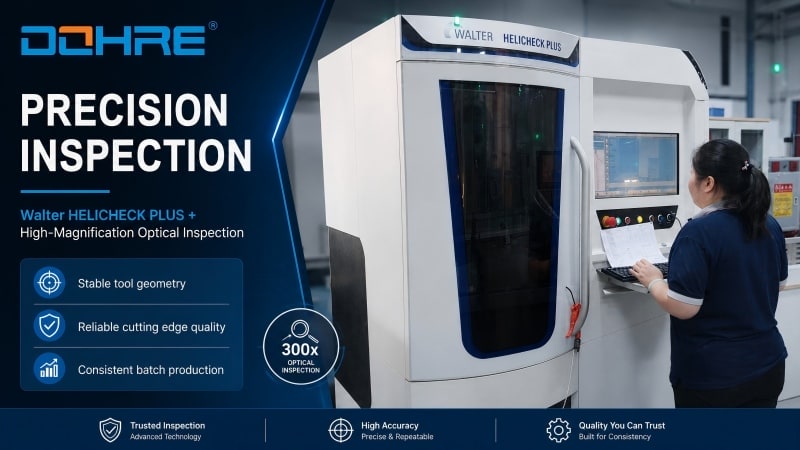
Walter HELICHECK PLUS Inspection
Tool profile, diameter, ball radius, runout, and key geometry are inspected with Walter HELICHECK PLUS measuring equipment to support consistent batch quality.
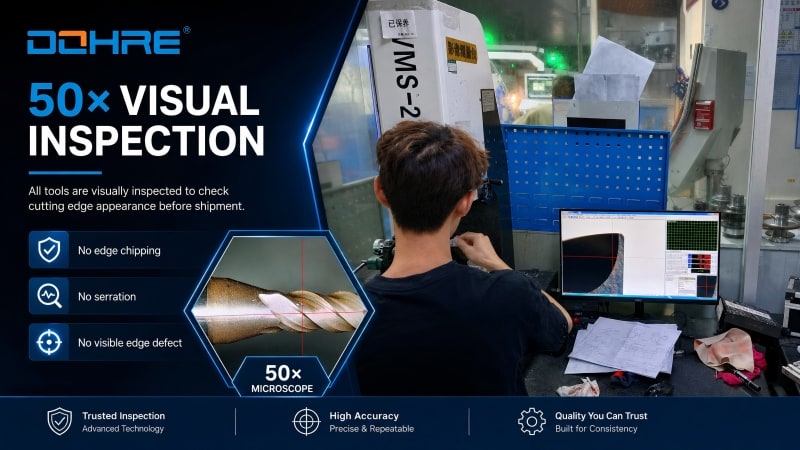
High-Magnification Inspection
Each tool can be inspected under high magnification to check cutting edge appearance, chipping, serration, and visible edge defects before shipment.
FAQ & Contact Us
Q1: What is the PEX ball nose end mill used for?
The PEX ball nose end mill is mainly used for curved surface finishing, 3D contour machining, mold profile finishing, and general steel finishing up to HRC55.
Q2: What materials can this ball nose end mill machine?
It is suitable for carbon steel, alloy steel, cast iron, ordinary mold steel, tool steel up to HRC55, and general steel components.
Q3: What is the difference between a ball nose end mill and a square end mill?
A ball nose end mill is better for curved surfaces, 3D contours, and mold profile machining. A square end mill is better for flat surfaces, bottom machining, slotting, side milling, and step faces.
Q4: What is the difference between a ball nose end mill and a corner radius end mill?
A ball nose end mill is used for curved and 3D surfaces. A corner radius end mill is more suitable for shoulder milling, side-wall machining, step machining, and applications requiring stronger corner protection.
Q5: Can this tool machine stainless steel?
It can be used in some general stainless steel conditions, but for dedicated stainless steel machining, a TEX stainless steel end mill is usually more suitable.
Q6: Can this tool machine hardened steel above HRC60?
This PEX ball nose end mill is mainly recommended for materials up to HRC55. For HRC60+ hardened steel, HEX or CBN tools are more suitable.
Q7: Is this ball nose end mill suitable for roughing?
It is mainly recommended for finishing and semi-finishing. For heavy roughing, a dedicated roughing end mill is usually more suitable.
Q8: Can Dohre customize PEX ball nose end mills?
Yes. Dohre supports custom carbide ball nose end mills, including diameter, flute length, overall length, shank size, ball radius, coating, and application-specific geometry.
Q9: Are you a carbide ball nose end mill manufacturer?
Yes. Dohre manufactures solid carbide end mills for carbon steel, stainless steel, aluminum, mold steel, hardened steel, titanium alloy, and custom machining applications.