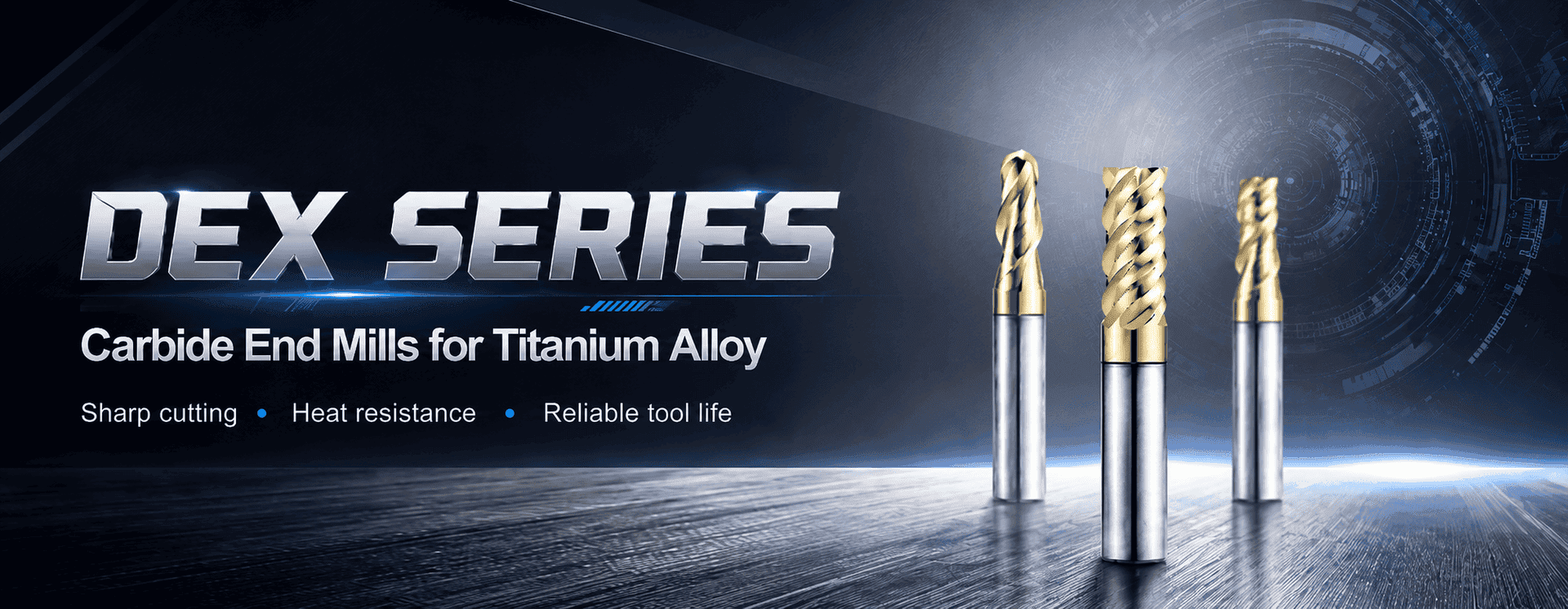
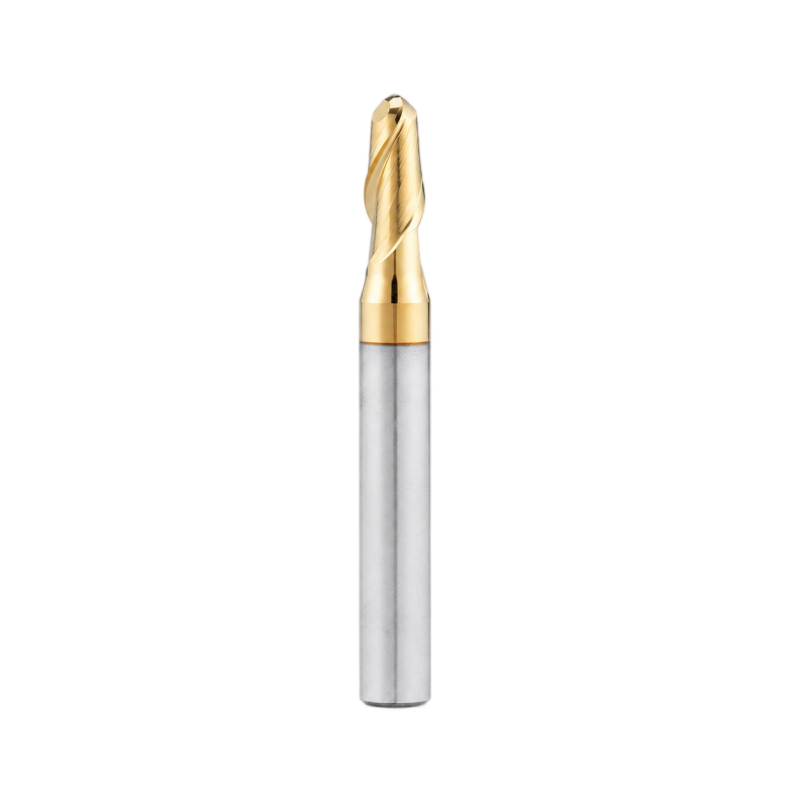
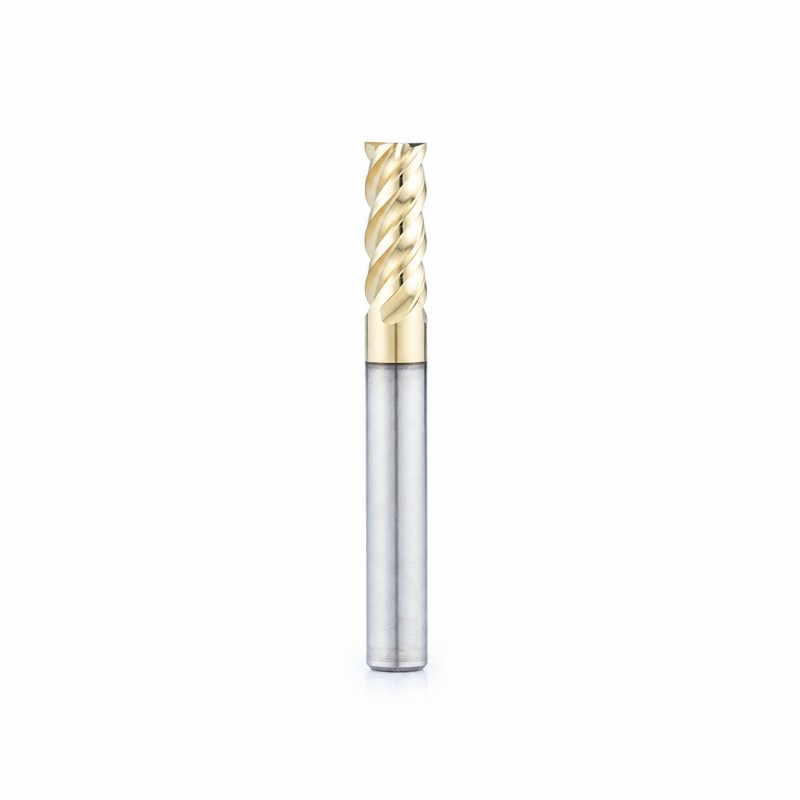
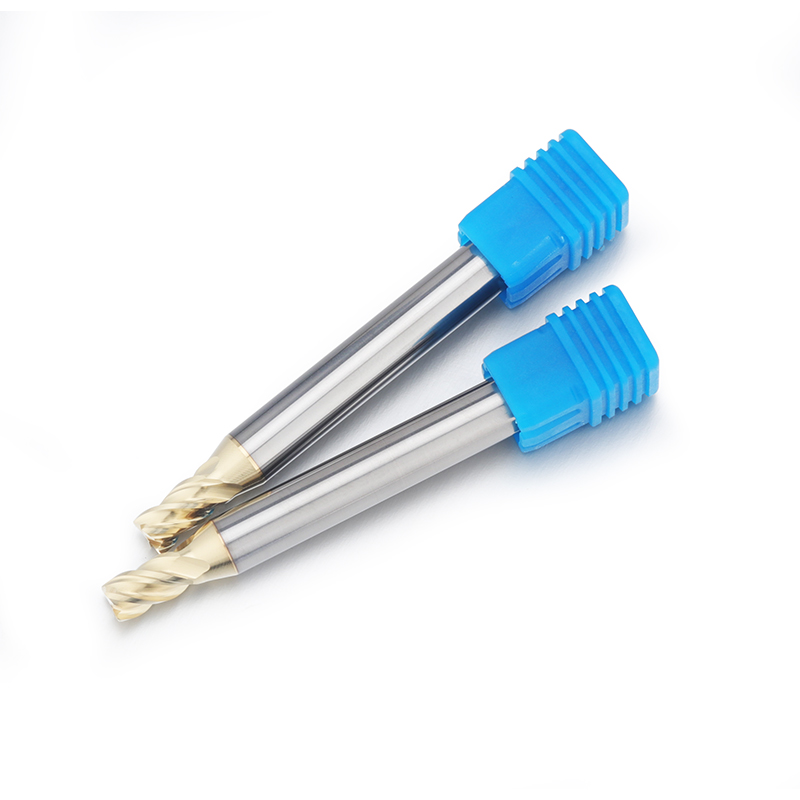
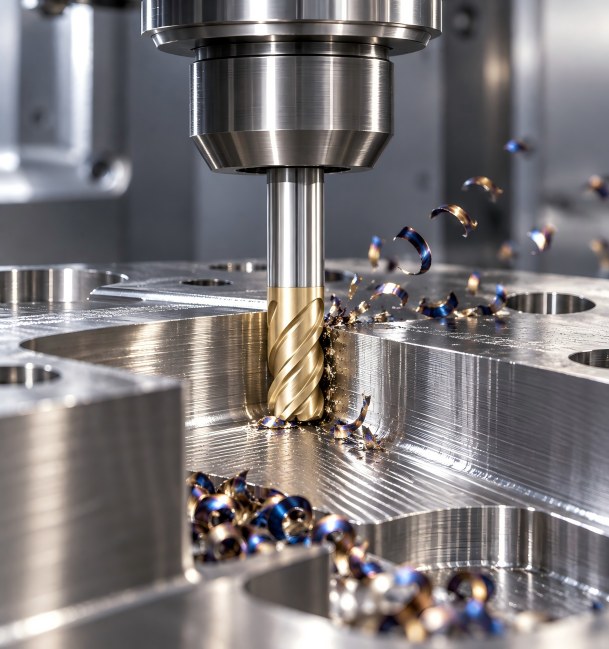
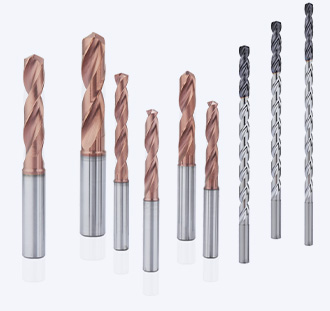
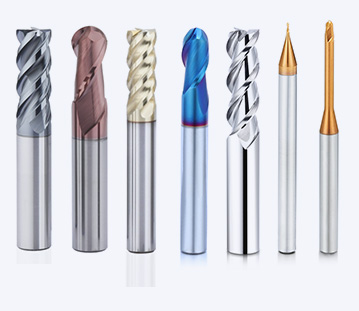
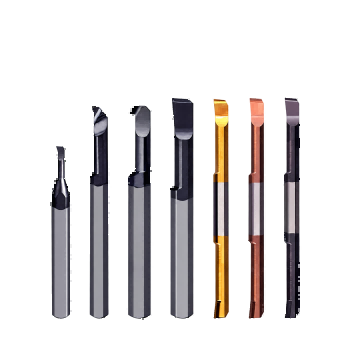
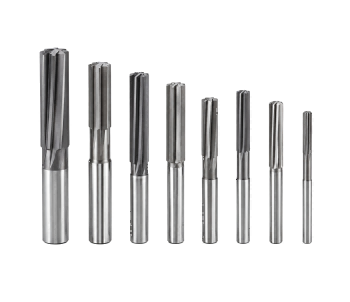
Dohre DEX Series carbide end mills are engineered for high-performance titanium alloy milling and difficult-to-machine materials, including high-temperature alloys and stainless steel. Designed for maximum stability, these end mills utilize specialized carbide substrates and advanced coating technology to solve common machining issues such as excessive heat, tool vibration, and rapid edge wear.
.
In titanium alloy machining, poor chip evacuation, high cutting heat, built-up edge, tool vibration, and rapid edge wear can easily affect surface finish and tool life. DEX Series end mills are designed with titanium-oriented carbide material, high-performance coating, optimized flute geometry, and stable edge preparation to improve chip flow, reduce sticking, and support reliable cutting performance under demanding machining conditions.
The series is suitable for roughing, dynamic milling, slotting, side milling, contour machining, semi-finishing, and finishing. Dohre also supports standard DEX end mills, custom carbide tools, OEM production, and stable batch supply for aerospace, medical, automotive, mold, and precision CNC machining industries.
DEX Series End Mills for Titanium Alloy Machining
Titanium alloy is widely used in aerospace, medical, automotive, energy, and precision component manufacturing, but it is difficult to machine because cutting heat is concentrated near the cutting edge and chips are not easy to evacuate smoothly.
During titanium alloy milling, common problems include built-up edge, tool sticking, edge chipping, coating wear, vibration, poor surface finish, and reduced tool life. These problems are especially noticeable during slotting, side milling, roughing, dynamic milling, and long cutting cycles.
DEX Series carbide end mills are designed for these machining conditions. The tool structure focuses on heat resistance, chip evacuation, edge strength, and cutting stability, helping manufacturers achieve more reliable performance when machining titanium alloy and other difficult materials.
Suitable machining materials include:
Although DEX tools can cover several difficult materials, the main recommended application is titanium alloy milling.
Why Titanium Alloy Needs Dedicated End Mills
Titanium alloy cannot be treated like ordinary steel or aluminum during milling. It requires end mills with stronger heat resistance, better anti-adhesion performance, stable cutting edges, and smoother chip evacuation.
Common titanium alloy milling problems include:
• High cutting temperature concentrated near the cutting edge
• Built-up edge caused by material adhesion
• Poor chip evacuation during slotting and roughing
• Edge chipping under high-load cutting
• Rapid coating wear under continuous cutting heat
• Unstable surface quality during finishing
Titanium alloy is difficult to machine because cutting heat is concentrated near the cutting edge, while the material also tends to adhere to the tool during milling. These problems can lead to built-up edge, rapid tool wear, poor chip evacuation, and unstable surface quality. For a more detailed explanation of these machining challenges, read Why Titanium Alloy Is Difficult to Machine and What Kind of End Mill Works Better
DEX Tool Design for Heat, Chip Evacuation and Anti-Sticking
DEX Series end mills combine ultra-fine carbide, high-temperature coating, optimized cutting geometry, U-shaped flute design, and chip breaker structure to support titanium alloy milling.
1. Ultra-Fine Carbide Material
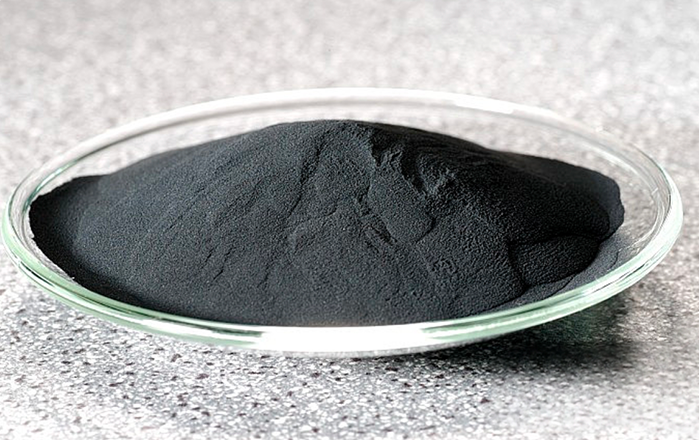
DEX Series end mills use ultra-fine micro-grain carbide with grain size below 0.6 μm and 12% cobalt content. This carbide substrate provides a balance of hardness, toughness, and wear resistance for high-load cutting of difficult materials.
2. HSR118 High-Temperature Coating
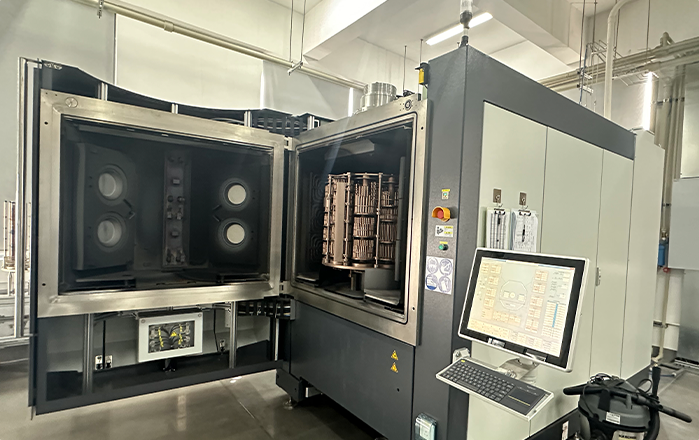
DEX tools use HSR118 coating, benchmarked against Balzers JZR coating. The coating can withstand temperatures below 1200°C and offers high red hardness, stable hardness retention at high temperature, and strong anti-sticking performance. This helps reduce built-up edge and improve cutting stability when machining titanium alloy and other adhesive materials.
3. Arc-Shaped Flute and 43° Helix Design
The tool adopts an arc-shaped flute design, 8° rake angle, and 43° helix angle. This geometry helps improve cutting smoothness, chip evacuation, and machining accuracy under high-load cutting conditions.
4. Unequal U-Shaped Flute Design 87°/93°
The unequal helix U-shaped flute design provides larger chip space and better vibration suppression. It is suitable for roughing, dynamic milling, and machining conditions where chip evacuation is critical.
5. Chip Breaker Design for Roughing Efficiency
The chip breaker design helps improve cutting force control and chip breaking performance. This makes DEX tools more suitable for efficient roughing and dynamic milling of titanium alloy and difficult-to-machine materials.
Tool life in titanium alloy milling is closely related to coating performance, flute design, chip evacuation, cutting heat, and cutting stability. When the tool cannot evacuate chips smoothly or maintain coating stability under high cutting temperature, problems such as built-up edge, edge chipping, rapid wear, and unstable surface finish can appear more easily. More practical suggestions are explained in How to Improve End Mill Tool Life in Titanium Alloy Milling
Choose DEX Tools by Machining Application
Different titanium alloy machining operations require different tool shapes. The DEX Series can be divided by application scenario, not only by product name.
| Machining Requirement | Recommended DEX Tool Type | Main Purpose |
|---|
| Slotting and side milling | DEX Flat End Mill | Straight slots, side walls, pockets, and general titanium milling |
| Roughing and dynamic milling | DEX Flat / Corner Radius End Mill | Larger chip space, stronger edge support, and stable high-load cutting |
| 3D contouring and curved surfaces | DEX Ball Nose End Mill | Curved surfaces, mold profiles, and 3D finishing |
| Shoulder and side-wall finishing | DEX Corner Radius End Mill | Better edge strength, reduced corner chipping, and stable side-wall machining |
| Semi-finishing and finishing | DEX Ball Nose / Corner Radius End Mill | Improved surface quality and dimensional consistency |
| Custom titanium alloy machining | OEM DEX Custom Tools | Special diameter, flute length, coating, and geometry requirements |
For titanium alloy slotting or side milling, a DEX flat end mill is usually suitable.
For curved surfaces, complex contours, and 3D profiles, a DEX ball nose end mill is more suitable.
For shoulder milling, side-wall finishing, and applications where edge strength is important, a DEX corner radius end mill provides better stability.
Different cutter shapes are suitable for different titanium alloy machining tasks. Flat end mills are usually used for slotting, side milling, and roughing; ball nose end mills are better for 3D contours and curved surfaces; corner radius end mills are often selected for shoulder milling, side-wall finishing, and stronger edge protection. For a more detailed comparison, read Flat End Mill vs Ball Nose vs Corner Radius End Mill for Titanium Alloy
If you are not sure which tool geometry, coating, or cutting strategy is suitable for your titanium alloy part, our selection guide Best End Mill for Titanium Alloy: How to Choose the Right Tool explains how to choose an end mill based on machining method, workpiece material, tool shape, and finishing requirement.