Introduction
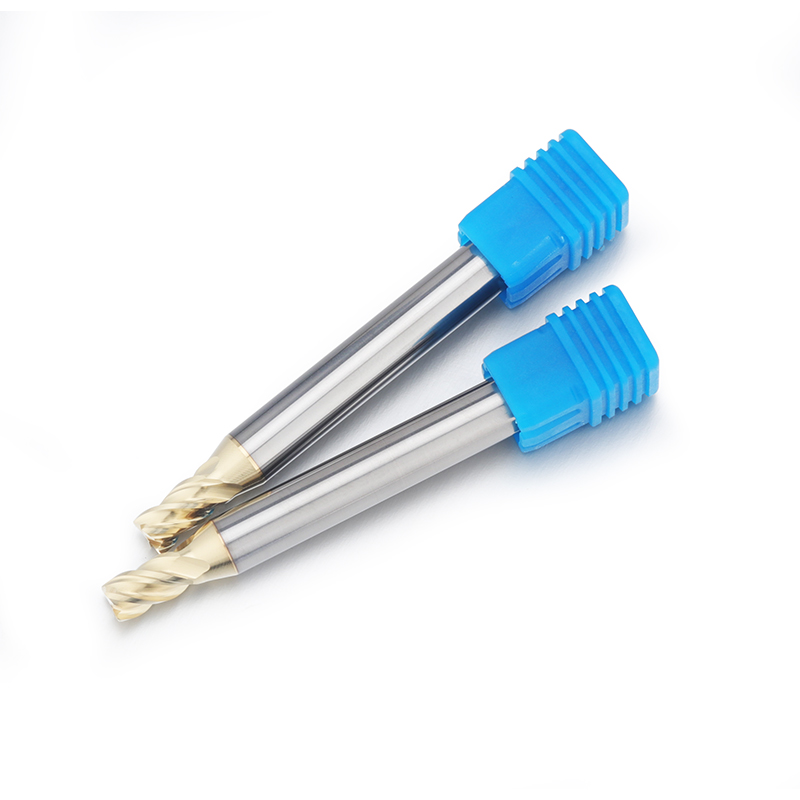
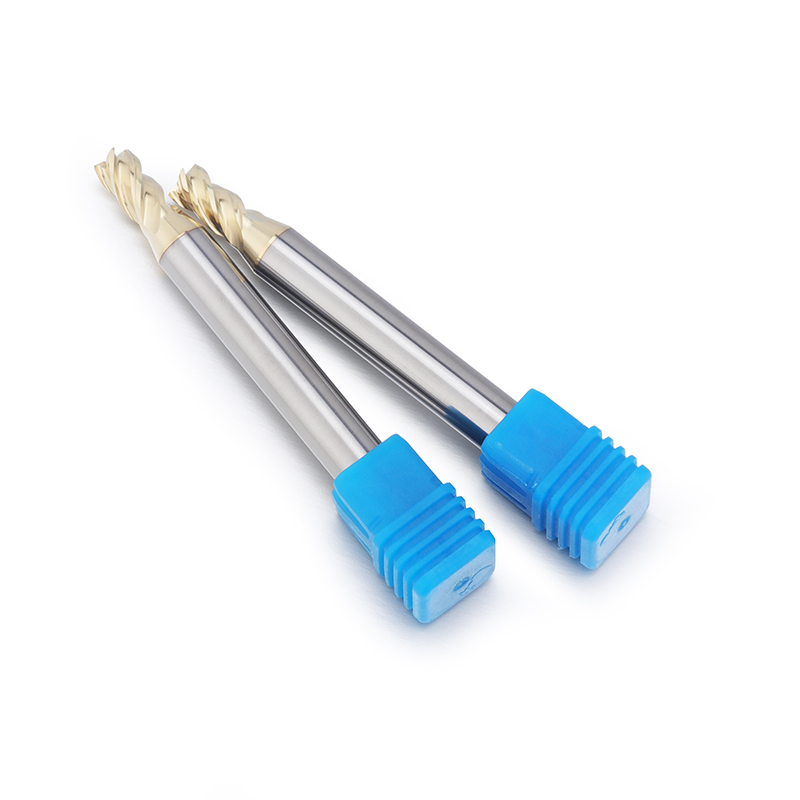
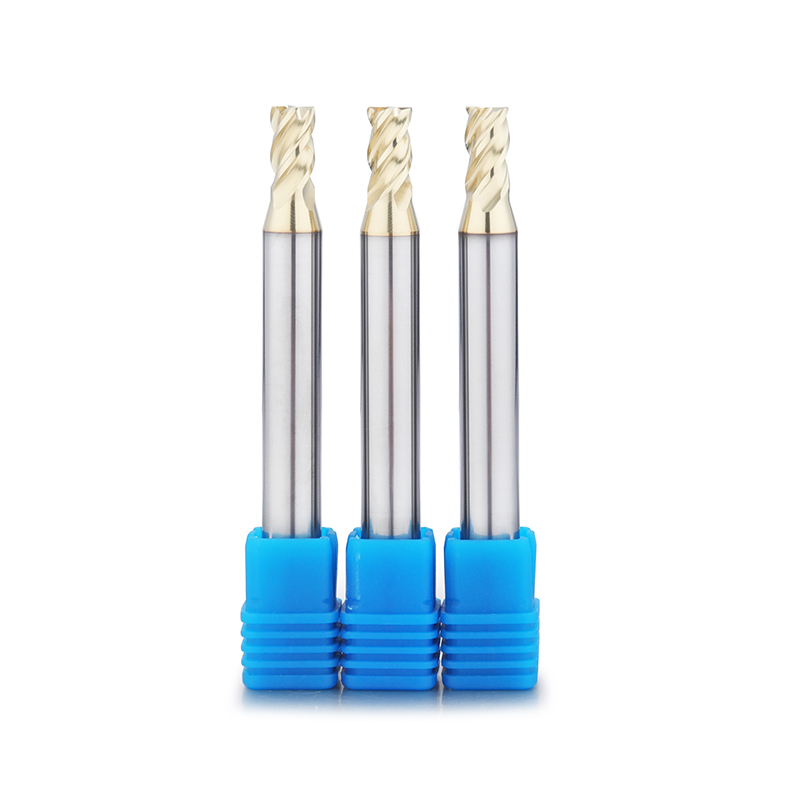
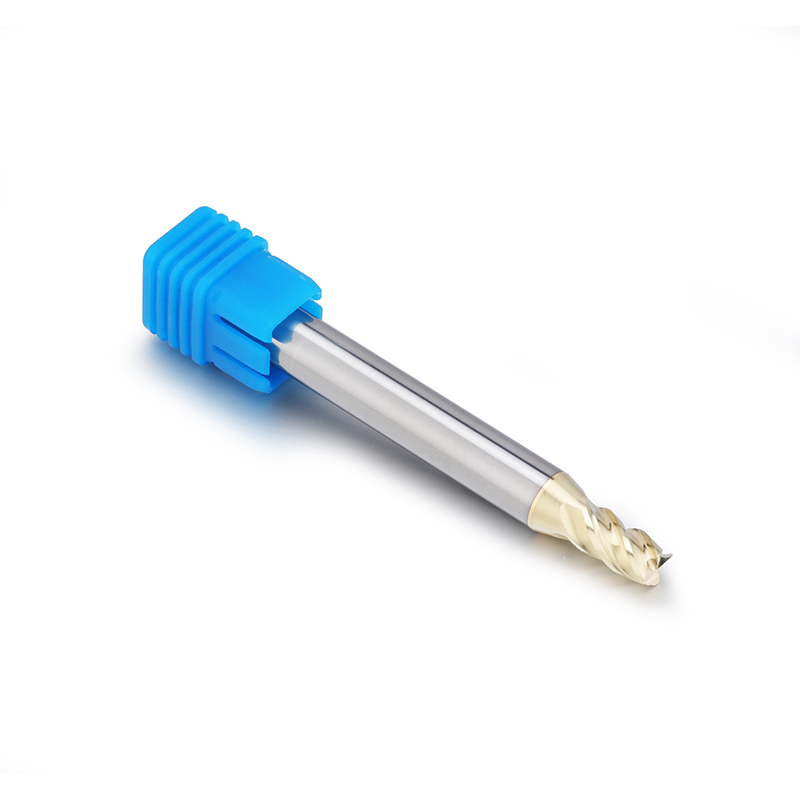
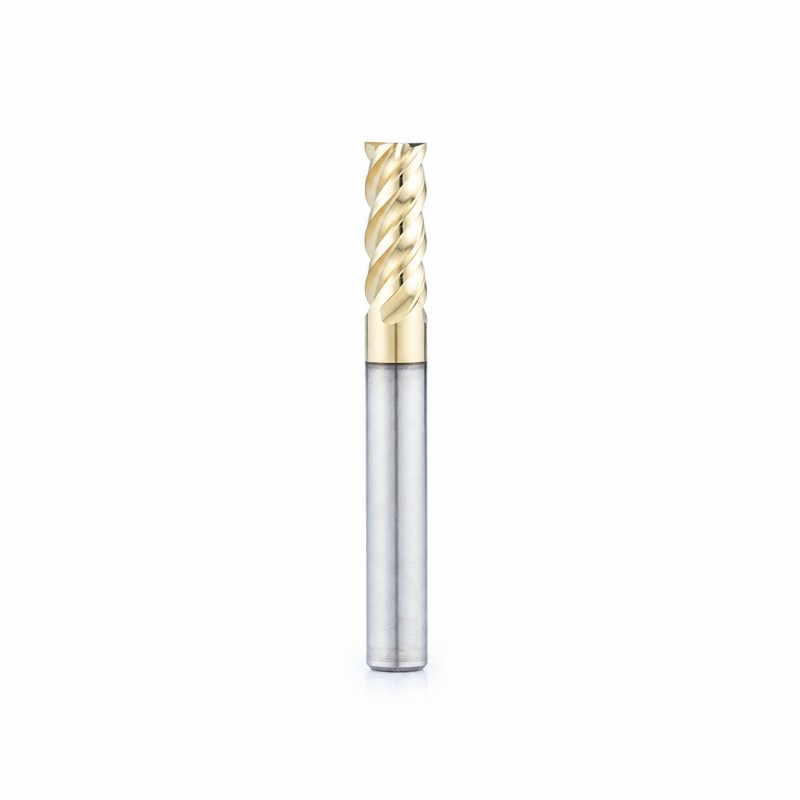
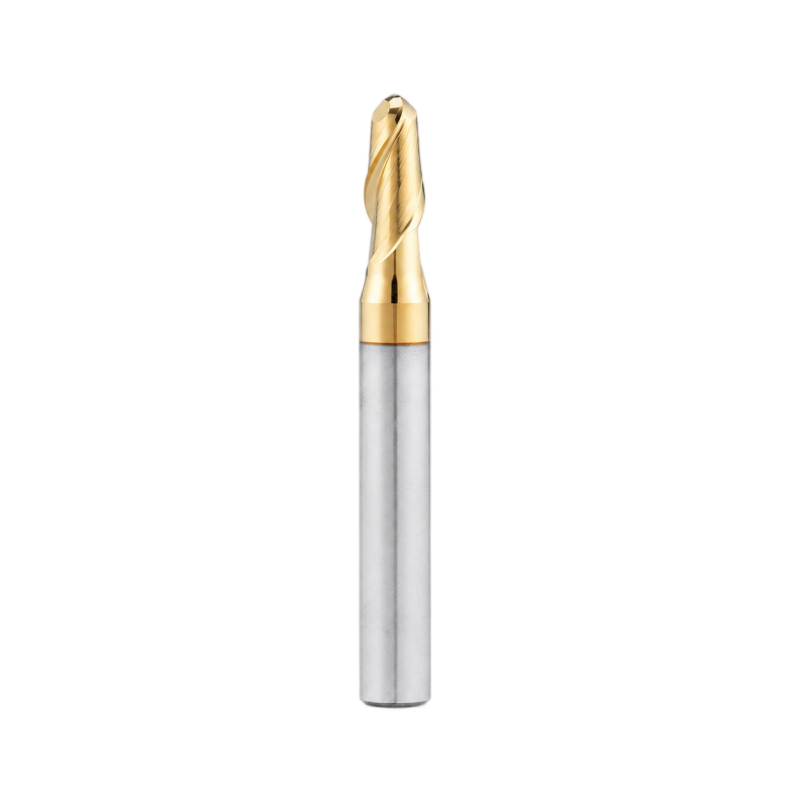
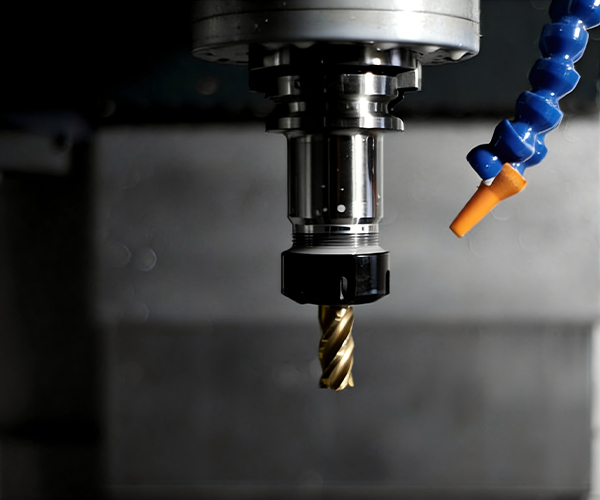
Dohre DEX Series corner radius end mill is specially engineered for stable, high-efficiency machining of titanium alloys and difficult cutting materials.
With a reinforced corner radius design, advanced coating technology, and optimized flute geometry, DEX delivers longer tool life, reduced vibration, and superior performance in high-load roughing and dynamic milling applications.
Product Description
| Item | Specification |
| Tool Type | Corner Raduis End Mill |
| Corner Raduis | R0.2/ R0.5 or custom |
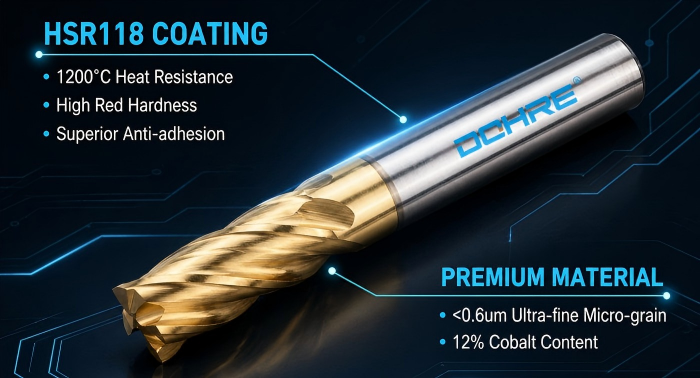
| Material | Ultra-fine grain carbide (<0.6um, 12% Co) |
| Coating | HSR118 |
| Workpiece Hardness | HRC25-60 |
| Flutes | 4F or custom |
| Coolant | Internal / Enternal |
Material
Manufactured from ultra-fine micro-grain carbide with a grain size below 0.6 μm and 12% cobalt content, ensuring excellent toughness, wear resistance, and cutting stability.
Coating
Applied with HSR118 coating, comparable to JZR coating, offering:
• High hot hardness and thermal stability up to 1200°C
• Excellent anti-adhesion performance to reduce built-up edge
• Stable cutting performance in titanium and high-alloy materials
Design Features
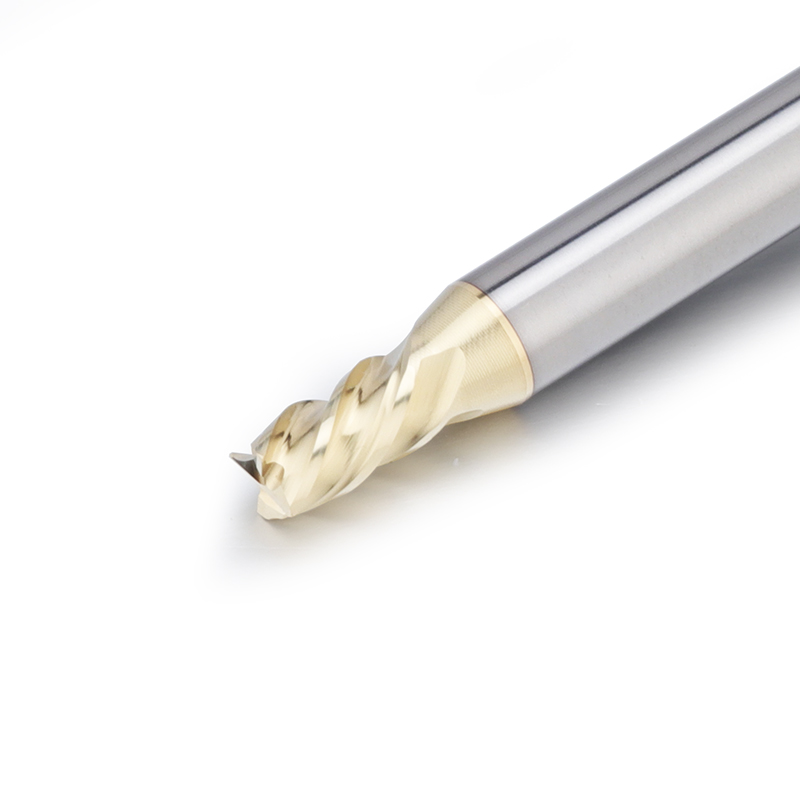
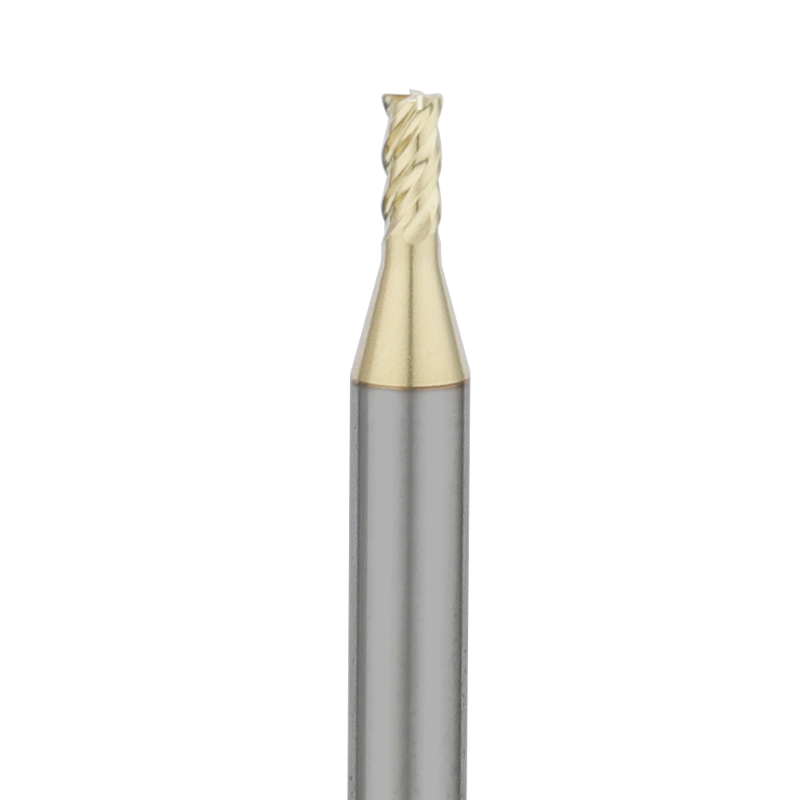
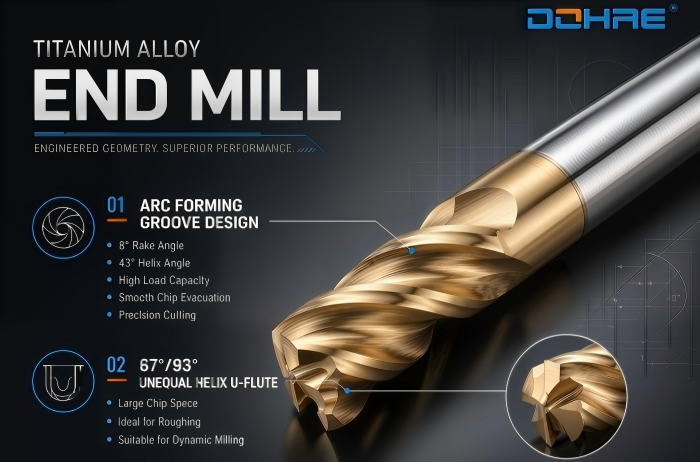
Featuring a radius-formed flute profile, 8° positive rake angle, and 43° helix angle, this design ensures stable cutting performance under high load conditions, smooth chip evacuation, and high precision machining of difficult cutting materials.
Flute Geometry
Adopts an unequal helix U-shaped flute design (87° / 93°), providing a larger chip pocket. Ideal for roughing operations and dynamic milling, especially under high material removal rates.
Application Range
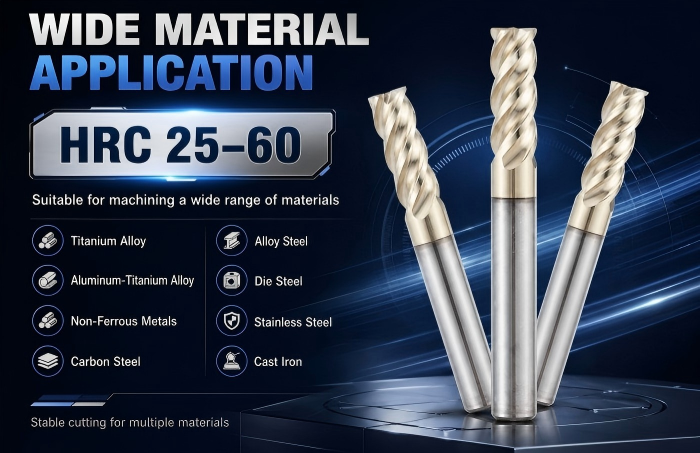
The DEX corner radius end mill is suitable for machining materials with hardness HRC 25–60, including:
• Titanium alloys
• Aluminum-titanium alloys
• Stainless steel
• Alloy steel & carbon steel
• Mold steel
• Cast iron
• Non-ferrous metals
Why Choose Dohre DEX Corner Radius End Mill
Key Advantages
• Reinforced corner radius design improves edge strength and reduces chipping
• Excellent stability under high cutting loads and interrupted cutting
• Optimized for titanium alloy roughing and semi-finishing
• Smooth chip evacuation for dynamic and high-feed milling
• Longer tool life compared to flat end mills in titanium machining
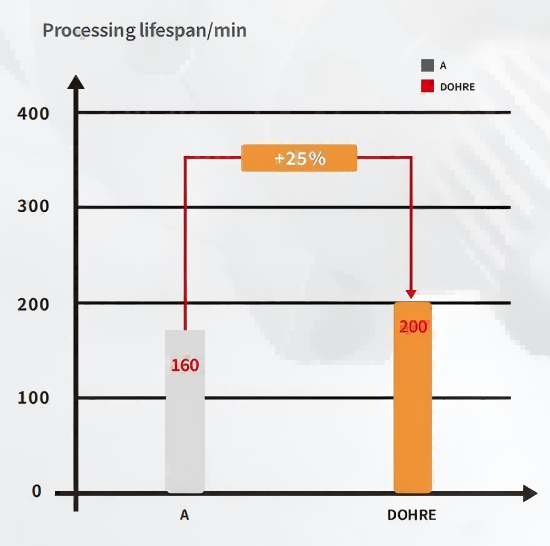
Application of DEX products in processing titanium alloys
|
Prop Specification:4F-D3XR0.2X8XD650LX4F
Processed Material: TC4+A6013
Test Condition: End Face milling • Cutting speed=113m/min
• Feed rate=0.042mm/z • Cutting depth=0.5 • Cutiing width=2.1 • Cooling method=Emulsion
Test result • After 200minutes of processing, the wear surface width of the cutting tool is 0.08mm, and the wear resistance of dohre cutting tool is better than A!!!
|
Manufacturing Process and Quality Assurance
To ensure consistent performance of the DEX corner radius end mill for titanium alloy machining, every tool is produced under strict manufacturing and quality control processes.
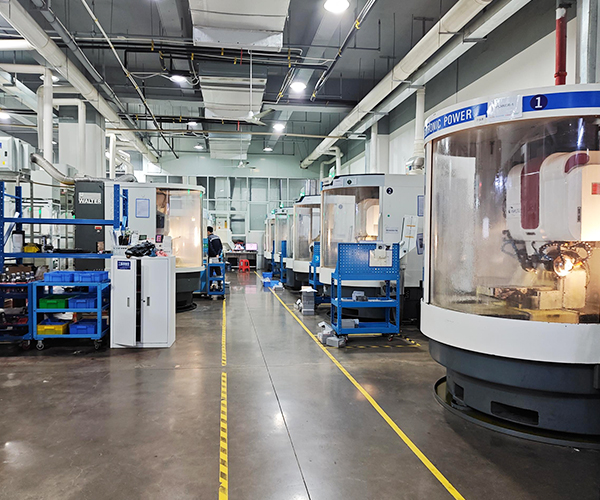
Precision Grinding Process
Dohre DEX titanium alloy end mills are all manufactured on Walter 5-axis high precision grinding machines from Germany, ensuring:
•Accurate tool geometry and corner radius consistency
•Sharp and stable cutting edges
•Smooth cutting performance under high load conditions
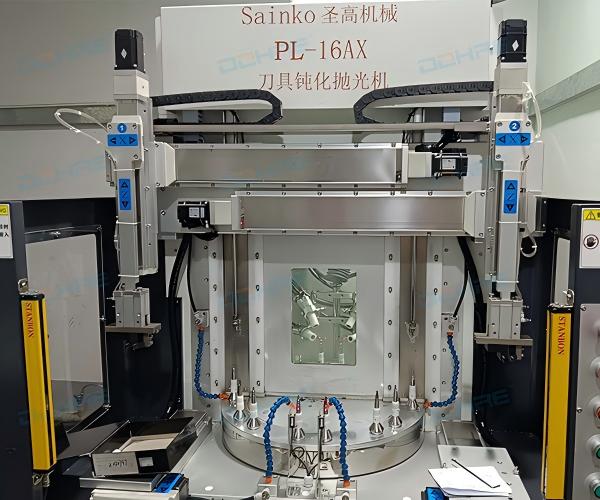
Edge Preparation & Honing Technology
A fully automated edge preparation system is used, combining:
•Fluid blasting process to remove micro-burrs
•Rubber-bond diamond abrasive polishing for controlled edge honing
This process ensures uniform cutting edge quality, with the edge radius controlled within ±3 μm, improving tool life and machining stability when cutting titanium alloys.
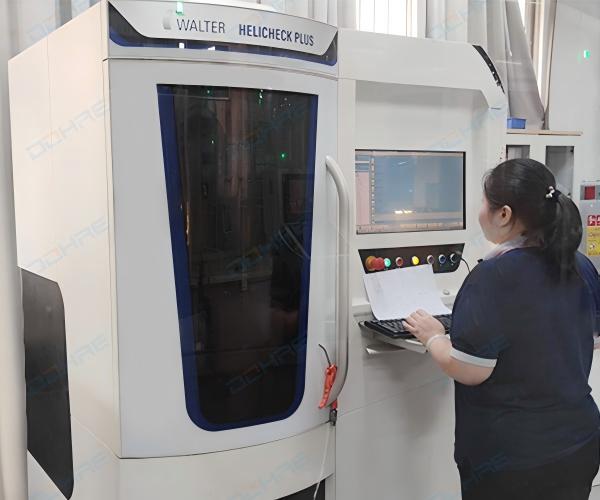
Inspection & Quality Control
Each Dohre DEX series end mill is comprehensively inspected using advanced measuring equipment, including:
•Walter Helichek Plus from Germany for profile and geometry measurement
•150× optical measurement for dimensional accuracy
•300× high-definition visual inspection for surface and edge condition
For corner radius and ball nose tools, radius accuracy is controlled within 3 μm, ensuring high consistency across batches.
FAQ & Contact us
Q1: What titanium alloys can the DEX corner radius end mill machine?
A1: The DEX corner radius end mill is primarily designed for machining titanium alloys such as TC4 and other commonly used aerospace, medical, and precision engineering titanium materials. Its optimized cutting geometry and HSR118 coating help control cutting heat, reduce material adhesion, and maintain stable cutting performance in difficult-to-machine titanium components.
Q2:Why use a corner radius end mill instead of a square end mill for titanium?
A2: The corner radius strengthens the connection between the end cutting edge and the peripheral cutting edge. This reinforced structure helps reduce edge chipping and improves stability under heavy cutting loads. It is especially useful for titanium alloy roughing, shoulder milling, cavity machining, and applications involving interrupted cuts or frequent changes in cutting direction.
Q3: Is this cutter suitable for roughing or finishing?
A3: The DEX 4-flute corner radius end mill is mainly recommended for roughing, dynamic milling, and semi-finishing of titanium alloys. Its large chip pocket and unequal flute geometry support efficient chip evacuation and stable material removal. For fine surface finishing or complex curved surfaces, a dedicated ball nose or finishing end mill may be more suitable.
Q4: What corner radius options are available?
A4: Standard corner radius options include R0.2 and R0.5. Other corner radii can be customized according to the workpiece profile, required edge strength, machining allowance, and surface requirements. Tool diameter, cutting length, overall length, shank diameter, flute number, and coating can also be adjusted for specific machining applications.
Q5: What coolant method is recommended for titanium alloy milling?
A5: Consistent coolant delivery is important because titanium alloys generate concentrated cutting heat and have relatively low thermal conductivity. Flood coolant, emulsion, or internal coolant can be selected according to the tool structure and machine configuration. The coolant should reach the cutting zone effectively to support chip evacuation and reduce heat accumulation.
Q6: How should cutting parameters be selected for this end mill?
A6: Cutting parameters should be selected according to the tool diameter, titanium grade, machining method, radial engagement, axial depth, machine rigidity, tool overhang, and coolant condition. For a new application, begin with conservative parameters and gradually increase the cutting speed or feed after confirming stable chip formation, spindle load, vibration, and tool wear.
Q7: How can tool life be improved when milling titanium alloys?
A7: Use a rigid tool holder, minimize tool overhang, control spindle runout, and maintain stable coolant delivery. Avoid chip recutting and excessive heat accumulation. Dynamic milling or controlled radial engagement can help reduce cutting load. Cutting edges should also be inspected regularly so that the tool can be replaced before severe wear or edge chipping occurs.
Q8: Can Dohre provide customized DEX corner radius end mills?
A8: Yes. Dohre supports OEM and ODM customization based on drawings, workpiece materials, component features, and machining requirements. Customized options may include tool diameter, corner radius, flute length, overall length, shank size, flute number, coolant configuration, coating, and special cutting-edge geometry for titanium alloy applications.