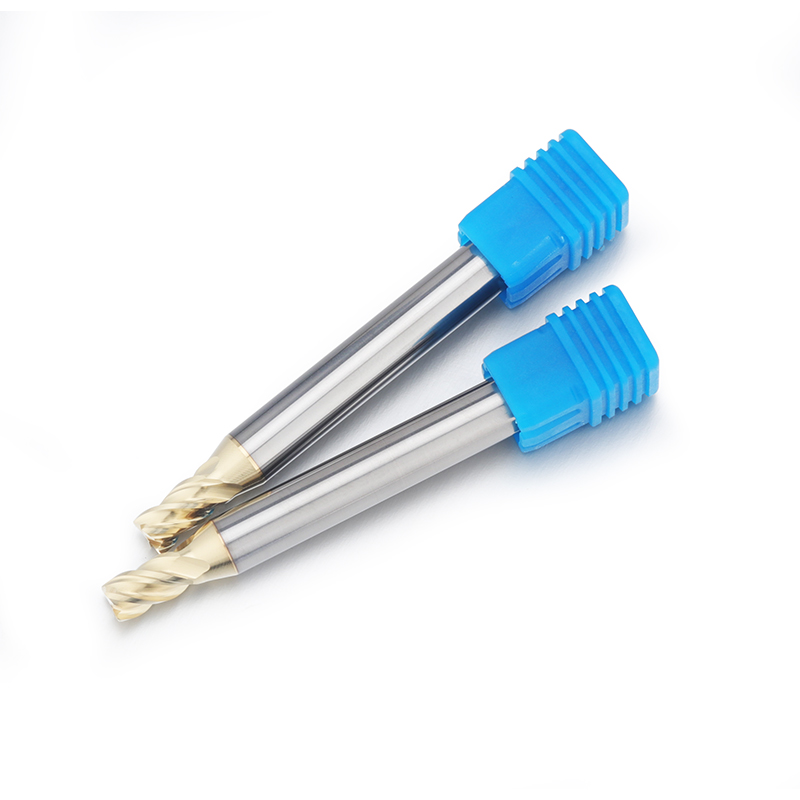
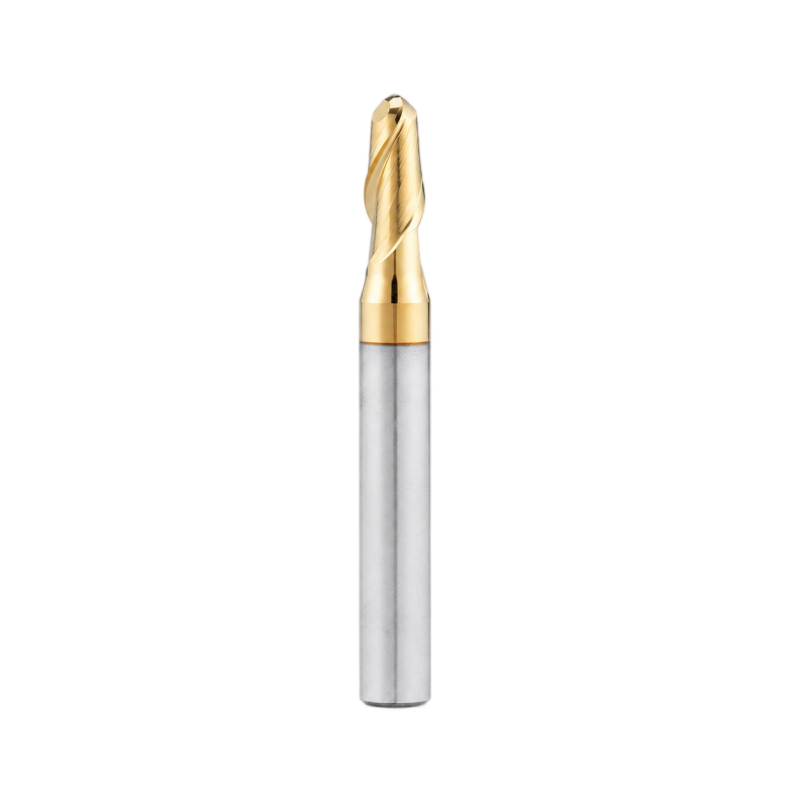
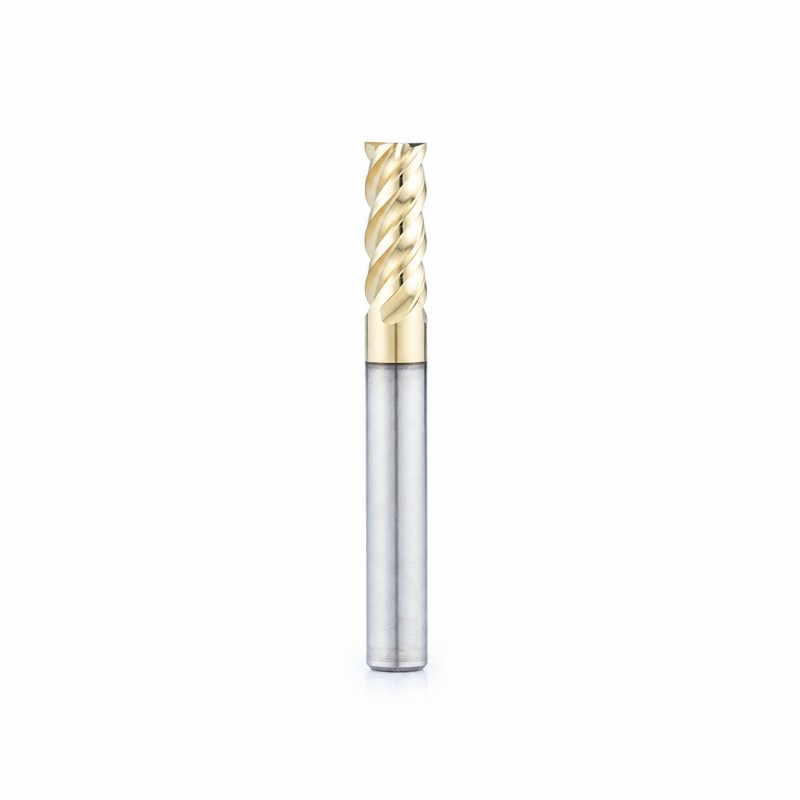
Best End Mill for Titanium Alloy: How to Choose the Right Tool
Introduction
Titanium alloy is difficult to machine because cutting heat stays near the tool edge, chip evacuation can become unstable, and the cutter must maintain edge strength under high cutting pressure.
This guide explains how to choose the best end mill for titanium alloy based on tool geometry, coating performance, chip control, and machining purpose.
Titanium alloy is difficult to machine because it generates high cutting heat, creates unstable chip evacuation, and places high demands on edge strength and coating performance. This guide explains how to choose the best end mill for titanium alloy and how cutter geometry, machining stage, and tool design affect milling stability and tool life.
In titanium milling, the problem is usually not whether the cutter can remove material at all, but whether it can stay sharp, control heat, and hold stable performance across the full toolpath. That is why tool selection becomes much more important in titanium alloy than in more general-purpose machining materials.
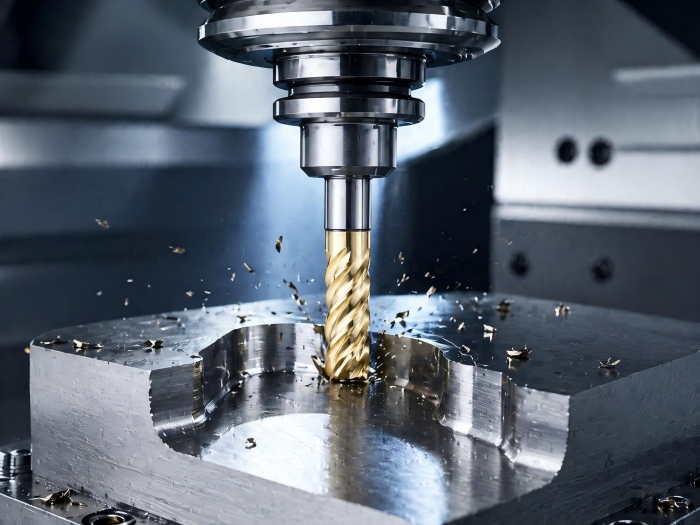
Why Titanium Alloy Needs a Specialized End Mill
Titanium alloy is widely used in aerospace, medical, automotive, and other high-performance applications because of its strength, corrosion resistance, and lightweight properties. But those same material advantages also make machining more demanding. Heat tends to stay concentrated near the cutting zone, the edge can wear quickly, and chip evacuation may become unstable if the cutter geometry is not well matched to the job.
For that reason, the best end mill for titanium alloy is usually not a fully general-purpose cutter. It is more often a tool designed with sharper edge control, stronger heat resistance, and geometry that helps chips leave the cutting area more cleanly.
What Makes a Good End Mill for Titanium Alloy?
A good titanium alloy end mill is usually built around several practical requirements rather than one feature alone.
Sharp Cutting Edge
A sharp edge helps reduce cutting resistance and lowers the chance of unstable edge loading. In titanium alloy milling, this often matters because once the edge begins to lose sharpness, heat and wear usually rise quickly.
Stable Chip Evacuation
Chip flow has a direct effect on tool life. When chips are not removed smoothly, heat stays near the edge and the cutting condition becomes less stable. That is why flute design and chip removal geometry matter so much in titanium alloy applications. Poor chip evacuation can cause recutting, heat accumulation, and faster edge wear, especially in deeper pockets or long toolpaths.
High Heat Resistance
Titanium alloy machining places strong demands on coating performance and edge stability under elevated cutting temperature. A tool that can stay more stable in heat usually offers more reliable tool life. Coatings such as AlTiN, TiAlN, or AlCrN-type coatings are often considered for titanium alloy because they can help maintain edge stability under high cutting temperature.
Geometry Matched to the Actual Operation
The best tool is not always the same across roughing, side milling, contouring, and finishing. Flat end mills, ball nose end mills, and corner radius end mills each serve different titanium alloy machining tasks.
Why Tool Geometry Affects Titanium Alloy Machining Stability
Tool geometry has a direct effect on stability when milling titanium alloy. A suitable flute design helps chips leave the cutting zone more smoothly, while a strong cutting edge helps reduce chipping under heat and pressure.
For titanium alloy, the cutter should balance sharpness, edge strength, coating performance, and vibration control. This is especially important in side milling, cavity machining, and finishing operations where tool wear can quickly affect surface quality.
Flat End Mill vs Ball Nose vs Corner Radius for Titanium Alloy
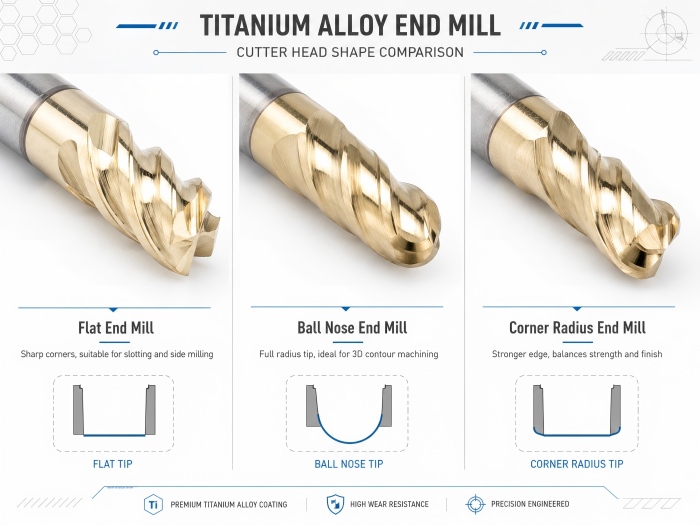
| Tool Type | Best For | Main Strength | Typical Limitation |
|---|
| Flat End Mill | Side milling, flat surfaces, profile features | Direct cutting for flat-bottom and edge-defined features | Less suitable for curved surfaces and 3D finishing paths |
| Ball Nose End Mill | Contours, cavities, curved surfaces | Better for smooth surface transitions and 3D paths | Not ideal for sharp flat-bottom features |
| Corner Radius End Mill | Semi-finishing, finishing, stronger edge support | Better balance of edge strength and profile stability | Not as flexible as ball nose in complex 3D contours |
How to Choose the Right Cutter Type for Titanium Milling
The most practical way to choose a titanium alloy end mill is to start from the workpiece shape and the machining purpose.
Choose a Flat End Mill for Defined Profiles and Side Milling
When the part requires flat surfaces, straight walls, and more defined profile features, a DEX flat end mill for titanium alloy is usually the more direct choice.
Choose a Ball Nose End Mill for Curved Surfaces
When the toolpath includes contours, radiused surfaces, or cavity finishing, a DEX ball nose end mill for titanium alloy usually matches the geometry more naturally.
Choose a Corner Radius End Mill When Edge Strength Matters More
When the process needs more edge support and more stable finishing than a sharp-cornered flat tool can provide, a DEX corner radius end mill for titanium alloy is often a strong option.
Common Problems in Titanium Alloy Milling
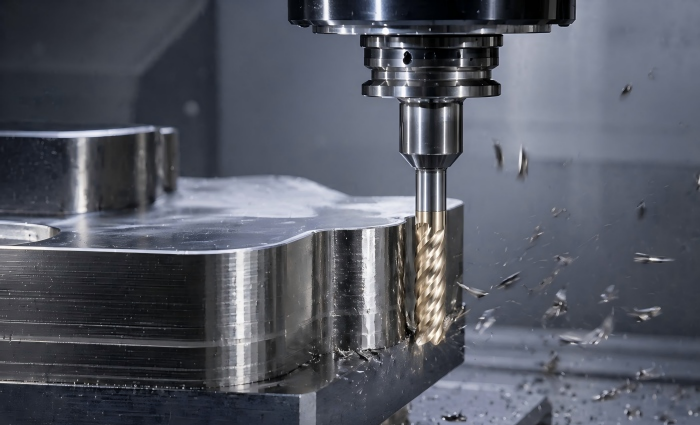
The wrong tool choice often appears first through machining problems rather than obvious tool failure.
• Rapid wear caused by concentrated cutting heat
• Edge chipping when the cutter geometry does not match the path
• Poor chip evacuation in deeper or less stable cuts
• Inconsistent surface finish when the edge loses stability too early
In many cases, these problems are not caused by one bad parameter alone. They are more often the result of a mismatch between tool geometry, coating performance, chip flow, and machining purpose.
These problems are often related to machining stability, not only tool material. That is why titanium alloy milling requires the right balance of carbide substrate, coating, flute geometry, and cutting parameters.
A Simple Selection Logic for Titanium Alloy End Mills
A practical selection process usually becomes clearer when these questions are answered first:
• Is the part mainly flat, curved, or a combination of both?
• Is the operation roughing, semi-finishing, or finishing?
• Does the process require sharper edge definition or stronger edge support?
• Will chip evacuation remain stable across the actual cutting path?
Once these points are clear, the best tool choice becomes much easier and more reliable. In titanium alloy machining, the right cutter usually comes from matching the tool to the process rather than looking for one universal answer.
Conclusion
The best end mill for titanium alloy depends on heat control, chip evacuation, cutter geometry, and machining purpose working together. Flat end mills, ball nose end mills, and corner radius end mills can all be correct choices, but not for the same workpiece features and not for the same machining stage.
For most titanium alloy applications, better results come from choosing a cutter designed specifically for the material rather than treating titanium as another general metal-cutting job. A complete end mill for titanium alloy range makes that comparison easier, especially when different part geometries require different cutter types.
FAQ
What is the best end mill for titanium alloy?
The best choice depends on workpiece geometry, cutting stage, chip evacuation stability, and tool design. There is no single cutter that fits every titanium alloy application.
Why is titanium alloy difficult to machine?
Titanium alloy is difficult to machine because cutting heat stays concentrated near the edge, chip evacuation can become unstable, and the cutter must maintain sharpness under demanding cutting conditions.
Should I use a flat end mill or ball nose end mill for titanium alloy?
A flat end mill is usually more suitable for flat surfaces and defined profiles, while a ball nose end mill is better for contours, curved surfaces, and cavity finishing.
When is a corner radius end mill better for titanium alloy?
A corner radius end mill is often preferred when stronger edge support and more stable finishing are needed than a sharp-cornered flat tool can provide.
What matters most in titanium alloy end mill design?
Sharp cutting edges, stable chip evacuation, strong heat resistance, and geometry suited to the actual machining path are usually the most important factors.
Looking for the Right Titanium Alloy End Mill?
Explore our End Mill for Titanium Alloy range to compare flat, ball nose, and corner radius cutters for different titanium milling applications.
Contact us for product recommendations and custom tool solutions.