CBN End Mill for Quenched Steel: How to Choose the Right Tool
Introduction
Quenched steel machining requires more than simply choosing a hard cutting tool. The right CBN end mill should match the workpiece hardness, machining stage, part geometry, and setup stability so the tool can maintain wear resistance, edge strength, and consistent finishing performance.
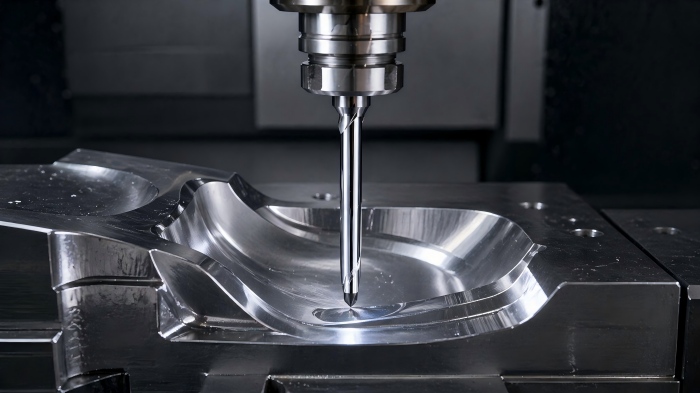
Quenched steel places much higher demands on wear resistance, cutting stability, and edge strength than general machining materials. This guide explains how to choose the right CBN end mill for quenched steel based on hardness range, machining purpose, and cutter geometry, and how to avoid common selection mistakes in hardened steel applications.
In quenched steel machining, the real challenge is not only whether the tool can cut the material, but whether it can do so with stable wear, predictable accuracy, and acceptable finishing quality. That is why tool selection in this material usually becomes much more specific than in general-purpose milling.
Why Quenched Steel Needs a Different Tool Strategy
Quenched steel is usually much less forgiving than softer steels or more general machining materials. As hardness rises, cutting pressure becomes more concentrated, wear tends to accelerate, and edge stability becomes more important. A tool that still works in lower-hardness applications may no longer be the most practical choice once the material enters a clearly hardened condition.
This is why users often stop asking for a general end mill and start looking for a more specific solution once the application moves into quenched steel machining.
When CBN Starts Making More Sense Than Carbide
CBN usually becomes more attractive when carbide begins to lose its practical advantage in wear stability, finishing control, or predictable tool life. In quenched steel, that shift is often easier to see because the workpiece is already in a much more demanding cutting condition. The decision becomes clearer when the job is viewed through the question of when a CBN end mill should be used instead of carbide, rather than treating CBN as an automatic upgrade for every difficult-looking part.
In some cases, carbide is still acceptable. But once hardness, wear, and finishing requirements all begin to push in the same direction, CBN usually becomes much easier to justify.
Hardness Range Is the First Checkpoint
Before choosing cutter shape, it makes sense to confirm whether the workpiece hardness is already in a range where CBN is practical. Quenched steel often suggests that direction, but hardness still needs to be evaluated as part of the real process rather than assumed from the material name alone.
That is why hardness usually comes first in tool selection logic. The relationship between workpiece condition and CBN suitability is explained more clearly in our guide to what hardness range is suitable for a CBN end mill.
A Practical Comparison of CBN Tool Types for Quenched Steel
| Tool Type | Best For | Main Strength | Main Limitation |
|---|
| Square CBN End Mill | Flat surfaces, side milling, straight walls, defined edges | Direct cutting for flat and profile features | Less suitable for curved cavities and contour transitions |
| Ball Nose CBN End Mill | Contours, cavities, 3D surfaces, mold finishing | Better for smooth geometry transitions | Not ideal for flat-bottom features or sharp internal corners |
| Corner Radius CBN End Mill | Semi-finishing, finishing, stable sidewall work | Stronger edge support with more stable finishing performance | Less suitable than ball nose for complex 3D contours |
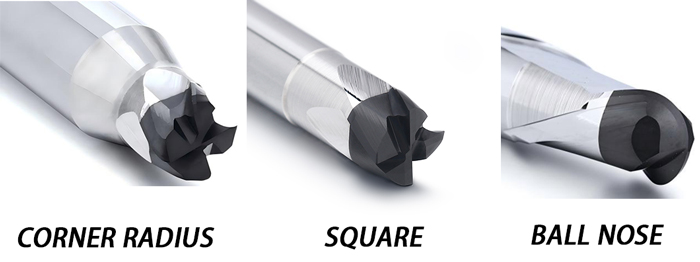
Choose Geometry by Part Shape and Machining Stage
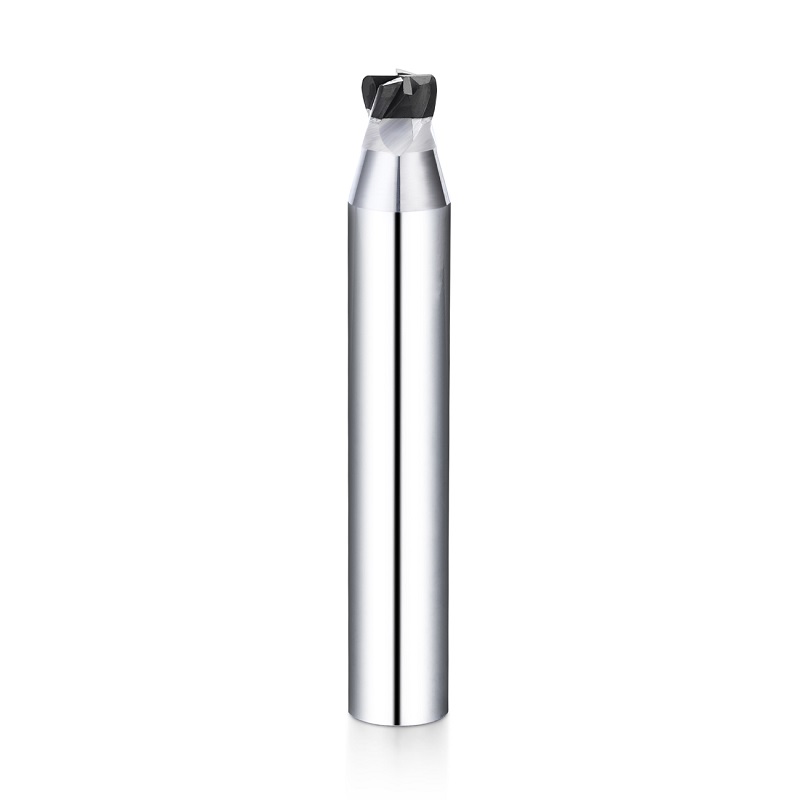
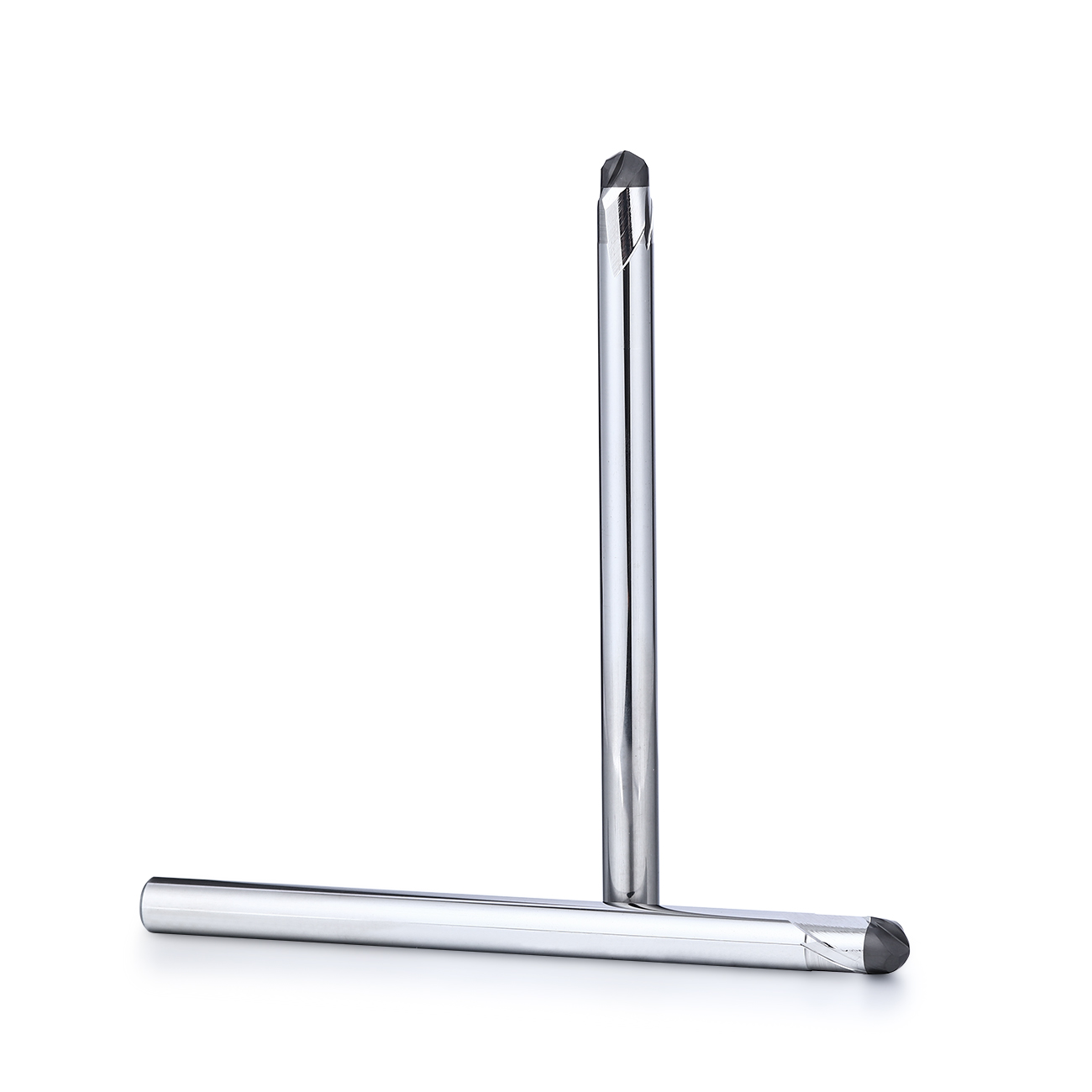
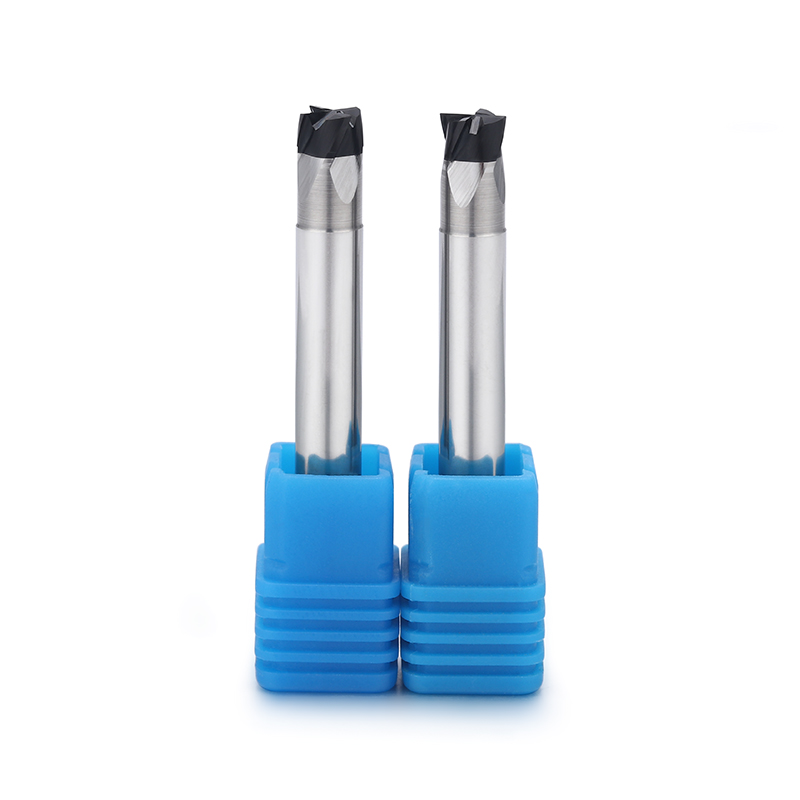
In quenched steel, cutter geometry often matters just as much as tool material. A square CBN end mill is usually more suitable for flat surfaces and defined edges. Ball nose tools fit contours, cavities, and curved finishing paths more naturally. Corner radius tools are often preferred when edge strength and stable finishing need to be balanced more carefully.
That choice becomes easier when the tool forms are compared directly across square, ball nose, and corner radius CBN end mills for hardened steel, especially in finishing work where the wrong geometry can shorten tool life even before parameters are changed.
The Best Tool Is Not Always the Same Across the Whole Process
The best CBN end mill for quenched steel may change from one stage to another. Roughing, semi-finishing, and finishing do not place the same demands on the edge. In many high-hardness applications, CBN shows its strongest value in the later stages of the process, where wear stability, profile control, and surface consistency become more important.
That is why one general cutter cannot always cover every path equally well. A tool selected for one stage may not be the most stable option for the next.
Setup Stability Still Controls the Result
Even in quenched steel, the cutter is only part of the system. Excessive runout, too much overhang, weak clamping, or unstable engagement can all shorten tool life quickly. In high-hardness work, those setup problems tend to show up faster because the edge has less tolerance for uneven load.
In practical terms, better setup rigidity often improves wear consistency as much as a better cutter does.
Common Selection Mistakes in Quenched Steel Machining
• Choosing CBN only because the material sounds difficult, without checking whether the hardness really supports it.
• Using the same cutter geometry for flat surfaces, contours, and finishing paths that require different edge behavior.
• Ignoring setup rigidity and focusing only on tool material.
• Trying to solve every cutting stage with one tool type.
A Simple Selection Logic for Quenched Steel
A practical selection process usually begins with four questions:
• Is the workpiece clearly in a hardened or quenched range where CBN is justified?
• Is the operation roughing, semi-finishing, or finishing?
• Does the part require flat features, contours, or stronger edge support?
• Is the setup stable enough to make proper use of CBN?
Once those answers are clear, the tool choice usually becomes much more reliable. In many cases, the best result comes from narrowing the decision step by step rather than searching for one universal tool.
Conclusion
Choosing the right CBN end mill for quenched steel starts with hardness, but it does not end there. The most practical result comes from matching workpiece condition, machining stage, cutter geometry, and setup stability as one system. A square, ball nose, or corner radius CBN end mill may all be correct choices, but not for the same path and not for the same finishing requirement.
A complete end mill for quenched steel range makes that comparison easier, especially when different stages of the process require different cutter types.
FAQ
What is the best CBN end mill for quenched steel?
The best choice depends on hardness range, machining stage, part geometry, and setup stability. There is no single cutter type that suits every quenched steel application.
Should I use square, ball nose, or corner radius CBN for quenched steel?
Square tools are usually better for flat surfaces and defined edges, ball nose tools are more suitable for contours and cavities, and corner radius tools often provide a better balance of edge strength and finishing stability.
Is CBN always better than carbide for quenched steel?
Not always. CBN usually becomes more attractive when the hardness and finishing requirement are high enough to expose the practical limits of carbide.
Why does setup stability matter so much in quenched steel machining?
Weak clamping, excessive runout, or too much overhang can create uneven load on the edge, which shortens tool life and reduces finishing stability.
At what point should I start considering CBN for quenched steel?
CBN usually becomes more relevant once the workpiece is clearly in a hardened range and the machining goal places more importance on wear stability, dimensional control, and finishing quality.
Looking for the Right CBN End Mill?
Explore our End Mill for Quenched Steel range to compare square, ball nose, and corner radius CBN solutions for hardened and heat-treated materials.
Contact us for product recommendations and custom tool solutions.