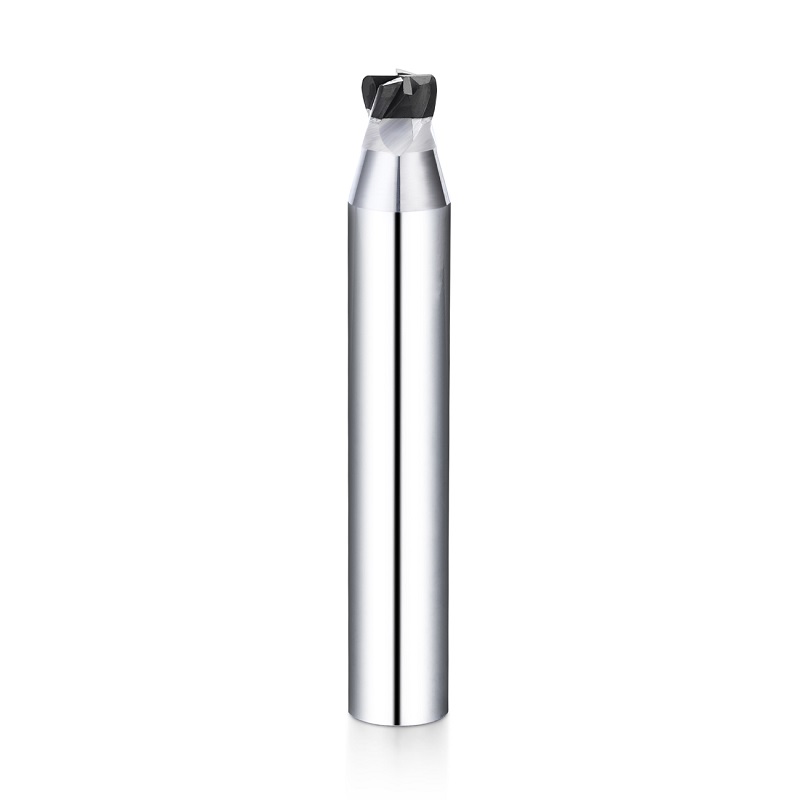
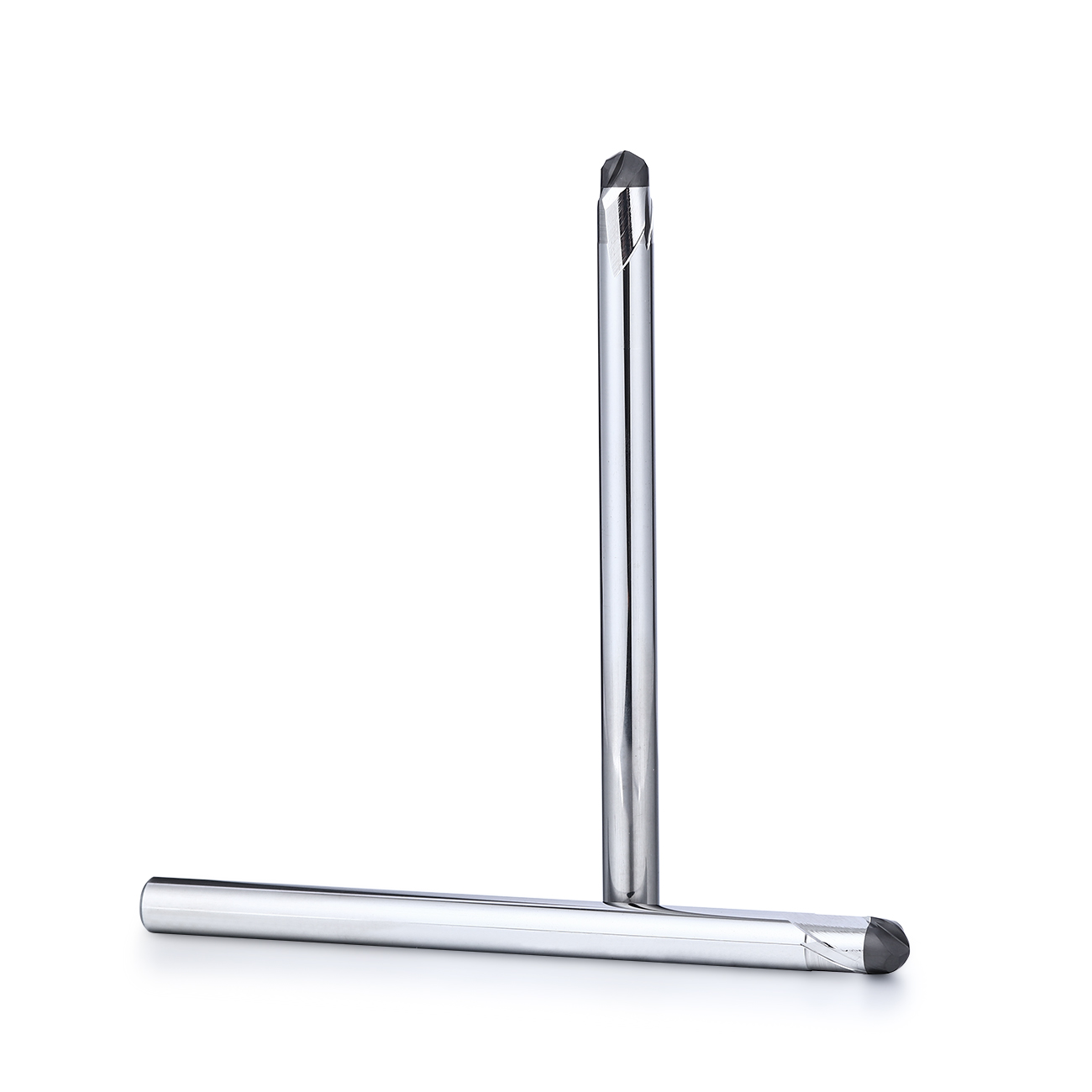
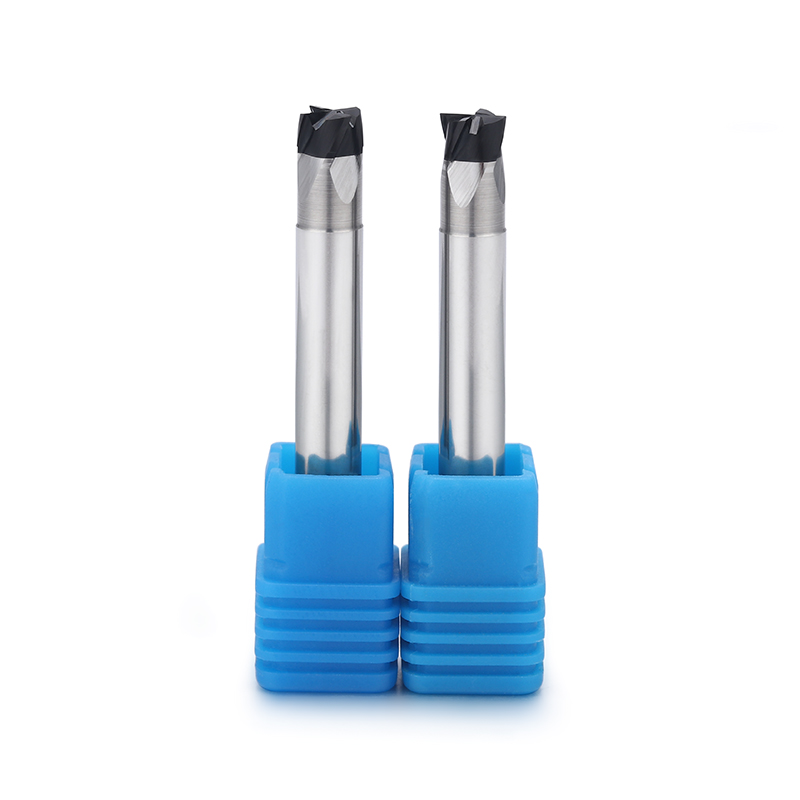
When Should You Use a CBN End Mill Instead of Carbide?
Introduction
CBN and carbide are not interchangeable in every machining condition. The decision usually depends on workpiece hardness, finishing requirements, tool wear, and process stability. When carbide begins to lose accuracy or tool life in hardened steel, CBN may become the better choice.
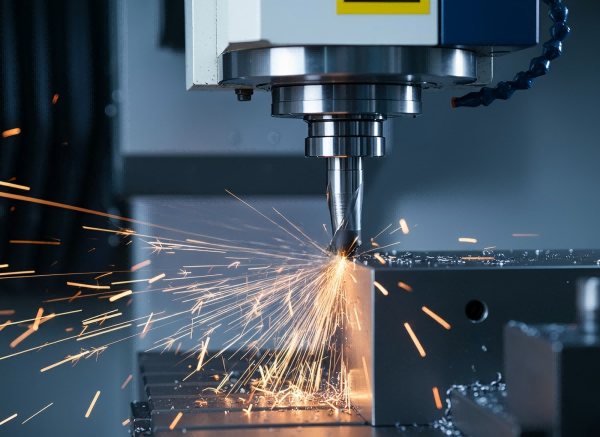
CBN and carbide end mills are both important cutting tools, but they are not used in the same machining conditions. This guide explains when a CBN end mill becomes the better choice, especially in hardened steel and high-hardness finishing applications where accuracy, wear resistance, and tool life matter most.
Many users do not start by asking what CBN is. Instead, they ask a more practical question: should this job still use carbide, or is it time to switch to CBN? If you want a broader overview first, you can also read our guide on what a CBN end mill is.
Why Users Compare CBN and Carbide
Carbide is widely used because it is versatile and suitable for many general machining applications. CBN is different. It is usually considered when the workpiece is harder, the finishing requirement is higher, or the machining process needs better wear resistance and more stable accuracy over time.
That means the choice is usually not about which tool is always better. The real question is which tool makes more sense for the workpiece hardness, the machining stage, and the expected result.
A Practical Comparison: CBN vs Carbide
| Situation | Carbide Usually Makes More Sense | CBN Usually Makes More Sense |
|---|
| General-purpose milling | Yes, especially when hardness is lower and versatility matters | Usually not necessary |
| Hardened steel finishing | May still be used in some cases, but wear can become a limitation | Often the stronger choice when accuracy and wear resistance matter |
| Quenched steel machining | Possible in some setups, but not always ideal | Often more suitable for high-hardness finishing work |
| Tool life under difficult wear conditions | May drop faster in harder materials | Often preferred when stable wear resistance is needed |
| High-accuracy semi-finishing and finishing | Possible, depending on hardness and setup | Often chosen when precision and consistency are priorities |
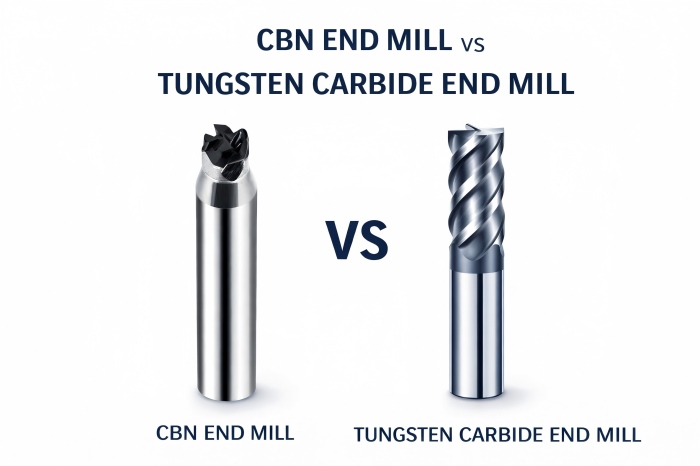
When Carbide Is Still the Practical Choice
Carbide is still a very practical choice in many situations. If the material hardness is not especially high, the process is more general-purpose, or the operation is still at the roughing stage, carbide often remains the more economical and flexible option.
It also makes sense when users need one cutter family to cover a wider range of jobs, rather than optimizing for a narrower high-hardness application.
When a CBN End Mill Becomes the Better Option
A CBN end mill becomes more attractive when carbide starts to show its limits in harder materials. In practical terms, users often start considering CBN when the job involves hardened steel, quenched steel, or other high-hardness ferrous materials where wear resistance, profile stability, and finishing accuracy become more important.
If your main application is hardened steel finishing, you can also read our article on how CBN end mills improve accuracy and tool life in hardened steel. If the workpiece is specifically heat-treated material, a dedicated end mill for quenched steel range is also worth reviewing.
Workpiece Hardness Is Often the Turning Point
One of the clearest reasons to move from carbide to CBN is workpiece hardness. The harder the material becomes, the more users tend to focus on edge wear, dimensional consistency, and surface finish stability. That is usually where CBN starts becoming more relevant in the selection process.
If you want a more detailed discussion of where hardness becomes an important boundary in tool selection, you can later connect this topic to a dedicated article such as what hardness range is suitable for a CBN end mill.
CBN Usually Makes More Sense in Finishing Than in General Roughing
Another important factor is the machining stage. In many cases, CBN is considered more often in semi-finishing and finishing than in broad general-purpose roughing. This is because users turn to CBN when they need more stable wear behavior, more reliable profile control, and better surface consistency in difficult materials.
That does not mean CBN is only for one narrow use case, but it does mean the value of CBN is often most visible when the job is already demanding enough that carbide performance becomes less predictable.
Tool Geometry Still Matters After You Choose CBN
Choosing CBN instead of carbide does not end the selection process. Cutter geometry still matters. Ball nose and corner radius designs are not interchangeable in every hardened steel application, especially when the workpiece includes contours, cavities, or edge-strength-sensitive finishing paths.
If your next question is about which CBN geometry is more suitable, a natural follow-up article would be CBN ball nose vs corner radius end mill for hardened steel.
Signs That It May Be Time to Move Beyond Carbide
Users often start evaluating CBN when they see one or more of these problems during harder-material machining:
• tool wear becomes too fast for stable production
• accuracy becomes difficult to maintain throughout the process
• surface finish becomes inconsistent in hardened steel
• carbide performance is acceptable at first, then drops too quickly
These are not automatic proof that CBN is always required, but they are often the reasons users begin making the comparison seriously.
Do Not Switch to CBN Blindly
CBN is not simply a more expensive carbide replacement. It makes sense when the application can actually benefit from its strengths. Machine rigidity, cutting path, part geometry, and the actual workpiece condition still matter. A poor setup can still damage CBN performance.
If your concern is that a CBN tool chips too quickly or fails earlier than expected, a useful follow-up topic is why CBN end mills chip or wear quickly and how to solve it.
How to Decide Between CBN and Carbide for Your Job
A practical decision process usually starts with four questions:
• How hard is the workpiece material?
• Is this roughing, semi-finishing, or finishing?
• Is tool wear or accuracy currently the main limitation?
• Is the machine and setup stable enough to make better use of CBN?
If the answer points toward high-hardness finishing, stable wear resistance, and tighter accuracy requirements, CBN becomes much more likely to be the better choice. If the work is still broader, softer, or more general-purpose, carbide may remain the more practical option.
Conclusion
You should consider using a CBN end mill instead of carbide when the workpiece is harder, the finishing requirement is more demanding, and tool wear or dimensional consistency has become a real production problem. In those cases, CBN often makes more sense than a general-purpose carbide solution.
Carbide still remains the practical choice for many general operations, but once hardened steel or quenched steel finishing starts pushing the limits of carbide, CBN becomes a much stronger candidate. The best choice depends on hardness, geometry, machining stage, and setup stability rather than tool material alone.
If you are evaluating high-hardness machining solutions, exploring a complete CBN milling solution for quenched steel can help you compare options more effectively.
FAQ
When should I use a CBN end mill instead of carbide?
A CBN end mill is more often considered when the workpiece is harder, the operation is more finishing-focused, and stable wear resistance or accuracy has become more important than general versatility.
Is CBN always better than carbide?
No. Carbide is still the practical choice in many general machining conditions. CBN becomes more relevant when harder materials and more demanding finishing requirements are involved.
Why is CBN often used for hardened steel?
CBN is often chosen in hardened steel machining because users value its wear resistance, cutting stability, and ability to maintain better accuracy in difficult materials.
Can carbide still be used in hard materials?
Yes, in some applications it can. The question is usually not whether carbide can cut the material at all, but whether it remains the most practical option for wear, accuracy, and process stability.
What should I compare before changing from carbide to CBN?
Compare workpiece hardness, machining stage, current wear behavior, surface finish requirements, and machine stability before deciding whether CBN is the better choice.
Looking for the Right CBN Solution?
Explore our End Mill for Quenched Steel range to compare different CBN solutions for hardened and heat-treated materials.
Contact us for product recommendations and custom tool solutions.