


Get In Touch
Do you have a questions or an issues we can help you with?
Let’s talk about your project and how Dohre can help get your tools designed, manufactured and ready for the market.


Reading volume: 1214

Release time :2026-04-09
Estimated reading time:
7075 aluminum is widely used in aerospace, automotive, robotics, and other high-strength applications. Compared with 6061 aluminum, it places higher demands on cutting stability, chip evacuation, tool rigidity, and surface finish. This guide explains how to choose the best end mill for 7075 aluminum based on flute count, tool geometry, coating or surface treatment, and machining purpose.
7075 aluminum is widely used in high-strength applications, but it also places higher demands on cutting stability, tool geometry, and overall machining performance. This guide explains what to consider when choosing the best end mill for 7075 aluminum and how flute count, cutter type, and machining purpose affect the final result.
Compared with more general-purpose aluminum alloys, 7075 aluminum is often selected for parts that require higher strength. Because of that, cutter selection becomes more important in actual CNC machining. If you are comparing tooling options, it is useful to review a dedicated end mill for aluminum range before choosing the most suitable cutter.
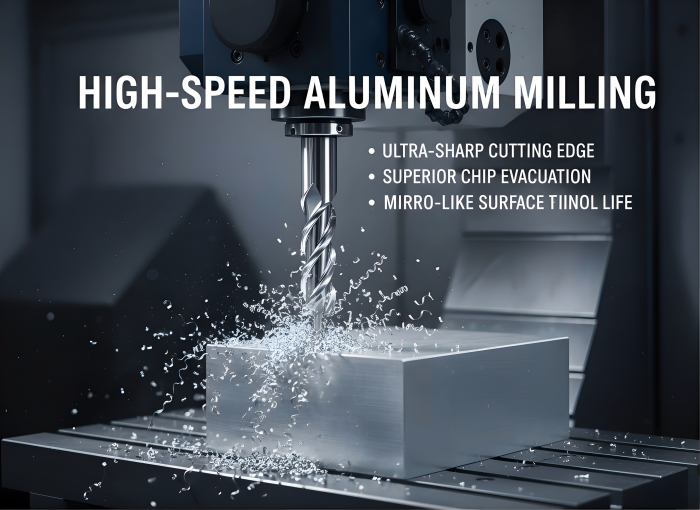
7075 aluminum is commonly associated with higher strength, which means machining conditions may require more attention to cutting stability, tool sharpness, and chip evacuation. In practical machining, the wrong cutter may lead to unstable finish quality, burrs, or reduced tool life.
For this reason, the best end mill for 7075 aluminum is usually not chosen by name alone. Cutter geometry, flute design, and the actual machining task all matter.
Although both materials are aluminum alloys, 7075 and 6061 are not always approached the same way in machining. 6061 is often seen as a more general-purpose aluminum alloy, while 7075 is usually considered when higher strength is required. As a result, users may pay more attention to cutter rigidity, edge condition, and cutting consistency when working with 7075.
If you are also machining more general-purpose aluminum parts, you can read our guide on the best end mill for 6061 aluminum.
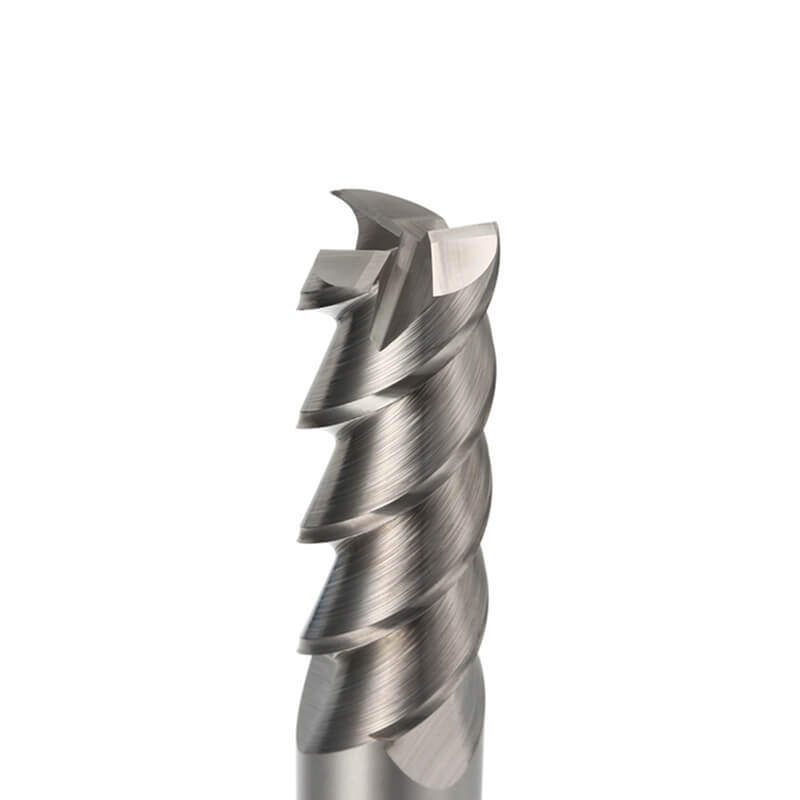
Tool geometry has a direct influence on machining stability when milling 7075 aluminum. A sharp cutting edge helps reduce cutting resistance, while a suitable flute design supports smoother chip evacuation. For high-strength aluminum parts, the cutter should also provide enough rigidity to maintain consistent sidewall quality and surface finish. In many 7075 aluminum applications, polished flutes, positive rake geometry, and a balanced 2-flute or 3-flute design can help reduce chip sticking, built-up edge, and unstable cutting behavior. This is especially important in slotting, pocketing, side milling, and high-speed aluminum machining.
A good end mill for 7075 aluminum is usually one that supports clean cutting, stable chip evacuation, and reliable machining performance under the actual cutting condition. In many cases, the following features matter most.
A sharp cutting edge helps reduce unnecessary cutting resistance and supports cleaner shearing of the material. This is important for controlling burrs and maintaining better surface quality.
Chip evacuation remains critical in aluminum machining. If chips cannot leave the cutting zone smoothly, machining stability may decrease and surface quality may suffer.
The flute design should balance chip clearance and cutter strength. In 7075 machining, choosing the right flute configuration can make a noticeable difference in process stability.
Because 7075 is often associated with higher-strength applications, tool rigidity can matter more when sidewall quality, consistent finish, or stable cutting behavior are priorities.
For a broader overview of aluminum cutter selection, you can also read our article on the best carbide end mill for aluminum.
Flute count is one of the most common questions when choosing an end mill for 7075 aluminum. In practice, the answer depends on chip evacuation, cutting stability, and the type of operation.
A 2 flute end mill is often preferred when chip evacuation is the main priority. Because there is more flute space, chips may leave the cutting zone more easily in certain operations.
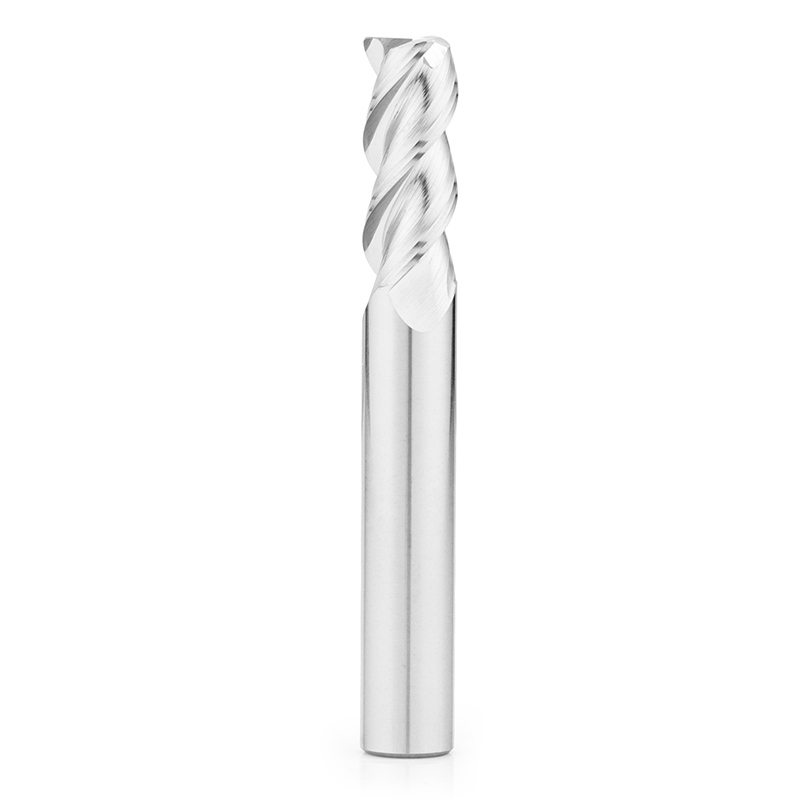
A 3 flute end mill is often considered when users want a balance between chip evacuation and cutting efficiency. In many aluminum machining situations, it can be a practical compromise.
If flute count is one of your main concerns, you can also read our guide on 2 flute vs 3 flute end mills for aluminum.
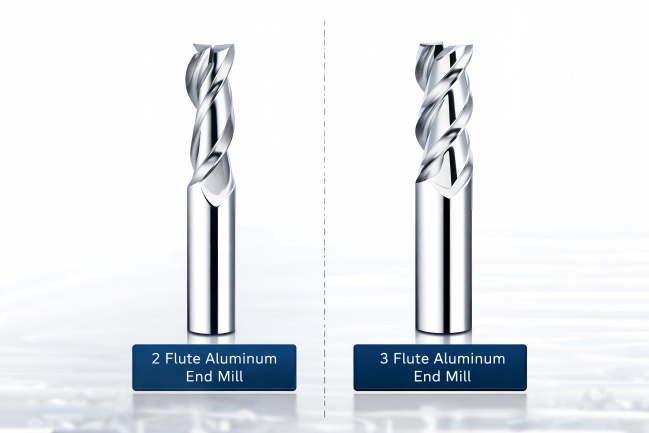
Different cutter types are suitable for different aluminum machining tasks. The best choice for 7075 depends on whether the job involves slotting, side milling, contouring, or finishing.
Square end mills are commonly used for general milling, slotting, and side milling where flat-bottom cuts and defined edges are needed.
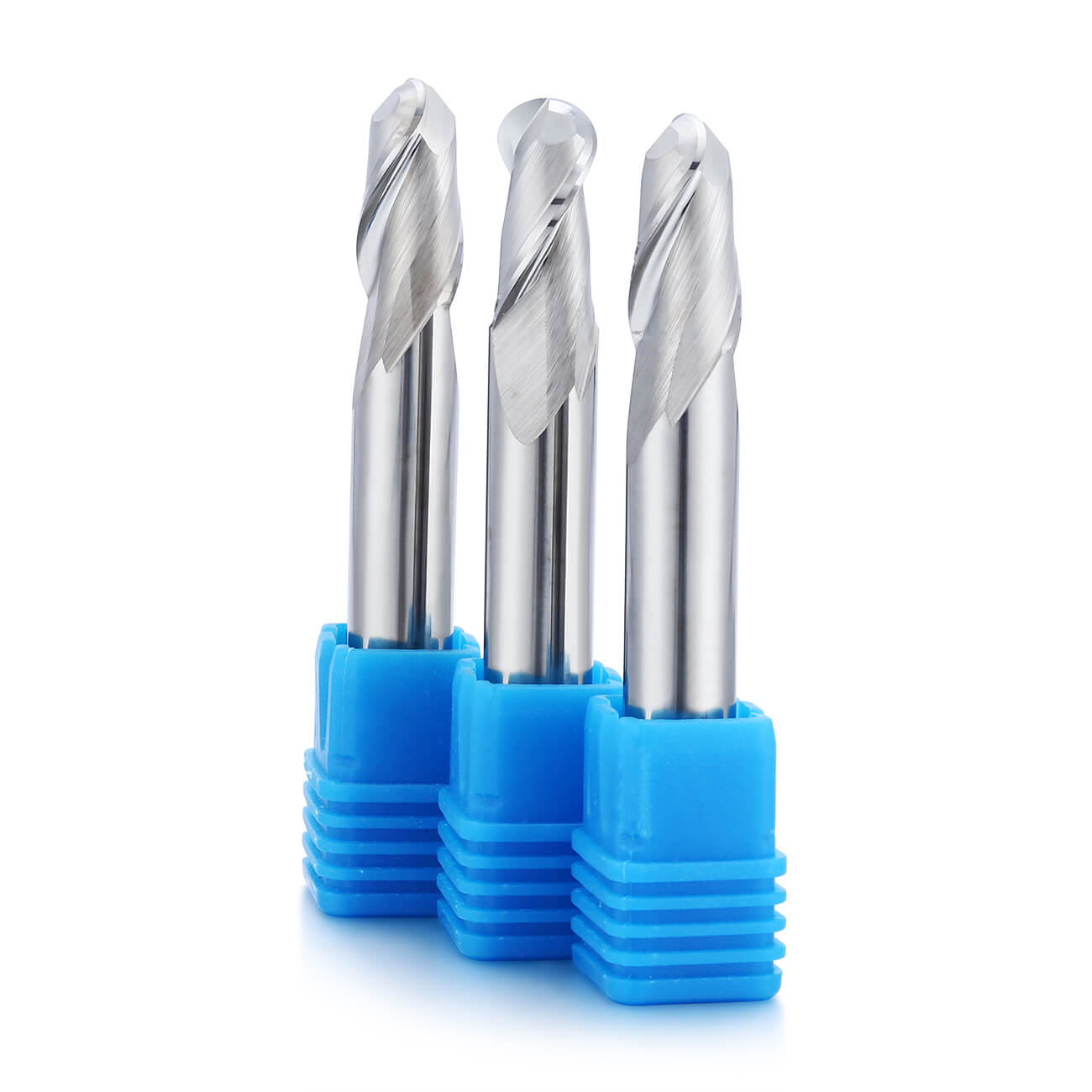
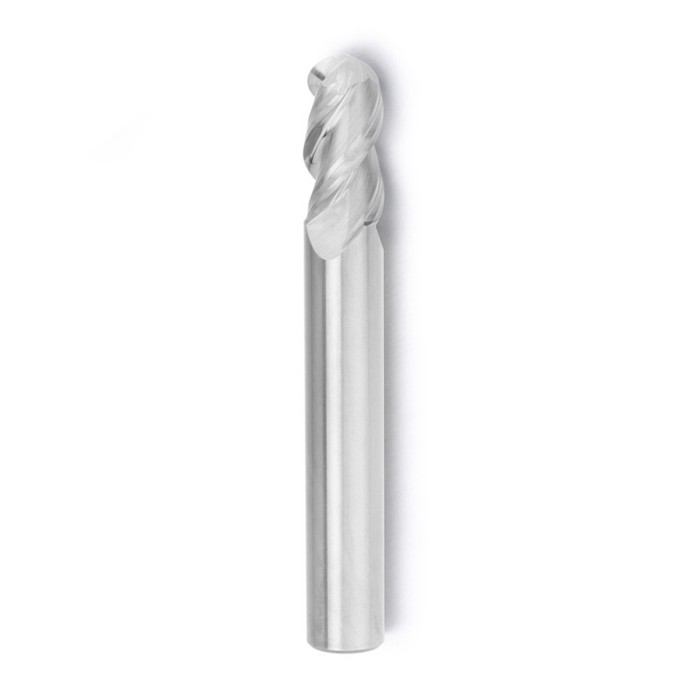
Ball nose end mills are more suitable for curved surfaces, contours, and cavity machining where rounded geometry is required.
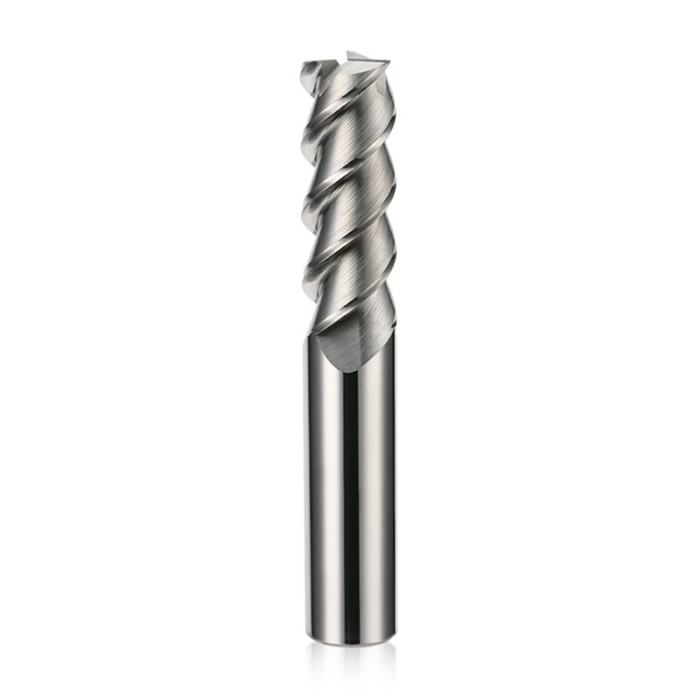
High polished flute designs are often considered when smoother chip flow and cleaner cutting are priorities in aluminum machining.
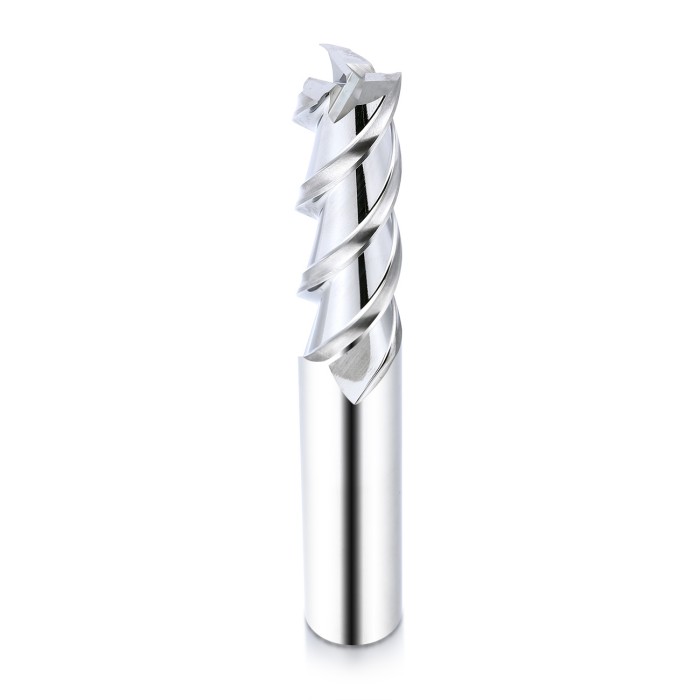
If your main question is whether to use a flat-end cutter or a rounded-end cutter, read our article on square end mill vs ball nose end mill for aluminum.
hen choosing an end mill for 7075 aluminum, coating and flute surface treatment should be considered carefully. In aluminum machining, the main purpose is not only heat resistance, but also reducing friction, improving chip flow, and preventing material adhesion.
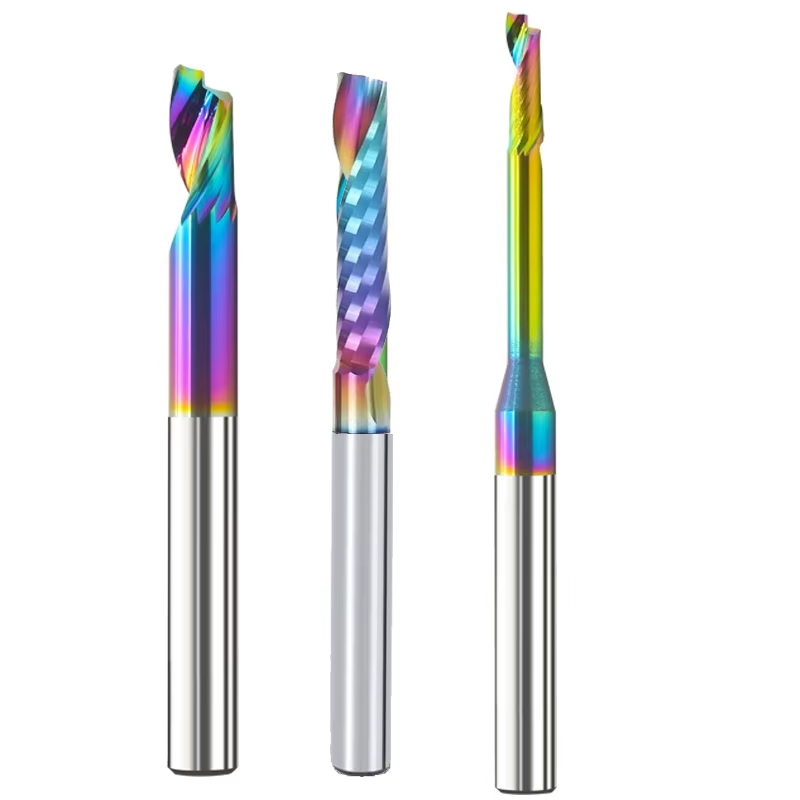
DLC coating is often considered for aluminum and other non-ferrous materials because it provides low friction and helps reduce built-up edge. Polished uncoated carbide tools can also perform well when the cutting edge is sharp and the flute surface is smooth.
For 7075 aluminum, the best choice often depends on the operation. If chip evacuation and surface finish are the main concerns, polished flutes or DLC-coated carbide end mills may help improve machining stability. If the tool is used for general aluminum milling, sharp carbide geometry with smooth flute surfaces is still very important.
Many machining problems in 7075 aluminum are not caused by the material alone, but by the mismatch between cutter type and cutting condition.
If the cutting edge is not sharp enough or the cutting process is unstable, burrs may become more obvious on the workpiece.
If chips do not leave the cutting zone smoothly, finish quality and tool behavior may become less stable.
Surface finish may become inconsistent if flute design, cutter geometry, or setup rigidity do not match the operation.
If material adhesion is affecting cutting performance, you can also read our guide on why aluminum sticks to an end mill and how to reduce it.
A practical way to choose the best end mill for 7075 aluminum is to start with the machining purpose.
A square end mill is often a practical starting point for many general operations.
A ball nose end mill is usually more suitable when the part includes curved geometry or cavity work.
A lower-flute design or polished flute geometry may be worth considering if chip evacuation is the main concern.
Tool rigidity, edge quality, and flute design all matter when the goal is cleaner sidewalls and more stable finish quality.
| Machining Need | Recommended Feature | Why It Matters |
|---|---|---|
| Slotting | 2-flute or large flute space | Improves chip evacuation and reduces chip packing. |
| Side milling | 3-flute carbide end mill | Balances chip removal, rigidity, and efficiency. |
| Surface finish | Sharp edge and polished flute | Reduces cutting resistance and improves finish. |
| High-speed milling | Carbide with aluminum geometry | Supports stable cutting at higher speeds. |
| Material adhesion | DLC coating or polished flute | Helps reduce built-up edge and chip sticking. |
The best end mill for 7075 aluminum depends on the actual operation, not just the product name. Flute count, cutter type, chip evacuation, and tool rigidity all influence machining stability and final surface quality.
For many applications, the right approach is to match the cutter to the real machining task, whether that means slotting, side milling, contouring, or finishing. A suitable cutter will usually perform more reliably than a general choice that does not match the process.
If you are comparing aluminum tooling options, exploring a complete End Mill for Aluminum range can help you choose the right cutter more efficiently.
What is the best end mill for 7075 aluminum?
The best choice depends on the machining purpose. Flute count, cutter type, chip evacuation, and tool rigidity all affect the result in 7075 aluminum machining.
Is 7075 aluminum harder to machine than 6061?
In practical machining, 7075 is often treated as a higher-strength aluminum alloy, so cutter selection and process stability may require more attention.
Is 2 flute or 3 flute better for 7075 aluminum?
It depends on the operation. A 2 flute tool may be preferred when chip evacuation is the main priority, while a 3 flute tool may offer a better balance between chip flow and cutting efficiency.
Can I use a square end mill for 7075 aluminum?
Yes. Square end mills are commonly used for slotting, side milling, and many general milling operations in aluminum machining.
When should I use a ball nose end mill for 7075 aluminum?
A ball nose end mill is usually more suitable for curved surfaces, contouring, and cavity machining where rounded geometry is required.
Explore our End Mill for Aluminum range to compare different cutter types and flute options for aluminum machining.
Contact us for product recommendations and custom tool solutions.
Do you have a questions or an issues we can help you with?
Let’s talk about your project and how Dohre can help get your tools designed, manufactured and ready for the market.
By continuing to use the site you agree to our privacy policy Terms and Conditions.