Best Carbide End Mill for Aluminum: How to Choose the Right Tool
Introduction
Choosing the best carbide end mill for aluminum is important for achieving better chip evacuation, cleaner cutting, and improved surface finish. This guide explains how flute count, tool geometry, and cutter type affect aluminum machining performance.
Aluminum is one of the most common materials in CNC machining, but choosing the right cutter is still important if you want clean cutting, smooth chip evacuation, and stable surface finish.
Many machining problems in aluminum are not caused by the material itself, but by tool selection. If the cutter geometry is not suitable, chip evacuation may become unstable, burrs may increase, and the workpiece surface may not stay consistent. In high-speed machining, these problems become even more obvious.
That is why selecting the right end mill for aluminum is not just about cutter shape. Flute design, edge sharpness, helix angle, and application purpose all affect machining performance.
If you are evaluating different types of end mill for aluminum, it is usually better to start from the machining task itself rather than just the product name.
Why Aluminum Needs a Different End Mill Design
Compared with harder materials such as mold steel or stainless steel, aluminum generally requires a sharper cutting edge and smoother chip evacuation.
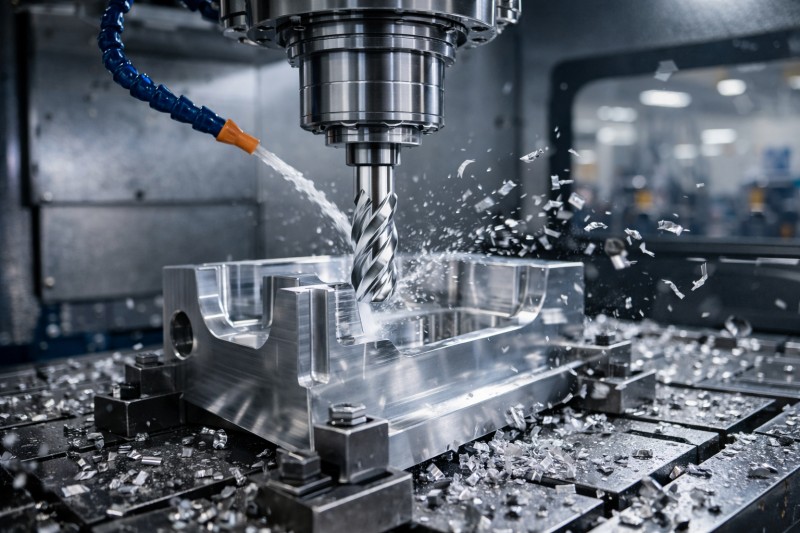
In actual machining, aluminum often produces continuous chips. If those chips do not leave the cutting zone smoothly, they may be recut, which can lead to poor finish, higher cutting resistance, and unstable machining. This is one reason why aluminum tools are often designed with sharper edges, polished flute surfaces, and geometry intended for fast chip removal.
For many shops, the goal is not only to remove material quickly, but also to keep burrs small, maintain a clean surface, and avoid sidewall inconsistency during batch machining.
Key Factors When Choosing an End Mill for Aluminum
Before selecting a cutter, it helps to look at the following points.
Edge Sharpness
For aluminum machining, edge sharpness is especially important. A sharper cutting edge helps the tool cut the material more cleanly instead of pushing it. This can reduce burr formation and improve surface quality.
Chip Evacuation
Smooth chip evacuation is one of the most important factors in aluminum cutting. A cutter that evacuates chips well can help reduce chip packing and improve machining stability, especially in slotting and roughing operations.
Flute Geometry
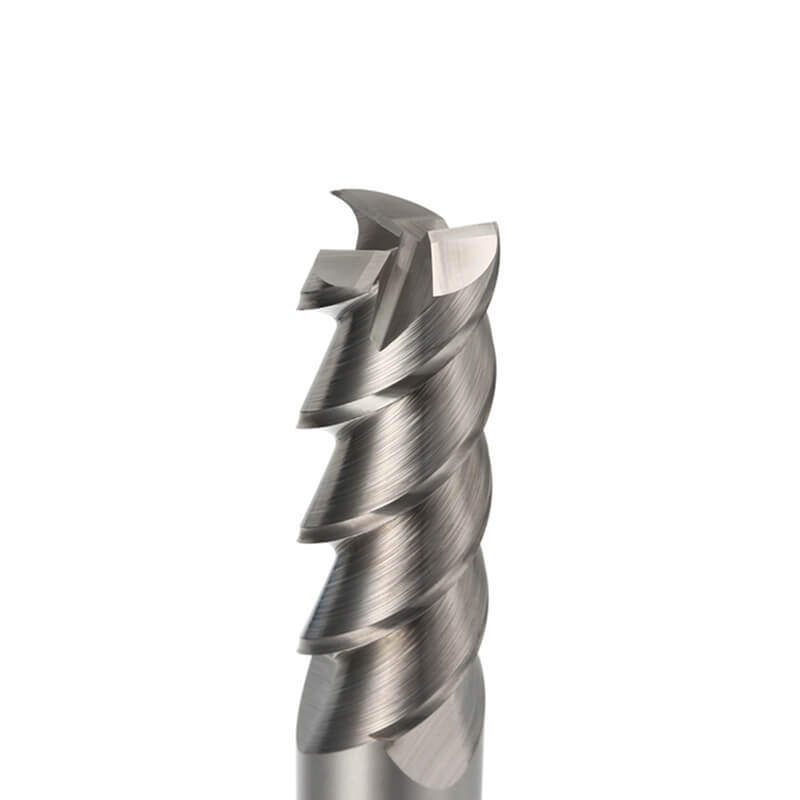
Flute design affects both rigidity and chip flow. In many aluminum applications, the flute should allow chips to move out quickly while still keeping the cutter stable during cutting.
Helix Angle
A higher helix angle is commonly used in aluminum machining because it can improve cutting smoothness and support more efficient chip removal.
Application Type
The right cutter for slotting may not be the best choice for contouring or finishing. Tool selection should always match the actual machining operation.
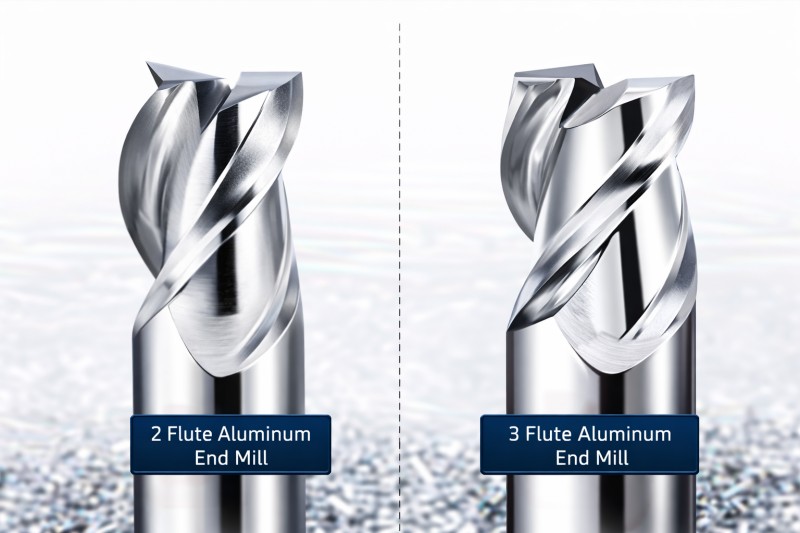
2 Flute vs 3 Flute End Mills for Aluminum
One of the most common questions in aluminum machining is whether to choose 2 flute or 3 flute tools.
2 Flute End Mills
2 flute configurations are often chosen when chip evacuation is the main priority. Because there is more flute space, chips can usually leave the cutting zone more easily. This makes 2 flute tools a common option for slotting and roughing.
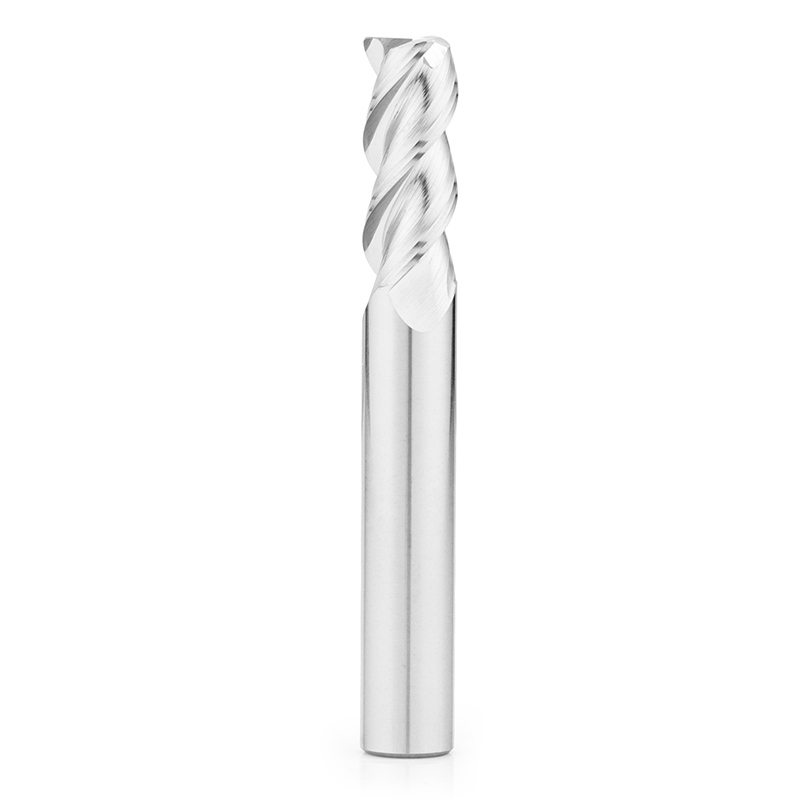
3 Flute End Mills
3 flute configurations are often used when a balance between chip evacuation and cutting efficiency is needed. In many cases, they can provide higher productivity while still maintaining good chip control.
Which One Is Better
There is no single answer for every machining condition. If the operation creates a large amount of chips and evacuation is the main concern, fewer flutes may be more suitable. If the setup is stable and higher efficiency is required, 3 flute tools may perform well.
For many aluminum cutter series, 2 flute and 3 flute are simply different options within the same product family rather than completely different tool categories.
For a more detailed comparison of flute options, read our guide on 2 flute vs 3 flute end mills for aluminum.
Common Types of End Mills for Aluminum
Different machining tasks require different cutter types. Below are some of the most common options used in aluminum machining.
Square End Mills
A square end mill for aluminum is one of the most common choices for general machining. It is suitable for slotting, side milling, profile milling, and many standard CNC operations.
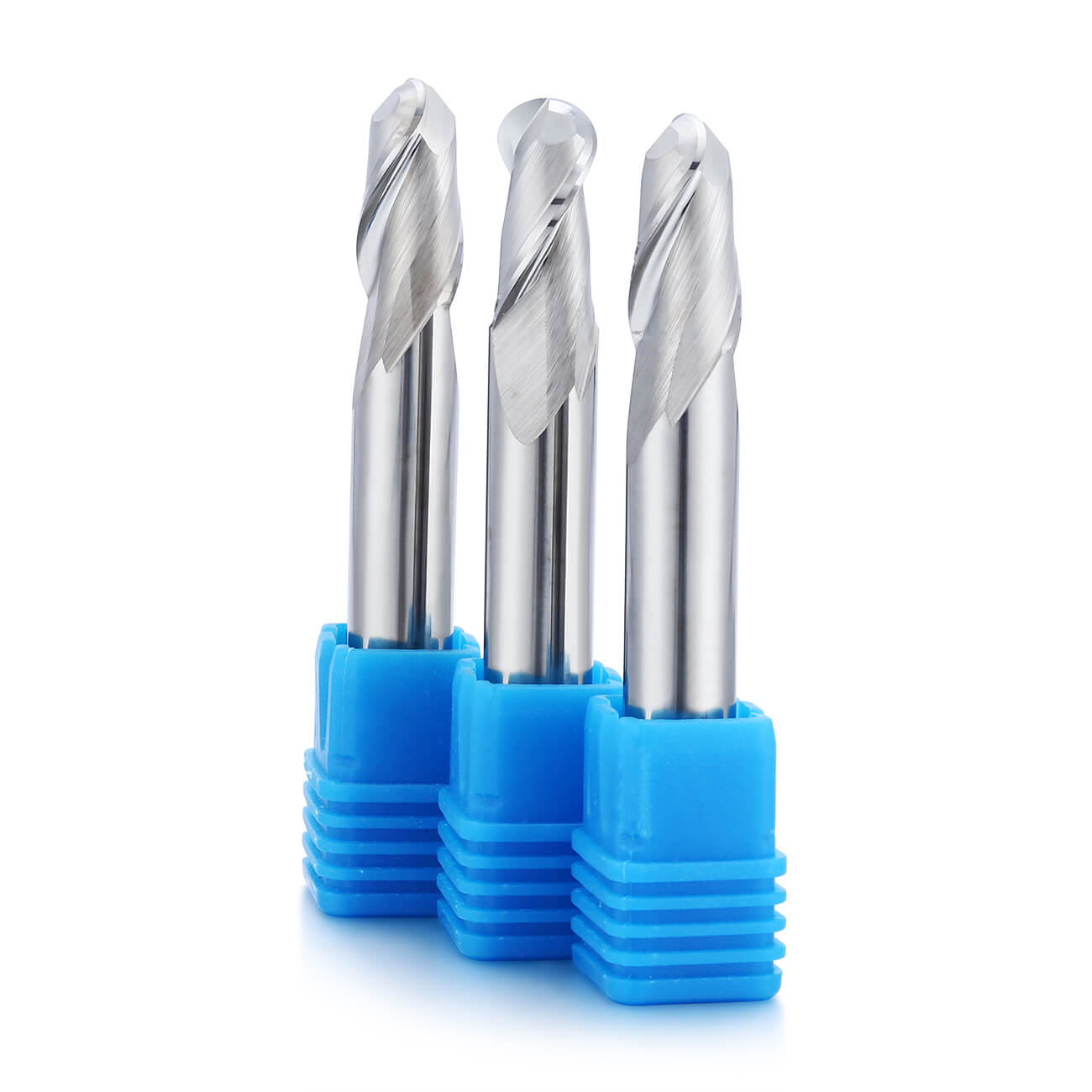
Ball Nose End Mills
A ball nose end mill for aluminum is more suitable for contouring, curved surfaces, and cavity machining. It is often used where a rounded cutting profile is needed.
Single Flute End Mills
In some aluminum machining conditions, a single flute end mill for aluminum can be a practical choice when chip evacuation is critical and smooth cutting is required.
High Polished End Mills
A high polished end mill for aluminum is often preferred when chip flow and surface finish are key concerns. Polished flute surfaces can help reduce adhesion and support cleaner cutting.
Common Problems in Aluminum Machining
Choosing the wrong cutter often leads to the same group of machining issues.
Burr Formation
If the cutting edge is not sharp enough or the cutting condition is unstable, burrs may become more obvious on the workpiece.
Chip Packing
When chips do not evacuate smoothly, they can build up in the flute and affect both cutting stability and surface finish.
Poor Surface Finish
Poor finish may come from vibration, unsuitable flute selection, or geometry that does not match the operation.
Inconsistent Sidewall Quality
In batch production, some tools may leave uneven sidewall conditions if the edge quality or grinding consistency is not stable enough.
What Tool Features Usually Matter in Practice
When users compare aluminum end mills, they often focus on cutter shape first. But in practical machining, the following features are usually just as important:
•sharp cutting edge preparation
•smooth flute surface
•balanced rigidity and chip evacuation
•stable grinding quality
•consistent inspection standard
These details are closely related to burr control, cutting resistance, chip flow, and machining repeatability.
For this reason, many specialized aluminum cutter series are designed with sharper rake geometry, polished flute conditions, and production control aimed at improving consistency in non-ferrous machining.
Materials Commonly Machined with Aluminum End Mills
Although the main application is aluminum machining, many aluminum-focused cutter series are also used for other non-ferrous and soft-cutting materials, such as:
•6 series aluminum
•7 series aluminum
•magnesium alloy
•silicon aluminum alloy
•copper alloy
•engineering plastics
•hardwood
This is one reason why aluminum end mills are widely used across multiple industries, including electronics, automotive parts, mold components, and precision mechanical products.
If you are specifically machining higher-strength 7 series aluminum, you can also read our guide on the best end mill for 7075 aluminum.
How to Choose the Right Tool for Your Operation
A practical way to choose the right cutter is to start with the machining purpose.
For General Slotting and Side Milling
A square end mill is often the most common starting point.
For 3D Surfaces and Contours
A ball nose end mill is usually more suitable.
For Better Chip Evacuation
A single flute or lower-flute design may be preferred.
For Cleaner Cutting and Better Finish
A high polished cutter may be a better option.
In addition, you should also consider:
Conclusion
Choosing the right end mill for aluminum machining is mainly about matching the cutter design to the real cutting task. Flute options, chip evacuation, edge sharpness, helix geometry, and cutter type all influence the final machining result.
In many applications, square end mills, ball nose end mills, single flute cutters, and high polished tools each have their own role. Rather than selecting a tool only by appearance, it is better to consider how the cutter will perform in chip evacuation, burr control, and surface finish.
If you are comparing different tooling options, exploring a complete End Mill for Aluminum range can help you understand which cutter type is more suitable for your application. For manufacturers that focus on non-ferrous machining, specialized aluminum series are often designed with sharper edges, smoother flute surfaces, and geometry intended for more stable cutting.
FAQ
What is the best end mill for aluminum?
The best choice depends on the operation. Square end mills are common for general milling, while ball nose, single flute, and high polished tools may be better for specific applications.
Is 2 flute or 3 flute better for aluminum?
Both can work well. 2 flute tools are often preferred for chip evacuation, while 3 flute tools may provide a better balance between efficiency and chip control.
Why is chip evacuation so important in aluminum machining?
Because aluminum often forms continuous chips. If chips are not removed smoothly, they may affect finish quality and cutting stability.
Are polished flute end mills better for aluminum?
In many cases, yes. A polished flute surface can help improve chip flow and reduce material adhesion during cutting.
Can aluminum end mills also be used for other materials?
Yes. Many aluminum-focused tools are also used for other non-ferrous materials such as magnesium alloy, copper alloy, engineering plastics, and hardwood.
Looking for the Right Cutter for Non-Ferrous Machining?
Explore our End Mill for Aluminum range to compare square end mills, ball nose end mills, single flute cutters, and high polished tools for different CNC applications.
Contact us for product recommendations and custom tool solutions.