What Hardness Range Is Suitable for a CBN End Mill?
Introduction
Workpiece hardness is usually the first signal that determines whether CBN is worth considering. When carbide wear, surface finish, or dimensional stability becomes difficult to control in hardened steel or quenched steel, the hardness range should be evaluated together with machining stage, tool geometry, and setup rigidity.
Workpiece hardness is one of the most important factors in deciding whether a CBN end mill is the right choice. This guide explains which hardness ranges are more suitable for CBN, when carbide may still be practical, and how hardness, machining stage, and tool geometry affect real cutting performance.
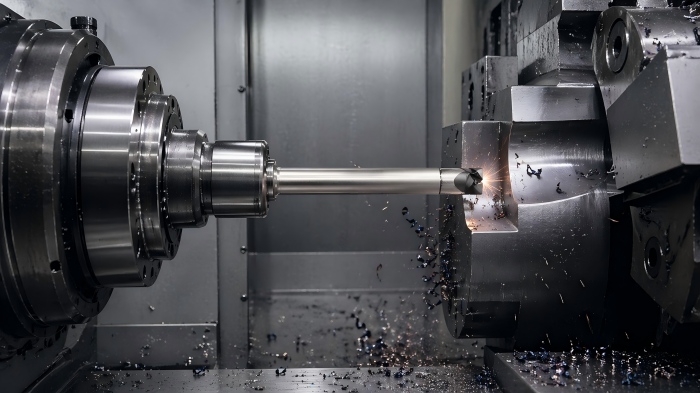
In actual machining, the discussion around CBN usually becomes practical only after hardness starts pushing a process beyond the comfortable range of general-purpose tooling. That is why questions about hardness often sit at the center of CBN end mill applications and material suitability rather than at the edge of it.
Why Hardness Matters So Much in CBN Tool Selection
CBN is not chosen simply because a material is difficult to cut. It is usually considered when higher hardness begins to create faster wear, lower finish stability, or weaker dimensional consistency with more general tools. Once that happens, tool material stops being a background issue and becomes part of the process decision itself.
This is also the point where the comparison between CBN and carbide starts becoming more meaningful. The question is not only whether carbide can still cut the part, but whether it can do so with stable wear, reliable finish, and predictable accuracy.
A Practical View of Hardness Range for CBN End Mills
| Workpiece Hardness | How CBN Is Usually Considered | General Practical View |
|---|
| Below about 45 HRC | Usually not the first choice | Carbide often remains more practical for general machining |
| About 45–55 HRC | May begin to matter in selective applications | CBN becomes more relevant when finish quality and wear stability carry more weight |
| About 55–65 HRC | Common range for practical CBN consideration | CBN often makes more sense in hardened steel semi-finishing and finishing |
| Above about 65 HRC | Often strongly associated with CBN use | Selection depends heavily on setup stability, toolpath, and cutter geometry |
These ranges are practical reference points rather than fixed rules. Material condition, heat treatment, machine rigidity, and machining purpose still affect the final decision. Even so, the higher the hardness moves, the more seriously CBN enters the conversation.
Where Carbide Still Makes More Sense
At relatively moderate hardness levels, carbide often remains the more flexible and economical option. This is especially true when the process is still broad, general-purpose, or roughing-focused, and when the actual wear behavior of carbide is still under control.
In that range, CBN may not yet provide enough practical benefit to outweigh the simplicity of staying with carbide. The value of CBN becomes easier to see only after hardness starts making carbide performance less predictable.
Where CBN Starts Becoming the Better Fit
As hardness rises, users usually begin paying closer attention to edge wear, finish consistency, and profile stability. This is where CBN starts becoming more attractive. In many hardened steel applications, the practical advantage of CBN becomes more visible when the process has already moved into semi-finishing or finishing work.
That is also why CBN is often discussed less as a general milling tool and more as a solution for difficult, high-hardness conditions where wear resistance and dimensional control need to stay stable throughout the path.
Hardness Alone Is Not the Whole Decision
Hardness is one of the strongest indicators, but it is not the only one. A hard workpiece with poor rigidity or an unstable setup can still produce disappointing results. At the same time, a workpiece near the lower end of the hardened range may still justify CBN if the finish requirement is strict enough and carbide wear has already become a problem.
In practice, users usually evaluate hardness together with machining stage, wear behavior, surface finish requirement, machine rigidity, and part geometry.
Why Finishing Often Shows the Real Value of CBN
CBN usually shows its strongest value in the stages where accuracy, wear consistency, and finish stability matter more than broad material removal. That is why the shift toward CBN often happens later in the process, once the workpiece is already hard enough and the job has moved toward semi-finishing or finishing.
At that stage, stable performance can become more important than simple cutting ability. The tool has to hold its behavior across the entire path, not just remove material successfully at the beginning.
Hardness and Geometry Usually Need to Be Considered Together
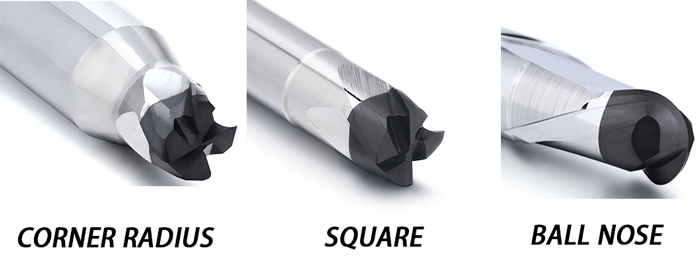
Once hardness has already pointed the selection toward CBN, the next decision usually shifts toward cutter geometry. A square, ball nose, or corner radius CBN end mill does not behave the same way in high-hardness finishing, especially when the workpiece includes flat surfaces, contours, cavities, or edge-strength-sensitive paths.
That is why the hardness discussion naturally overlaps with the question of square, ball nose, and corner radius CBN end mill selection in hardened steel work.
How This Applies to Quenched Steel
In quenched steel machining, hardness is often one of the first reasons users begin evaluating CBN at all. Even so, the most suitable choice still depends on more than HRC value alone. Material condition, required finish, and cutter type all continue to influence the final result.
That is why the hardness discussion often leads naturally into broader quenched steel tool selection, rather than ending with one hardness number.
Signs That Hardness Is Already Pushing the Process Toward CBN
Users often begin taking CBN more seriously when several of these signals appear together:
carbide wears too quickly as hardness increases
finish quality becomes harder to control in hardened steel
tool life becomes unpredictable in higher-hardness workpieces
dimensional consistency becomes more difficult to maintain
None of these signals alone proves that every job must change to CBN, but together they often show that hardness is already pushing the process closer to the range where CBN becomes more practical.
How to Judge Whether the Hardness Is High Enough for CBN
A practical evaluation usually starts with four questions:
•Is the workpiece already within a clearly hardened range?
•Is carbide wear becoming the main process limitation?
•Is the work focused on finishing quality and dimensional stability?
•Is the setup stable enough to take advantage of CBN performance?
When most of those answers are yes, the hardness range is often already close to or inside the zone where CBN becomes much more relevant than a general carbide solution.
Conclusion
A CBN end mill is usually most suitable once the workpiece enters a higher-hardness machining range and the limitations of carbide begin to affect wear resistance, accuracy, or finishing stability. In many practical situations, CBN becomes much more relevant as hardness moves into hardened steel and quenched steel applications.
The best choice still depends on more than hardness alone. Machining stage, part geometry, and setup stability must all be considered together. Even so, the harder and more finish-sensitive the application becomes, the more seriously CBN should be considered.
A complete CBN milling solution for quenched steel often makes that comparison clearer, especially when the process is already demanding enough that carbide performance has become difficult to hold steady.
FAQ
What hardness range is suitable for a CBN end mill?
CBN is usually considered more seriously once the workpiece enters a higher-hardness range, especially in hardened steel and quenched steel applications where wear resistance and accuracy matter more.
Is CBN necessary below 45 HRC?
In many cases, not necessarily. Carbide often remains the more practical option for general-purpose machining when hardness is still relatively moderate.
At what hardness does CBN become more attractive than carbide?
CBN often becomes more attractive as the workpiece moves into a clearly hardened range and carbide wear or finishing stability starts becoming a limitation.
Does hardness alone decide whether I should use CBN?
No. Hardness is one of the most important indicators, but machining stage, geometry, machine rigidity, and finish requirements also matter.
Is CBN better for finishing than roughing?
In many applications, yes. CBN often shows more practical value in semi-finishing and finishing where wear consistency and accuracy are especially important.
Looking for the Right CBN End Mill?
Explore our End Mill for Quenched Steel range to compare different CBN solutions for high-hardness materials.
Contact us for product recommendations and custom tool solutions.