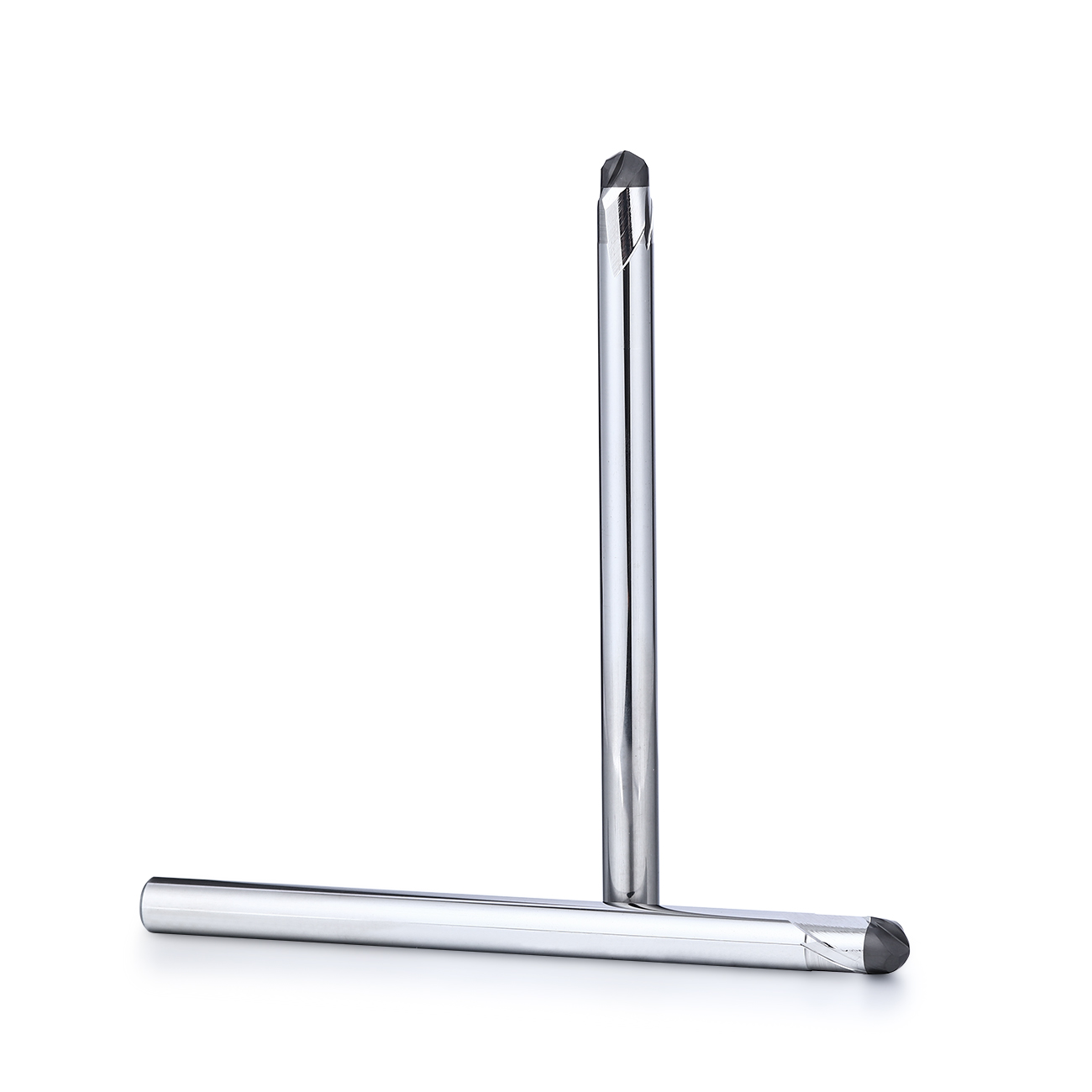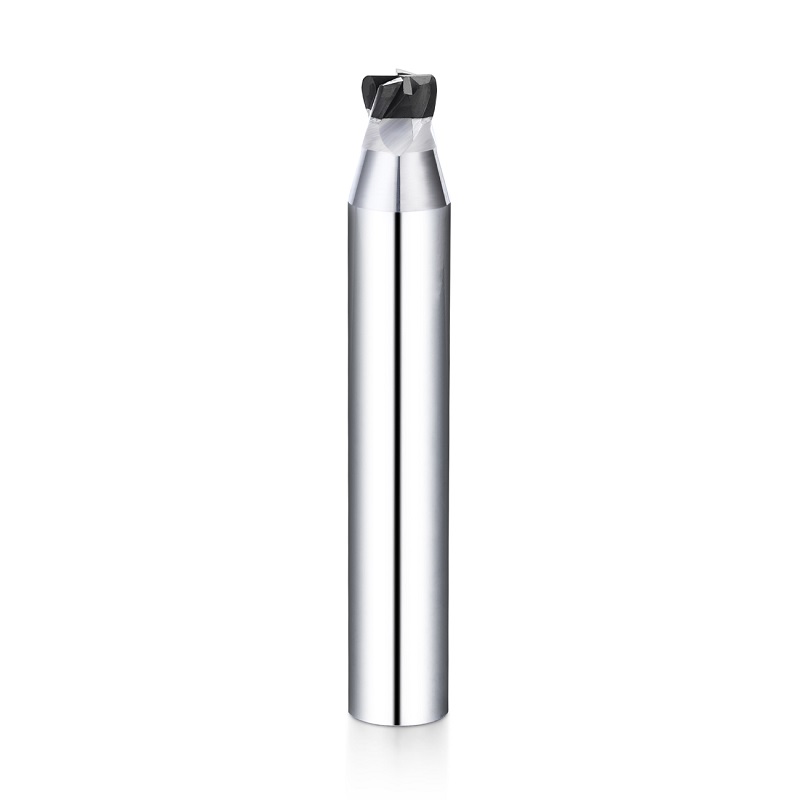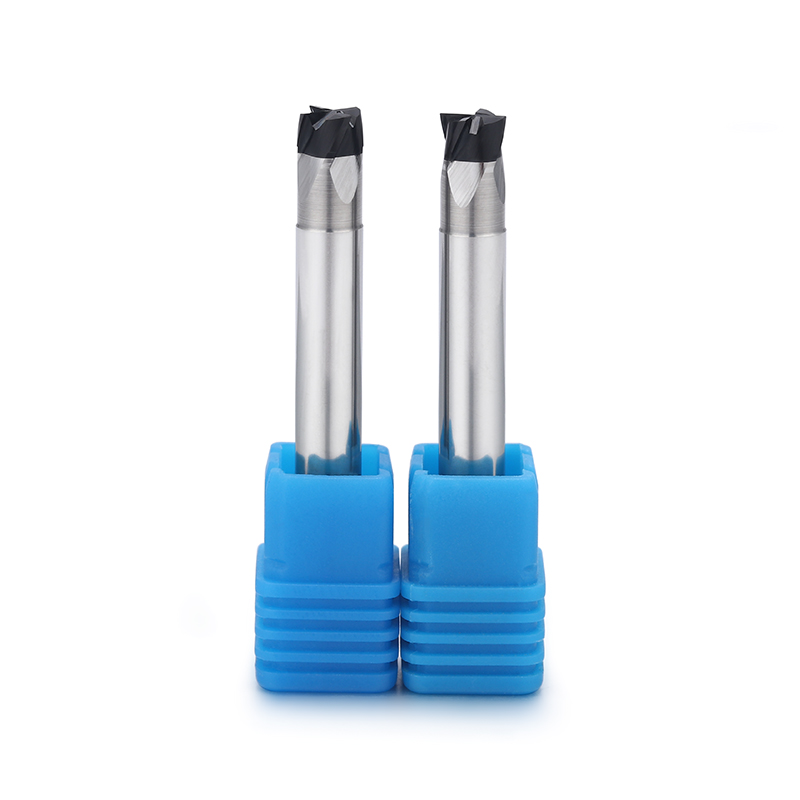

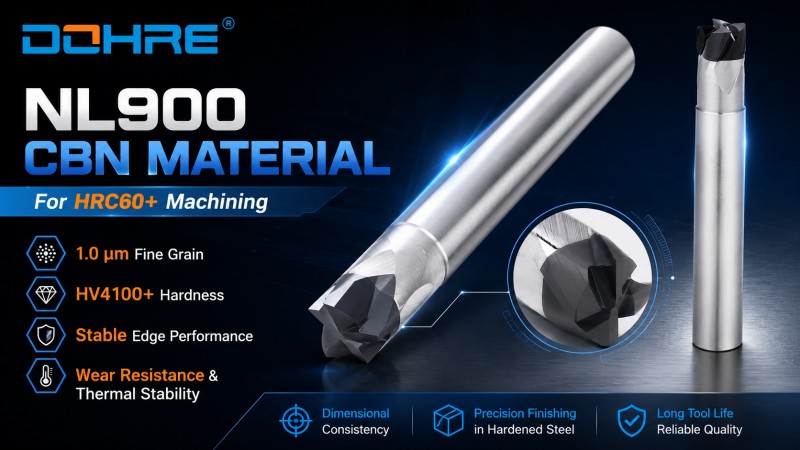
• Material: Self-developed NL900
• Grain Size:1.0um
• Hardness:HV4100+
• Machining: Hrc60+ hardened steel
• Design: 70% large core diamater, 20° helix angle, 10° negative charmfer edge
• Tool Life: Up to 20 hours





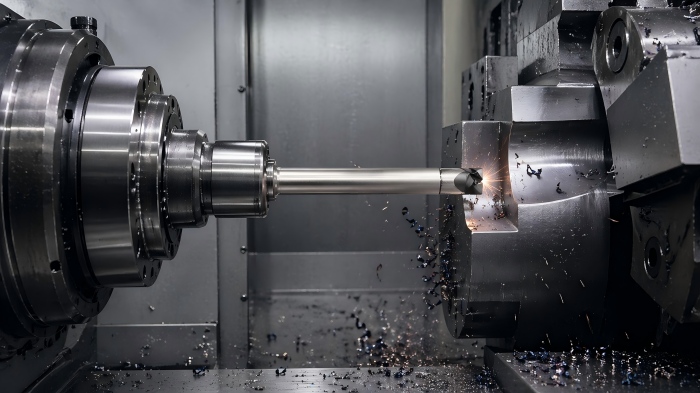
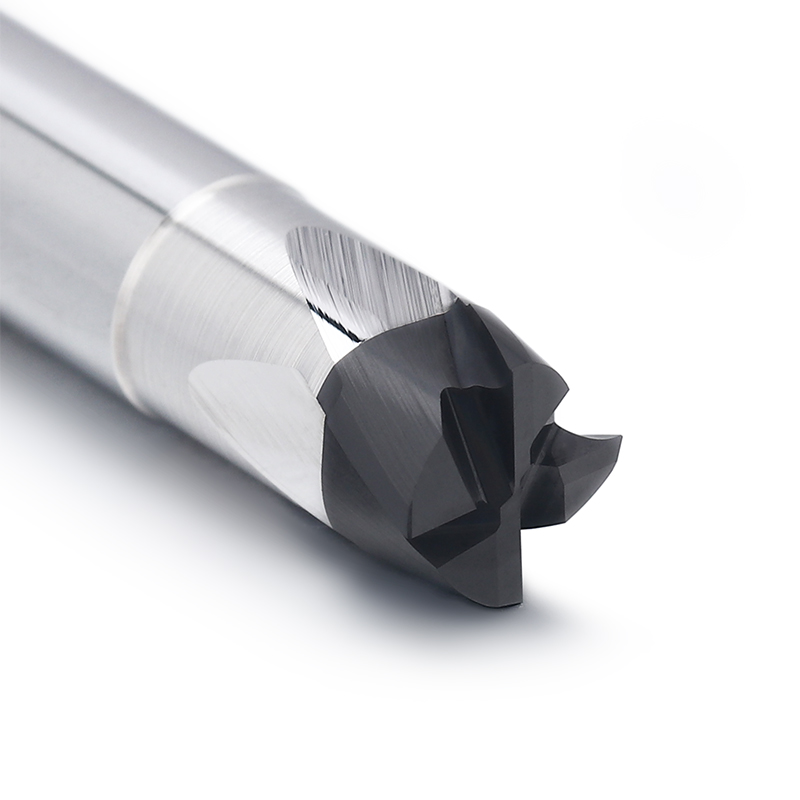
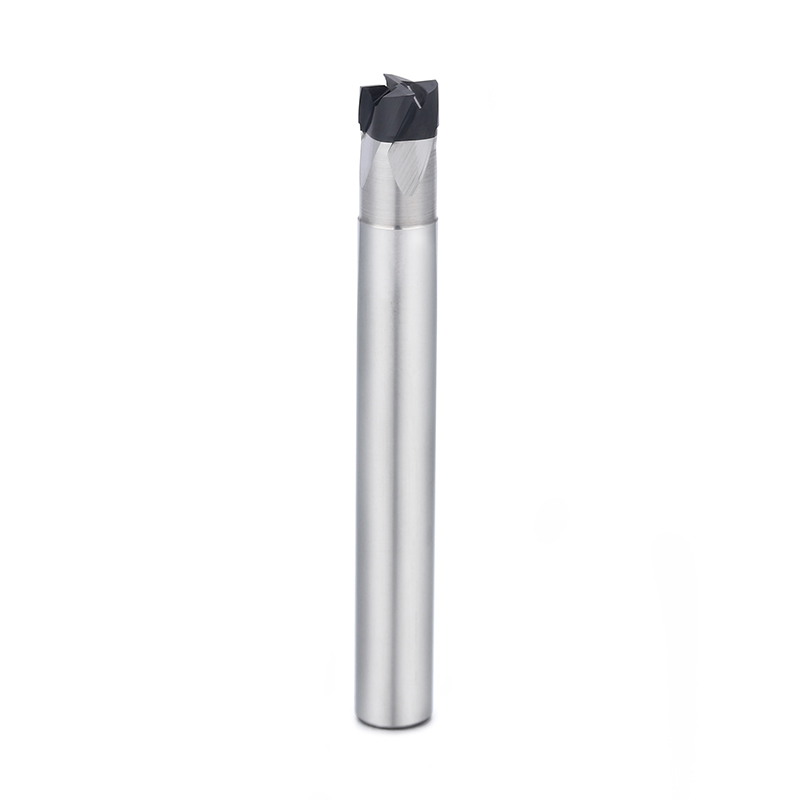
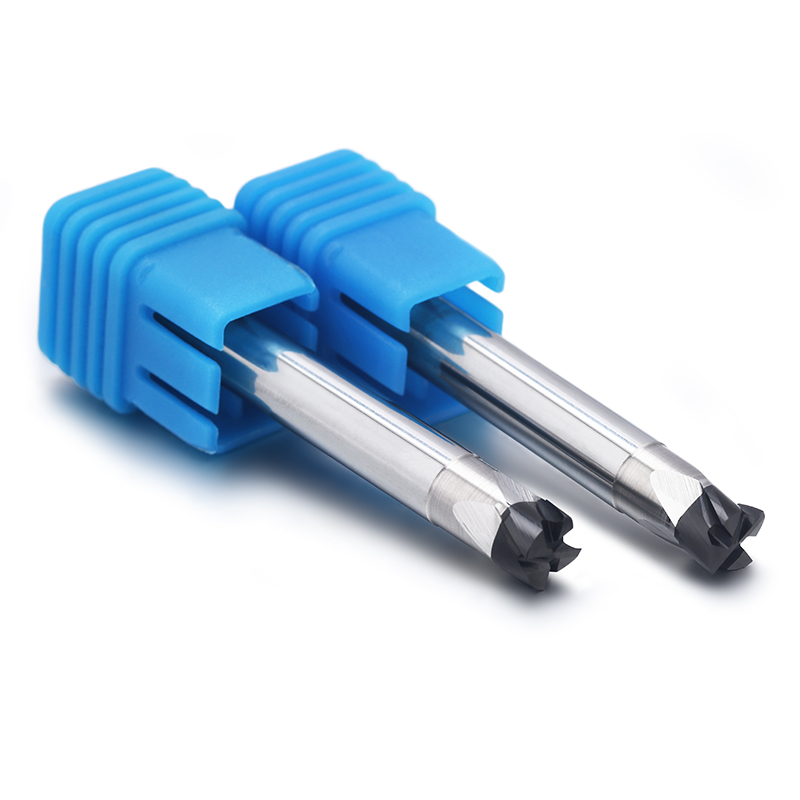
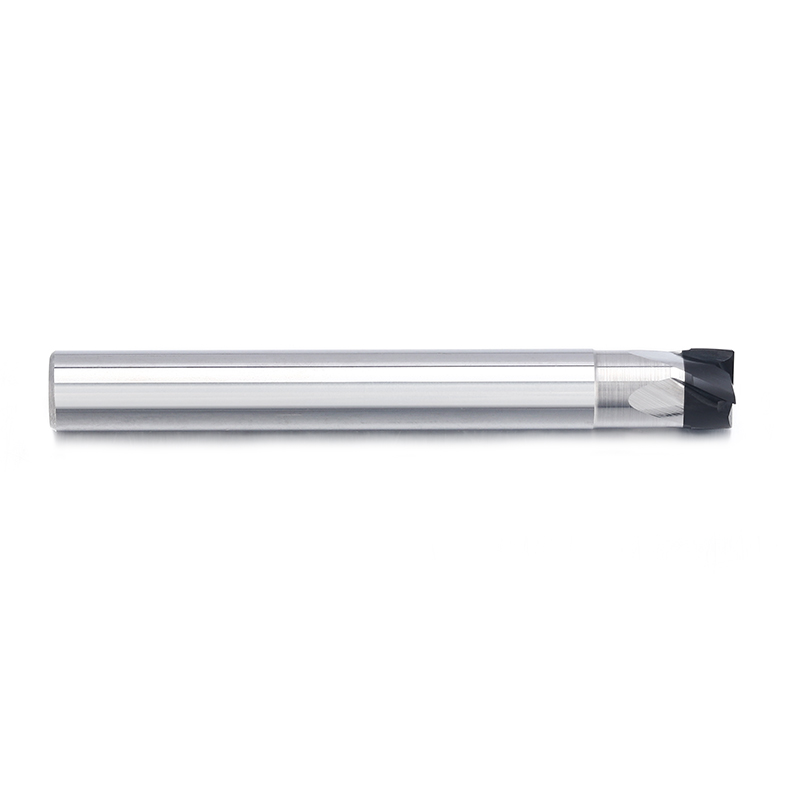
The Dohre CBN square end mill is designed for HRC60+ hardened steel finishing, quenched steel machining, and precision mold finishing applications.
Unlike a CBN ball nose end mill, which is mainly used for 3D curved surfaces and mold cavity contours, a CBN square end mill is more suitable for flat surface finishing, bottom surface finishing, step face machining, straight side walls, and sharp corner finishing.
Compared with a CBN corner radius end mill, the square end mill provides a sharper cutting corner and better control when a flat bottom, clear edge, or precise step profile is required.
This tool is suitable for hardened mold steel, die steel, quenched steel parts, precision inserts, flat mold areas, step faces, sharp corners, and high-hardness components where dimensional stability and surface consistency are important.
CBN tools are not always used to replace carbide in every condition. They are more suitable when the workpiece hardness, finishing allowance, machine rigidity, toolpath stability, and surface finish requirement match CBN machining conditions. For a broader comparison, see When Should You Use a CBN End Mill Instead of Carbide?
| Item | Details |
| Name | CBN square end mill |
| Material | Self-developed NL900 |
| Grain Size | 1.0μm |
| Hardness | HV4100+ |
| Suitable Workpiece Hardness | HRC60+ |
| Helix Angle | 20° |
| Core Diameter Design | 70% Large Core Diameter |
| Edge Treatment | 10° Negative Chamfer |
| Brazing Method | Vacuum Brazing |
The cutter is made from Dohre's self-developed NL900 CBN material, which is suitable for finishing hardened steel and quenched steel where ordinary carbide tools may wear quickly or lose dimensional stability.
The 1.0 μm fine grain structure and HV4100+ hardness help improve edge stability, wear resistance, and thermal stability during high-hardness steel finishing. This supports better dimensional consistency and longer cutting performance in continuous precision machining.
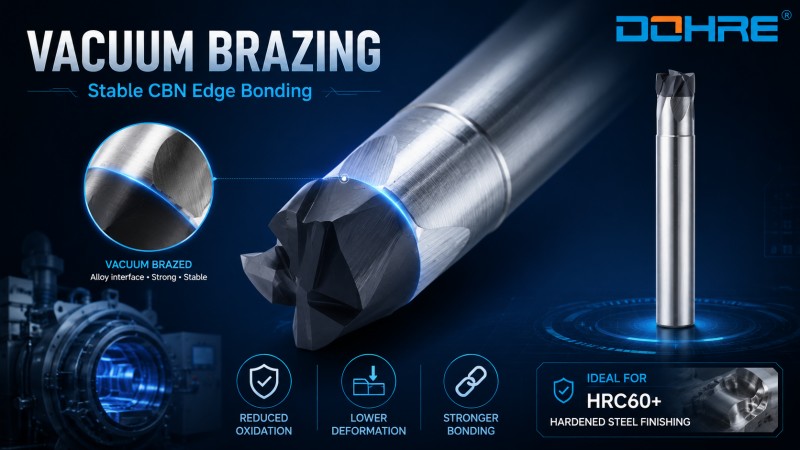
The tool uses a vacuum brazing process to improve bonding stability between the CBN cutting part and the tool body. Compared with ordinary brazing, vacuum brazing helps reduce oxidation, reduce insert deformation, and improve bonding strength.
For HRC60+ hardened steel finishing, stable CBN edge bonding is important because cutting force, cutting heat, vibration, and long-cycle finishing can directly affect tool life and surface finish.
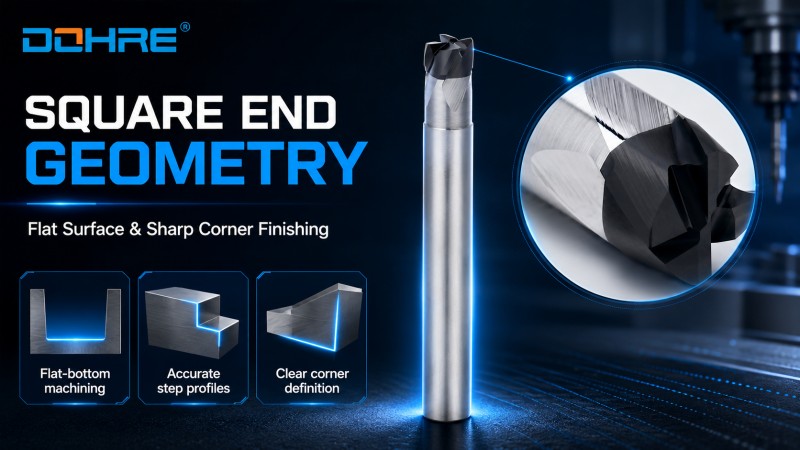
The square end geometry is designed for flat surface finishing, bottom surface finishing, step face machining, and sharp corner finishing.
This makes the tool especially useful when the workpiece requires clear corner definition, accurate step profiles, and stable flat-bottom machining after heat treatment.
For users comparing CBN square, ball nose, and corner radius tools, this guide explains the selection logic more clearly: CBN End Mill for Hardened Steel: Square vs Ball Nose vs Corner Radius
The tool adopts a reinforced geometry design for stable finishing of high-hardness materials.
Key geometry features include:
• 70% large core diameter for higher rigidity
• 20° helix angle for stable cutting and smoother machining
• Negative chamfer edge to strengthen the cutting edge
• Square end structure for flat-bottom and sharp corner finishing
• Dedicated CBN grinding process for accurate edge forming
This structure is designed for finishing and semi-finishing rather than heavy roughing. It is more suitable for stable cutting conditions where edge strength, surface quality, and dimensional accuracy are more important than large material removal.
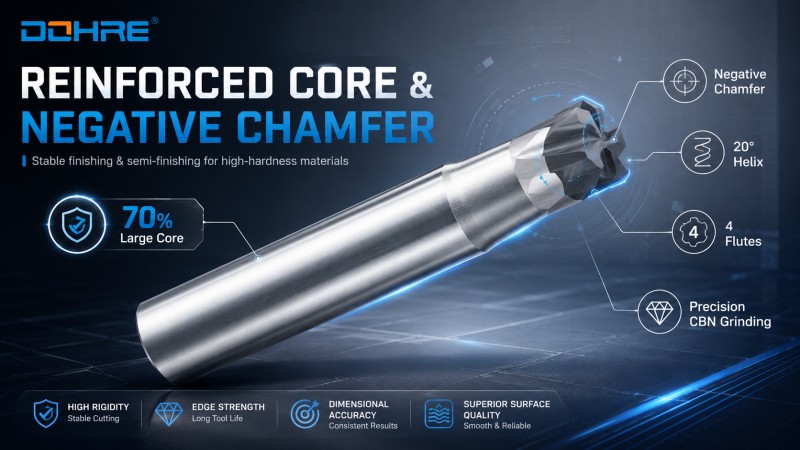
The combination of NL900 CBN material, vacuum brazing, reinforced core design, negative chamfer edge, and precise square end grinding helps improve tool life and batch finishing stability under suitable machining conditions.
Tool life is affected by workpiece hardness, finishing allowance, cutting parameters, machine rigidity, tool overhang, runout, clamping condition, and toolpath stability. When chipping or rapid wear happens too early, it is often related to unstable cutting conditions, wrong application range, or unsuitable cutting parameters. More details are explained in Why Do CBN End Mills Chip or Wear Quickly? Causes and Solutions
Dohre CBN square end mills are mainly used for precision finishing of HRC60+ hardened steel, quenched steel, and hardened mold materials.
| Machining Need | Why Choose CBN Square End Mill |
|---|---|
| Flat surface finishing | Provides stable flat-bottom machining and surface consistency |
| Bottom surface finishing | Suitable for mold bottoms, pockets, and flat hardened areas |
| Step face machining | Helps maintain clear step geometry and dimensional accuracy |
| Sharp corner finishing | Suitable when a clear corner edge is required |
| Straight side-wall finishing | Supports stable finishing of vertical surfaces |
| Precision insert machining | Suitable for small hardened components and mold inserts |
| Batch finishing | CBN material helps maintain tool life and dimensional consistency |
Suitable workpiece materials include:
• HRC60+ hardened steel
• Quenched steel
• Hardened mold steel
• High-hardness die steel
• Heat-treated steel parts
• Precision mold inserts
• Flat mold areas and step profiles
• Small high-hardness precision components
CBN tool selection should not depend only on the material name. The actual workpiece hardness, finishing allowance, machine rigidity, and surface requirement should also be considered. For more details, see What Hardness Range Is Suitable for a CBN End Mill?
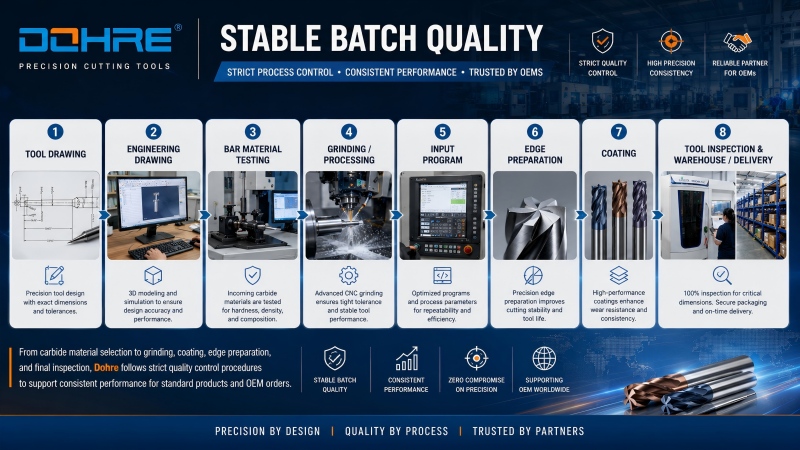
Dohre focuses on CBN tool manufacturing, vacuum brazing, precision grinding, edge consistency, dimensional stability, and final inspection. For CBN square end mills, stable manufacturing quality is especially important because edge defects can directly affect flat surface quality, sharp corner accuracy, and tool life.
CBN tools require dedicated grinding processes and grinding wheels. Dohre uses precision grinding equipment and CBN-specific grinding methods to maintain edge sharpness, geometry consistency, and stable tool quality.
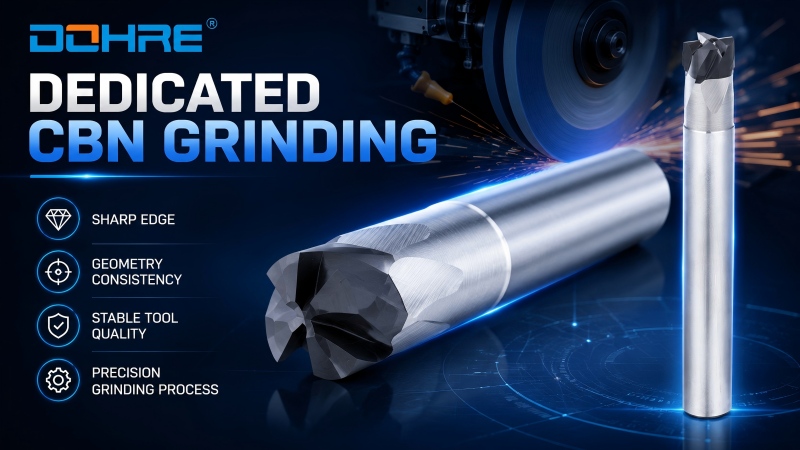
CBN square end mills are produced using German Walter 5-axis high-precision grinding machines. This helps maintain accurate flute geometry, stable dimensions, and repeatable cutting edge quality.

For CBN square end mills, end face geometry, cutting edge straightness, and corner consistency are important for flat surface finishing and sharp corner machining. Dohre controls grinding accuracy to support stable dimensional performance during hardened steel finishing.
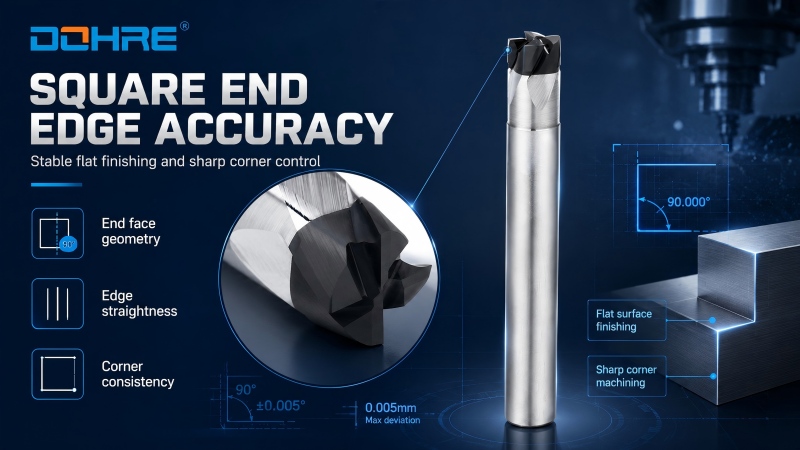
Tool profile, cutting edge geometry, and key dimensions are inspected using Walter HELICHECK PLUS measuring equipment. This helps ensure stable tool geometry and consistent batch quality.
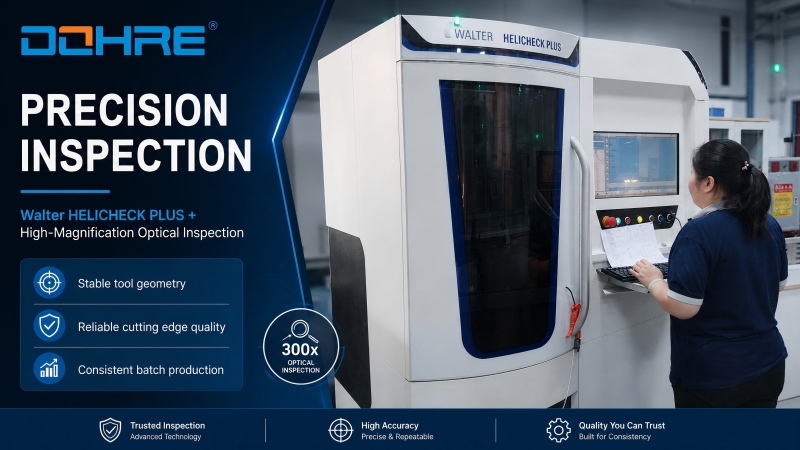
CBN cutting edges are inspected under high magnification to check edge condition, micro-chipping, cracks, serration, and visible defects before delivery.

From NL900 CBN material selection to vacuum brazing, precision grinding, edge inspection, and final quality control, Dohre follows strict procedures to support stable tool performance for hardened steel finishing and OEM CBN tool orders.
For hardened steel finishing where surface accuracy and tool life are both important, this article may also help: Using CBN End Mills to Achieve High Accuracy When Milling Hardened Steel
Q1: What is a CBN square end mill used for?
A CBN square end mill is mainly used for flat surface finishing, bottom surface finishing, step face machining, sharp corner finishing, and straight side-wall finishing of HRC60+ hardened steel and quenched steel.
Q2: What is the difference between a CBN square end mill and a CBN ball nose end mill?
A CBN square end mill is better for flat surfaces, bottom finishing, step faces, and sharp corners. A CBN ball nose end mill is better for 3D contours, curved surfaces, and mold cavity profiles.
Q3: What is the difference between a CBN square end mill and a CBN corner radius end mill?
A CBN square end mill provides a sharper corner for flat-bottom and step finishing. A CBN corner radius end mill provides stronger corner protection and is often used for side-wall, shoulder, and profile finishing where edge chipping risk is higher.
Q4: Is this CBN square end mill suitable for roughing?
It is mainly recommended for finishing and semi-finishing. CBN tools perform better in stable cutting conditions. Heavy roughing, large cutting allowance, unstable engagement, or excessive interrupted cutting may increase the risk of edge chipping.
Q5: What hardness range is suitable for this tool?
This tool is mainly designed for HRC60+ hardened steel and quenched steel finishing. Actual suitability depends on machine rigidity, tool holding, cutting parameters, toolpath stability, and finishing allowance.
Q6: Why does a CBN square end mill chip during hardened steel machining?
Common reasons include wrong hardness range, unstable tool engagement, excessive runout, long overhang, weak clamping, unsuitable tool geometry, or aggressive cutting parameters.
Q7: Can Dohre customize CBN square end mills?
Yes. Dohre supports custom CBN square end mills, including diameter, cutting length, overall length, shank size, flute structure, edge geometry, and application-specific design.
Q8: Are you a CBN square end mill manufacturer?
Yes. Dohre manufactures CBN end mills for hardened steel and quenched steel finishing, including CBN square end mills, CBN ball nose end mills, and CBN corner radius end mills.
Need a CBN Square End Mill for Hardened Steel Finishing?
Contact us for standard sizes, custom CBN square end mills, and OEM manufacturing support.
By continuing to use the site you agree to our privacy policy Terms and Conditions.