Why Titanium Alloy Is Difficult to Machine and What Kind of End Mill Works Better
Introduction
Titanium alloy is challenging to machine because heat buildup, chip evacuation, material adhesion, and tool wear often happen together. Understanding these machining difficulties helps explain why a dedicated titanium alloy end mill with suitable geometry, coating, and chip control performs better than a general-purpose cutter.
Titanium alloy is difficult to machine because cutting heat stays near the tool edge, chips are harder to control, and tool wear can develop quickly under unstable conditions. This article explains the main machining challenges of titanium alloy and what kind of end mill design works better for improving stability, tool life, and surface quality.
For many CNC users, titanium alloy machining problems do not appear as one single failure. Heat buildup, chip evacuation, edge wear, and vibration often appear together. A suitable titanium alloy end mill needs to control these problems as a complete cutting system, not only as a sharp tool.
Why Titanium Alloy Is More Difficult to Machine
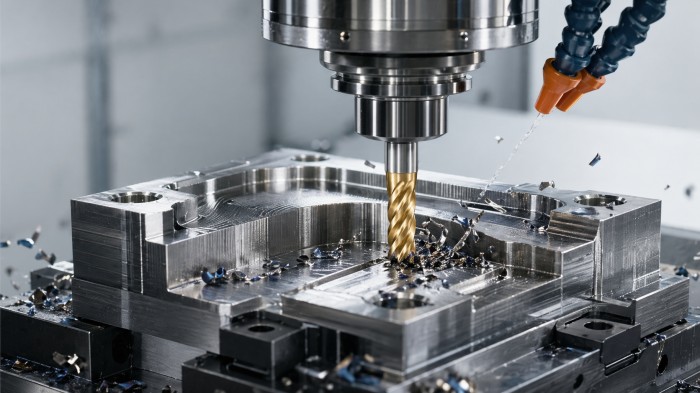
Titanium alloy is widely used in aerospace, medical, automotive, and high-performance mechanical parts because it offers high strength, corrosion resistance, and lightweight performance. However, these advantages also make the material more demanding during milling.
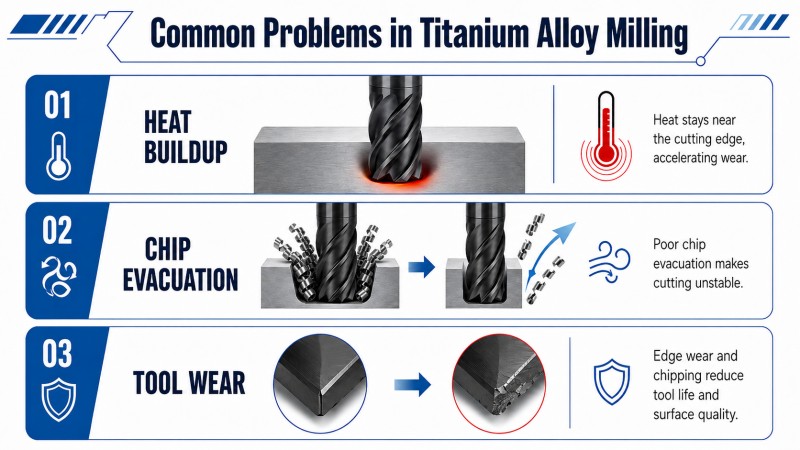
The biggest challenge is that titanium alloy does not release cutting heat as easily as many other metals. More heat stays near the cutting edge, which increases tool wear and makes edge stability more important. At the same time, titanium has a stronger tendency to create difficult cutting conditions when the tool geometry, coating, or chip evacuation is not properly matched.
Main Problems in Titanium Alloy Milling
| Problem | Why It Happens | What the End Mill Should Improve |
|---|
| Fast tool wear | Cutting heat stays concentrated near the edge | Heat resistance, coating stability, edge strength |
| Built-up edge | Material adhesion becomes worse under unstable cutting heat | Anti-sticking coating, smoother chip flow, sharp cutting edge |
| Poor chip evacuation | Chips cannot leave the cutting zone smoothly | Optimized flute design and chip removal space |
| Chipping or unstable finish | Cutting load becomes uneven or tool geometry does not match the path | Proper cutter type, edge support, and stable engagement |
Heat Control Is the First Key Issue
Heat is one of the main reasons titanium alloy shortens tool life. When cutting temperature stays near the edge, the tool coating, carbide substrate, and cutting geometry all become more important. A general-purpose cutter may still remove material, but it may not hold stable performance for long.
A titanium alloy end mill should be designed to maintain cutting stability under higher heat. This is why high-temperature coating performance, edge quality, and chip evacuation cannot be treated as separate details in titanium milling.
Chip Evacuation Has a Direct Effect on Tool Life
Poor chip evacuation makes titanium alloy machining less stable. When chips stay near the cutting edge, heat becomes more concentrated, the tool may rub instead of cut cleanly, and surface finish may become inconsistent.
A suitable end mill for titanium alloy usually needs enough chip space and a flute design that supports smoother discharge. In deeper or more demanding cuts, chip control often becomes one of the most important factors behind tool life and cutting stability.
What Kind of End Mill Works Better for Titanium Alloy?
A better titanium alloy end mill is usually not defined by one feature. It should combine several design elements that work together under difficult cutting conditions.
Sharp and Stable Cutting Edge
A sharp cutting edge helps reduce cutting resistance and supports cleaner material removal. For titanium alloy, edge sharpness must also be balanced with enough strength to avoid early chipping under load.
High-Temperature Coating
A suitable coating helps the tool maintain hardness and wear resistance under elevated cutting temperature. Anti-sticking performance also matters because titanium alloy can create unstable cutting conditions when material adhesion develops near the edge.
Optimized Flute and Chip Removal Design
Flute design affects how chips leave the cutting zone. In titanium alloy milling, smoother chip flow helps reduce heat accumulation and improves cutting consistency.
Cutter Geometry Matched to the Workpiece
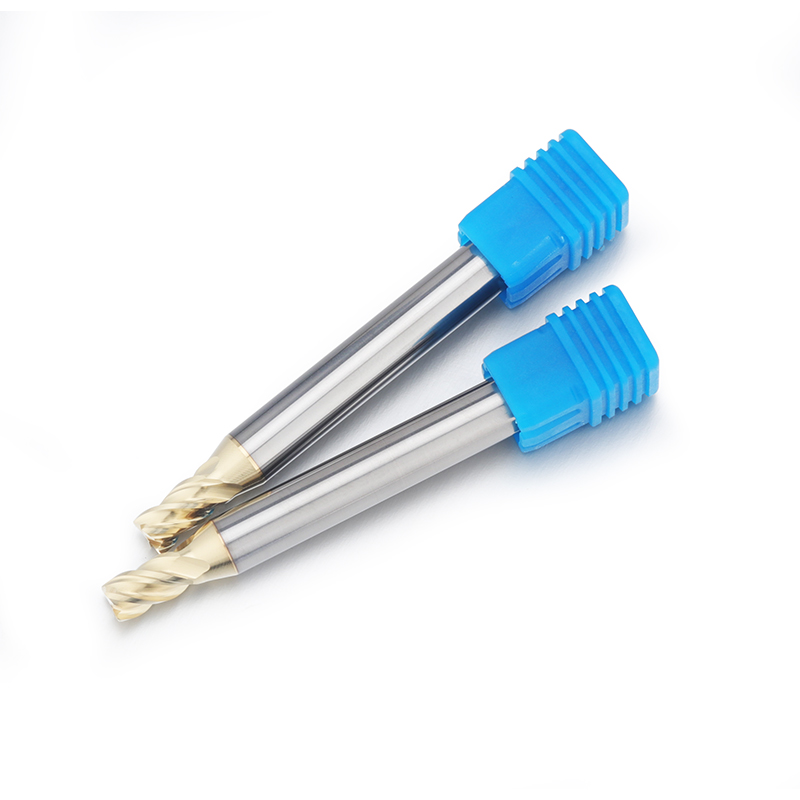
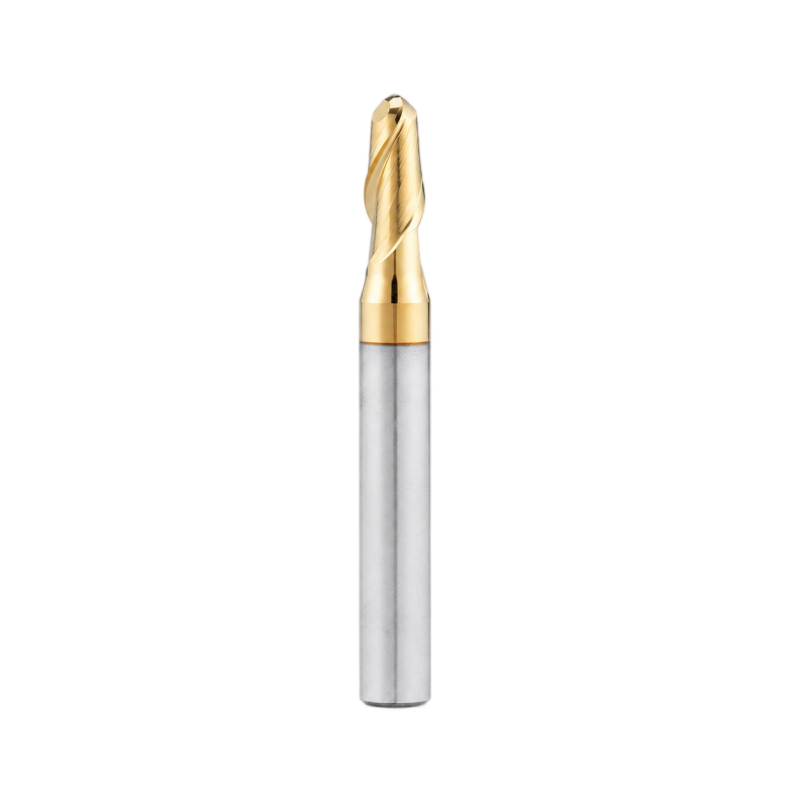
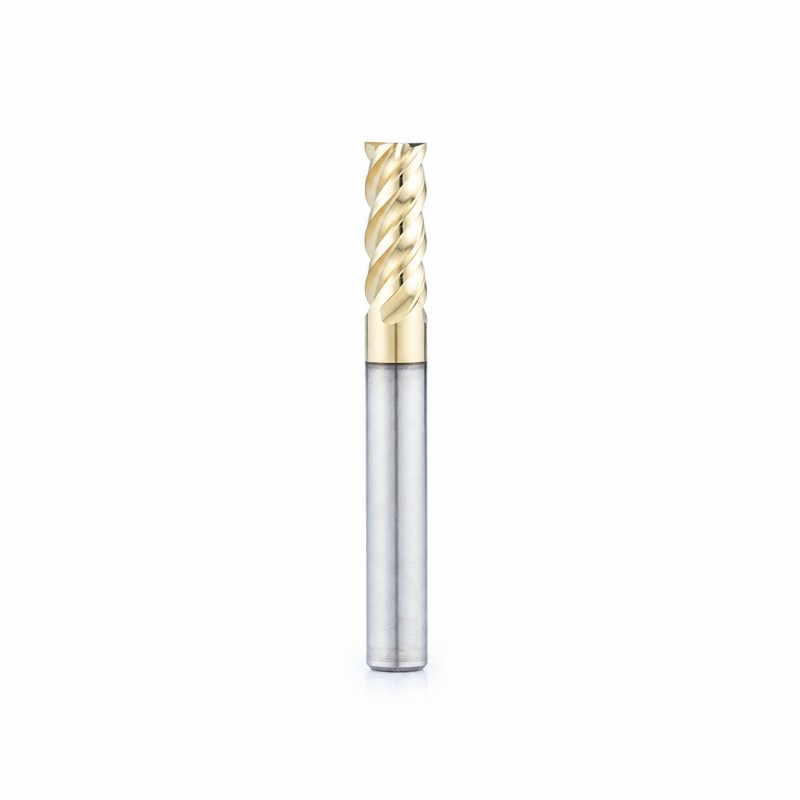
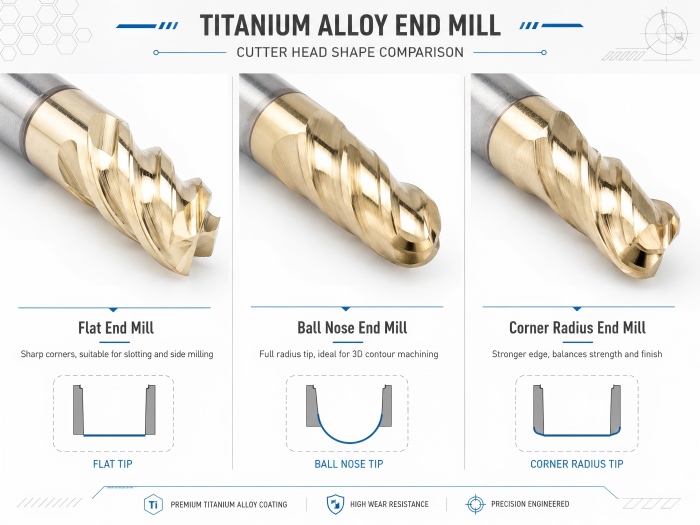
Flat, ball nose, and corner radius end mills are not used in the same way. A cutter that works well for a straight wall may not be the best option for a curved cavity or finishing path. Tool geometry should match the actual part shape.
Flat, Ball Nose, or Corner Radius: Which One Fits the Job?
Titanium alloy machining becomes easier to control when the cutter shape matches the workpiece feature. Flat end mills are more suitable for side milling, flat surfaces, and defined profiles. Ball nose end mills work better for curved surfaces, contours, and cavity finishing. Corner radius end mills are often useful when stronger edge support and more stable finishing are needed.
The selection logic is covered in more detail in our guide to choosing the best end mill for titanium alloy, where cutter type, geometry, and machining purpose are compared together.
Why a General-Purpose End Mill May Not Be Enough
A general-purpose end mill may work in easier materials, but titanium alloy usually exposes weaknesses more quickly. Edge wear may become faster, chips may not evacuate smoothly, and the tool may lose stability before the process is complete.
Titanium alloy is not only a strength issue. It is a heat, adhesion, chip flow, and edge stability issue at the same time. A cutter designed for titanium alloy should address all of these factors together.
Practical Selection Checklist
• Choose an end mill designed for titanium alloy rather than a fully general-purpose cutter.
• Prioritize sharp edge control, heat-resistant coating, and stable chip evacuation.
• Match flat, ball nose, or corner radius geometry to the actual part feature.
• Avoid unstable engagement that can increase heat, vibration, and edge chipping.
• Evaluate tool life by cutting stability and finish consistency, not only by whether the tool can remove material.
Conclusion
Titanium alloy is difficult to machine because heat, chip evacuation, material adhesion, and edge stability all affect the cutting process at the same time. A better end mill for titanium alloy should be designed to control these problems together, not only to cut the material in a basic sense.
Sharp cutting edges, heat-resistant coating, optimized flute geometry, and the right cutter type all play important roles. A dedicated end mill for titanium alloy range makes it easier to compare flat, ball nose, and corner radius tools for different titanium milling applications.
FAQ
Why is titanium alloy difficult to machine?
Titanium alloy is difficult to machine because cutting heat stays near the tool edge, chip evacuation can become unstable, and the cutting edge must remain sharp under demanding conditions.
What kind of end mill is better for titanium alloy?
A better titanium alloy end mill usually has sharp edge control, high-temperature coating, stable chip evacuation, and geometry matched to the actual machining task.
Why do end mills wear quickly in titanium milling?
Fast wear is often caused by concentrated heat, poor chip evacuation, material adhesion, or a cutter geometry that does not match the cutting path.
Is coating important for titanium alloy end mills?
Yes. Coating helps improve heat resistance, wear resistance, and cutting stability, especially when machining titanium alloy under demanding conditions.
Can I use a general-purpose end mill for titanium alloy?
It may work in some light conditions, but a dedicated titanium alloy end mill is usually more suitable when tool life, chip evacuation, and surface quality are important.
Looking for a Titanium Alloy End Mill?
Explore our End Mill for Titanium Alloy range to compare flat, ball nose, and corner radius cutters designed for titanium milling applications.
Contact us for product recommendations and custom tool solutions.