Introduction
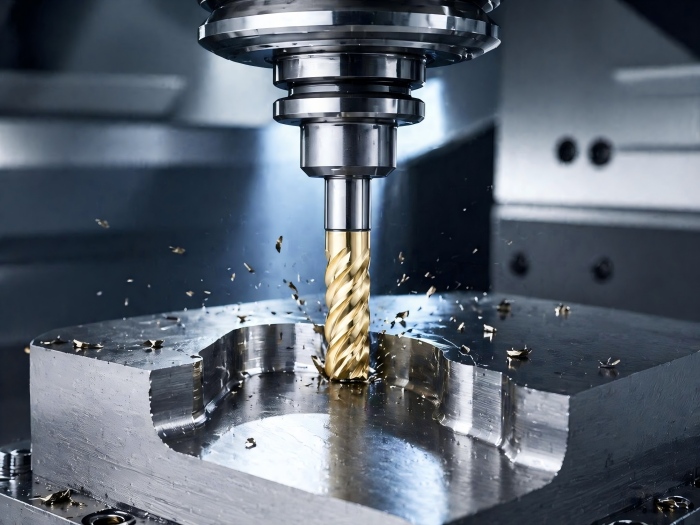
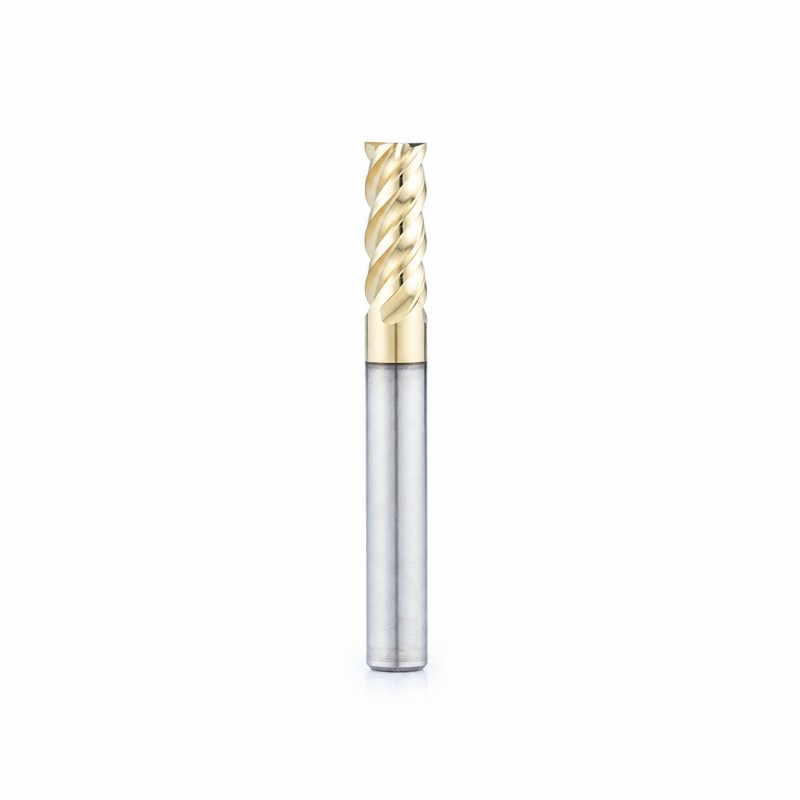
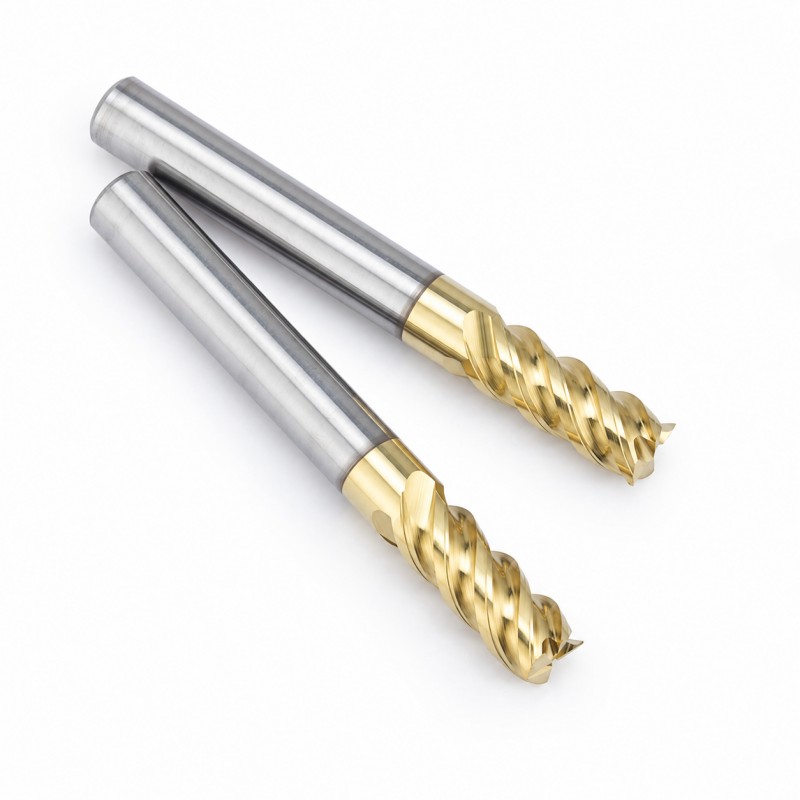
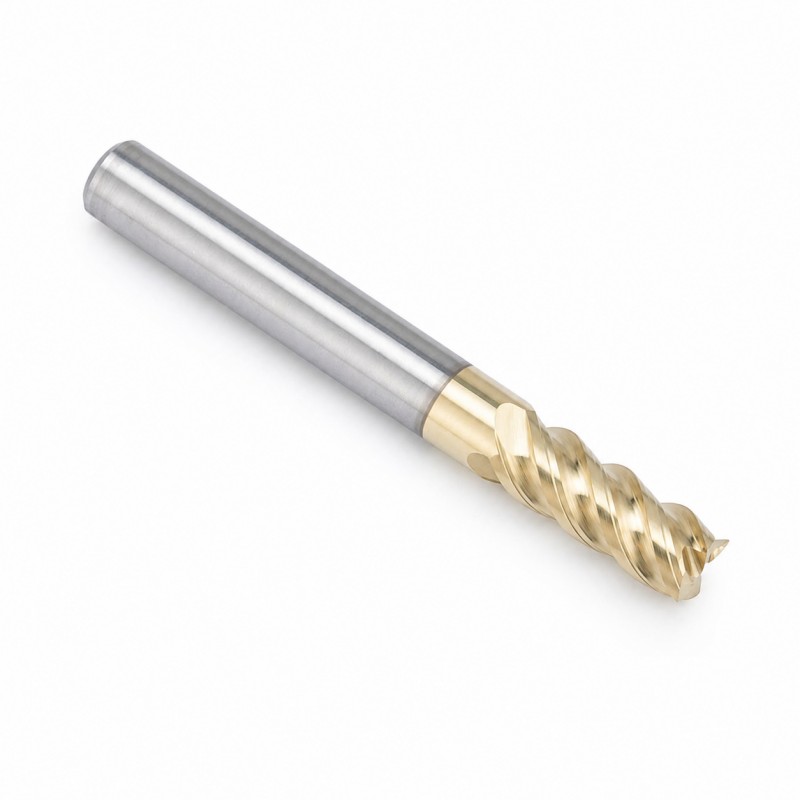
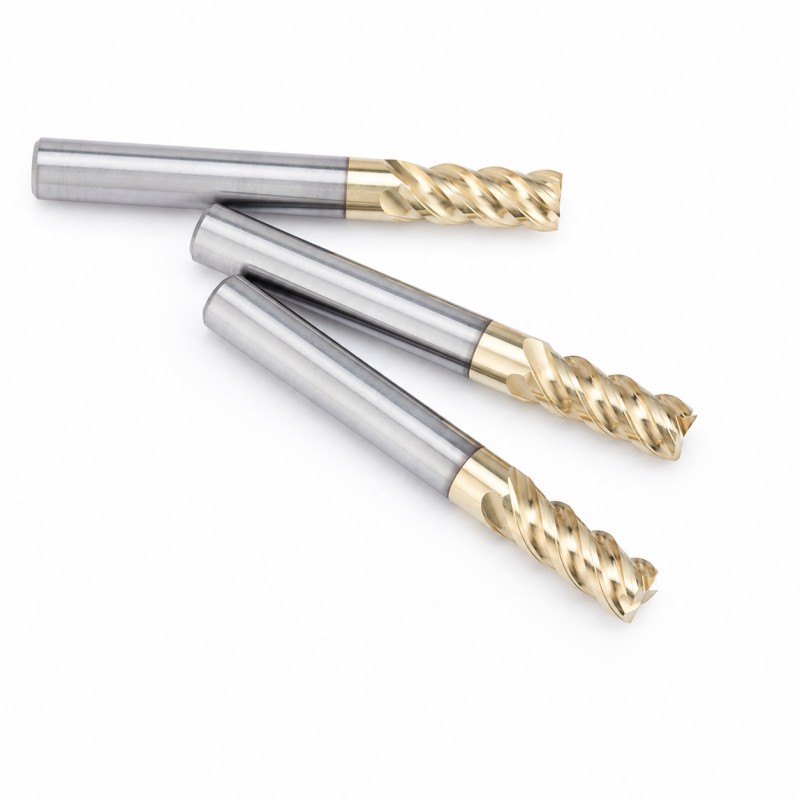
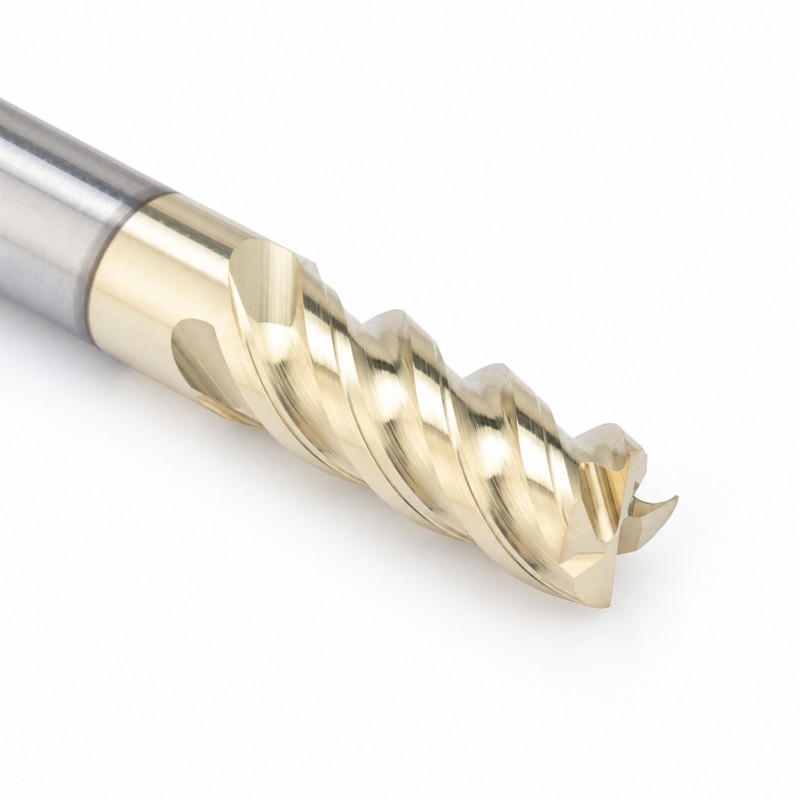
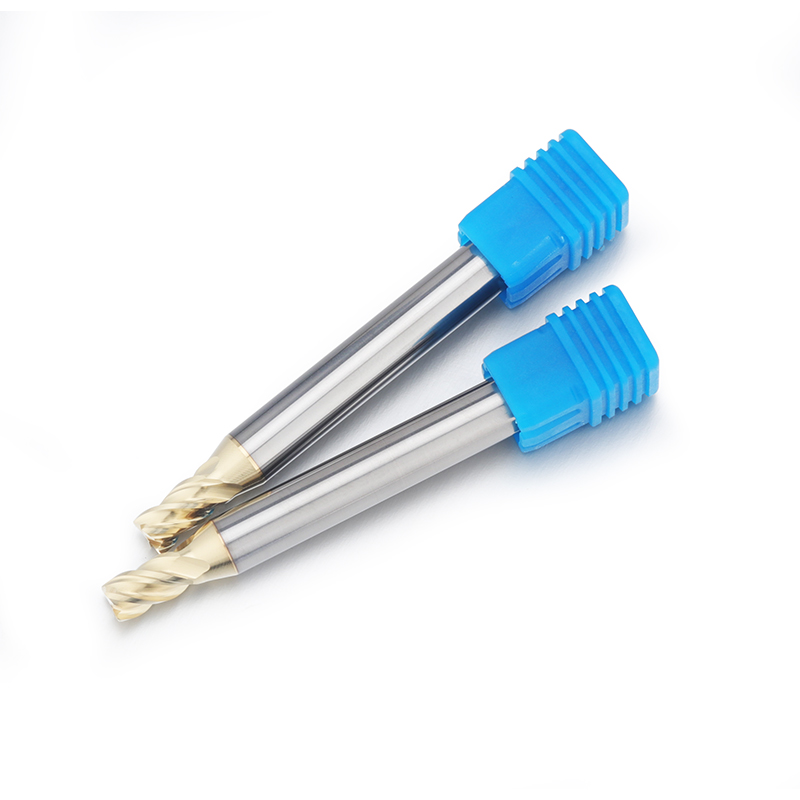
The DEX flat end mill is designed for customers who need efficient and stable machining on titanium alloy and other hard-to-cut materials. Its flat end geometry makes it a practical choice for machining flat surfaces, side walls, shoulders, slots, and step faces where corner accuracy and cutting efficiency are important.
For titanium alloy machining, tool stability, chip evacuation, and anti-sticking performance are especially critical. DEX flat end mills are developed to address these challenges through optimized material selection, advanced coating technology, and carefully designed flute geometry. They can be used for roughing, semi-finishing, and finishing depending on the machining strategy and workpiece condition.
Product Description
| Item | Details |
|---|
| Product Name | DEX Flat End Mill |
| Tool Type | Flat End Mill |
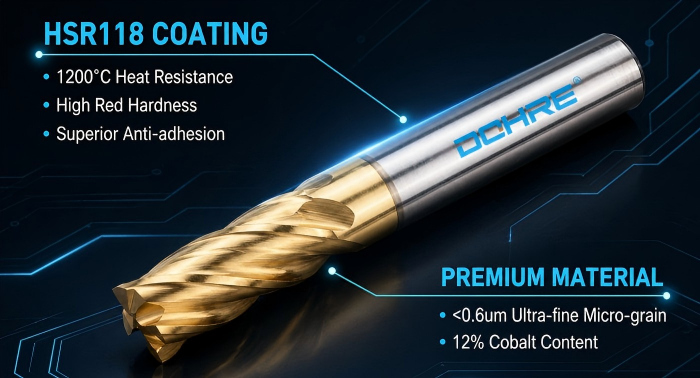
| Material | Ultra-fine micro-grain carbide |
| Grain Size | <0.6μm |
| Cobalt Content | 12% |
| Coating | HSR118 coating |
| Heat Resistance | Below 1200℃ |
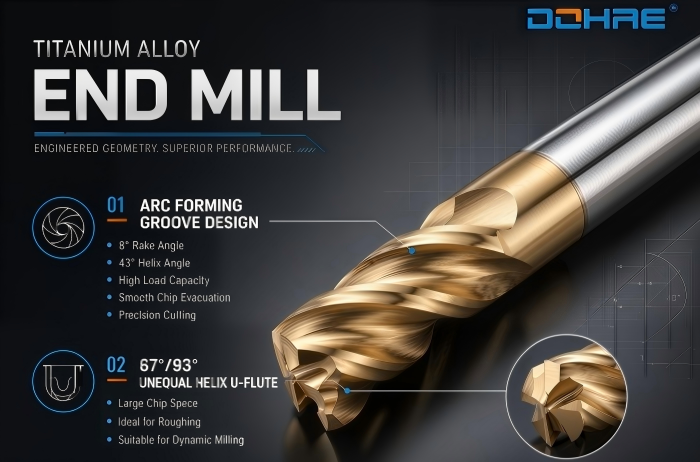
| Rake Angle | 8° |
| Helix Angle | 43° |
| Flute Design | Unequal helix U-shaped flute |
| Unequal Helix Angle | 87° / 93° |
| Groove Feature | Chip breaker groove |
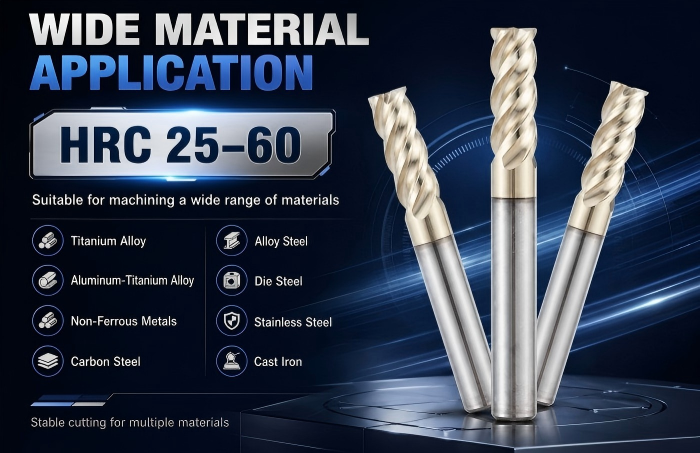
| Workpiece Hardness | HRC25-60 |
| Main Applications | Slotting, side milling, shoulder machining, flat surface machining, dynamic milling |
| Suitable Materials | Titanium alloy, aluminum-titanium alloy, non-ferrous metals, carbon steel, alloy steel, mold steel, stainless steel, cast iron |
| Customization | Available |
Ultra-fine micro-grain carbide material
The cutter is made from ultra-fine micro-grain carbide with particle size below 0.6μm and 12% cobalt content. This provides strong toughness, good wear resistance, and reliable edge strength for demanding cutting conditions.
HSR118 coating for difficult materials
DEX flat end mills use HSR118 coating, benchmarked against JZR coating. With heat resistance below 1200℃, this coating offers excellent red hardness, stable hardness retention at high temperature, and strong anti-sticking performance. It is especially suitable for machining titanium alloy and other materials that tend to generate heat and chip adhesion.
Optimized cutting geometry
The tool adopts an 8° rake angle and 43° helix angle to improve cutting smoothness, reduce cutting resistance, and support more stable chip evacuation. This helps maintain better cutting performance under high load and difficult machining conditions.
Unequal helix U-shaped flute design
The 87°/93° unequal helix U-shaped flute design increases chip space and helps suppress vibration during machining. This is beneficial for dynamic milling, side milling, and other operations where stability directly affects surface finish and tool life.
Chip breaker groove design
The chip breaker groove design helps optimize cutting force and improve chip breaking efficiency. This supports more efficient roughing and improves cutting control, especially in titanium alloy machining where chip management is very important.
Applications and Machining Advantages
The DEX flat end mill is suitable for machining HRC25-60 materials, including titanium alloy, aluminum-titanium alloy, non-ferrous metals, carbon steel, alloy steel, mold steel, stainless steel, and cast iron.
It is especially suitable for the following applications:
In practical machining, DEX flat end mills offer several clear advantages:
• Sharp corner capability for precise shoulder and step machining
• Efficient side cutting for walls and profiles
• Good versatility across different machining tasks
• Stable cutting performance on titanium alloy and difficult materials
• Strong anti-sticking behavior at high temperature
• Large chip space for better chip evacuation
• Reduced vibration through unequal helix flute design
• Better cutting force control with chip breaker groove structure
For customers machining titanium alloy components, DEX flat end mills are a practical option when the machining target includes planes, slots, side walls, and sharp corner features.
DEX Flat End Mill vs Corner Radius vs Ball Nose
When machining titanium alloy and other difficult-to-machine materials, choosing the right tool geometry is just as important as selecting the right coating or carbide grade. Different DEX series end mills are designed for different machining tasks.
| Tool Type | Best For | Main Advantage | Typical Application | Recommended Machining Stage |
|---|
| DEX Flat End Mill | Flat surfaces, side walls, step faces, shoulder machining | Sharp corner machining, efficient side milling, good versatility | Slotting, side milling, shoulder machining, flat surface finishing | Roughing, semi-finishing, finishing |
| DEX Corner Radius End Mill | High-load cutting, dynamic milling, applications requiring stronger edge protection | Better edge strength, reduced chipping, improved stability under load | Titanium alloy roughing, semi-finishing, dynamic milling, high-efficiency machining | Roughing, semi-finishing |
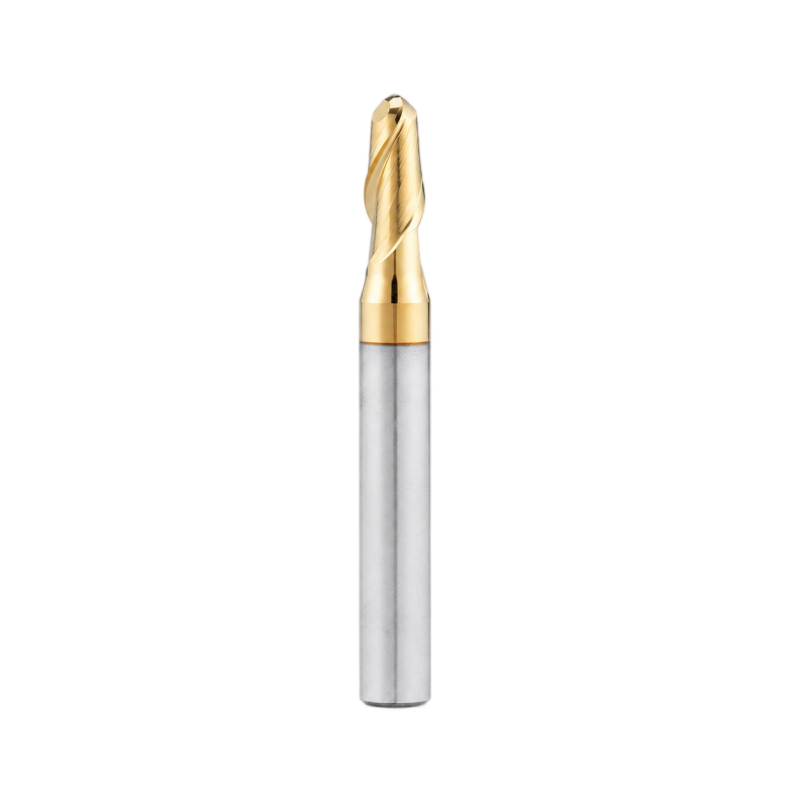
| DEX Ball Nose End Mill | 3D curved surfaces, cavity profiling, contour machining, arc transition areas | Smoother tool path, better surface consistency, ideal for complex profiles | Mold cavities, curved surfaces, contour milling, radius transitions, profile finishing | Semi-finishing, finishing |
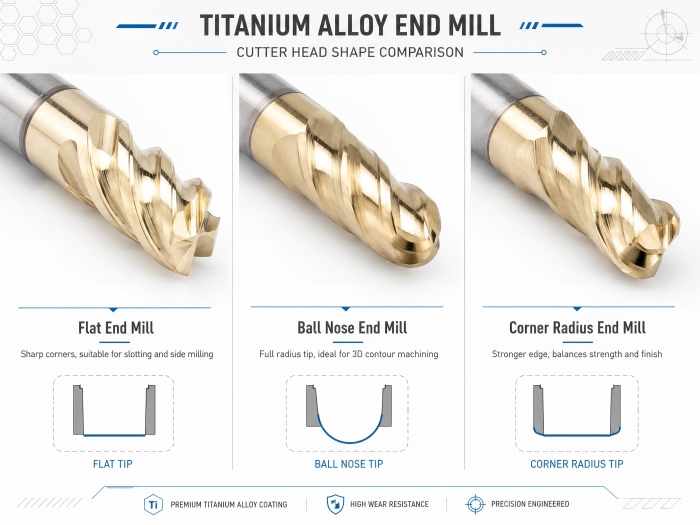
In simple terms, choose a DEX flat end mill when the machining focus is on flat surfaces, side walls, slots, and sharp corners. Choose a DEX corner radius end mill when higher edge strength and more stable high-load cutting are required. Choose a DEX ball nose end mill when machining 3D curved surfaces, cavity profiles, and complex contours.
Manufacturing Process and Quality Assurance
To ensure consistent performance of the DEX flat end mill for titanium alloy machining, every tool is produced under strict manufacturing and quality control processes.
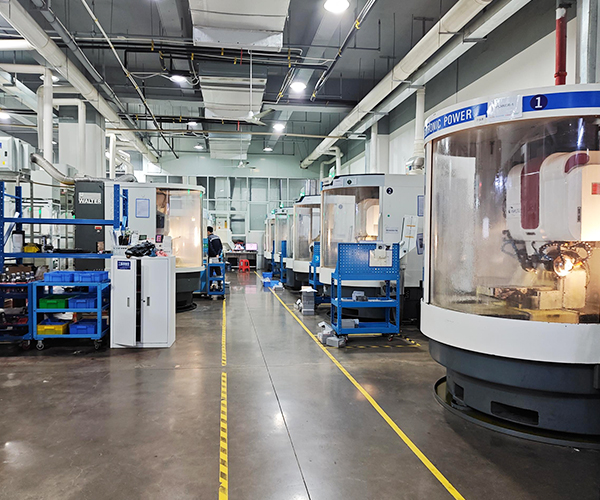
Precision Grinding Process
Dohre DEX titanium alloy end mills are all manufactured on Walter 5-axis high precision grinding machines from Germany, ensuring:
•Accurate tool geometry and corner radius consistency
•Sharp and stable cutting edges
•Smooth cutting performance under high load conditions
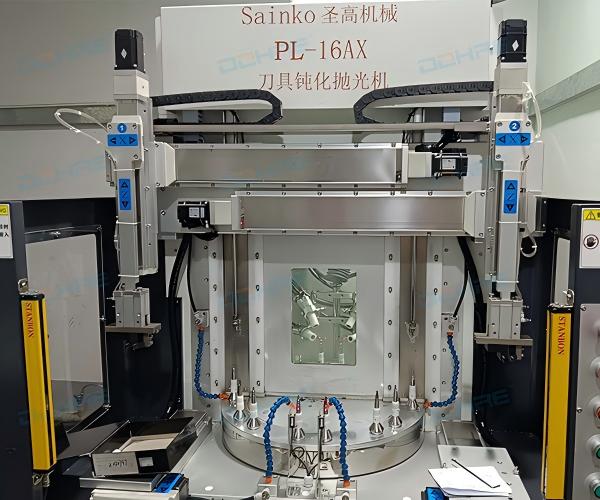
Edge Preparation & Honing Technology
A fully automated edge preparation system is used, combining:
•Fluid blasting process to remove micro-burrs
•Rubber-bond diamond abrasive polishing for controlled edge honing
This process ensures uniform cutting edge quality, with the edge radius controlled within ±3 μm, improving tool life and machining stability when cutting titanium alloys.
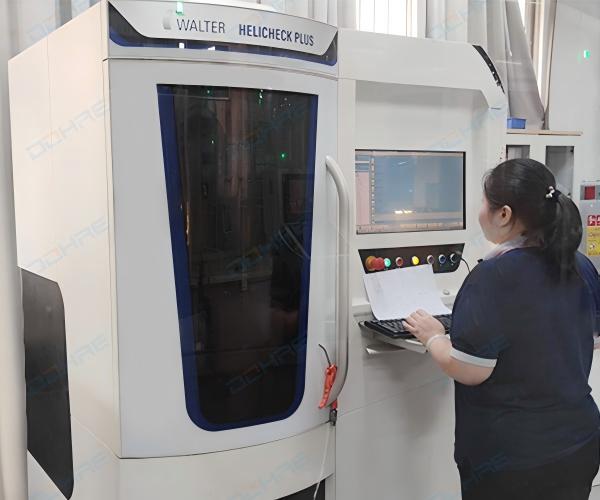
Inspection & Quality Control
Each Dohre DEX series end mill is comprehensively inspected using advanced measuring equipment, including:
•Walter Helichek Plus from Germany for profile and geometry measurement
•150× optical measurement for dimensional accuracy
•300× high-definition visual inspection for surface and edge condition
FAQ & Contact us
Q1:What materials is the DEX flat end mill suitable for?
A1: It is suitable for HRC25-60 materials such as titanium alloy, aluminum-titanium alloy, non-ferrous metals, carbon steel, alloy steel, mold steel, stainless steel, and cast iron.
Q2: What is the main advantage of a flat end mill?
A2: A flat end mill is especially suitable for flat surfaces, side walls, step faces, slots, and shoulder machining. It is the preferred choice when sharp corners and efficient side cutting are required.
Q3: Why is HSR118 coating important for titanium alloy machining?
A3: HSR118 coating provides strong red hardness, stable hardness retention at high temperature, and excellent anti-sticking performance. This helps reduce chip adhesion and improves machining stability when cutting titanium alloy.
Q4: Is this tool suitable for roughing?
A4: Yes. With its unequal helix U-shaped flute design and chip breaker groove, the DEX flat end mill can support roughing, dynamic milling, semi-finishing, and finishing in suitable conditions.
Q5: Can Dohre CNC provide customized DEX flat end mills?
A5: Yes. Dohre CNC can provide custom solutions based on tool diameter, flute length, overall length, and special geometry requirements.