What Coating Is Best for End Mills Used on Mold Steel
Introduction
In mold steel machining, the choice of end mill coating plays a crucial role in determining tool life, cutting stability, and final surface finish quality. Different coatings such as TiAlN, AlTiN, and TiSiN offer varying levels of heat resistance, wear protection, and oxidation resistance, making them suitable for different grades and hardness levels of mold steel.
In mold steel machining, the choice of end mill coating plays a crucial role in determining tool life, cutting stability, and final surface finish quality. Different coatings such as TiAlN, AlTiN, and TiSiN offer varying levels of heat resistance, wear protection, and oxidation resistance, making them suitable for different grades and hardness levels of mold steel.
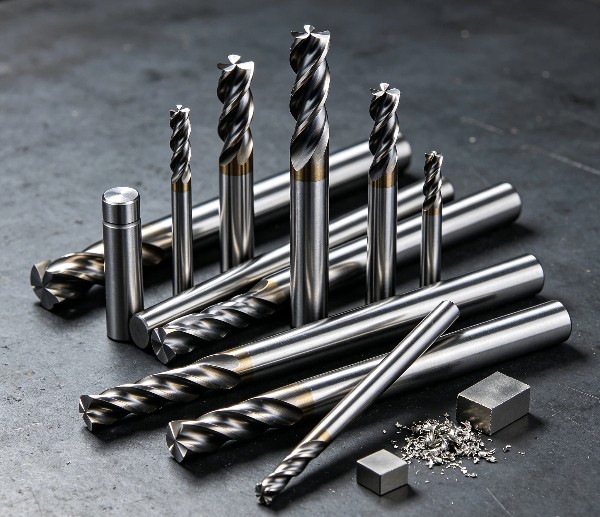
Understanding the performance differences of these coatings helps manufacturers make more informed decisions when facing high-speed cutting or high-hardness machining conditions. The right coating selection can significantly reduce tool wear, lower production costs, and improve overall machining efficiency. The following sections will break down the most common coating types and guide you toward the best choice for your application.
Why Coating Matters When Milling Mold Steel
In mold steel machining, cutting conditions are typically demanding due to high hardness, abrasive materials, and continuous heat generation during milling. Without a proper coating, end mills are more likely to suffer from rapid wear, edge chipping, and unstable cutting performance.
A suitable coating acts as a protective barrier between the tool and the workpiece. It improves heat resistance, reduces friction, and helps maintain cutting edge sharpness under high-speed or dry machining conditions. This not only extends tool life but also ensures more consistent surface finish quality.
In addition, different mold steels require different coating properties. For example, high-hardness steels benefit from coatings with superior thermal stability, while abrasive materials require coatings with stronger wear resistance. Therefore, choosing the right coating is essential to improve efficiency, reduce tooling costs, and achieve stable machining performance.
TiAlN Coating for High-Temperature Resistance in Mold Steel Cutting
TiAlN (Titanium Aluminum Nitride) coating is widely used in mold steel milling because it performs exceptionally well under high-temperature cutting conditions. During machining, heat builds up rapidly at the cutting edge, especially when processing hardened or pre-hardened mold steels. TiAlN forms a protective aluminum oxide layer at elevated temperatures, which helps shield the tool from oxidation and thermal wear.
This coating is especially suitable for dry or high-speed cutting, where coolant usage is limited or heat dissipation is more difficult. By maintaining hardness and edge stability at higher temperatures, TiAlN significantly reduces tool wear and helps prevent premature edge failure.
As a result, end mills with TiAlN coating deliver more stable cutting performance, longer tool life, and better consistency in surface finish—making them a reliable choice for demanding mold steel applications.
AlTiN Coating for Dry and High-Speed Machining Applications
AlTiN (Aluminum Titanium Nitride) coating is engineered for demanding dry and high-speed milling conditions, especially in mold steel machining where cutting temperatures rise rapidly. Its high aluminum content allows the coating to form a dense protective aluminum oxide layer during cutting, which significantly improves thermal resistance and reduces tool degradation.
In dry machining applications where coolant is limited or not used, heat is concentrated at the cutting edge. AlTiN effectively maintains hardness at elevated temperatures, preventing edge softening, chipping, and premature tool failure. This makes it highly suitable for high-speed operations that require both efficiency and stability.
By reducing friction and improving oxidation resistance, AlTiN-coated end mills deliver smoother cutting performance, longer tool life, and more consistent surface quality. As a result, it is widely used in high-performance mold steel machining where productivity and reliability are critical.
DLC Coating for Reduced Friction and Better Surface Finish
DLC (Diamond-Like Carbon) coating is known for its extremely low friction coefficient, making it highly effective in applications where surface finish quality is critical. In machining processes, reduced friction helps minimize cutting resistance, allowing the tool to move more smoothly through the material and reducing heat generation at the cutting zone.
When used in mold steel finishing operations, DLC coating helps prevent material adhesion and built-up edge formation, which are common issues that can negatively affect surface quality. This results in a cleaner cut, improved dimensional accuracy, and a smoother surface finish on the workpiece.
Because of its excellent lubricity and anti-sticking properties, DLC-coated end mills are especially suitable for light cutting, finishing passes, and precision mold components. It is an ideal choice when high surface quality and minimal tool-workpiece interaction are the primary machining requirements.
Choosing the Right Coating Based on Mold Steel Hardness
Selecting the appropriate end mill coating for mold steel depends largely on the hardness of the material being machined, as different coatings perform better under specific cutting conditions. For softer mold steels, coatings like TiAlN are often sufficient, providing a good balance of heat resistance and durability for general-purpose machining.
As hardness increases, especially in pre-hardened or hardened mold steels, higher-performance coatings such as AlTiN become more effective due to their superior thermal stability and ability to maintain hardness at elevated cutting temperatures. These coatings help prevent tool softening and extend tool life in high-speed operations.
For highly abrasive or finishing applications on hardened mold steels, TiSiN or DLC coatings may be preferred. TiSiN offers excellent wear resistance, while DLC reduces friction and improves surface finish quality. By matching coating type with material hardness and machining requirements, manufacturers can achieve better tool performance, longer tool life, and more stable machining results.
Conclusion
In mold steel machining, selecting the right end mill coating is a key factor in achieving stable cutting performance, longer tool life, and high-quality surface finishes. As discussed, coatings such as TiAlN, AlTiN, TiSiN, and DLC each provide distinct advantages in heat resistance, wear protection, and friction control, making them suitable for different machining conditions and steel hardness levels.
By understanding how each coating performs under specific applications, manufacturers can significantly reduce tool wear, improve machining efficiency, and lower overall production costs. For consistent and high-performance results in mold steel processing, choosing the right tooling solution is essential.
For more professional tooling solutions and CNC cutting tools, you can explore Dohrecnc, which provides a wide range of end mills designed for different materials and machining requirements.
FAQ
Q1: What is the best general-purpose coating for mold steel machining?
A: TiAlN coating is widely used for general mold steel machining. It offers good heat resistance and tool life balance, making it suitable for most standard cutting conditions.
Q2: Which coating is best for high-speed or dry machining of mold steel?
A: AlTiN is the preferred choice for high-speed and dry machining. It maintains hardness at high temperatures and reduces tool wear under heavy thermal load.
Q3: What coating should I use for hardened or abrasive mold steel?
A: TiSiN is recommended because of its high hardness and excellent wear resistance, especially in roughing and hard cutting applications.
Q4: Is DLC coating suitable for mold steel milling?
A: Yes, but mainly for finishing operations. DLC reduces friction and improves surface finish quality, making it ideal for light cutting and precision parts.