TEX Square End Mill for Stainless Steel
Learn More

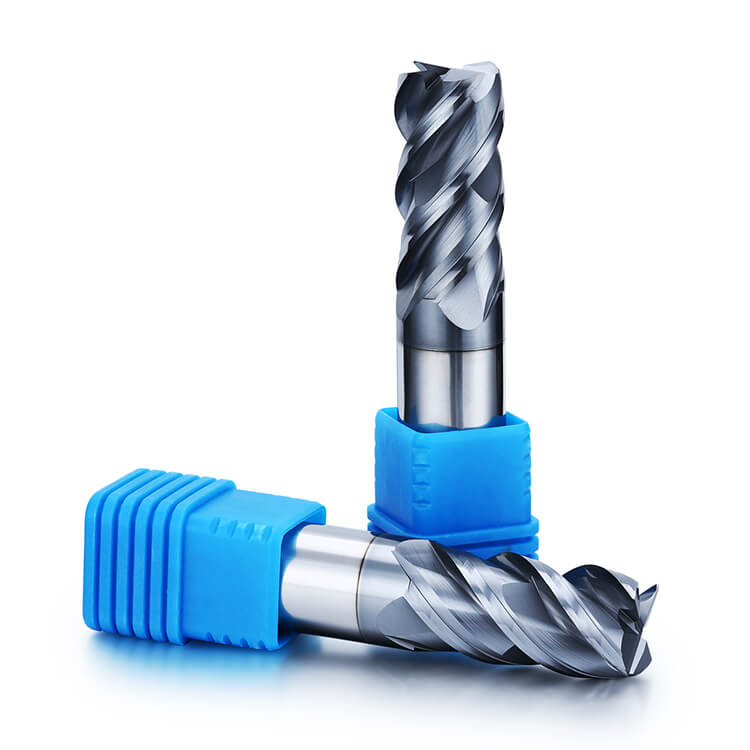
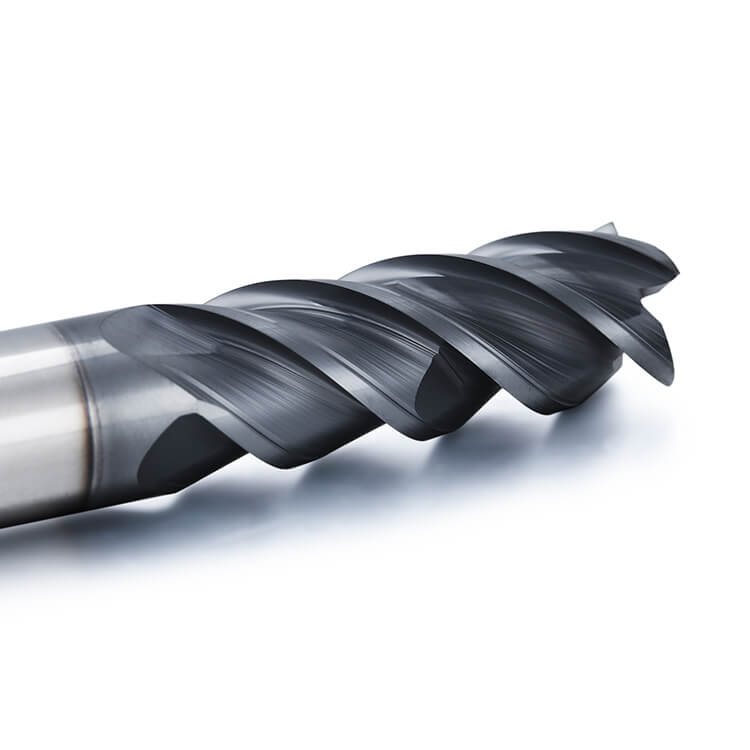
Stainless steel milling presents challenges such as work hardening, cutting heat, built-up edge, and difficult chip evacuation. These factors can affect tool wear, dimensional accuracy, and surface finish, particularly when machining austenitic stainless steels such as 304 and 316.
The DOHRE TEX Series combines ultra-fine-grain carbide, AlCrN coating, unequal flute spacing, and optimized cutting geometry to address these machining challenges. Different cutter profiles are available for flat surfaces, shoulders, pockets, and complex 3D contours, allowing customers to select tools according to their machining operations.
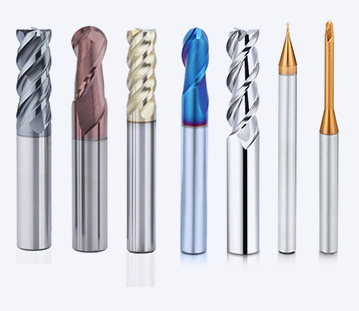
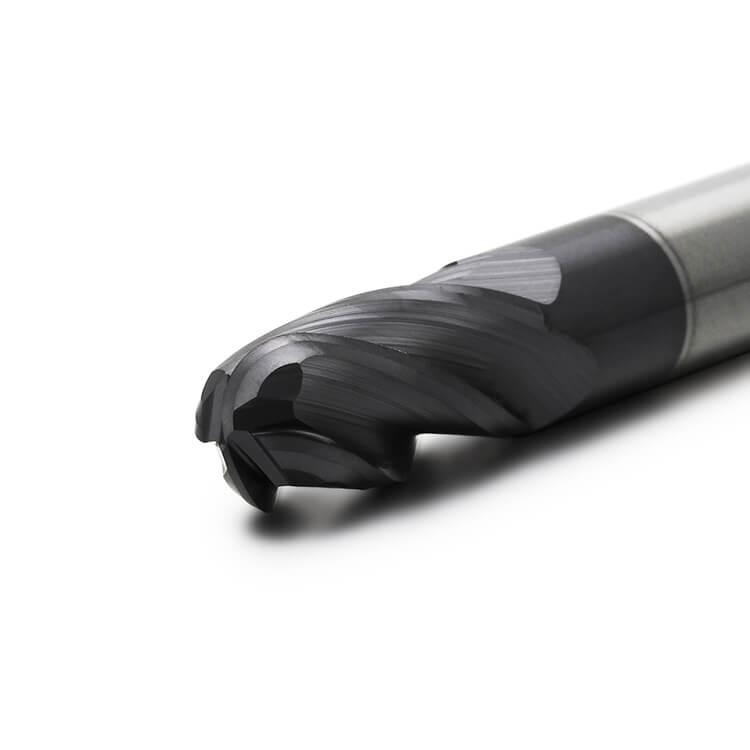
TEX Series end mills are available in three main cutting geometries. Select the appropriate tool based on the machining operation, workpiece profile, and required surface finish.
| Tool Type | Best For | Typical Applications |
|---|---|---|
| TEX Square End Mill | Flat floors, slots, straight walls, and defined corners | Slotting, side milling, pocket machining, roughing, and semi-finishing |
| TEX Corner Radius End Mill | Reinforced cutting corners and radiused transitions | Shoulder milling, profile machining, roughing, and semi-finishing |
| TEX Ball Nose End Mill | Curved surfaces, complex contours, and 3D profiles | 3D surface finishing, cavity machining, and multi-axis contour milling |
Selection Tip: Choose a square end mill for flat-bottom features, a corner radius end mill when stronger corner support is needed, and a ball nose end mill for curved surfaces. The selected cutter should match the required workpiece geometry and machining stage.
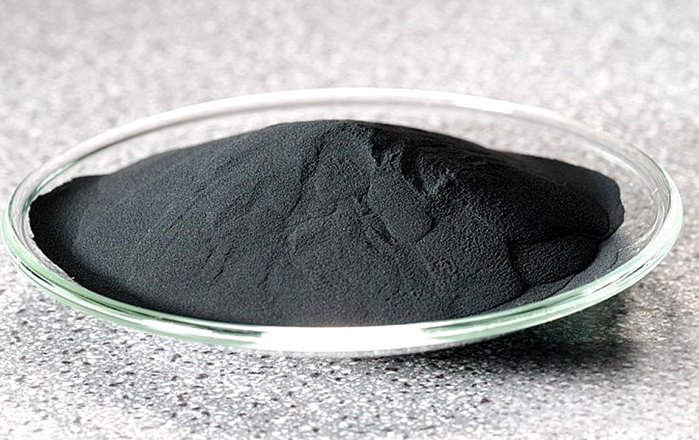
TEX Series end mills use ultra-fine micro-grain carbide below 0.6 μm with 12% cobalt content. This carbide substrate provides a balanced combination of hardness, toughness, and wear resistance, helping the tool maintain stable performance in stainless steel cutting.
Stainless steel materials are often sticky and difficult to machine. A stable carbide substrate helps reduce edge wear, support cutting edge strength, and improve tool life during continuous cutting.
TEX Series tools use AP AlCrN Coating, with heat resistance up to 1200°C. The coating helps improve hardness, oxidation resistance, and wear resistance under high-temperature stainless steel machining conditions.
This coating is especially useful when machining stainless steel materials where cutting heat and built-up edge can affect tool life and surface quality.
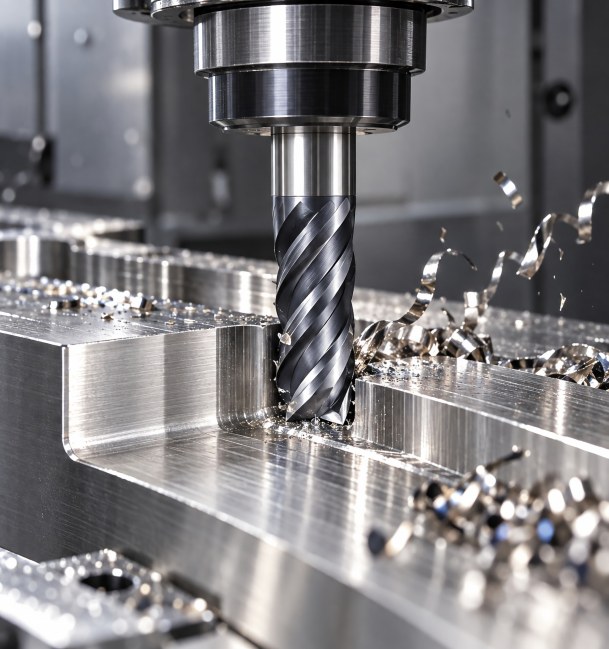
TEX Series end mills adopt geometry designed for smoother chip evacuation and lower cutting resistance. The tool design helps remove chips more efficiently, reduce heat accumulation, and lower the risk of built-up edge during stainless steel machining.
For TEX stainless steel end mills, features such as optimized rake angle, high helix geometry, and dual-core design help support smoother cutting and more stable machining.
The unequal pitch design helps suppress chatter and improve machining stability. This is especially important in stainless steel roughing, dynamic milling, side milling, and semi-finishing applications where vibration can reduce tool life and affect surface finish.
By improving vibration resistance, TEX Series end mills help achieve more stable cutting and more consistent machining results.
DOHRE TEX carbide end mills are primarily designed for stainless steel milling. Suitable applications include the following material groups, subject to tool selection and machining conditions.
Austenitic Stainless Steels: Grades such as 201, 304, and 316, commonly used in industrial machinery, precision components, and equipment manufacturing.
Martensitic Stainless Steels: Grades such as 410 and 420, with tool selection dependent on the material hardness and heat-treatment condition.
Duplex Stainless Steels: Selected duplex grades, where cutting resistance, chip formation, and workpiece condition require careful evaluation.
The TEX Series can also be used for nickel-based alloy machining. These materials often involve high cutting resistance, work hardening, and concentrated cutting heat. TEX cutting geometry and AlCrN coating are designed to support cutting stability and wear resistance under demanding conditions.
For nickel-based alloys such as Inconel, the appropriate end mill type, diameter, coating, and cutting parameters should be confirmed according to the specific alloy grade and machining operation. Stainless steel cutting data should not be applied directly to nickel-based alloys without evaluation.
Typical operations across the TEX Series include slotting, side milling, pocket machining, dynamic milling, shoulder milling, 3D contouring, roughing, semi-finishing, and finishing. The suitable operation depends on the selected cutting geometry.





By continuing to use the site you agree to our privacy policy Terms and Conditions.