Product Description
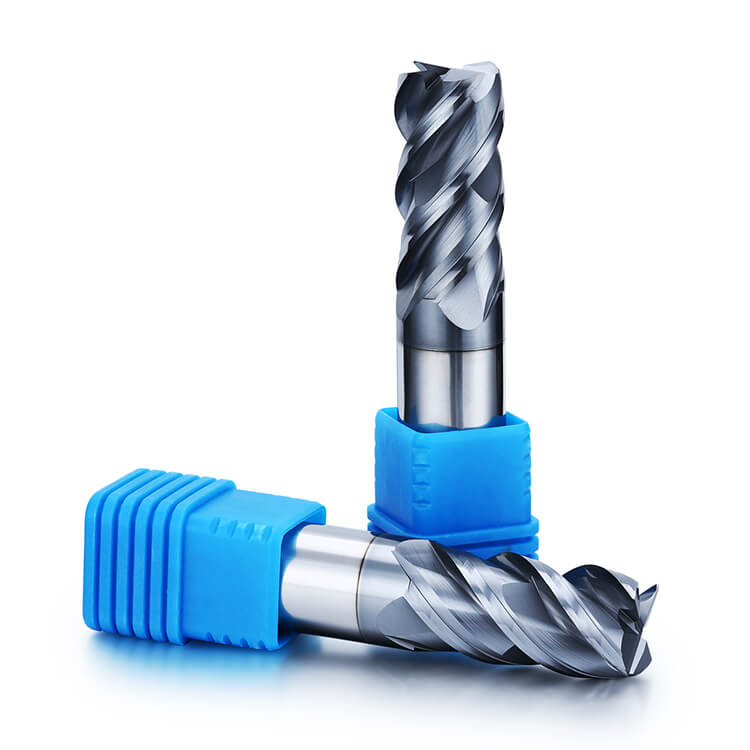
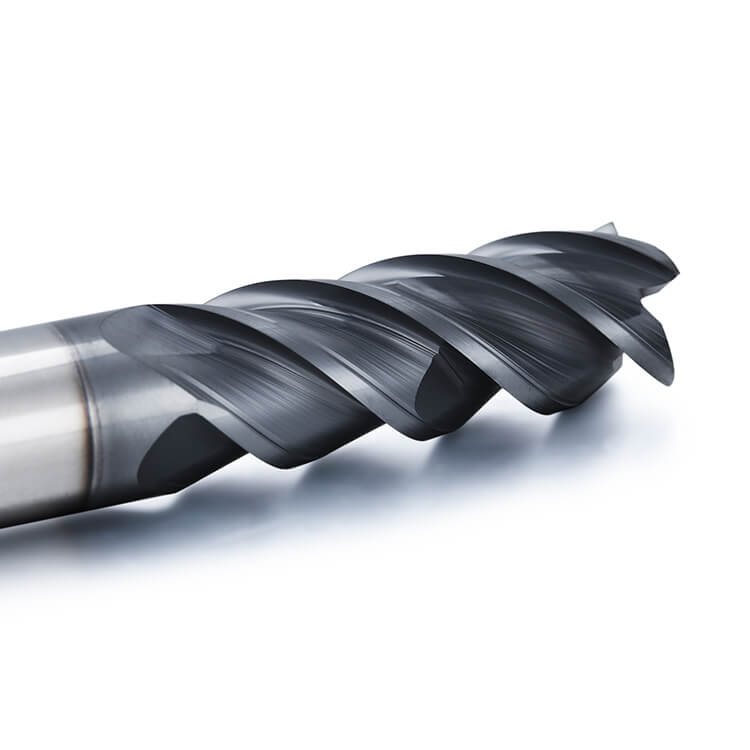
The DOHRE TEX square end mill is a solid carbide cutting tool designed for dynamic milling, slotting, side milling, roughing, and semi-finishing of stainless steel, including grades 304 and 316. It features a 45° helix angle, 8° rake angle, 88°/92° unequal flute spacing, dual-core geometry (52%/70%), and Balzers AP AlCrN coating to support chip evacuation, vibration control, and wear resistance.
The TEX Series can also be used for nickel-based alloy machining. Tool selection and cutting parameters should be adjusted according to the specific alloy grade, tool size, operation, and machining conditions.
For a broader comparison of cutter geometries used in stainless steel machining, see our guide to stainless steel end mill types and how to choose the right one.

The table below lists standard sizes of the Dohre TEX series square end mill for stainless steel machining. Custom sizes and geometries are also available based on your application requirements.
Standard Size Overview
| Item | Range / Notes |
|---|
| Diameter range | 1.0 mm – 25.0 mm |
| Common sizes | Ø6 mm, Ø8 mm, Ø10 mm, Ø12 mm |
| Typical use | Dynamic milling, roughing, semi-finishing |
| Custom service | Diameter, flute length, overall length, shank size |
Product Features

Premium Carbide Material
The TEX square end mill uses ultra-fine micro-grain carbide below 0.6 μm with 12% cobalt content. This material provides a balanced combination of hardness, toughness, and wear resistance, helping the tool maintain stable performance in stainless steel machining.
Balzers AP Coating
The cutter uses Balzers AP coating based on AlCrN technology, with heat resistance up to 1200°C. The coating offers strong hardness, oxidation resistance, and wear resistance, making it more reliable in high-temperature stainless steel cutting conditions.
Optimized Dual-Core Geometry
The tool adopts a dual-core design, with the first core opened to 52% and the second core to 70%, combined with an 8° rake angle and 45° helix angle. The smaller front core helps improve chip evacuation during roughing, remove cutting heat more effectively, and reduce the risk of built-up edge.
Unequal Pitch for Lower Vibration
The unequal pitch design of 88° / 92° effectively suppresses cutting vibration and improves machining stability. This makes the tool especially suitable for roughing and dynamic milling, while also helping achieve smoother cutting and more consistent machining results.
For a wider overview of tool selection priorities, you can also read our guide to the best end mills for stainless steel.
Application
Applications of TEX Square End Mills
DOHRE TEX square end mills are designed for stainless steel milling applications where cutting stability, chip evacuation, and edge strength are important. They are suitable for common stainless steel grades such as 201, 304, and 316, as well as other stainless steels under suitable machining conditions.
Typical machining applications include:
• Dynamic milling
• Slotting and groove milling
• Side milling and shoulder machining
• Pocket machining
• Roughing of stainless steel components
• Semi-finishing of profiles and flat surfaces

Recommended Application Guide
The TEX square end mill can be selected for different stainless steel machining operations according to workpiece geometry, material grade, and cutting requirements.
| Machining Task | Why TEX Square End Mill Fits |
|---|
| Dynamic Milling | Unequal flute spacing helps manage vibration, while optimized flute geometry supports chip evacuation during variable-engagement milling. |
| Slotting | Square cutting geometry supports slot and groove machining. Cutting engagement and chip evacuation must be controlled according to slot depth and tool diameter. |
| Side Milling | Optimized cutting geometry supports machining of straight sidewalls, shoulders, and defined profiles. |
| Pocket Machining | Suitable for flat-bottom pockets and internal profiles when toolpath transitions and chip evacuation are properly controlled. |
| Roughing | Balzers AP AlCrN coating and dual-core geometry support wear resistance and cutting stability during stainless steel material removal. |
| Semi-Finishing | Controlled cutting engagement and consistent tool geometry help maintain surface quality and dimensional stability. |
Nickel-Based Alloy Machining
In addition to stainless steel, DOHRE TEX Series carbide end mills can also be used for nickel-based alloy machining. These materials are often more challenging to cut because of their work-hardening behavior, concentrated cutting heat, and high cutting resistance.
The TEX square end mill features Balzers AP AlCrN coating, a 45° helix angle, an 8° rake angle, 88°/92° unequal flute spacing, and dual-core geometry (52%/70%). These features are designed to support cutting-edge stability, wear resistance, and chip evacuation during demanding milling applications.
For nickel-based alloys such as Inconel, tool selection should be based on the specific alloy grade, material condition, machining operation, and machine rigidity. Cutting speeds, feeds, and engagement should be confirmed for the selected tool specification rather than taken directly from stainless steel test data.
For application-specific recommendations, please contact DOHRE with your workpiece material, required tool size, and machining conditions.
SUS316 Stainless Steel Machining Test
The following test records the machining conditions and measured tool wear of a DOHRE TEX square end mill during SUS316 stainless steel end-face milling. The data provides a practical reference for evaluating tool performance under the recorded conditions.

| Test Parameter | Recorded Value |
|---|
| Tool Specification | 4F-D6×15×D6×50L |
| Workpiece Material | SUS316 Stainless Steel |
| Machining Operation | End-Face Milling |
| Cutting Speed (Vc) | 94 m/min |
| Feed per Tooth (fz) | 0.15 mm/tooth |
| Axial Depth of Cut (ap) | 6 mm |
| Radial Width of Cut (ae) | 0.6 mm |
| Cooling Method | Oil Cooling |
| Machining Time | 4 hours |
| Measured Flank Wear | 0.071 mm |
Test Result: After 4 hours of SUS316 stainless steel milling under the recorded conditions, the measured flank wear width of the DOHRE TEX square end mill was 0.071 mm.
Note: This result represents one specific machining test and should not be interpreted as a guaranteed tool life or a universal cutting recommendation. Actual tool performance depends on workpiece condition, tool geometry, machine rigidity, cutting engagement, and coolant delivery.
For more information about tool geometry, coatings, and cutting conditions, read our complete guide to selecting end mills for stainless steel.
Manufacturing & Quality Control

DOHRE CNC pays close attention to edge preparation, dimensional consistency, and inspection standards in stainless steel machining applications. TEX series end mills are produced under strict control to ensure stable cutting performance, consistent edge quality, and reliable batch accuracy.
We use a fluid sandblasting process to reduce burrs on the cutting edge and improve the final surface quality of machined parts. This helps the tool achieve more stable cutting performance in stainless steel semi-finishing applications.
The cutting edges are treated by a fully automatic passivation machine with rubber-bonded diamond abrasive polishing. This process helps maintain edge consistency across all tools, and the passivation value can be controlled within ±3 μm.
Profile measurement is carried out using German Walter HELICHECK PLUS equipment, together with 150× optical inspection and 300× high-definition appearance inspection. This helps ensure stable tool geometry, reliable cutting edge quality, and consistent batch production.
TEX series end mills are produced on German Walter 5-axis high-precision grinding machines. This helps maintain cutting edge sharpness and dimensional accuracy, making cutting smoother and more stable in stainless steel machining.
FAQ & Contact us
Q1: What materials is this TEX square end mill suitable for?
The DOHRE TEX square end mill is designed primarily for stainless steel machining, including grades 201, 304, and 316. It can also be used for nickel-based alloys under suitable machining conditions. Tool selection should be based on the specific material grade, cutting operation, and tool specifications.
Q2: What machining operations is this tool suitable for?
The TEX square end mill is suitable for dynamic milling, slotting, side milling, pocket machining, roughing, and semi-finishing. Its square cutting geometry is particularly useful for machining flat surfaces, straight sidewalls, shoulders, and defined profiles.
Q3: Why is the dual-core design important?
The TEX square end mill features dual-core geometry (52%/70%) designed to balance core strength and flute space. This helps support tool rigidity and chip evacuation during demanding stainless steel milling operations. Actual cutting performance depends on tool size, engagement, and machining conditions.
Q4: Can DOHRE provide customized square end mills?
Yes. DOHRE supports customized carbide square end mills based on customer requirements, including cutting diameter, flute length, overall length, shank dimensions, coating, and cutting geometry. Customers can provide technical drawings or machining requirements for evaluation. Our standard MOQ is 10 pieces, while available stock items may be ordered from 1 piece, subject to stock confirmation.
Q5: Are different flute counts available?
Yes. DOHRE can provide different flute configurations according to the tool specification and machining requirements. The appropriate flute count depends on the workpiece material, cutting operation, chip evacuation requirements, and tool diameter.
Q6: Which DOHRE end mill is suitable for nickel-based alloys such as Inconel?
DOHRE TEX Series carbide end mills can be used for nickel-based alloy machining. The TEX square end mill features Balzers AP AlCrN coating and optimized cutting geometry to support wear resistance and cutting stability. For Inconel and similar nickel-based alloys, the recommended cutter and cutting parameters depend on the specific alloy grade, workpiece condition, and machining operation. Contact DOHRE for application-specific tool recommendations.
Q7: What cutting speed should I use for 316 stainless steel?
In a recorded SUS316 end-face milling test, a DOHRE TEX square end mill (4F-D6×15×D6×50L) was operated at a cutting speed of 94 m/min and a feed per tooth of 0.15 mm. The axial depth of cut was 6 mm, the radial width of cut was 0.6 mm, and oil cooling was used. These values represent specific test conditions rather than universal recommendations. Actual cutting parameters should be adjusted according to the tool size, machining strategy, and machine rigidity.
Q8: Is the TEX square end mill better than budget end mills for stainless steel?
The value of an end mill should be evaluated through tool wear, cutting stability, surface quality, and total machining cost rather than purchase price alone. In a recorded SUS316 milling test, the DOHRE TEX square end mill showed a measured flank wear width of 0.071 mm after 4 hours of machining. This result demonstrates performance under the recorded test conditions but does not establish a universal advantage over all budget end mills. A fair comparison requires the same workpiece material, cutting parameters, and test setup.