For manufacturers of 6061 aluminum 3C components, achieving a mirror surface often feels like a constant battle against tool marks, built-up edges, and micro-scratches. These surface defects frequently force costly secondary polishing and increase scrap rates.
You can achieve mirror surface on 6061 aluminum by upgrading to the AEX single flute end mill. This AEX series guide helps you cut secondary polishing cost and optimize your 6061 aluminum mirror finish milling process in one step.
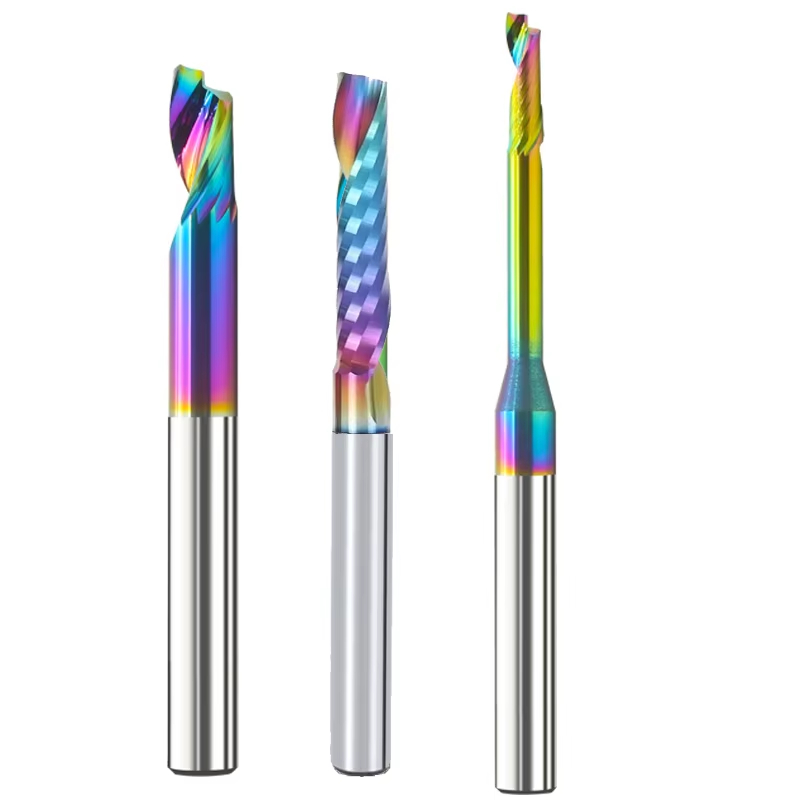
Why 6061 Aluminum Is Hard to Get Mirror Gloss
6061-T6 aluminum's high ductility and low melting point often cause material to weld to the cutting edge, forming built-up edges. Without efficient chip evacuation, these sticky chips drag across the surface, creating micro-scratches and chatter marks that prevent a true mirror gloss.
Beyond material properties, chatter from vibration or poor tool paths often causes invisible surface defects that only appear after finishing. Standard multi-flute cutters frequently clog, "rubbing" the surface instead of shearing it. To reduce tool marks on 6061 aluminum and prevent aluminum built-up edge, your process must prioritize unobstructed chip evacuation.
Core Advantages of Single Flute AEX End Mill for 6061 Mirror Machining
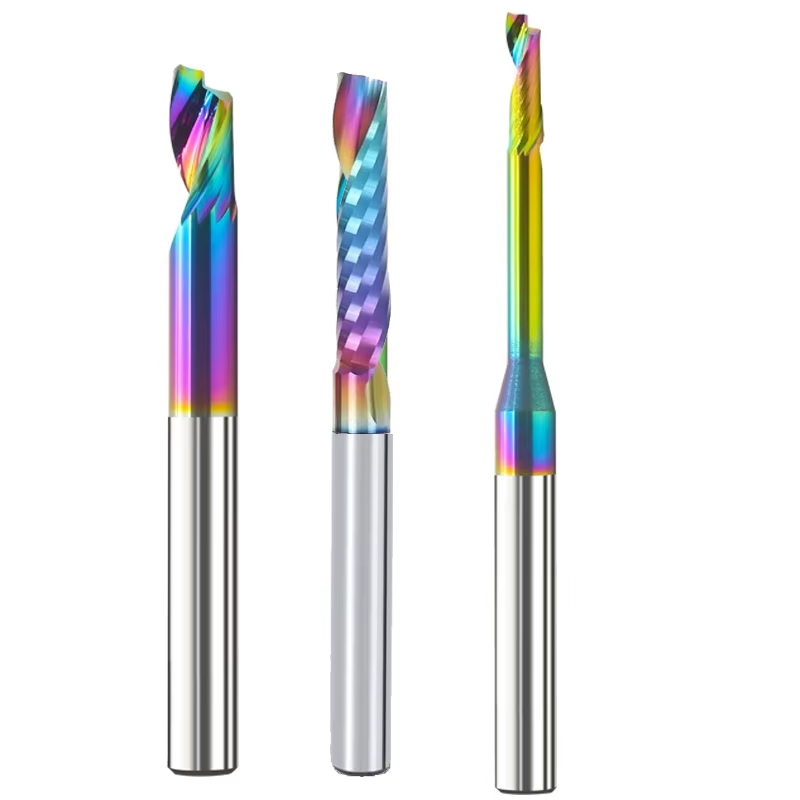
Achieving a mirror-like finish in a single pass requires a tool that minimizes friction and maximizes cutting efficiency. A single flute AEX series end mill is engineered specifically for this purpose, offering several key advantages for high-gloss applications:
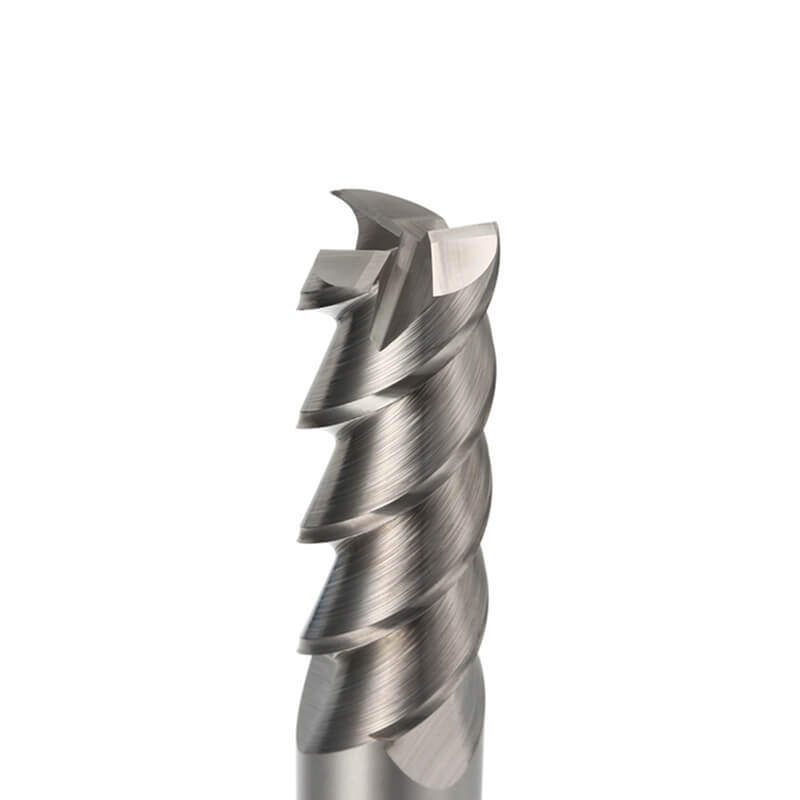
Ultra-Large Polished Chip Gullet:
Unlike multi-flute designs, this expansive space ensures that chips are thrown clear of the cutting zone instantly. This design effectively prevents the re-cutting of chips, which is the most common cause of surface blemishes and scratches.
High Positive Rake and Razor-Sharp Edge:
The geometry provides a very low cutting force, which ensures the material is sheared cleanly rather than pushed. This prevents material extrusion and the formation of burrs on the edge of your workpiece.
Mirror-Polished Flute Surface:
By reducing the coefficient of friction, the polished flute dramatically inhibits aluminum adhesion. This effectively prevents the material from welding to the cutting edge, a phenomenon that otherwise destroys surface finish quality.
Uncoated Ultra-Fine Virgin Carbide Substrate:
The absence of a thick coating prevents the formation of micro-cracks or coating-induced scratches. This base material provides the extreme sharpness required to achieve high-gloss results directly off the machine.
Optimized High Helix Single Flute Geometry:
This design works to suppress vibration marks, especially when working on thin-walled 3C electronics housings. It maintains tool stability even at the high spindle speeds necessary for a mirror finish.
Complete Step-by-Step Machining Operation Guide
To replicate a mirror surface in mass production, consistency is the objective. Follow these operational standards:
Parameter Optimization:
Use a high spindle speed (15,000–25,000 RPM) combined with a moderate feed rate. For mirror finishing, keep the radial depth of cut (Ae) very shallow—typically 0.05mm to 0.1mm—to minimize tool deflection.
Tool Pathing:
Always employ a climb milling strategy. Use smooth arc transitions at contour exits to prevent the tool from "dwelling" and leaving marks. Avoid vertical tool retraction directly out of the workpiece surface.
Cooling Strategy:
While air blast dry cutting is often sufficient for light finishing, a low-pressure mist or flood coolant can help ensure the temperature remains stable in mass production aluminum mirror components. Ensure your air blast pressure is consistently high to blow away any stray aluminum particles.
Maintenance: Tool runout must be kept under 0.002mm to maintain mirror consistency. Regularly inspect the flute for any trace of aluminum buildup, and replace the tool as soon as the edge wear exceeds your baseline threshold to prevent vibration chatter.
Auxiliary Matching Scheme for Higher Mirror Consistency
To achieve the best results across a production run, ensure your machine setup is as robust as the tool itself. Using a high-precision, rigid tool holder is mandatory; even a slight runout will translate into visible chatter marks on the 6061 surface. For complex parts, consider a custom non-standard milling tool with a specific neck length for deep cavity access. When standardizing your process, use the same tool series for both roughing and finishing to maintain dimensional consistency, which is critical for 3C electronics applications.
TCO Cost Analysis
When you compare one-step mirror finishing to traditional methods, the cost savings are substantial. Manual polishing is not only slow, but it also compromises dimensional tolerances. By mastering this process, you eliminate the need for polishing consumables, reduce labor hours, and significantly lower your scrap rate. For most high-volume workshops, the investment in high-performance tooling is recovered within the first two months due to the reduced downtime and the elimination of secondary finishing stages.
Troubleshooting Residual Scratches
If your surface quality isn't meeting expectations, troubleshoot in this order:
Micro-scratches:
Likely caused by chip residue. Check your air blast pressure and ensure it is hitting the cutting zone directly.
Dim Gloss:
Often a sign of tool runout. Calibrate your tool holder and ensure the tool is seated correctly in the collet.
Edge Burrs:
If minor burrs appear, slightly decrease your feed per tooth or check your finishing allowance. Sometimes, a tiny reduction in feed is all it takes to allow the sharp edge of the end mill to shear the aluminum cleanly.
Conclusion
Achieving a mirror finish on 6061 aluminum requires mastering single-flute geometry and optimizing your machining parameters. Ready to elevate your surface quality? Contact us for customized cutting strategies or browse our full machining blog.