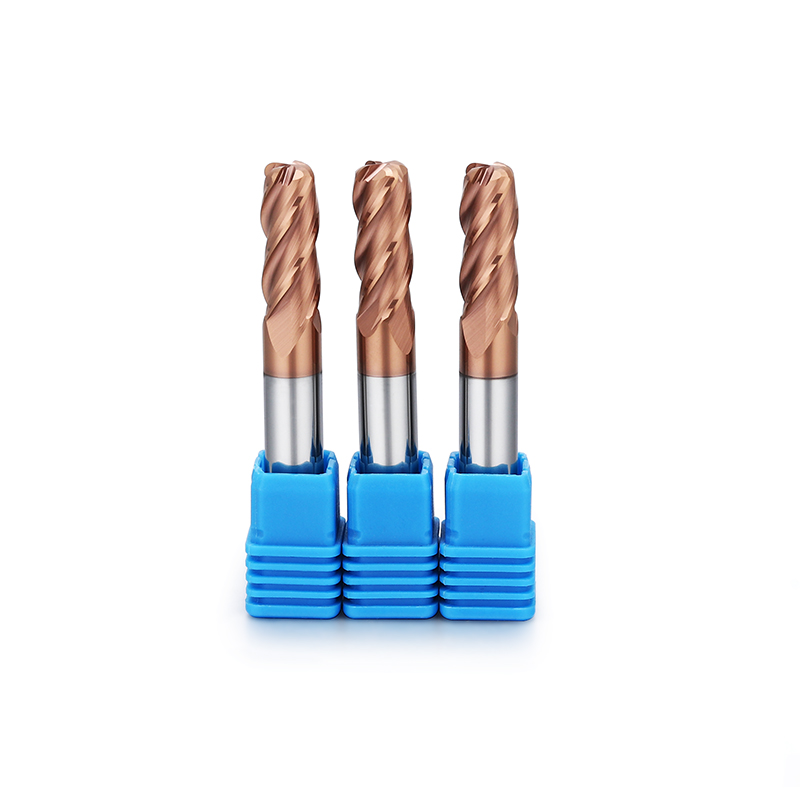
End mill tool life in mold steel machining is governed by thermal load, cutting dynamics, and coating-substrate interaction. Extending tool life requires systematic adjustments to cutting parameters, tool selection, coolant delivery, and process strategy rather than isolated parameter tweaks.
Key Factors That Limit End Mill Life in Mold Steel
Thermal degradation is the primary failure mechanism in mold steel milling. Cutting temperatures above 700°C cause carbide substrate oxidation and coating breakdown, accelerating edge wear and dimensional loss.
Adhesive wear occurs when low-carbon mold steels bond to the cutting edge, forming built-up edge (BUE) deposits. BUE fragments detach and gouge the tool surface, producing irregular wear patterns and surface defects on mold cavities.
Mechanical fracture from excessive chip load or interrupted cuts creates macro-edge chipping. Mold steel workpieces with hard spots, scale layers, or complex 3D contours amplify the risk of sudden edge failure during deep-pocket machining.
Abrasive wear from hard inclusions in mold steel gradually erodes the cutting edge radius. This mechanism reduces surface finish quality progressively, even when thermal and adhesive conditions appear stable during normal machining cycles.
Step-by-Step Approach to Extend Tool Life
Select coatings matched to steel grade. Use AlTiN for H13 and other hot-work steels above 44 HRC. Apply TiCN for P20 and medium-hardness steels where adhesive wear dominates. DLC suits soft steels and finish passes.
Optimize cutting speed within thermal limits. Reduce spindle RPM when cutting hardened steels to lower edge temperature. For AlTiN-coated tools on H13, target 80–120 m/min rather than pushing above 200 m/min unless dry machining is proven stable.
Control feed per tooth to manage chip thickness. Maintain chip thickness between 0.05 and 0.15 mm for finish passes, and 0.15–0.25 mm for roughing. Thin chips concentrate heat at the edge; thick chips overload the cutting geometry.
Implement consistent coolant delivery. Flood coolant at minimum 15 L/min directed at the cutting zone. For deep cavities, use through-tool coolant channels to reach the edge directly and prevent vapor barrier formation.
Adopt trochoidal milling paths for pocketing. Trochoidal toolpaths maintain constant engagement angle, reducing thermal spikes and mechanical shock. This strategy extends tool life 2–3 times compared to conventional linear ramping in deep mold cavities.
Schedule tool changes based on wear measurement, not time. Measure flank wear land (VB) at regular intervals. Replace tools when VB reaches 0.15–0.20 mm for finishing, or 0.30 mm for roughing, rather than relying on fixed cycle counts.
Tool Geometry Selection for Mold Steel
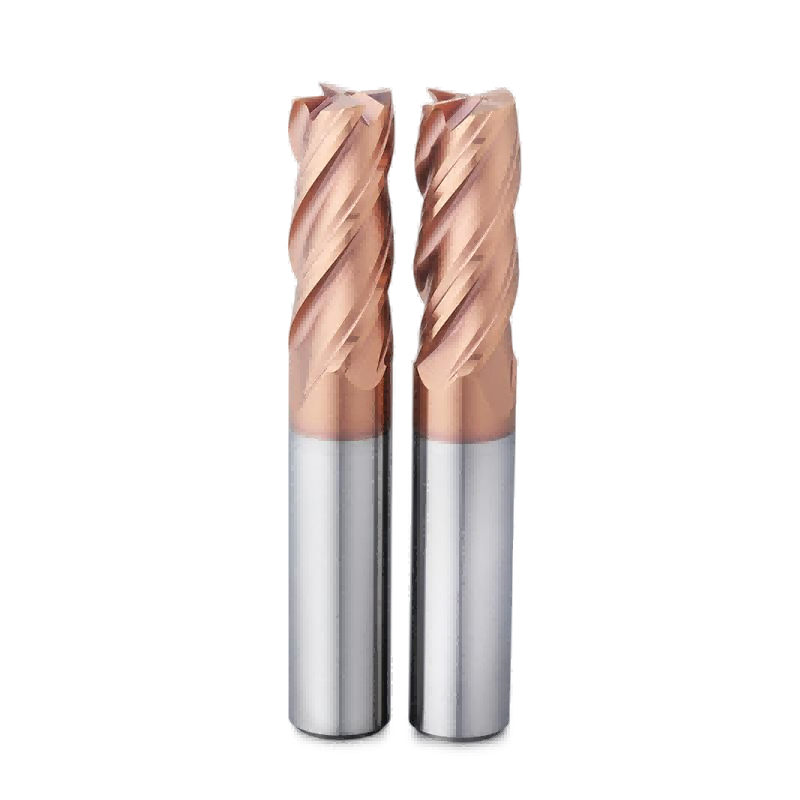
Helix angle directly affects chip evacuation and heat distribution. A 35°–40° helix angle balances rigidity and chip flow for general mold steel milling. Higher helix angles (45°+) improve chip removal in deep pockets but reduce core strength.
Number of flutes determines chip load capacity and surface finish. Four-flute end mills provide stability and finish quality in pre-hardened steels. Two and three-flute tools offer better chip clearance for roughing in adhesive, low-carbon mold steels.
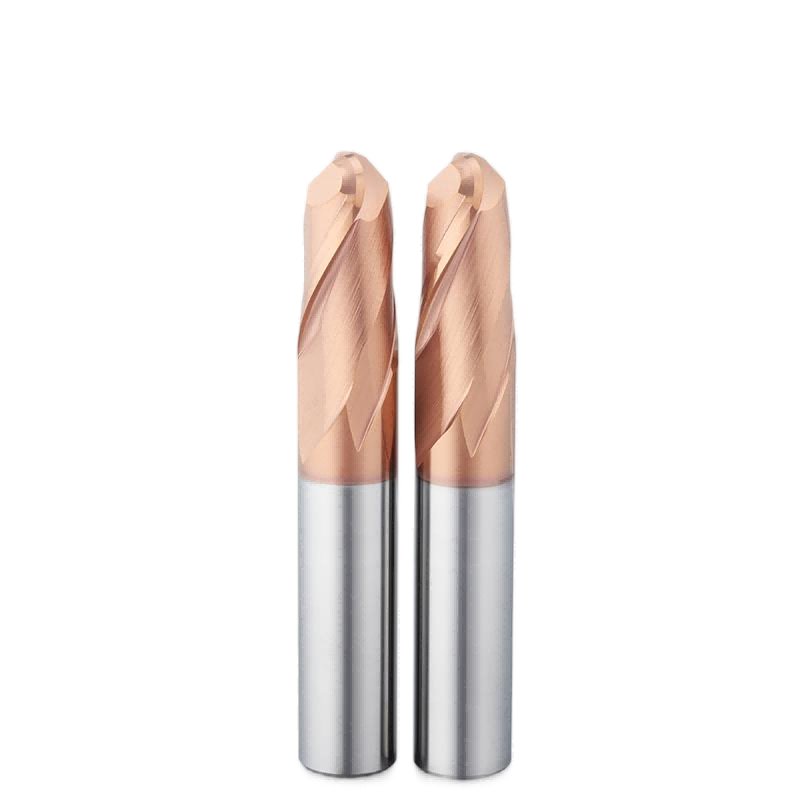
Corner geometry influences edge survival in corner-radius transitions. Bull-nose end mills with radii between 0.5 and 2.0 mm distribute stress across a larger contact area, reducing corner chipping common in sharp-corner toolpaths on hard mold steel.
Coolant and Lubrication Strategy
Flood coolant remains the standard for mold steel roughing, where thermal volume is high. Minimum quantity lubrication (MQL) can reduce thermal shock cycling in interrupted cuts but lacks the heat extraction capacity needed for sustained pocketing operations.
Through-tool coolant delivery eliminates the vapor barrier problem in deep cavity machining. Pressurized coolant (10–20 bar) directed through spindle and tool body reaches the cutting edge consistently, maintaining thermal control at depths exceeding 50 mm.
Coolant concentration affects both lubrication and corrosion. Maintain 8–12% concentration for semi-synthetic fluids in mold steel applications. Low concentration reduces lubrication; high concentration promotes residue buildup that interferes with chip evacuation.
Process Monitoring and Maintenance Routines
Regular flank wear measurement using optical comparators or digital microscopes provides objective replacement criteria. Track VB values across tool positions and adjust change schedules based on measured wear rates rather than estimated cycle times.
Vibration monitoring during machining identifies resonance conditions that accelerate tool fracture. Install accelerometers on spindle housings and set alert thresholds at 2–4 g for mold steel milling, triggering parameter review before catastrophic failure occurs.
Tool storage and handling protocols prevent pre-use damage. Store end mills in individual protective sleeves, avoid hand-contact with cutting edges, and inspect each tool before installation. Coating defects from handling can reduce effective tool life by 30–50%.
B2B Technical Reference Data
Parameter | Roughing (H13, 44 HRC) | Finishing (P20, 32 HRC) | Deep Pocketing |
|---|
Recommended coating | AlTiN | TiCN | AlTiN / multi-layer |
FAQ
Q: Does trochoidal milling work on all mold steel grades?
A: Trochoidal milling reduces engagement angle and thermal spikes regardless of steel hardness. It is most effective in pocketing operations on steels above 30 HRC where conventional linear paths generate rapid edge wear from variable chip load.
Q: How much tool life improvement can proper coolant delivery provide?
A: Consistent flood coolant or through-tool delivery can extend tool life by 30–50% compared to dry or intermittent coolant in mold steel machining. The improvement is most pronounced in deep cavities where vapor barrier formation blocks external coolant access.
Q: Should I re-sharpen worn end mills for mold steel?
A: Re-sharpening removes worn material but also strips the original coating. Re-coated tools typically achieve 60–70% of original tool life due to thinner re-applied coatings and substrate micro-damage from grinding. For critical mold cavity work, new tools are generally more cost-effective.
Q: What vibration levels indicate tool damage risk in mold steel?
A: Spindle vibration above 4 g during mold steel milling signals imminent edge fracture risk. Levels between 2–4 g indicate resonance conditions requiring parameter adjustment. Below 2 g is normal for stable cutting with proper toolpath strategies.
Q: Is MQL viable for hardened mold steel machining?
A: MQL provides sufficient lubrication for light finishing passes on pre-hardened steels but cannot extract the thermal volume generated in roughing or deep-pocket operations. Full flood or through-tool coolant remains necessary for sustained machining above 40 HRC.
Conclusion
Extending end mill tool life in mold steel requires integrated adjustments across coating selection, cutting parameters, tool geometry, coolant strategy, and process monitoring. Thermal management, chip thickness control, and wear-based replacement schedules form the core of any effective tool life extension program.
For technical guidance on mold steel machining optimization and custom tool design, contact Dohre CNC Tools engineering team. Request a rapid sourcing quote from Dohre CNC Tools for solid carbide end mills with application-specific coatings and geometries for mold steel production.