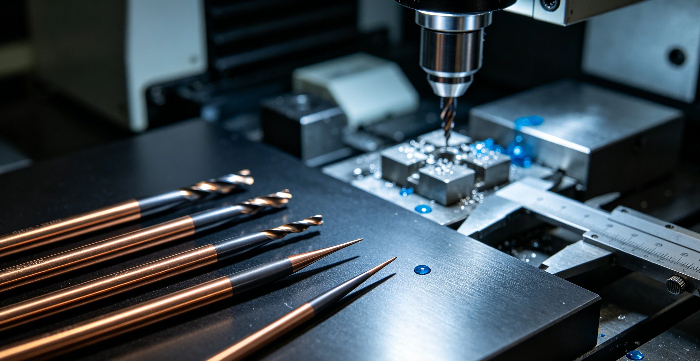
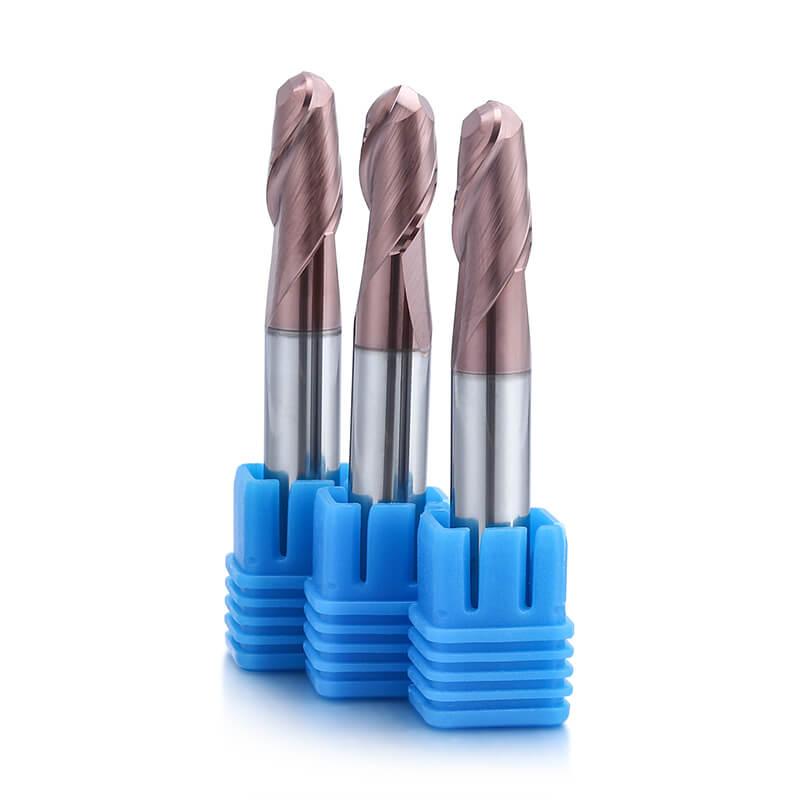
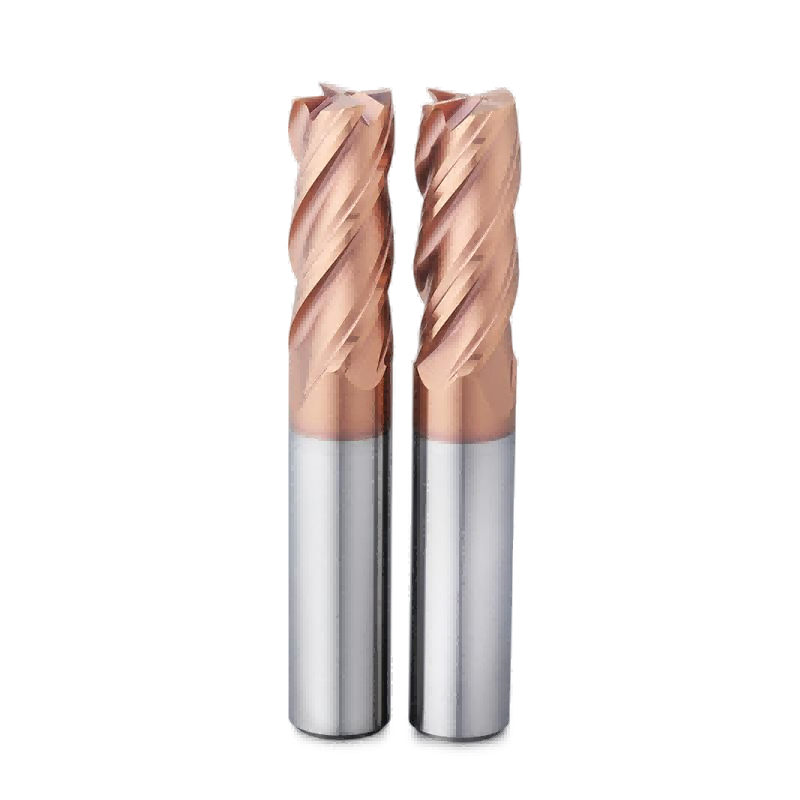
Top 10 End Mill Manufacturers in the World 2026

Reading volume: 0

Release time :2026-06-20

Estimated reading time:

Introduction

We highlight the top 10 global tooling giants and specialized manufacturers shaping the future of high-performance milling. Optimize your industrial workflows and achieve peak productivity with our expert industry insights.

As of 2026, the cutting tool industry is defined by rapid innovation in materials science and digital integration. Global leaders are setting new benchmarks for precision and productivity, enabling manufacturers to meet the extreme demands of aerospace, automotive, and high-tech sectors.

This list highlights the top 10 manufacturers shaping the future of machining technology this year. Whether you are optimizing industrial workflows or seeking peak performance, these industry pioneers provide the essential expertise and advanced tooling solutions to stay competitive in an increasingly automated world.

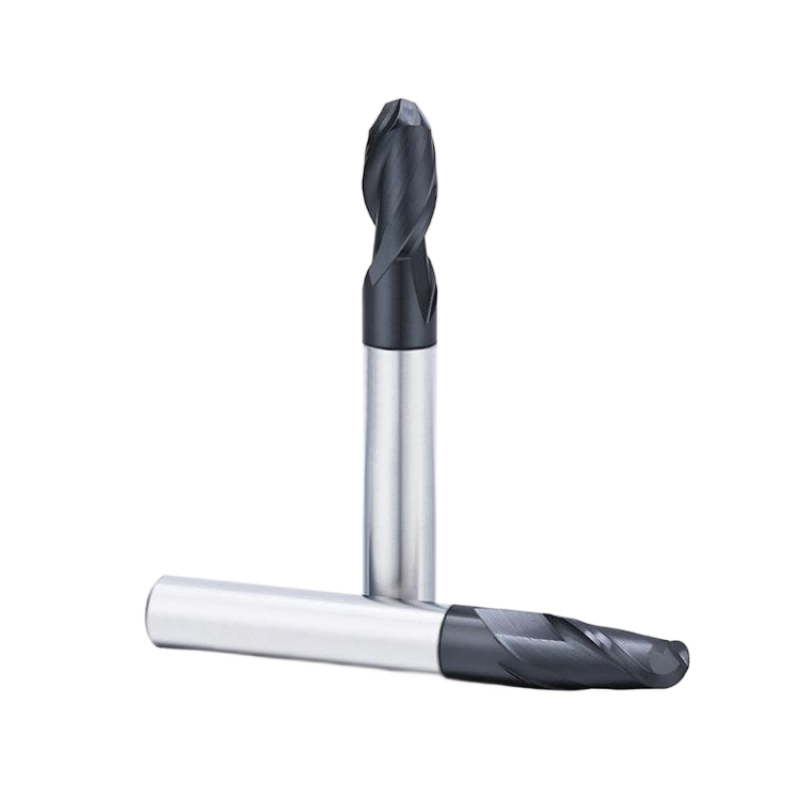
Top 10 End Mill Manufacturers in the World 2026.jpg

Top 10 Industry Leaders for High-Performance Milling Tools

In 2026, the market for high-performance milling tools is dominated by global pioneers that combine advanced material science with digital manufacturing integration. These leaders are chosen for their ability to deliver superior tool life, extreme geometric precision, and specialized coating technologies, which are critical for tackling difficult-to-cut materials like titanium alloys, Inconel, and hardened steels used in aerospace and medical industries.

Sandvik Coromant : The global benchmark for innovation, offering extensive R&D and digitalized cutting solutions.

Kennametal : Renowned for the HARVI series, known for vibration-damping and aerospace performance.

Seco Tools : A leader in high-precision solid and indexable end mills, recognized for strong technical support.

Walter Tools : A century-old expert in precision milling, focusing on long tool life and management services.

Kyocera SGS Precision Tools : A premier manufacturer of advanced carbide rotary tooling with high-tech internal coolant capabilities.

Ingersoll Cutting Tools : A historic innovator specializing in high-performance indexable and solid milling for heavy-duty applications.

Guhring : Possesses over 40,000 tool variations, providing unmatched versatility for tool and mold making.

Dohre CNC: A specialized manufacturer focused on high-performance carbide end mills, known for excellent cost-efficiency and precision in industrial machining.

Harvey Performance Company: Famous for micro/specialty end mills and their "Machining Advisor Pro" software.

DHF Precision Tool: An industry leader in high-speed, high-hardness cutting, known for advanced coatings and aerospace series.
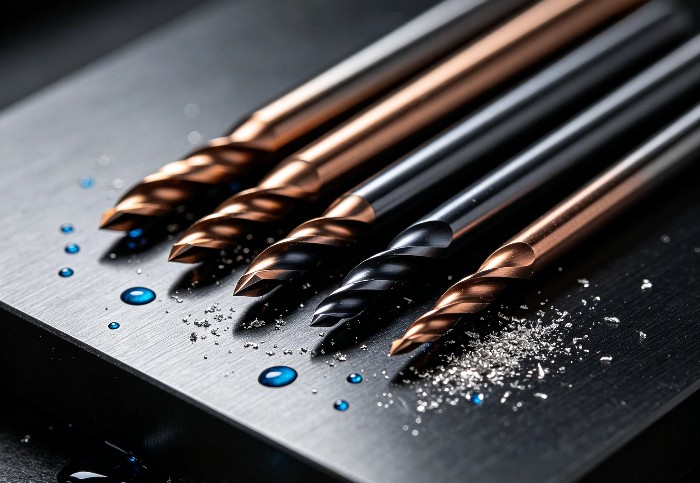
What Defines the Worlds Best End Mill Manufacturers

What Defines the World’s Best End Mill Manufacturers

In 2026, the elite tier of end mill manufacturers is defined by more than just tool production; it is defined by their role as integrated technology partners. The best in the industry distinguish themselves through four core pillars:

Advanced Material Science & Coating Tech: Leadership starts with proprietary carbide substrates and next-generation nano-coatings. Top manufacturers invest heavily in R&D to develop coatings that drastically reduce friction, withstand extreme heat, and extend tool life in demanding sectors like aerospace and medical manufacturing.

Precision Engineering & Quality Consistency: The world’s best utilize state-of-the-art grinding technology to ensure micron-level accuracy. Their hallmark is "repeatability"—ensuring that every tool produced delivers the exact same performance, geometry, and surface finish, which is non-negotiable for high-stakes production lines.

Digital Integration & Smart Tooling: The top-tier standard now includes digital support. This involves providing "Machining Advisors," real-time tool wear data, and digital twins that help engineers optimize speeds, feeds, and toolpaths before a single chip is cut.

Deep Application Expertise: The best manufacturers don’t just sell catalogs; they solve problems. Whether it's developing specialized geometries for exotic materials like titanium or offering customized solutions for complex 5-axis machining, these leaders provide the technical guidance and application support required to maximize productivity in Industry 4.0 environments.

Comparing Global Tooling Giants vs Specialized Manufacturers

The machining industry is supported by two distinct types of suppliers: global tooling giants and specialized niche manufacturers. Choosing the right partner often depends on whether your priority is broad-spectrum infrastructure support or highly targeted, performance-driven solutions.

Global Tooling Giants (e.g., Sandvik Coromant, Kennametal, Seco) act as the backbone of modern industrial manufacturing. Their core strengths lie in:

Scale and Ecosystems: They offer vast, standardized product catalogs that cover virtually every machining need, supported by global distribution networks and expert technical training.

Integrated Solutions: These companies provide more than just tools; they offer "comprehensive machining systems," including software (e.g., tool management, digital machining advisors) and R&D support for large-scale, automated production lines.

Reliability: For mass-production industries like automotive or aerospace, they offer the consistency, repeatability, and supply-chain security required for high-stakes, 24/7 operations.

Specialized Manufacturers (e.g., Dohre CNC, Harvey Performance) focus on depth over breadth. Their advantages include:

Agility and Customization: They are often better positioned to adapt to niche requirements, offering rapid prototyping and custom-engineered tooling geometries that mass-market catalogs may not provide.

Cost-Efficiency: By focusing on specific tool types or industry segments, specialized manufacturers can often provide high-performance solutions at a more competitive price point than the premium-priced "all-in-one" giants.

Targeted Expertise: They frequently lead in specific domains—such as micro-tooling for electronics, specialized coatings for mold and die, or high-performance carbide for specific exotic materials—where their localized focus allows for deeper innovation.

Which should you choose?

Choose a Global Giant if: You need a single, reliable partner to manage a complex, multi-site supply chain, require advanced software integration, or are running high-volume, standardized manufacturing processes.

Choose a Specialized Manufacturer if: You are tackling a unique machining challenge, require custom geometry, or are seeking to optimize performance and costs in specific high-precision or niche applications.

Factors Influencing End Mill Performance in 2026

In 2026, the performance of an end mill is no longer just about the tool itself; it is the result of a complex interplay between advanced metallurgy, real-time data, and precision execution. Whether you are aiming for high-speed material removal or mirror-like surface finishes, the following factors are the primary drivers of success:

Advanced Metallurgy & Coating Integration: Performance begins with the substrate. The industry is moving toward high-performance tungsten carbide grades that offer superior hot hardness. When paired with next-generation PVD/CVD nano-coatings, these tools can withstand extreme thermal loads and resist built-up edge (BUE) in exotic materials like titanium and Inconel.

Adaptive Tool Geometry: Modern designs prioritize vibration control. Technologies like variable helix angles and unequal flute spacing have become industry standard for disrupting harmonic vibrations (chatter). This allows for higher depths of cut and faster feed rates without sacrificing surface integrity.

AI-Native Machining & Digital Optimization: The "old way" of relying solely on static speed/feed charts is being replaced by AI-driven, data-backed optimization. Machinists now leverage digital twins and "Machining Advisor" software to simulate cutting forces and thermal drift before the first cut, allowing for precise adjustment of cutting parameters in real-time.

System Rigidity & Workholding: A tool is only as stable as the machine it is held in. Total Indicated Runout (TIR) remains the silent killer of performance. High-performance milling in 2026 relies on high-precision hydraulic or shrink-fit tool holders to maximize tool life and repeatability, particularly when using micro-diameter or long-reach end mills.

Thermal & Chip Management: Effective heat dissipation—whether through high-pressure internal coolant delivery or optimized air-blast strategies—is critical. Furthermore, flute design now focuses heavily on chip evacuation volume; for deep-pocket or slotting operations, the ability to clear chips efficiently prevents re-cutting, which is a leading cause of premature tool failure.

Summary

In 2026, the high-performance milling market is defined by a strategic balance between global tooling giants, which provide comprehensive digital ecosystems, and specialized manufacturers, which offer agility and cost-efficient, niche technical expertise. 

Success in this era is driven by a fusion of advanced material science, AI-native machining optimization, and precision-focused engineering.

To stay competitive, manufacturers must choose partners based on their specific operational needs: global leaders for standardized, high-volume production and software integration, or specialized firms for custom geometries and target-specific applications. 

Ultimately, achieving peak performance requires integrating these high-tech tools with data-backed strategies to navigate the increasingly automated landscape of modern industry.

FAQ

How often do these manufacturers release new products?

Most top brands launch new products every 6–12 months, with ISCAR known for the fastest innovation cycle in the industry.

Do I need to buy directly from the manufacturer?

Not necessarily. Most sell through authorized distributors, who often provide faster local stock, technical support, and better small-batch pricing.

What should I consider when choosing a manufacturer?

Focus on four things: your material (titanium, steel, aluminum), cost per part (not just tool price), coating technology, and supply reliability.
Interest in Contact with us?

*We respect your privacy. When you submit your contact information, we agree to only contact you in accordance with our Privacy Policy.

Table of contents

×

Contact Us

captcha

*We respect your privacy. When you submit your contact information, we agree to only contact you in accordance with our Privacy Policy.

×

By continuing to use the site you agree to our privacy policy Terms and Conditions.
I agree