How to Choose an End Mill for Pre-Hardened Mold Steel
Introduction
Pre-hardened mold steel can often be machined without additional hardening after the main cutting process, but it still places higher demands on the end mill than ordinary carbon steel. The right cutter should be selected according to the actual hardness, mold feature, machining stage, tool rigidity, and required surface finish.
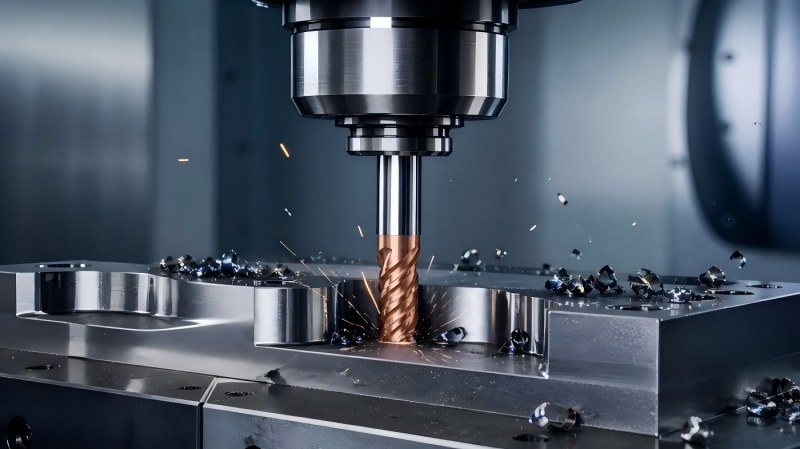
Pre-hardened mold steel is widely used for injection molds, die components, mold bases, cavities, and precision tooling. Because the material is supplied in a hardened or semi-hardened condition, manufacturers can often machine the part without carrying out a separate hardening process after most of the cutting work is complete.
That does not mean the material is easy to mill. Compared with ordinary steel, pre-hardened mold steel places more pressure on the cutting edge and is less tolerant of runout, vibration, weak toolholding, or unsuitable cutter geometry. Tool selection should therefore be based on the actual hardness and machining requirement, not only on the material name.
What Is Pre-Hardened Mold Steel?
Pre-hardened mold steel is supplied at a controlled hardness that allows it to be machined directly into mold components. P20 and 718H are common examples used in plastic injection molds, mold bases, and general mold parts.
Other mold steels, including H13, SKD61, S136, and powder metallurgy grades, may also be machined in different heat-treatment conditions. Their machinability can change significantly depending on the actual hardness, previous heat treatment, part size, and required finishing quality.
For this reason, two workpieces with a similar material name may not require the same end mill. The hardness certificate, machining stage, and final surface requirement should be confirmed before the cutter is selected.
Why Pre-Hardened Steel Needs a Suitable End Mill
Pre-hardened steel combines hardness and toughness. During milling, the cutting edge must resist wear while remaining strong enough to handle changing cutting loads in cavities, corners, sidewalls, and shoulders.
A general-purpose cutter may remove the material, but it may not maintain stable tool life or surface quality during longer mold machining operations. Common problems include flank wear, corner chipping, chatter marks, poor sidewall finish, and dimensional variation.
A mold steel end mill should provide a balanced combination of wear resistance, edge strength, heat resistance, and vibration control. The right balance depends on whether the operation is roughing, semi-finishing, flat-surface milling, cavity finishing, or 3D contour machining.
Confirm the Actual Hardness Before Selecting the Cutter
Material name alone does not provide enough information for accurate tool selection. P20, 718H, H13, and S136 can be supplied or heat-treated to different hardness levels, and the machining requirement changes as hardness increases.
| Workpiece Condition | Main Machining Concern | Tool Selection Direction |
|---|
| Moderate pre-hardened condition | Machining efficiency and predictable wear | Use a coated carbide end mill designed for mold steel |
| Higher-hardness mold steel within HRC60 | Edge strength, vibration, and coating stability | Use a dedicated mold steel end mill with stable geometry and rigid toolholding |
| Near the upper end of the tool's hardness range | Faster wear, chipping risk, and surface consistency | Reduce unstable engagement and match the cutter carefully to the machining stage |
| Heat-treated material in the HRC60–68 range | High cutting pressure and demanding hard-milling conditions | Consider a dedicated high-hardness steel end mill |
When the workpiece is close to or above HRC60, the cutter should not be selected as if the material were ordinary pre-hardened steel. For a more detailed comparison, see our guide on HRC60, HRC65, and HRC68 hardened steel end mill selection.
Common Pre-Hardened and Mold Steel Materials
The same end mill should not automatically be used for every mold steel. Material condition, hardness, alloy content, part geometry, and finishing requirements all influence cutting performance.
| Material | Typical Application | Selection Note |
|---|
| P20 | Plastic injection molds and general mold components | Confirm supplied hardness and select the cutter according to roughing or finishing needs |
| 718H | Large plastic molds and precision mold components | Stable sidewall finish and dimensional consistency are often important |
| H13 / SKD61 | Die-casting molds, hot-work dies, and forging components | The required tool changes significantly before and after heat treatment |
| S136 | Precision cavities and molds requiring high surface quality | Pay close attention to edge condition, finishing allowance, and actual hardness |
| CPM and other powder steels | High-wear mold components and demanding tooling parts | Wear resistance and cutting stability become more important |
Choose the End Mill Shape According to the Mold Feature
Tool shape should follow the feature being machined. Flat surfaces, deep cavities, sidewalls, corners, and curved profiles create different contact conditions and cutting loads.
Square End Mills for Flat Surfaces, Slots, and Sidewalls
Square end mills are commonly used for slots, flat bottoms, shoulders, sidewalls, and step faces. They are suitable when the part requires a defined corner and a flat machined surface.
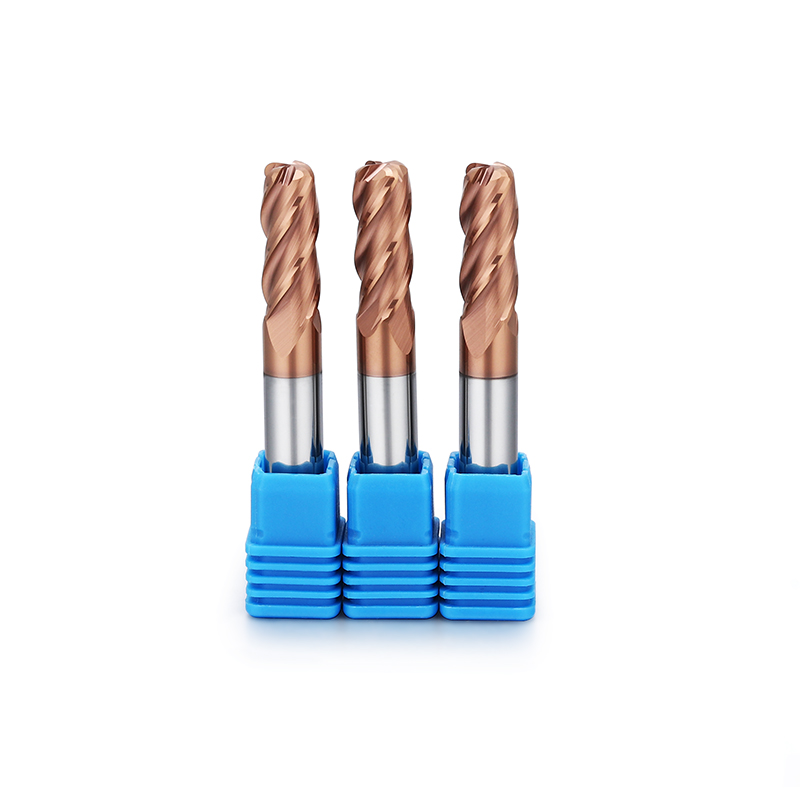
For mold steel machining within HRC60, a UEX square end mill for mold steel can be used for semi-finishing and finishing of flat surfaces, slots, shoulders, and sidewalls.
Corner Radius End Mills for Stronger Corner Support
The sharp corner of a square end mill can carry a high local load. When corner wear or small edge damage becomes a concern, a corner radius design can distribute the load more gradually and provide better edge support.
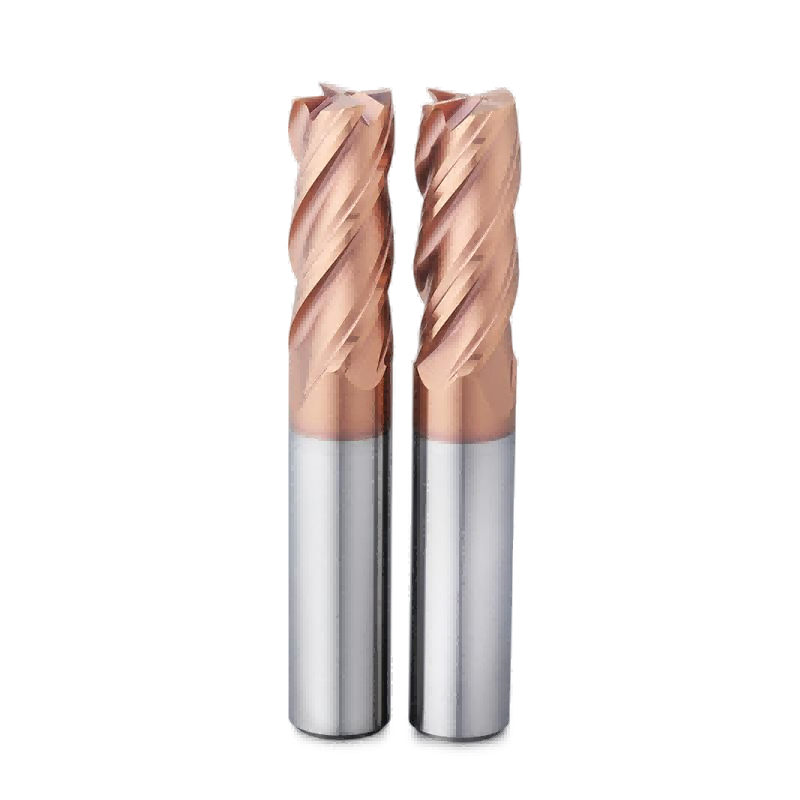
A UEX corner radius end mill for mold steel is suitable for semi-finishing, sidewall machining, shoulders, and corner-transition areas where stability is more important than producing a completely sharp internal corner.
Ball Nose End Mills for Cavities and 3D Surfaces
Ball nose end mills are used for curved surfaces, mold cavities, complex contours, and 3D finishing. Surface quality depends on the tool radius, step-over, toolpath, cutter condition, and contact point on the ball nose.
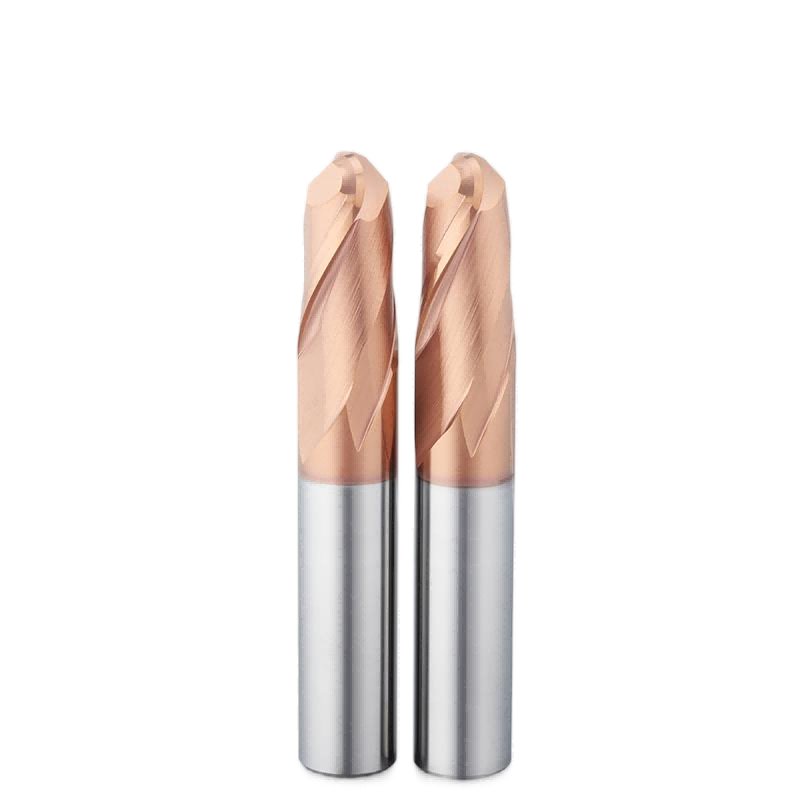
For curved mold surfaces and cavity finishing, a UEX ball nose end mill for mold steel can support smooth contour transitions and stable finishing within the recommended hardness range.
What to Look for in a Mold Steel End Mill
A suitable mold steel end mill should be evaluated as a complete cutting system. The carbide substrate, coating, edge preparation, flute geometry, and toolholding condition all influence performance.
| Selection Factor | Why It Matters |
|---|
| Carbide substrate | Needs enough hardness for wear resistance and enough toughness to reduce chipping risk |
| Coating | Helps resist heat, oxidation, friction, and abrasive wear during continuous machining |
| Edge preparation | Affects the balance between cutting sharpness and edge strength |
| Flute geometry | Influences vibration, chip flow, cutting pressure, and surface quality |
| Toolholding accuracy | Runout and long overhang can cause uneven flute loading, wear, and chatter |
Dohre's UEX series mold steel end mills for materials up to HRC60 combine ultra-fine carbide, TIALSIN coating, and unequal flute geometry to support stable semi-finishing and finishing in mold steel applications.
Roughing, Semi-Finishing, and Finishing Require Different Priorities
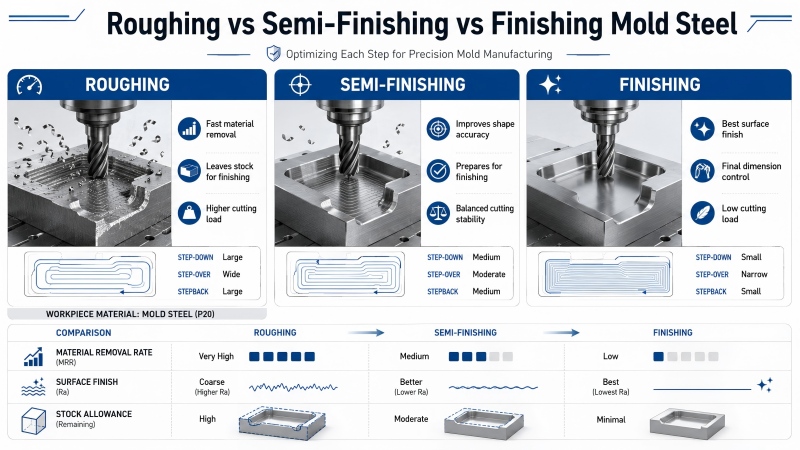
Using the same cutting strategy throughout the entire mold machining process can shorten tool life or reduce finishing consistency. Each machining stage has a different objective.
| Machining Stage | Main Goal | Selection Focus |
|---|
| Roughing | Remove material efficiently | Tool rigidity, chip evacuation, and controlled engagement |
| Semi-finishing | Create a consistent allowance for finishing | Stable geometry, predictable wear, and vibration control |
| Finishing | Achieve final dimensions and surface quality | Low runout, sharp and stable edge condition, and controlled step-over |
For demanding mold components, separating roughing and finishing tools can make wear more predictable. A tool that has already completed a long roughing cycle may still cut material, but its edge condition may no longer be suitable for precision finishing.
Dry Cutting or Coolant: Which Is Better?
There is no single cooling method that is correct for every pre-hardened steel application. The decision depends on the cutter coating, machine setup, cutting speed, toolpath, workpiece geometry, and chip-removal requirement.
Some mold steel operations are performed dry or with air blast, while others use coolant to support chip removal and temperature control. The important point is to maintain a stable cutting condition. Intermittent cooling or an inconsistent coolant supply can create a less predictable thermal environment around the cutting edge.
Follow the cutter supplier's recommendation and confirm that the selected cooling method is suitable for the coating, machining operation, and machine enclosure.
Common Problems in Pre-Hardened Mold Steel Milling
| Problem | Possible Cause | What to Check |
|---|
| Fast flank wear | Unsuitable coating, excessive cutting load, or hardness higher than expected | Actual hardness, coating condition, feed, and engagement |
| Corner chipping | Weak corner support, runout, chatter, or sudden entry | Tool shape, holder accuracy, overhang, and toolpath transition |
| Chatter marks | Long overhang, weak setup, or unstable radial engagement | Toolholding rigidity, spindle condition, and cutting path |
| Poor surface finish | Tool wear, runout, large step-over, or unsuitable cutter shape | Edge condition, finishing allowance, tool geometry, and step-over |
When Should You Use a High-Hardness Steel End Mill Instead?
Pre-hardened mold steel and fully hardened steel should not be treated as the same machining condition. A mold steel end mill is generally suitable when the workpiece remains within its recommended hardness range and the operation requires stable semi-finishing or finishing.
When heat treatment raises the workpiece into the HRC60–68 range, wear speed, cutting pressure, and chipping risk become more demanding. In that condition, a dedicated high-hardness steel end mill for HRC60–68 materials should be considered.
The transition should be based on the measured hardness and machining condition rather than the material name alone. H13, S136, and other mold steels may require different cutters before and after heat treatment.
Practical Checklist for Pre-Hardened Mold Steel End Mill Selection
• Confirm the actual hardness and heat-treatment condition of the workpiece.
• Do not select the cutter by material name alone.
• Match square, corner radius, or ball nose geometry to the mold feature.
• Choose a carbide substrate and coating suitable for mold steel machining.
• Keep tool overhang as short as the part allows.
• Check runout and holder condition before precision finishing.
• Use a stable toolpath and avoid sudden changes in cutter engagement.
• Leave a consistent allowance during semi-finishing.
• Monitor wear before surface finish or dimensional accuracy begins to change.
• Move to a high-hardness steel end mill when the actual hardness exceeds the mold steel tool's recommended range.
FAQ
What end mill should I use for pre-hardened mold steel?
Use a coated carbide end mill designed for mold steel and matched to the actual workpiece hardness. Cutter shape should be selected according to whether the operation involves flat surfaces, sidewalls, corners, cavities, or 3D contours.
Can the same end mill machine P20, 718H, H13, and S136?
One tool series may cover several mold steel grades, but the actual cutter and cutting conditions should still be selected according to hardness, heat-treatment state, machining stage, and part feature.
Is a square or corner radius end mill better for mold steel?
A square end mill is useful when a flat bottom or sharp corner is required. A corner radius end mill provides stronger corner support and may be more stable when corner wear or chipping is a concern.
Which end mill is suitable for mold cavity finishing?
Ball nose end mills are commonly used for curved cavities and 3D surfaces. Flat or corner radius tools may also be required for sidewalls, flat areas, shoulders, and semi-finishing operations.
When should I change from a mold steel end mill to a hardened steel end mill?
Consider a dedicated high-hardness steel end mill when the measured workpiece hardness enters the HRC60–68 range or when the mold steel cutter can no longer maintain stable wear, edge strength, and surface quality under the actual cutting condition.
Conclusion
Choosing an end mill for pre-hardened mold steel starts with confirming the actual hardness and machining condition. P20, 718H, H13, S136, and other mold steels can require different cutters depending on heat treatment, part geometry, and machining stage.
The best results usually come from matching the cutter shape, carbide substrate, coating, toolholding, and toolpath to the application. Square end mills are suitable for flat features, corner radius tools improve corner support, and ball nose end mills are used for cavities and curved surfaces.
Dohre provides UEX mold steel end mills for materials up to HRC60, including square, corner radius, and ball nose designs for different mold machining requirements. Contact us for standard tool recommendations or custom mold steel end mill solutions.