How to Improve Surface Finish When Milling Pre-Hardened Mold Steel
Introduction
Achieving a consistent surface finish in pre-hardened mold steel requires more than reducing the feed rate. Tool condition, cutter shape, runout, finishing allowance, step-over, toolholding rigidity, and workpiece hardness all influence the final result. A stable process can reduce polishing work and improve mold accuracy.
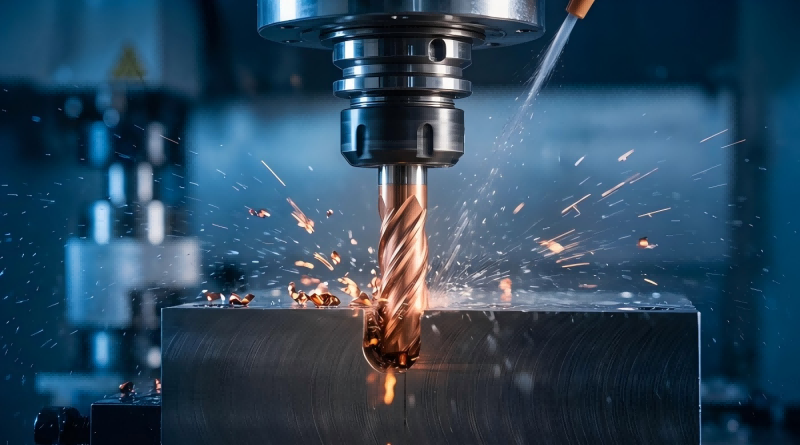
Surface finish is a major concern in mold steel machining. Visible cutter marks, uneven sidewalls, chatter patterns, or rough cavity surfaces can increase polishing time and make it more difficult to maintain consistent mold dimensions.
These problems are rarely caused by one cutting parameter alone. The condition of the cutting edge, tool geometry, holder accuracy, remaining allowance, toolpath, and actual workpiece hardness all affect the final result. Improving the finish therefore starts with identifying which part of the process is creating the surface defect.
Why Surface Finish Is Difficult to Control in Pre-Hardened Mold Steel
Pre-hardened mold steels such as P20 and 718H combine moderate-to-high hardness with enough toughness to resist cutting. Other materials, including H13, SKD61, and S136, may also be machined in different heat-treatment conditions.
As hardness increases, the cutting edge has less tolerance for runout, vibration, or unstable engagement. Small problems that may be difficult to notice in ordinary steel can leave clear marks on a mold cavity or precision sidewall.
The first step is to confirm the actual hardness and machining condition. Our guide on how to choose an end mill for pre-hardened mold steel explains how hardness, material condition, machining stage, and cutter geometry should be considered together.
Common Surface Problems in Mold Steel Milling
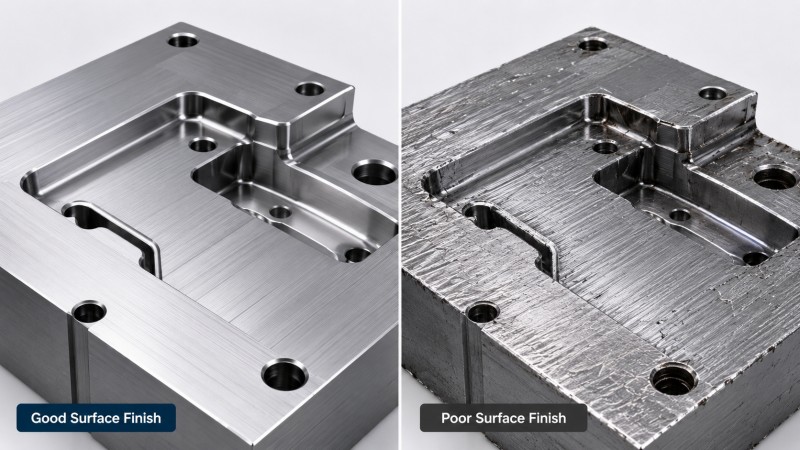
The appearance of the machined surface often provides useful information about the cause of the problem. Regular feed marks usually point to a different issue than random scratches, chatter waves, or damaged corners.
| Surface Problem | Possible Cause | What to Check |
|---|
| Visible feed marks | Large step-over, high feed per tooth, or worn cutting edge | Step-over, feed, edge condition, and tool diameter |
| Chatter or wave patterns | Long overhang, poor rigidity, runout, or unstable engagement | Holder, spindle, clamping, radial engagement, and toolpath |
| Uneven sidewall finish | Tool deflection, flute runout, or changing cutting load | Tool extension, runout, finishing allowance, and pass direction |
| Rough cavity surface | Worn tool, unsuitable cutter shape, excessive allowance, or unstable step-over | Tool wear, ball radius, cutting path, and remaining stock |
| Corner damage or small chips | Sharp tool corner, sudden entry, runout, or excessive local load | Corner geometry, toolpath transition, holder accuracy, and cutting load |
Start with the Condition of the Cutting Edge
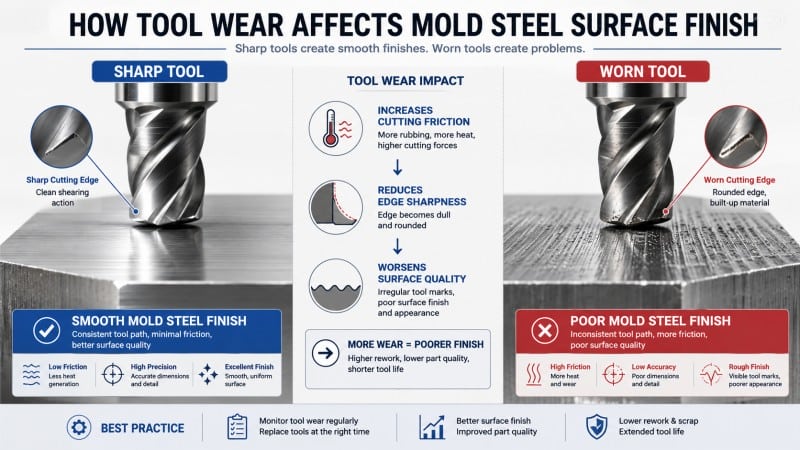
Tool wear often appears on the workpiece before the cutter fails completely. A worn edge may continue removing material, but it no longer cuts as cleanly as a new or stable edge.
As flank wear increases, cutting pressure rises and the tool may begin to rub against the surface. The result can be stronger tool marks, uneven brightness, higher cutting temperature, and less consistent dimensions.
Corner wear is especially important when using square end mills. Once the sharp corner begins to wear or chip, the cutter may leave lines on the bottom surface or create inconsistent transitions between the floor and sidewall.
For precision finishing, it is usually better to inspect or replace the cutter before surface quality begins to decline. A tool that has completed a long roughing cycle may not be suitable for the final finishing pass.
Choose the Cutter Shape According to the Surface
Different mold features require different cutting contact. A flat bottom, vertical wall, corner transition, and 3D cavity should not automatically be machined with the same cutter shape.
Square End Mills for Flat Surfaces and Sidewalls
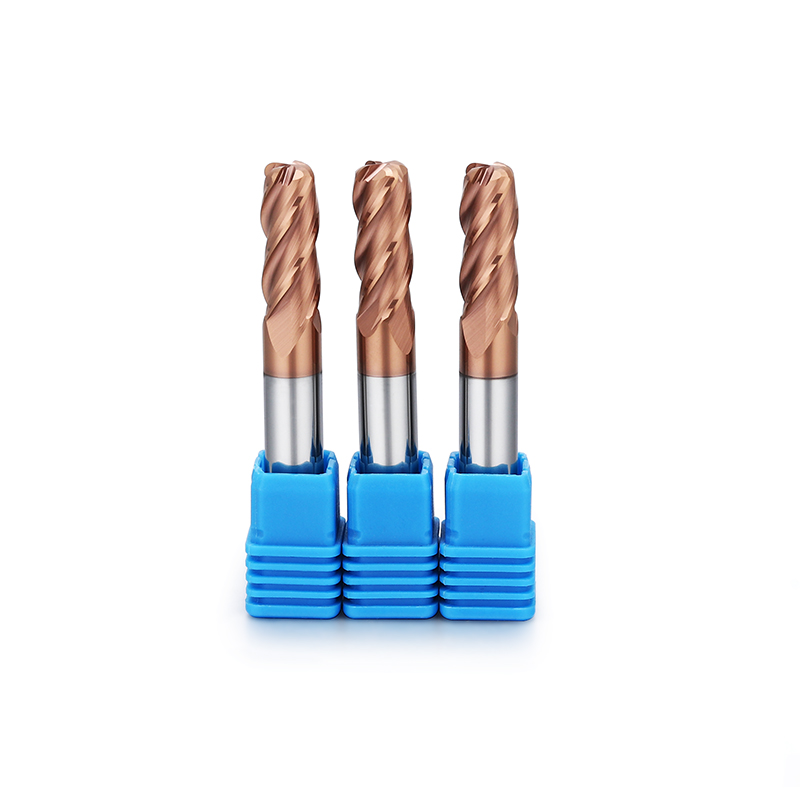
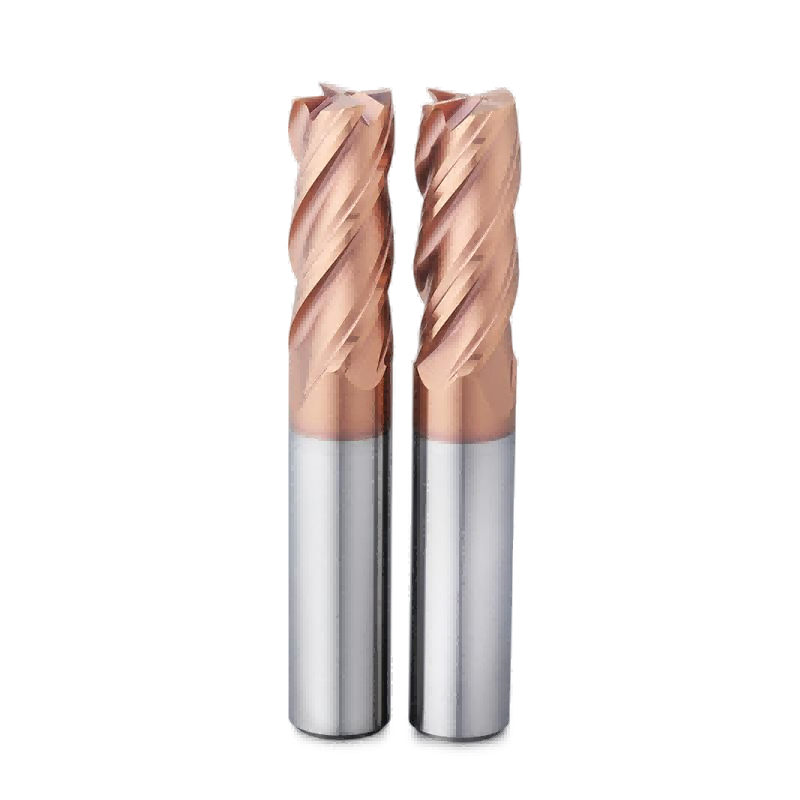
Square end mills are commonly used for flat bottoms, shoulders, slots, and sidewalls. They can produce a clear bottom profile, but the sharp cutting corner carries a concentrated load and should be monitored for wear.
For flat features and sidewall finishing within the recommended hardness range, a UEX square end mill for mold steel can support stable machining of flat surfaces, shoulders, slots, and defined edges.
Corner Radius End Mills for Better Corner Stability
A corner radius end mill distributes cutting load over a curved corner rather than concentrating it at a sharp point. This can improve corner strength and make wear more predictable during semi-finishing and sidewall machining.
When a completely sharp internal corner is not required, a UEX corner radius end mill for mold steel can help reduce corner damage and improve stability around shoulders and cavity transitions.
Ball Nose End Mills for Curved Cavities and 3D Finishing
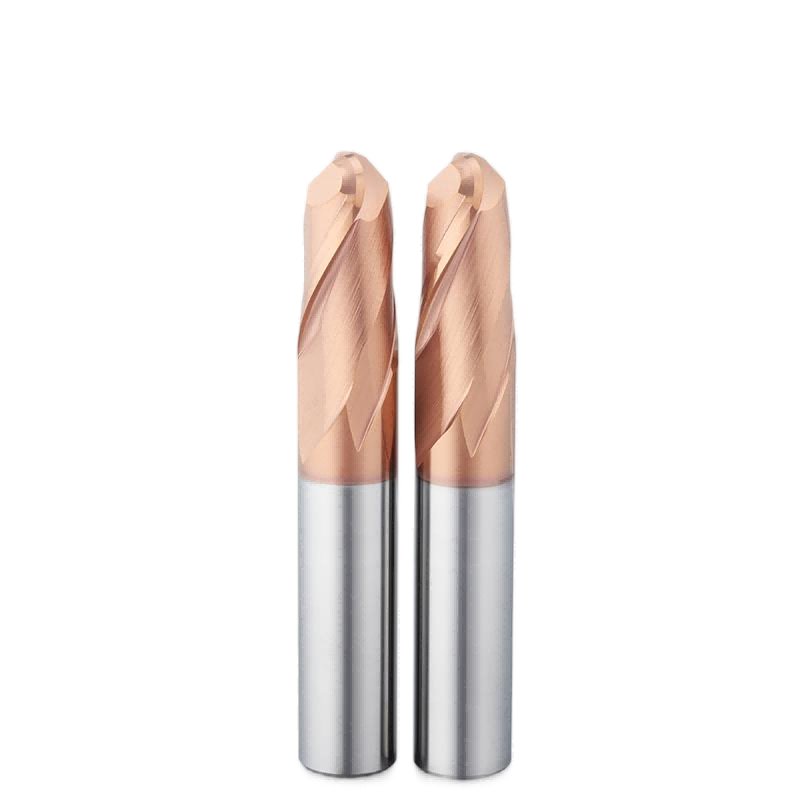
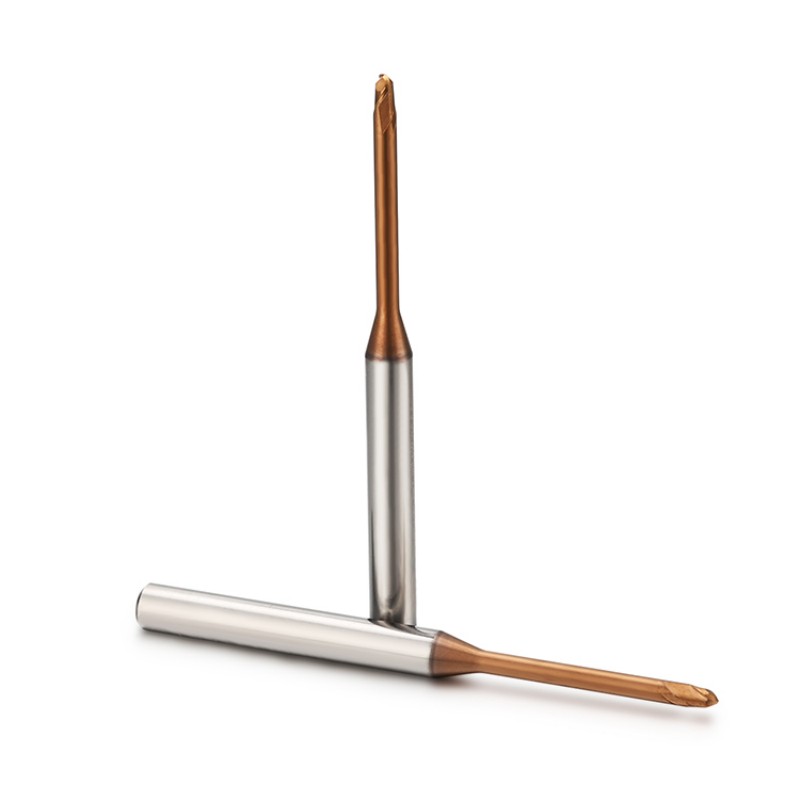
Ball nose end mills are commonly used for curved cavities, free-form surfaces, and 3D mold profiles. The final surface depends heavily on the ball radius, step-over, cutting direction, contact point, and condition of the cutting edge.
For curved mold surfaces and cavity finishing, a UEX ball nose end mill for mold steel can support smooth contour transitions and consistent finishing when the toolpath and step-over are properly controlled.
Why Runout and Toolholding Accuracy Matter
Runout causes the flutes to carry different cutting loads. One flute may remove more material and wear faster, while another flute may rub or cut very little. This creates an uneven surface pattern and reduces tool life.
The effect becomes more noticeable during mold finishing because the remaining allowance is small. Even a slight difference between cutting edges can leave visible lines on sidewalls and flat surfaces.
Before finishing, check the holder, collet, spindle interface, clamping depth, and tool extension. Keep the overhang as short as the mold feature allows. A suitable cutter cannot produce a stable finish if the setup allows the tool to deflect or rotate off-center.
Control the Finishing Allowance
The final surface depends on the material left by the previous operation. If roughing or semi-finishing leaves an uneven allowance, the finishing tool must remove different amounts of material across the part.
This changing load can cause tool deflection, inconsistent wear, and visible surface variation. The final finishing pass should remove a controlled and relatively uniform amount of material.
| Machining Stage | Main Objective | Surface Finish Control |
|---|
| Roughing | Remove material efficiently | Leave enough material for shape correction and later finishing |
| Semi-finishing | Create a consistent part shape | Leave a uniform allowance across sidewalls, floors, and cavities |
| Finishing | Reach the final size and surface quality | Use a stable tool, controlled engagement, and suitable step-over |
Step-Over and Feed Marks
Step-over controls the distance between adjacent tool passes. If the value is too large, visible ridges or scallop marks remain on the surface. Reducing step-over usually produces a finer finish, but it also increases machining time.
The correct value depends on the cutter diameter, ball radius, surface shape, required roughness, and rigidity of the setup. Curved cavity finishing with a ball nose end mill usually requires closer toolpath spacing than flat-surface milling.
Feed per tooth also affects the spacing and depth of cutter marks. Reducing the feed can improve the finish in some cases, but an excessively low feed may cause rubbing rather than clean cutting. Feed, spindle speed, and step-over should therefore be adjusted together.
Reduce Vibration Before Changing Cutting Data
Chatter cannot always be corrected by lowering the feed. If the tool overhang is too long, the holder is not rigid, or the cutting path creates sudden engagement, reducing the feed may only reduce productivity without solving the main problem.
Check whether the vibration occurs throughout the cut or only in corners, deep cavities, or changing engagement areas. Local chatter often points to a toolpath or radial-load problem, while continuous chatter may indicate insufficient rigidity or an unsuitable spindle-speed range.
Unequal helix or unequal pitch geometry can help interrupt repeated cutting forces and reduce resonance. The cutter should still be combined with short overhang, accurate holding, and smooth toolpath transitions.
Coating and Edge Preparation Affect the Finished Surface
A coating for mold steel machining should help the cutting edge resist heat, friction, oxidation, and wear. When the coating begins to fail or the edge loses its original shape, surface consistency can decline quickly.
Edge preparation also affects the result. An edge that is too weak may chip under load, while an edge that is too heavily prepared may increase cutting pressure. A balanced edge supports both cutting stability and finishing quality.
Dohre’s UEX series mold steel end mills for materials up to HRC60 combine ultra-fine carbide, TIALSIN coating, and unequal flute geometry for stable semi-finishing and finishing in mold steel applications.
When the Workpiece Hardness Is Above the UEX Range
The actual hardness should always be confirmed before finishing. H13, S136, and other mold steels can change significantly after heat treatment, even though the material name remains the same.
When the workpiece enters the HRC60–68 range, a cutter designed specifically for high-hardness steel should be considered. The higher hardness creates greater cutting pressure and places more demanding requirements on edge strength, coating stability, and setup rigidity.
For these conditions, see our guide on HRC60, HRC65, and HRC68 hardened steel end mill selection.
Practical Checklist for Better Mold Steel Surface Finish
• Confirm the actual hardness and heat-treatment condition.
• Choose the cutter shape according to the mold feature.
• Inspect tool wear before precision finishing.
• Separate roughing and finishing tools when surface quality is critical.
• Keep tool overhang as short as possible.
• Check runout, holder condition, and clamping accuracy.
• Leave a consistent allowance during semi-finishing.
• Select step-over according to cutter radius and required surface quality.
• Use smooth toolpath entries and avoid sudden engagement changes.
• Adjust feed, speed, step-over, and depth of cut as one cutting system.
FAQ
What causes poor surface finish in pre-hardened mold steel?
Common causes include tool wear, excessive runout, long overhang, vibration, uneven finishing allowance, unsuitable cutter geometry, large step-over, and unstable cutting engagement.
Which end mill is best for mold cavity finishing?
Ball nose end mills are commonly used for curved cavities and 3D surfaces. Square or corner radius tools may also be needed for flat areas, sidewalls, shoulders, and semi-finishing.
Will reducing feed always improve the surface finish?
No. Reducing feed may help in some cases, but it will not correct runout, vibration, tool wear, uneven allowance, or unsuitable cutter geometry. Excessively low feed can also cause rubbing.
How does step-over affect mold surface quality?
A large step-over leaves deeper and more visible toolpath marks. A smaller step-over usually produces a finer surface, especially during ball nose finishing of curved cavities.
Can the same cutter be used for roughing and finishing?
It is possible in less demanding work, but separate roughing and finishing tools are often better when surface finish and dimensional accuracy are important. A worn roughing tool may no longer have the edge condition required for finishing.
Conclusion
Improving surface finish in pre-hardened mold steel requires control over the complete machining process. Tool wear, cutter geometry, runout, overhang, finishing allowance, step-over, and toolpath stability all influence the finished surface.
The cutter should match both the mold feature and the actual workpiece hardness. Square end mills are suitable for flat areas and sidewalls, corner radius cutters provide stronger corner support, and ball nose end mills are used for curved cavities and 3D surfaces.
Dohre provides UEX mold steel end mills for materials up to HRC60, including square, corner radius, and ball nose designs for different mold machining requirements. Contact us for standard tool recommendations or custom mold steel end mill solutions.