Tungsten Carbide Drill Bits: Manufacturing Process and Performance Advantages
Introduction
Tungsten carbide drill bits are widely used for precision drilling because they offer high hardness, wear resistance, stable geometry, and long tool life. This article explains how carbide material, CNC grinding, coating, and quality inspection improve drilling performance in demanding machining applications.
Tungsten carbide drill bits are widely used in modern machining because of their high hardness, excellent wear resistance, and ability to maintain cutting performance under high-speed conditions. Compared with traditional high-speed steel drills, solid carbide drills provide longer tool life, higher efficiency, and more stable drilling accuracy.
In industries such as automotive manufacturing, mold making, aerospace, and general mechanical processing, carbide drill bits have become the preferred solution for drilling materials like alloy steel, stainless steel, cast iron, and bearing steel.
This article explains the manufacturing process of tungsten carbide drill bits and the key performance advantages that make them an essential tool in high-precision machining.
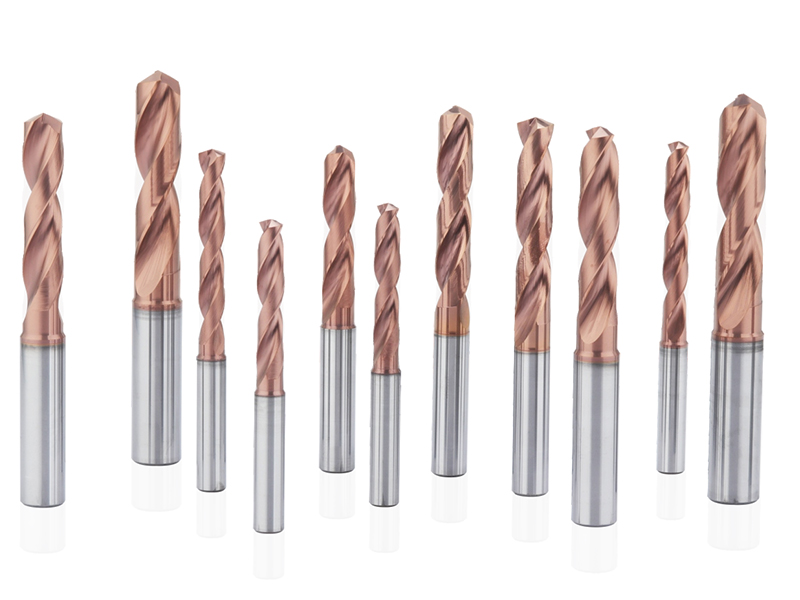
Raw Material Selection: High-Quality Tungsten Carbide
The performance of a carbide drill bit starts with the quality of the raw material. High-performance drill bits are usually manufactured from ultra-fine grain tungsten carbide.
For example, high-grade carbide drills are often made from 0.8μm ultra-fine tungsten carbide with about 10% cobalt content. This combination provides an ideal balance between hardness and toughness. The ultra-fine grain structure improves wear resistance, while the cobalt binder enhances toughness and prevents premature breakage during drilling.
High-quality carbide materials are especially important for high-speed machining applications, such as carbide drills designed for aluminum machining, where cutting speeds are significantly higher than those used for steel.
Precision Grinding with Advanced CNC Machines
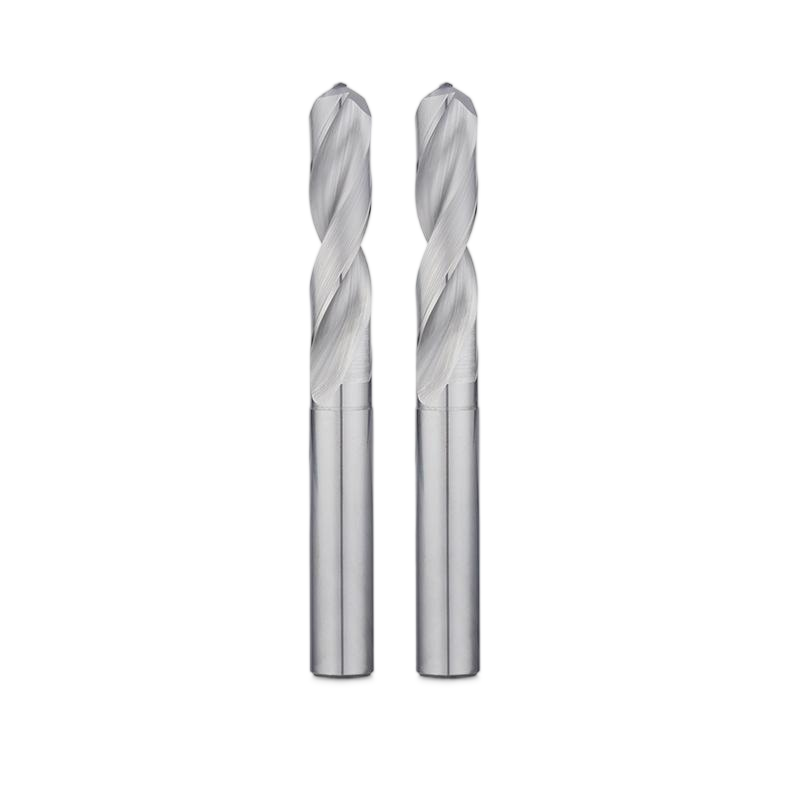
After selecting the raw carbide rod, the drill geometry is produced through high-precision grinding. Modern carbide drills are typically manufactured using five-axis CNC grinding machines, which allow extremely accurate control of cutting edges and geometry.
High-precision grinding ensures:
lSharp and consistent cutting edges
lAccurate point angles and helix angles
lStable chip evacuation geometry
lHigh dimensional accuracy
For example, many high-performance carbide drills use a 30° helix angle and a 138.9° point angle, which significantly improves chip evacuation and cutting stability. The optimized geometry allows the drill to enter the material quickly while reducing cutting resistance.
In addition, advanced grinding equipment ensures extremely high edge precision, which leads to smoother cutting and improved hole quality.
Optimized Drill Geometry Design
Geometry plays a crucial role in drilling performance. A well-designed carbide drill must balance cutting efficiency, chip evacuation, and tool strength.
Several key structural features are commonly used in high-performance carbide drills:
1. Double Cutting Edge Point Design
Solid carbide maintains cutting edge integrity even under high RPM and elevated cutting temperatures. This allows for stable machining of both soft and hard materials without rapid edge degradation.
The drill point often adopts a double-margin or double-cutting edge design. The secondary cutting edge improves wear resistance and enhances chip breaking performance. This helps prevent long chips from wrapping around the tool during drilling.
2. Split Point Structure
A split point design creates a chip-breaking structure at the drill center. This structure allows the drill to quickly penetrate the material and reduces the risk of tool wandering at the start of drilling.
As a result, the drill can maintain better hole positioning accuracy.
3.Variable Core and Diameter Design
Advanced carbide drills may incorporate:.
l30–40% variable core thickness
l0.8° variable outer diameter
This variable geometry increases tool rigidity while maintaining efficient chip evacuation.
Flute Design for Efficient Chip Removal
Chip evacuation is one of the most important factors affecting drilling performance.
A well-designed carbide drill often features:
lNegative chamfer edges around –6°
lOptimized flute shapes
lOptimized flute shapes
These features help guide chips smoothly out of the hole while maintaining strong cutting edges.
Efficient chip evacuation reduces heat buildup and prevents chip clogging. In demanding applications such as internal coolant carbide drills for steel, coolant is delivered directly through the tool to improve chip evacuation and cooling performance.
Advanced Edge Preparation Technology
Edge preparation is another critical step in carbide drill manufacturing.
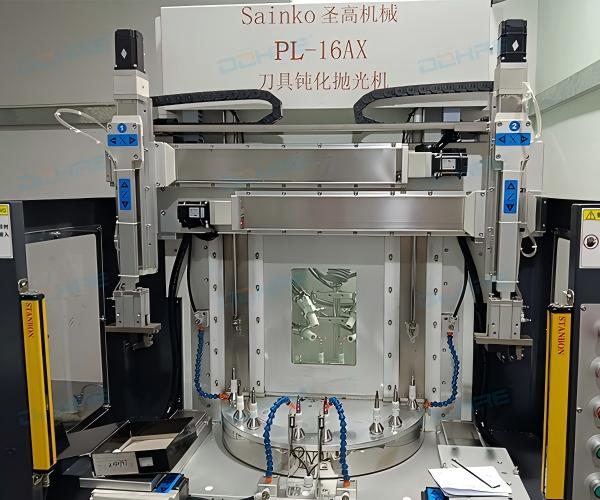
Instead of leaving the cutting edge extremely sharp and fragile, the drill edge is carefully micro-chamfered and passivated. This process strengthens the cutting edge and prevents micro-chipping during machining.
Modern carbide drills use automatic edge-preparation polishing machines with diamond abrasive media to ensure consistent edge treatment.
With this process, the edge radius can be controlled within ±0.003 mm, ensuring uniform performance across all tools.
Additionally, manual micro-chamfering at the drill point further enhances durability and extends tool life.
High-Performance Coating Technology
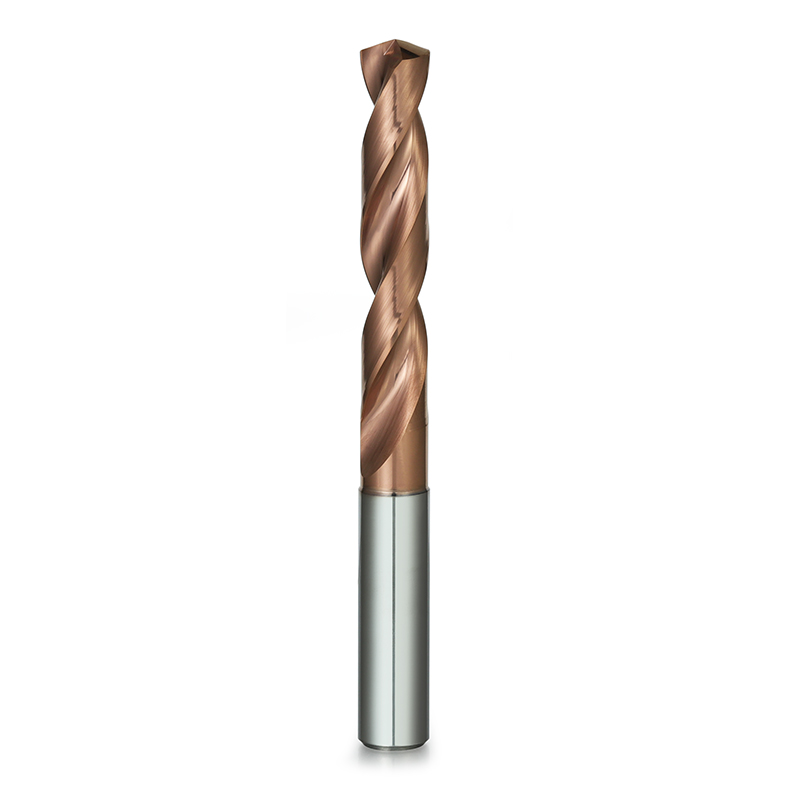
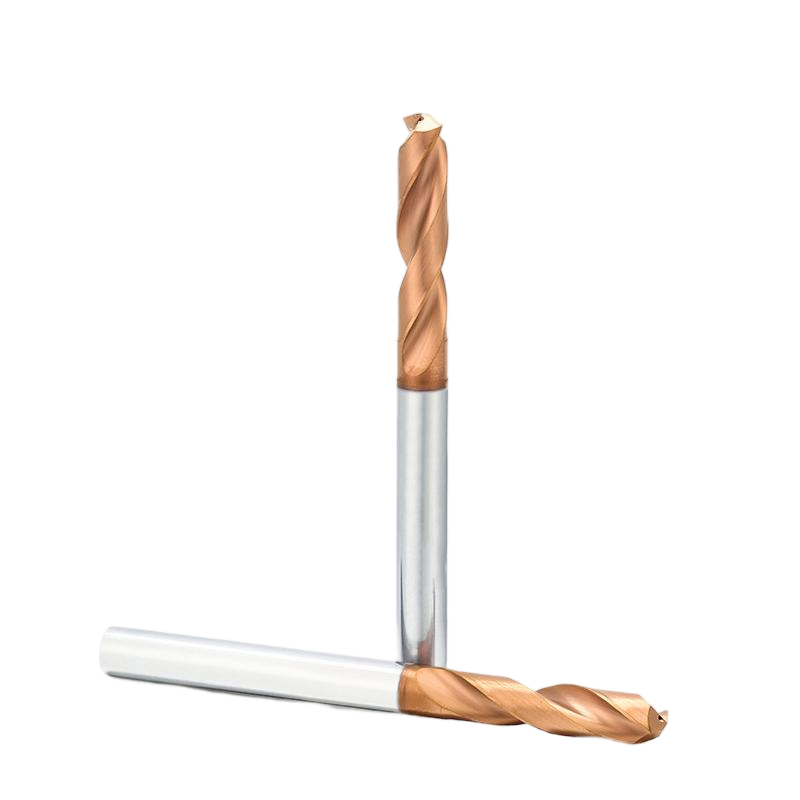
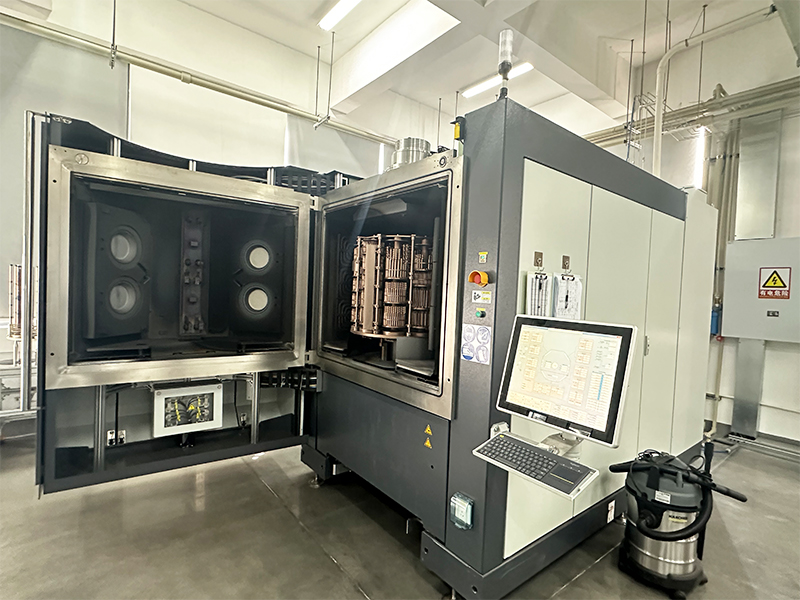
Coating technology plays a major role in improving the performance of carbide drill bits. For example, DLC coated carbide drills are widely used for machining aluminum and non-ferrous materials because of their extremely low friction coefficient and excellent anti-adhesion properties.
Advanced PVD coatings provide:
lHigher surface hardness
lReduced friction
lImproved heat resistance
lLonger tool life
High-quality coatings can reach hardness levels of 2000–4000 HV, with extremely low friction coefficients of 0.05–0.15. This significantly reduces wear and prevents scratching on the cutting edges.
After coating, tools are often subjected to a post-coating passivation process, which smooths the coating layer and improves adhesion. This further enhances tool durability and cutting performance.
Strict Quality Inspection and Measurement
Precision inspection is essential to guarantee consistent tool quality.
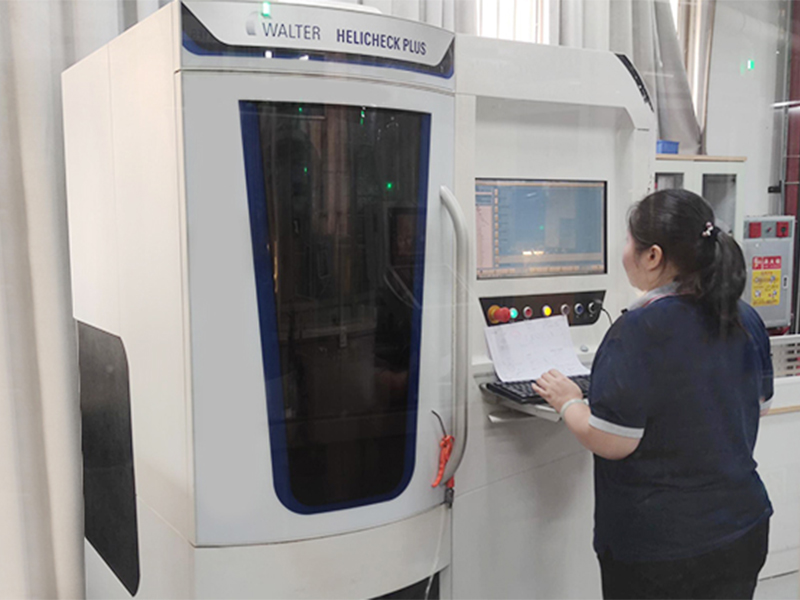
High-performance carbide drills are inspected using advanced optical measuring systems such as HeliCheck measuring equipment, which can measure tool profiles and radius accuracy within 3 microns.
Additionally, each tool is visually inspected under 300× magnification to ensure that there are no edge defects such as chipping or serrations.
This strict inspection process ensures that every drill meets high precision and quality standards.
Long Tool Life and High Efficiency
Thanks to optimized geometry, advanced coatings, and precision manufacturing, tungsten carbide drill bits offer significantly longer tool life compared with traditional drills.
In many applications, carbide drills can achieve 80–100 meters of drilling life, depending on the material and cutting conditions.
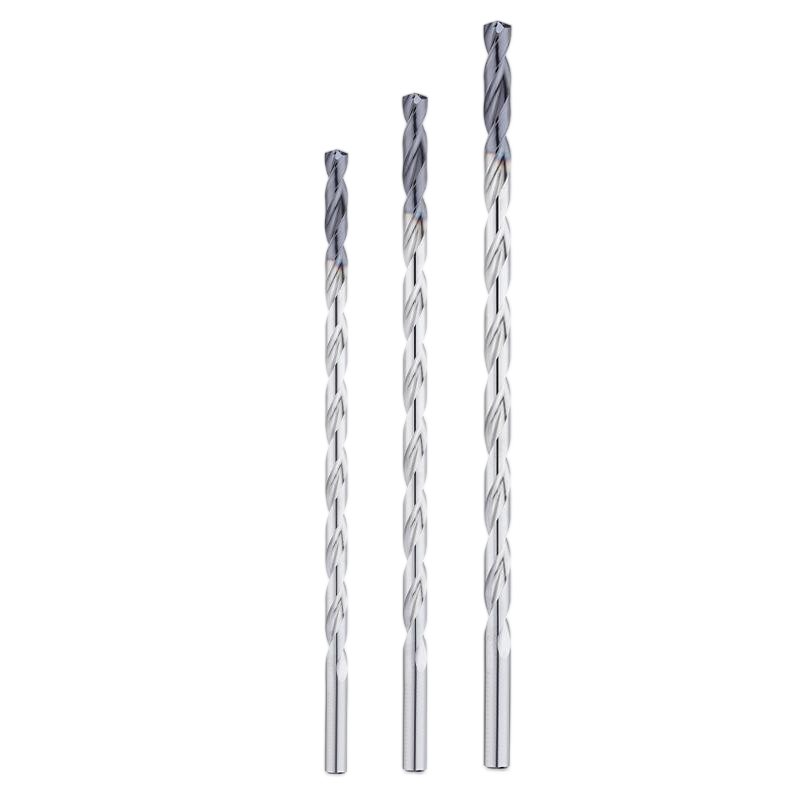
These tools are also available in various length-to-diameter ratios, including:
l3×D
l5×D
l8×D
l12×D
lup to 30×D deep-hole drilling
This flexibility allows carbide drills to handle both standard and deep-hole drilling applications.
Another important advantage is that carbide drills can often be customized, providing a cost-effective solution for long-term machining operations.
Wide Machining Application Range
Modern tungsten carbide drill bits are designed for versatile machining applications and stable drilling performance across a wide range of materials.
They are widely used for drilling materials such as:
lMild steel
lAlloy steel
lQuenched and tempered steel
lStainless steel
lCast iron
lBearing steel
For many general machining operations, external coolant carbide drills are commonly used because they provide stable cutting performance while allowing flexible coolant application during drilling.
Their strong universality makes them suitable for both general machining and high-precision industrial production.
Conclusion
Tungsten carbide drill bits combine advanced materials, precision manufacturing, optimized geometry, and high-performance coatings to deliver exceptional drilling performance.
From ultra-fine tungsten carbide raw materials to five-axis CNC grinding, edge preparation, coating technology, and strict quality inspection, every step of the manufacturing process plays an important role in ensuring tool durability and efficiency.
With advantages such as long tool life, high cutting efficiency, excellent chip evacuation, and wide application range, carbide drill bits have become an indispensable tool in modern machining.
As machining requirements continue to evolve, high-quality carbide drills will remain essential for achieving higher productivity, better hole quality, and lower manufacturing costs.