Why Do End Mills Chip When Milling HRC 60–68 Hardened Steel? Causes and Solutions
Introduction
Chipping is one of the most common problems when milling HRC 60–68 hardened steel. In high-hardness mold steel machining, the cause is usually not the cutter alone, but the combination of material hardness, edge strength, toolholding rigidity, cutter geometry, and cutting engagement.
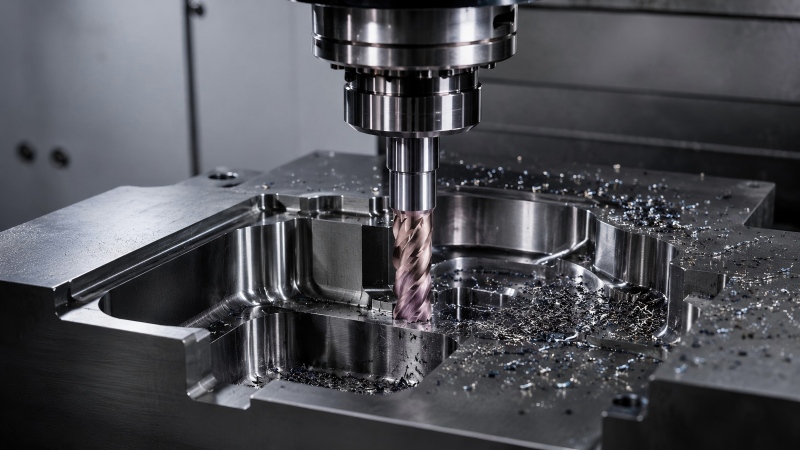
In HRC 60–68 hardened steel milling, even small edge chipping can quickly affect tool life, surface finish, and dimensional accuracy. The cutting edge must handle high hardness, concentrated cutting pressure, and limited tolerance for vibration or unstable engagement.
For hardened mold steels such as H13, NAK80, S136, and 718H, reducing chipping is not only about using a harder cutter. The end mill must match the actual hardness range, machining stage, cutter geometry, toolholding condition, and cutting path.
Why Chipping Happens More Easily in HRC 60–68 Hardened Steel
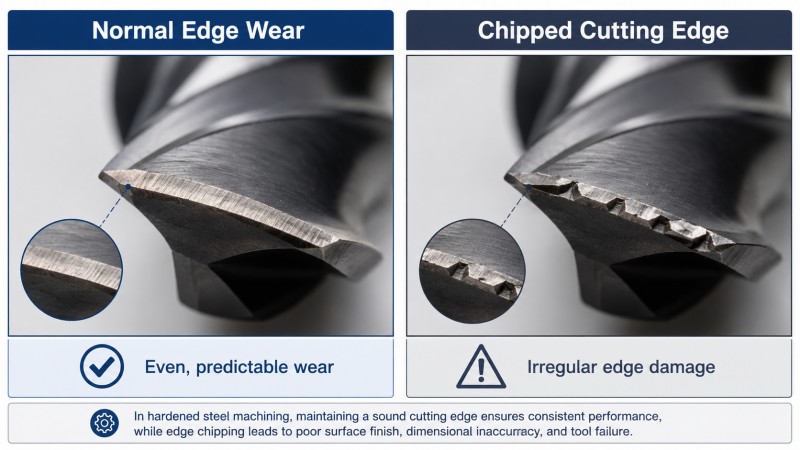
HRC 60–68 hardened steel places much higher stress on the cutting edge than general mold steel or pre-hardened materials. As hardness increases, the tool has less tolerance for unstable engagement, runout, weak clamping, or incorrect cutter geometry.
A small vibration or sudden change in cutting load may cause the edge to chip before normal wear develops. This is why high-hardness milling requires more attention to edge strength, coating stability, tool rigidity, and cutting condition control.
Common Causes of End Mill Chipping in Hard Milling
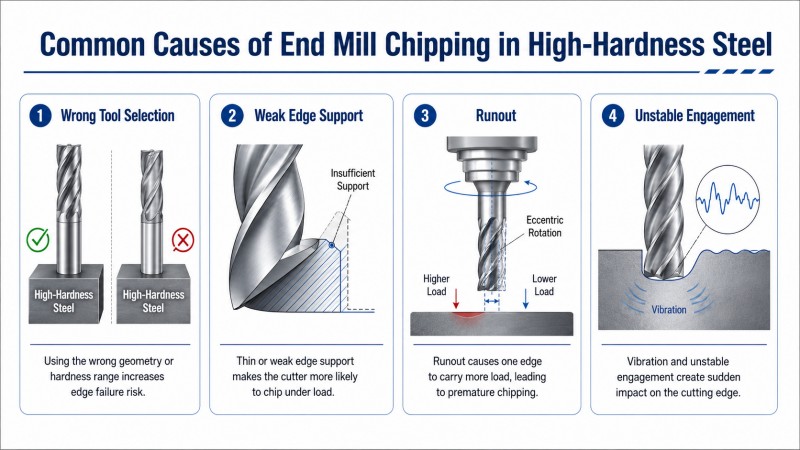
| Cause | What Happens | What to Improve |
|---|
| Wrong tool for the hardness range | The edge cannot handle HRC 60–68 cutting pressure | Use an end mill designed for high-hardness hardened steel |
| Insufficient edge strength | The cutting edge chips under concentrated load | Choose suitable edge preparation and cutter geometry |
| Excessive runout or weak clamping | One cutting edge carries more load than the others | Improve toolholding, reduce overhang, and check runout |
| Unstable toolpath or sudden engagement | The edge receives shock load during cutting | Use smoother entry, stable engagement, and controlled cutting load |
Tool Selection Mistakes That Lead to Chipping
One common mistake is choosing an end mill by material name only. H13, NAK80, S136, and 718H may appear in different hardness conditions. A cutter that works well in lower-hardness mold steel may not remain stable when the workpiece reaches HRC 60–68.
Another mistake is using a cutter designed for general difficult-to-machine materials below HRC60 in a true high-hardness milling application. The selection logic for this hardness range is different, which is why actual hardness, heat treatment condition, machining stage, and tool geometry should all be checked together.
This selection process is discussed more broadly in our guide on how to choose an end mill for HRC 60–68 hardened mold steel.
How Cutter Geometry Affects Edge Strength
Cutter geometry has a direct effect on chipping risk. A very sharp edge may reduce cutting resistance, but it can become fragile if edge support is not enough. A stronger edge may resist chipping better, but if the edge becomes too blunt, cutting heat and resistance may increase.
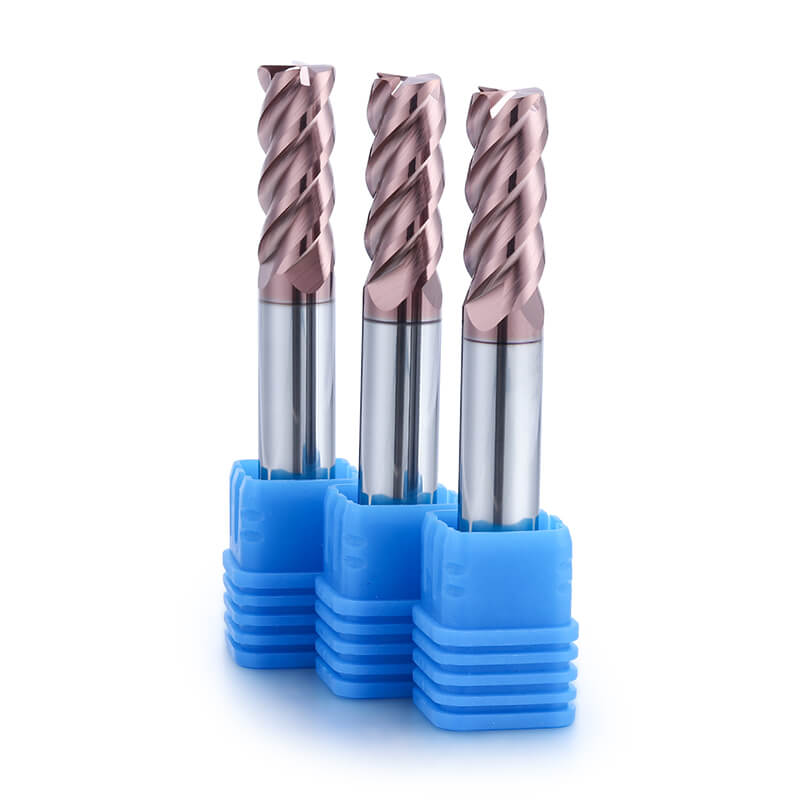
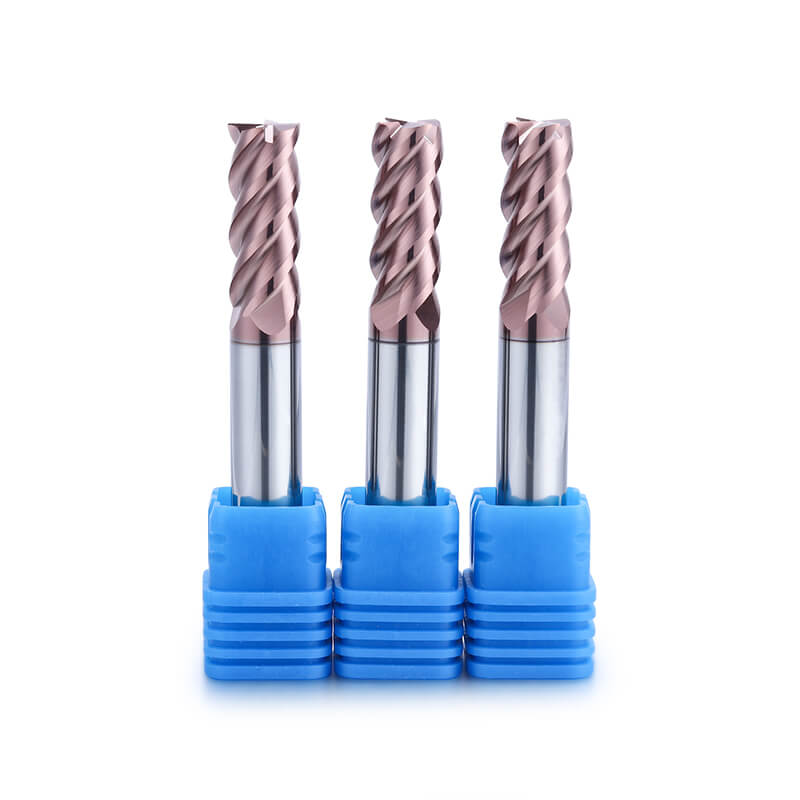
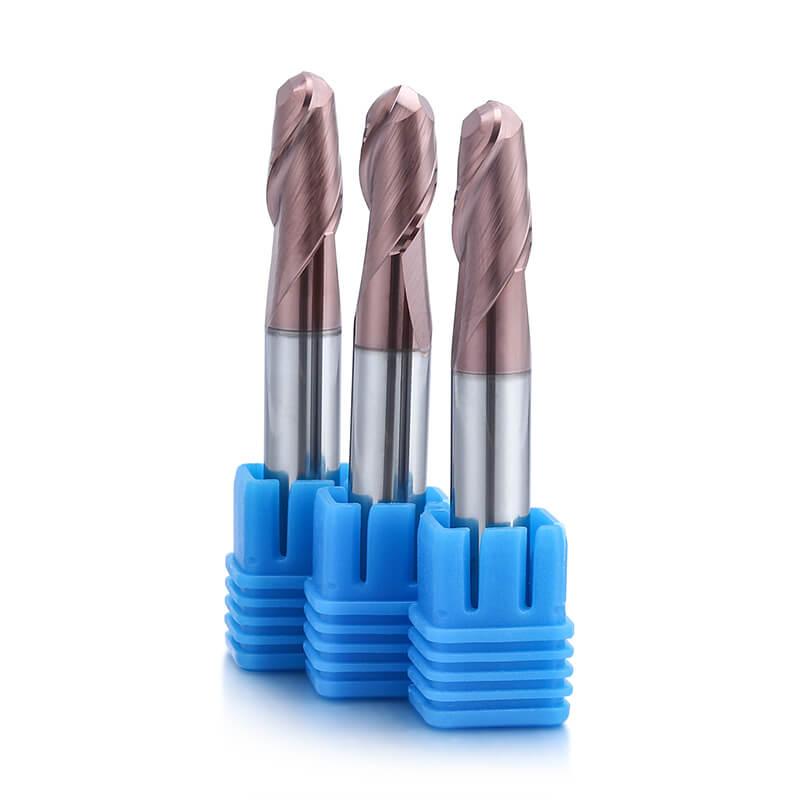
Flat end mills, ball nose end mills, and corner radius end mills behave differently in hardened steel. A flat end mill can be useful for defined surfaces and side milling, but the sharp corner can be sensitive under unstable load. A ball nose tool is more suitable for curved mold surfaces. A corner radius tool can help reduce stress concentration at the corner and improve edge durability in some finishing or semi-finishing operations.
Why Setup Rigidity and Runout Matter
In HRC 60–68 hard milling, setup stability is often just as important as the cutter itself. Excessive runout, long tool overhang, weak clamping, or poor spindle condition can make one cutting edge take more load than the others.
This uneven load is one of the fastest ways to cause chipping. A rigid setup helps the cutter wear more evenly and reduces shock on the edge. Shorter overhang, stable toolholding, proper clamping, and controlled engagement all help improve edge life in hardened mold steel machining.
Coating and Carbide Substrate Still Need to Match the Application
Coating helps improve wear resistance and heat stability, but coating alone cannot prevent chipping if the tool is used in the wrong condition. In high-hardness steel, the coating, carbide substrate, edge preparation, and cutter geometry need to work together.
For HRC 60–68 hardened materials, a dedicated high-hardness steel end mill is usually more suitable than a cutter designed mainly for general difficult materials below HRC60. Dohre’s HEX series is a company-defined high-hardness steel end mill series developed for this type of application, so it should be understood as a product series name rather than a general international tool term.
How to Reduce Chipping in HRC 60–68 Hardened Steel Milling
Reducing chipping usually requires improving several factors together. Changing only one parameter may help temporarily, but stable results come from matching the tool, setup, and cutting path as a complete system.
• Confirm the actual hardness range before selecting the end mill.
• Use a cutter designed for HRC 60–68 high-hardness hardened steel.
• Choose cutter geometry based on the part feature and machining stage.
• Reduce runout, tool overhang, vibration, and weak clamping.
• Avoid sudden tool entry, unstable engagement, and aggressive load changes.
• Monitor edge wear before small chipping develops into tool failure.
When Chipping Means Carbide May Not Be Enough
A dedicated carbide end mill can still be effective for many HRC 60–68 hardened steel applications when the setup is stable and the cutter is properly selected. However, if chipping continues in finishing operations despite correct tool selection and stable cutting conditions, the issue may be related to the limits of carbide in that specific process.
In that situation, the comparison between carbide and CBN becomes more relevant. The decision depends on hardness, finishing accuracy, tool life requirements, and process stability, not simply on tool price or material name.
FAQ
Why do end mills chip when milling HRC 60–68 hardened steel?
End mills chip because the cutting edge is exposed to high hardness, concentrated cutting pressure, and limited tolerance for vibration or unstable engagement. Wrong tool selection, weak edge support, runout, and sudden load changes can all increase chipping risk.
How can I reduce end mill chipping in hardened steel?
Chipping can be reduced by confirming the hardness range, choosing a cutter designed for HRC 60–68 materials, improving setup rigidity, reducing runout, and avoiding unstable tool engagement.
Does cutter geometry affect chipping?
Yes. Cutter geometry affects edge support, stress concentration, and cutting load distribution. Flat, ball nose, and corner radius tools should be selected according to the part feature and machining stage.
Is coating enough to prevent chipping in hardened steel?
No. Coating helps with wear resistance and heat stability, but chipping is also affected by carbide substrate, edge strength, cutter geometry, setup rigidity, and cutting path stability.
When should I consider CBN instead of carbide?
CBN may be worth considering when carbide cannot maintain stable tool life, finishing accuracy, or edge condition in high-hardness finishing applications, even after tool selection and setup conditions are improved.
Conclusion
End mill chipping in HRC 60–68 hardened steel usually comes from a combination of high material hardness, weak edge support, unstable setup, poor cutter selection, or sudden cutting load changes. The problem should be solved as a complete machining system rather than only by changing one parameter.
For hardened mold steel such as H13, NAK80, S136, and 718H, the end mill should match the actual hardness range, machining stage, part feature, and setup condition. A dedicated high-hardness steel end mill can help users improve edge stability and reduce chipping in demanding hard milling applications.
Explore our HEX series high-hardness steel end mill for HRC 60–68 hardened materials to compare suitable cutter types for stable hard milling. Contact us for product recommendations and custom end mill solutions.