How to Choose an End Mill for HRC 60–68 Hardened Mold Steel
Introduction
Machining hardened mold steel in the HRC 60–68 range places much higher demands on the cutting edge than general mold steel. For materials such as H13, NAK80, S136, and 718H, the end mill should be selected based on actual hardness, heat treatment condition, machining stage, and part feature—not only by material name.
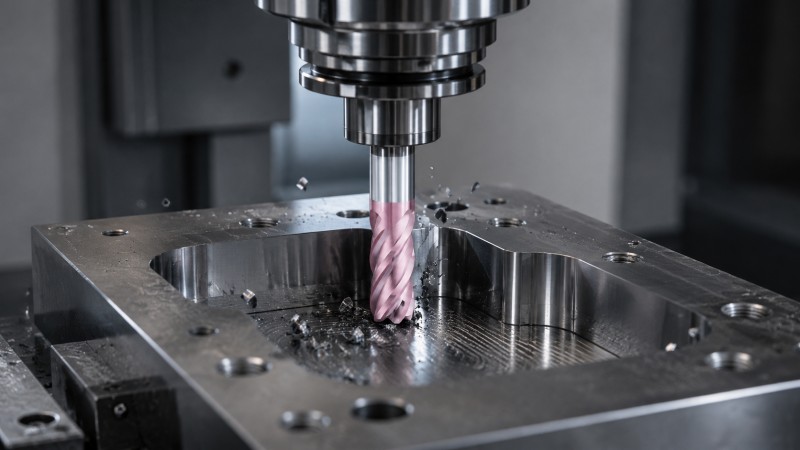
HRC 60–68 hardened mold steel requires an end mill with strong wear resistance, stable edge strength, suitable cutter geometry, and reliable machining stability. This guide explains how to choose the right end mill for high-hardness mold materials such as H13, NAK80, S136, and 718H, and what to consider for finishing, semi-finishing, and stable hard milling.
When mold steel reaches the HRC 60–68 range, the machining condition becomes very different from general mold steel or difficult-to-machine materials below HRC60. Tool wear, edge chipping, heat resistance, and surface finish stability all become more sensitive. That is why the cutter should be selected by hardness range, machining stage, tool geometry, and part feature, not only by material name.
Why HRC 60–68 Hardened Mold Steel Needs a Different End Mill
Hardened mold steel in the HRC 60–68 range places much higher pressure on the cutting edge. Compared with lower-hardness mold steel, the tool has less tolerance for unstable engagement, weak edge support, poor coating performance, and excessive vibration. Even a small mismatch between cutter and application can lead to faster wear or edge damage.
This is especially important in mold finishing and semi-finishing. The tool is not only expected to cut the material, but also to maintain dimensional consistency, surface quality, and edge stability throughout the machining path.
HRC 60–68 Is Not the Same as General Difficult-to-Machine Materials
One common mistake is treating all mold steel applications as the same. Materials such as H13 or 718H may appear in different hardness conditions, so the material name alone does not decide the correct end mill. A cutter used for materials within HRC60 may not be the best choice once the workpiece is hardened to the HRC 60–68 range.
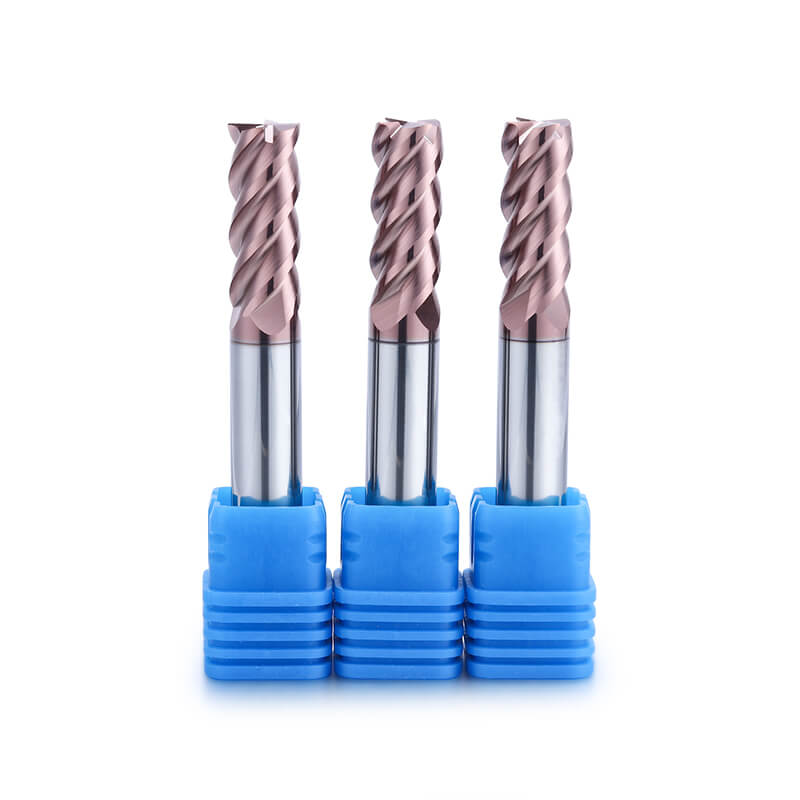
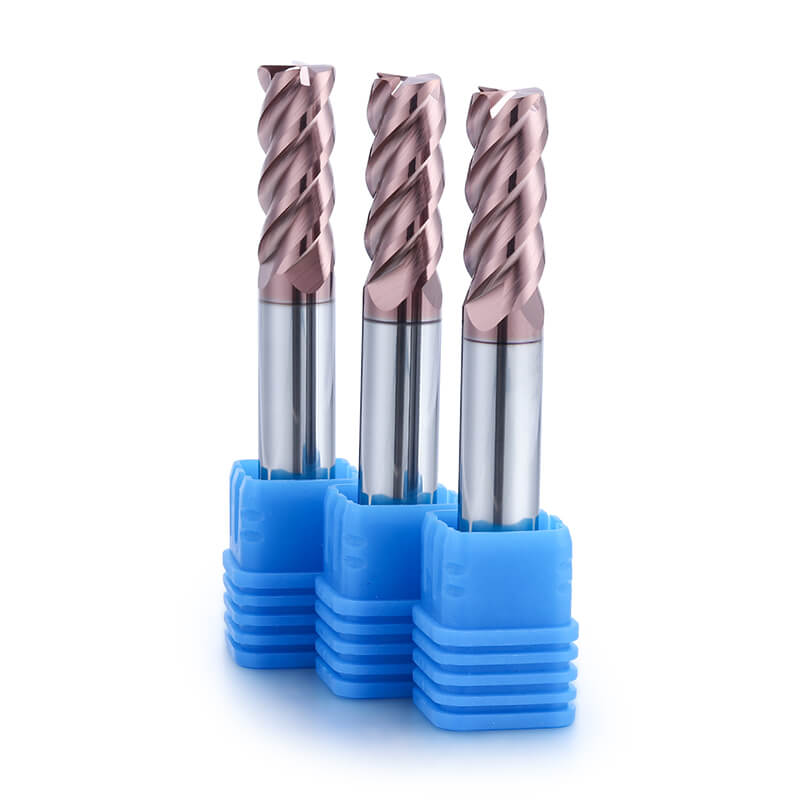
For high-hardness mold steel, the selection should focus more on wear resistance, edge strength, coating stability, and tool rigidity. This is the positioning of the HEX series end mill for HRC 60–68 hardened materials, which is designed for high-hardness mold steel applications rather than general-purpose difficult materials.
Common Mold Materials in HRC 60–68 Hard Milling
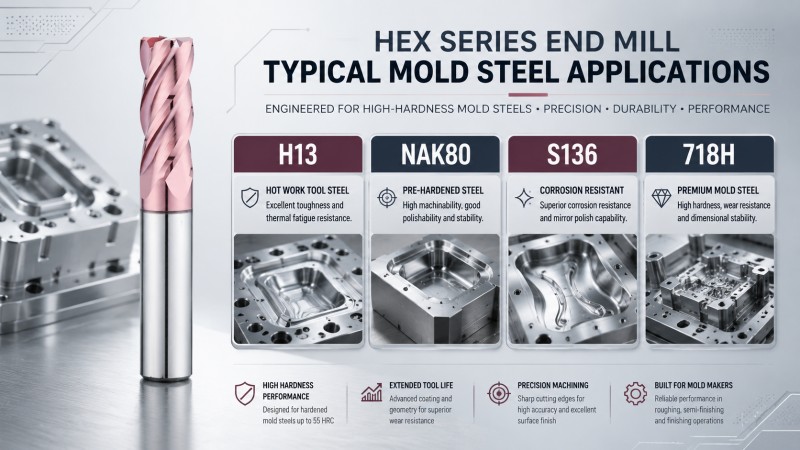
High-hardness mold machining often involves heat-treated mold steels and precision mold materials. Common examples include H13, NAK80, S136, 718H, and other hardened mold steels used in mold cavities, inserts, precision surfaces, and high-wear components.
| Material Example | Typical Machining Concern | End Mill Selection Focus |
|---|
| H13 Hardened Steel | Heat-treated mold steel, higher wear on the cutting edge | Wear resistance, coating stability, edge strength |
| NAK80 | Precision mold machining and surface quality requirements | Stable finishing, sharp but supported edge geometry |
| S136 | Mold steel with surface finish and dimensional demands | Surface finish stability, tool rigidity, controlled wear |
| 718H | Mold steel machining with different hardness conditions | Match cutter to actual hardness and machining stage |
Start with the Actual Hardness Range
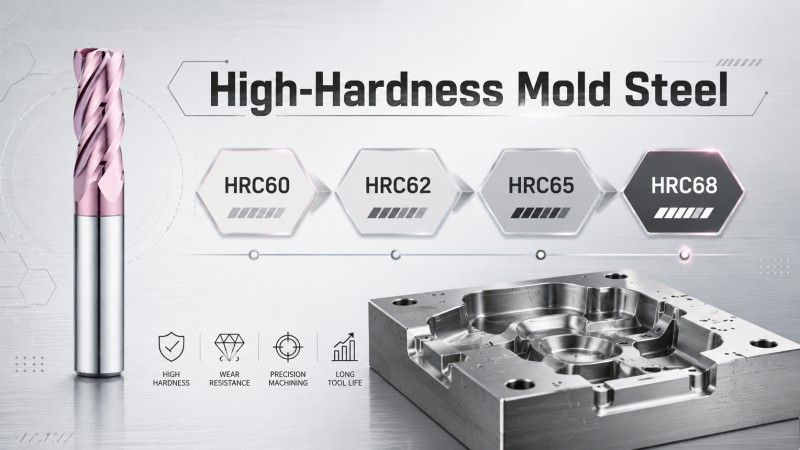
For HRC 60–68 hardened mold steel, hardness should be one of the first selection points. As hardness increases, the cutting edge must resist more severe wear and maintain stability under higher cutting pressure. A cutter that performs acceptably at HRC55 may not deliver the same tool life or surface quality at HRC65.
This is why high-hardness applications should not be judged only by material category. The same material name may require different tooling depending on heat treatment, hardness, machining allowance, and finishing requirement.
Choose Cutter Geometry by Machining Feature
Cutter geometry has a direct effect on hard milling stability. In high-hardness mold steel, flat end mills, ball nose end mills, and corner radius end mills should be selected according to the workpiece feature and machining stage.
| Cutter Type | Best For | Why It Matters in HRC 60–68 Materials |
|---|
| Flat End Mill | Flat surfaces, side milling, straight walls, defined profiles | Provides direct cutting on flat and edge-defined features, but setup stability is critical |
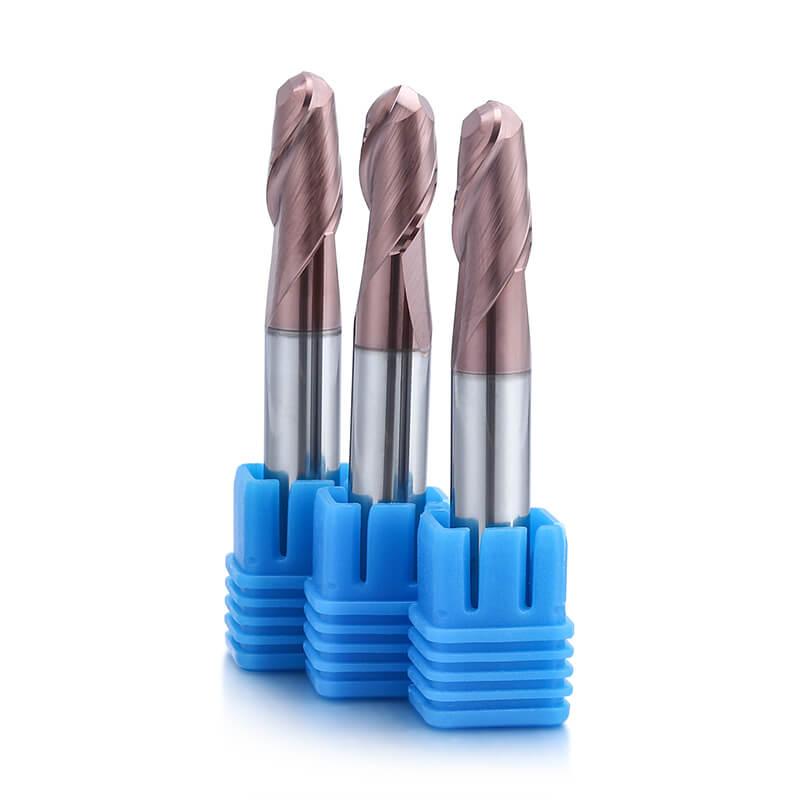
| Ball Nose End Mill | Contours, cavities, curved mold surfaces, 3D finishing | Helps follow curved surfaces and supports smoother transitions in mold finishing |
| Corner Radius End Mill | Semi-finishing, finishing, sidewall work, stronger corner support | Reduces corner stress and improves edge durability compared with a sharp corner |
Pay Attention to Edge Strength and Tool Rigidity
In HRC 60–68 hardened mold steel, the cutting edge needs a balance between sharpness and strength. A very sharp but weak edge may chip too easily, while an overly strong but dull edge may increase cutting resistance and heat. The best choice depends on whether the operation is finishing, semi-finishing, side milling, or contour machining.
Tool rigidity also matters. Smaller tools, longer overhang, or unstable toolholding can make the edge carry uneven load. Once that happens, tool life becomes inconsistent and surface finish may suffer.
Coating Stability Matters in High-Hardness Milling
High-hardness mold steel machining generates concentrated heat and high wear at the cutting edge. A suitable coating helps improve wear resistance, reduce heat-related damage, and support more stable tool life. However, coating cannot compensate for poor geometry, unstable engagement, or excessive tool overhang.
For HRC 60–68 materials, coating should be considered together with substrate toughness, edge preparation, cutter diameter, flute design, and the machining path. This system-level view is more reliable than selecting an end mill by coating name alone.
Match the Tool to the Machining Stage
The right end mill may change between roughing, semi-finishing, and finishing. In HRC 60–68 hardened mold steel, finishing and semi-finishing often place stronger demands on tool stability, dimensional accuracy, and surface quality. Roughing, on the other hand, may require more attention to engagement, load control, and edge protection.
For precision mold work, the final tool choice should reflect both the hardness and the required machining result. A ball nose cutter may be more suitable for curved cavity finishing, while a corner radius cutter may provide better stability in sidewall finishing. Flat tools are still useful where flat-bottom features and defined edges are needed.
When Carbide May Not Be Enough
For many HRC 60–68 hardened mold steel applications, a dedicated carbide end mill can be a practical solution when the setup is stable and the cutter is correctly selected. However, some extreme finishing conditions may require a different tool material strategy, especially when wear stability and dimensional consistency become difficult to maintain.
The decision between carbide and CBN becomes more relevant when hardness, finishing accuracy, and tool life requirements exceed what carbide can provide consistently. The comparison is discussed more directly in our article on when a CBN end mill should be used instead of carbide.
Common Mistakes When Choosing an End Mill for HRC 60–68 Steel
• Choosing by material name only, without confirming the actual hardness and heat treatment condition.
• Using a cutter designed for HRC60 or below in a true HRC 60–68 hard milling application.
• Selecting cutter shape without considering whether the part has flat surfaces, curved contours, or sidewall finishing requirements.
• Relying only on coating while ignoring tool rigidity, edge strength, and setup stability.
• Using excessive tool overhang or unstable clamping in high-hardness finishing work.
Practical Selection Checklist
• Confirm whether the workpiece is actually in the HRC 60–68 range.
• Choose a cutter designed for high-hardness mold steel, not just general difficult materials.
• Match flat, ball nose, or corner radius geometry to the part feature.
• Use coating and carbide substrate designed for wear resistance and heat stability.
• Reduce runout, tool overhang, vibration, and unstable engagement.
• Evaluate the tool by surface finish stability, wear pattern, and dimensional consistency.
FAQ
What end mill should I use for HRC 60–68 hardened steel?
Use an end mill designed for high-hardness mold steel, with suitable edge strength, wear-resistant coating, stable carbide substrate, and geometry matched to the machining feature.
Is HRC 60–68 considered high-hardness machining?
Yes. HRC 60–68 is a high-hardness range where tool wear, edge stability, coating performance, and machine rigidity become especially important.
Can the same end mill be used for HRC60 and HRC68 steel?
Not always. As hardness increases, tool wear and edge stress also increase. A cutter that works at the lower end may not provide the same stability near HRC68.
Which cutter type is better for hardened mold steel?
Flat end mills are suitable for flat and defined features, ball nose end mills are better for contours and cavities, and corner radius end mills are often useful when stronger edge support and stable finishing are needed.
When should I consider CBN instead of carbide?
CBN may become more relevant when hardened steel finishing requires higher wear stability, tighter accuracy, or longer tool life than carbide can provide consistently.
Conclusion
Choosing an end mill for HRC 60–68 hardened mold steel starts with the actual hardness range, but the final decision also depends on cutter geometry, coating stability, edge strength, machining stage, and setup rigidity. High-hardness materials such as H13, NAK80, S136, and 718H require more than a general-purpose hard milling tool.
For stable hard milling, the end mill should match both the material condition and the part feature. A dedicated HEX series end mill for HRC 60–68 hardened materials helps users compare suitable cutter types for high-hardness mold steel machining.
Contact us for product recommendations and custom end mill solutions for hardened mold steel applications.