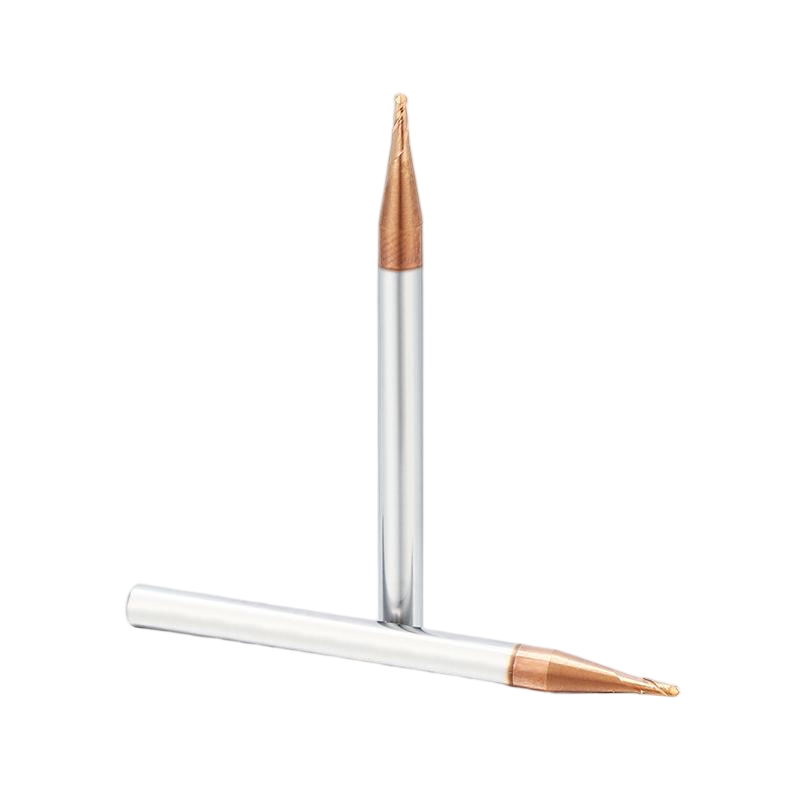
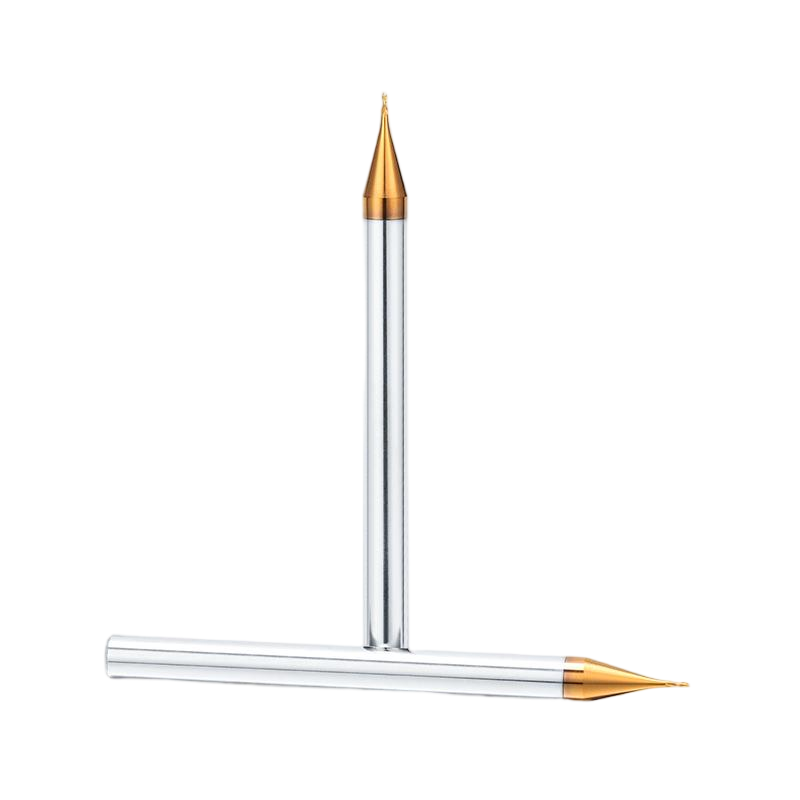
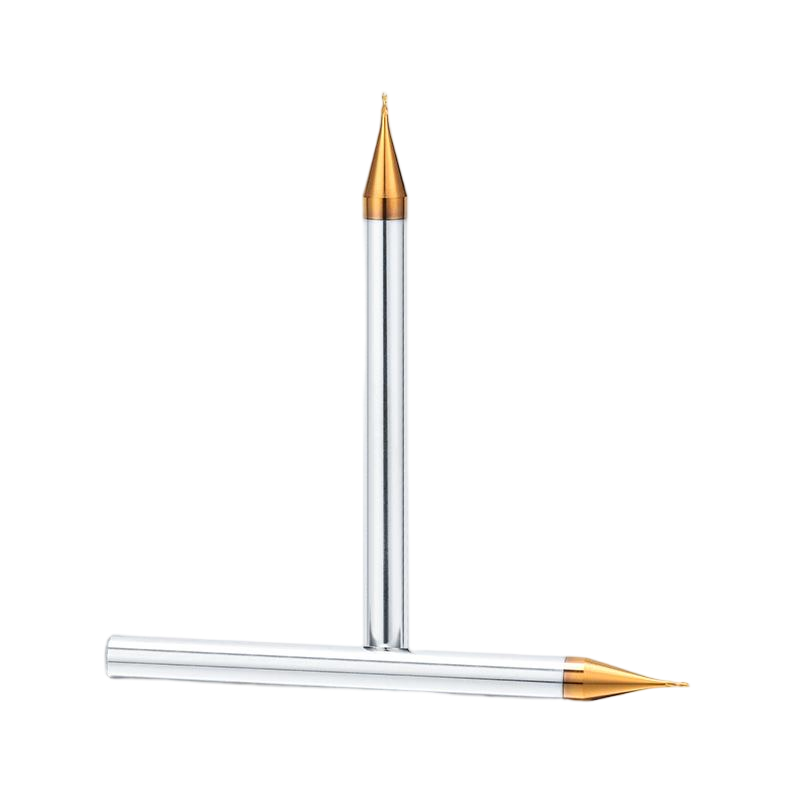
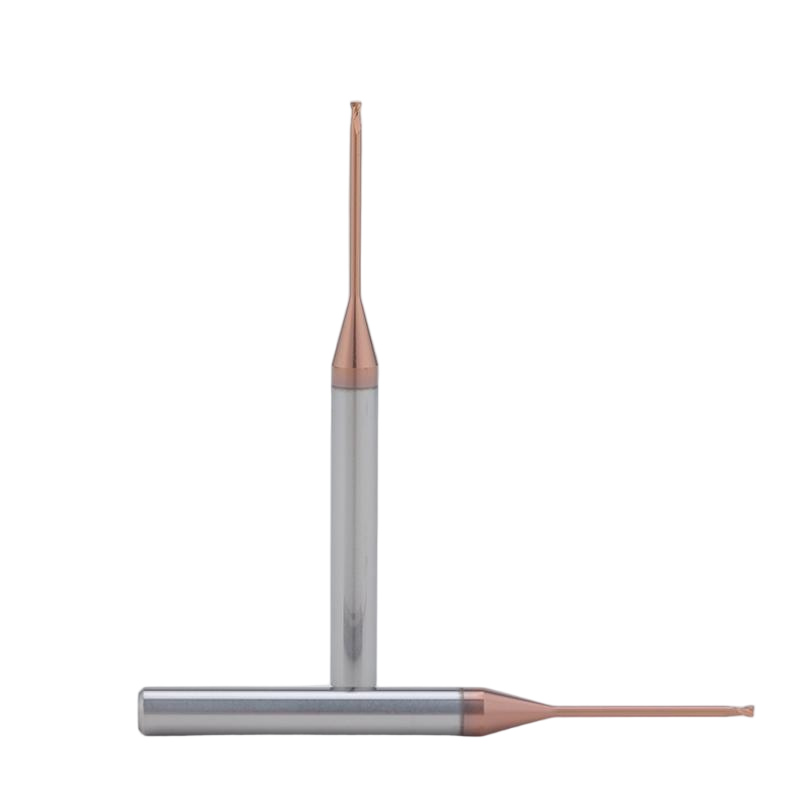
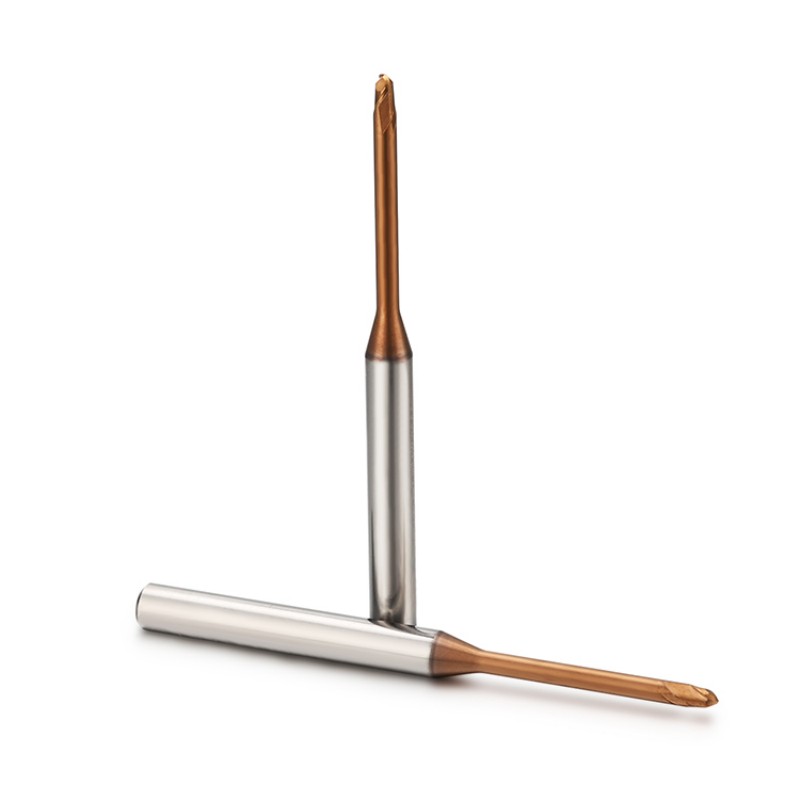
Solid Carbide Micro Ball Nose End Mill

Solid Carbide Micro Ball Nose End Mill

• Solid carbide micro ball nose end mill for curved surfaces and precision contours
• Suitable for micro cavities, 3D profiles, mold details, and smooth transition areas
• Ball nose geometry supports continuous cutting on curved and freeform surfaces
• Short flute options help improve rigidity during small-diameter machining
• Selected standard specifications and custom dimensions are available
• Custom radius, flute length, neck length, shank size, coating, and geometry supported
• OEM production and stable batch supply available

Workpiece Material

  • Steel & Mold Steel
  • Stainless Steel
  • Aluminum & Copper Alloy
  • Graphite & Abrasive Materials

Application Type

  • Precision Finishing
  • Micro Cavity Milling
  • 3D Contour Machining
  • Mold Profile Finishing

Coating

  • Material-Specific Coating
  • Custom Coating Available

Product Description

The Dohre solid carbide micro ball nose end mill is a small-diameter milling cutter designed for precision machining of curved surfaces, micro cavities, 3D contours, mold profiles, arc features, and smooth transition areas.

Its hemispherical cutting end maintains continuous contact with curved and freeform surfaces, making it more suitable than a micro flat end mill for contour finishing, cavity machining, and detailed three-dimensional features.

Micro ball nose end mills require stable cutting-edge geometry, controlled tool runout, suitable tool overhang, and low cutting resistance. Small changes in spindle runout, cutting depth, flute length, or toolholder accuracy can significantly affect tool life and profile consistency.

Dohre provides selected standard micro ball nose end mills with different ball radii, flute lengths, and shank diameters. Carbide grade, coating, cutting-edge preparation, and flute geometry can also be selected according to the workpiece material and machining requirement.

The specifications below represent only part of the available standard sizes. They do not indicate the complete minimum or maximum production range. Additional ball radii, cutting lengths, neck dimensions, shank sizes, and overall lengths can be manufactured according to customer drawings or machining requirements.

Standard Size Options

The following table shows selected standard specifications only. Additional sizes are available.

Ball Radius (R)Flute Length (Lc)Overall Length (L)Shank Diameter (d)
R0.150.6503
R0.200.8503
R0.251.0503
R0.301.2503
R0.351.4503
R0.401.6503
R0.150.6504
R0.200.8504
R0.251.0504
R0.301.2504
R0.351.4504
R0.401.6504
R0.451.8504

Custom Size Support

Additional ball radii, flute lengths, neck diameters, neck lengths, overall lengths, shank diameters, coatings, flute geometries, and application-specific designs can be manufactured according to customer requirements.

Product Features

Dohre solid carbide micro ball nose end mills are designed to provide stable profile accuracy, low cutting resistance, and consistent cutting-edge quality during small-diameter contour machining.

Solid Carbide Construction

The solid carbide construction provides the hardness and structural stability required for micro-diameter milling. A stable carbide substrate helps maintain the ball profile and cutting-edge geometry during precision contour finishing and small-cavity machining.

Micro Ball Nose Geometry

The hemispherical cutting end is designed for curved surfaces, 3D contours, arc transitions, mold profiles, and freeform features. Compared with a micro flat end mill, the ball nose geometry provides smoother contact when machining curved and continuously changing surfaces.

Short Flute Design for Improved Rigidity

Short flute options help reduce tool deflection and improve rigidity during small-diameter machining. This is especially important when machining micro cavities, fine profiles, narrow areas, and precision components with limited feature sizes.

Precision-Ground Ball Profile

The ball profile is precision ground to support consistent radius geometry and stable contour accuracy. Reliable ball-radius control helps reduce dimensional variation during repeated finishing operations and batch machining.

Sharp Cutting Edge and Low Cutting Resistance

Precision-ground cutting edges help reduce cutting resistance and support smoother material removal. Lower cutting force can improve machining stability when using small tool diameters, long machining paths, or delicate workpiece features.

Material-Specific Tool Options

Carbide grade, coating, flute geometry, and cutting-edge preparation can be selected according to the workpiece material. Different tool options are available for steel, stainless steel, aluminum, copper alloys, mold steel, graphite, and other precision-machining materials.

Custom Micro Ball Nose End Mills

Dohre supports custom ball radius, flute length, neck diameter, neck length, shank diameter, overall length, coating, flute geometry, and application-specific tool designs according to customer drawings and machining requirements.

Applications for Micro and Precision Contour Machining

Solid carbide micro ball nose end mills are suitable for precision components containing curved surfaces, micro cavities, small-radius transitions, detailed mold profiles, and three-dimensional features. The correct tool should be selected according to the workpiece material, feature depth, ball radius, tool overhang, spindle runout, and required surface quality.

Typical Machining Features

  • Micro cavities and small pocket contours

  • Curved surfaces and freeform profiles

  • Three-dimensional contour finishing

  • Small-radius corners and arc transitions

  • Detailed mold and electrode profiles

  • Fine surface finishing and light semi-finishing

  • Precision engraving and compact profile features

Typical Industries and Components

Application AreaTypical Machining Features
Mold & DieSmall mold cavities, detailed profiles, curved surfaces, inserts, electrodes, and fine transition areas
3C ElectronicsCompact housings, camera-frame features, small cavities, decorative contours, and precision curved details
Optical Modules & CPO ComponentsMicro cavities, small curved surfaces, optical-interface profiles, positioning areas, and compact precision features
Medical & Precision ComponentsMiniature instrument parts, small mechanisms, curved profiles, fine contours, and precision component finishing
Graphite ElectrodesDetailed electrode cavities, small-radius contours, 3D profiles, and fine surface finishing with suitable tool material and coating
Custom Precision PartsPrototype parts, fixtures, small freeform surfaces, compact contours, and application-specific profile features

Choosing Between Flat and Ball Nose Micro End Mills

Choose a micro ball nose end mill for curved surfaces, 3D contours, mold cavities, arc transitions, and freeform profiles.

Choose a micro flat end mill when the machining feature requires a flat bottom, narrow slot, straight side wall, small shoulder, or clear bottom-to-wall transition.

For side-wall or shoulder machining requiring stronger corner protection, a micro corner radius end mill may be more suitable.

Manufacturing & Quality Control

Micro ball nose end mills require precise control of the ball radius, cutting diameter, flute symmetry, cutting-edge condition, radial runout, and dimensional consistency. Dohre combines precision CNC grinding, optical measurement, and high-magnification inspection to support stable small-diameter tool production.

German Walter 5-Axis Precision Grinding

Micro ball nose end mills are produced using German Walter 5-axis CNC grinding equipment. Precision-controlled grinding helps maintain consistent flute geometry, ball profile, cutting-edge shape, and tool symmetry.

Ball Radius Grinding Control

The ball radius and transition area are precisely ground to support stable contour accuracy. Consistent radius geometry is important for three-dimensional finishing, mold profiles, curved surfaces, and repeatable batch machining.

Small-Diameter Geometry Control

Ball radius, flute length, shank diameter, overall length, cutting-edge profile, and other critical dimensions are controlled according to the product specification. Stable grinding control helps reduce variation between individual tools and production batches.

Walter HELICHECK PLUS Inspection

Walter HELICHECK PLUS measuring equipment is used to inspect tool geometry and key dimensional features. Optical measurement supports consistent ball-radius control, flute geometry, profile accuracy, and repeatable production quality.

High-Magnification Cutting Edge Inspection

High-magnification inspection is used to check visible edge chipping, grinding marks, ball-tip condition, coating appearance, and surface defects. Small cutting-edge defects can significantly affect tool life and profile quality when machining with micro-diameter tools.

Runout and Batch Consistency

Stable shank dimensions, tool symmetry, and controlled grinding processes help support lower machining variation during batch production. The final cutting performance also depends on toolholder accuracy, spindle condition, tool overhang, and machine setup.

Custom Development and OEM Supply

Dohre supports selected standard tools, drawing-based custom micro ball nose end mills, sample production, OEM requirements, private-label orders, and stable batch supply. Tool design can be adjusted according to the workpiece material, feature size, machining depth, required radius, and surface-finish target.

FAQ & Contact Us

What is a micro ball nose end mill used for?

A micro ball nose end mill is mainly used for machining small curved surfaces, 3D contours, micro cavities, mold profiles, arc transitions, and other precision features requiring a smooth and continuous surface

What is the relationship between ball radius and cutting diameter?

For a standard full ball nose end mill, the cutting diameter is normally twice the ball radius. For example, an R0.20 ball nose corresponds to a nominal cutting diameter of approximately 0.40 mm.

What is the difference between a micro ball nose and a micro flat end mill?

A micro ball nose end mill is suitable for curved surfaces, 3D contours, mold cavities, and arc profiles. A micro flat end mill is more suitable for flat bottoms, narrow slots, straight side walls, and small shoulder features.

What materials can micro ball nose end mills machine?

Micro ball nose end mills can be designed for steel, stainless steel, aluminum, copper alloys, mold steel, graphite, and other precision-machining materials. Carbide grade, coating, cutting-edge preparation, and flute geometry should be selected according to the workpiece material.

Why do micro ball nose end mills break easily?

Small-diameter tools have limited cross-sectional strength and are sensitive to tool runout, excessive cutting depth, unstable clamping, unsuitable toolpaths, chip congestion, and excessive tool overhang.

  • Use a high-precision toolholder with low runout

  • Keep tool overhang as short as possible

  • Use suitable step-over and cutting depth

  • Avoid sudden entry, impact, and unstable tool engagement

  • Maintain effective chip or dust evacuation

  • Select a suitable coating and tool geometry for the material

How should I choose the flute length?

Select the shortest flute length that can reach the machining feature. A shorter cutting section generally provides better rigidity and lower tool deflection. Longer flute or neck dimensions should only be selected when the cavity depth or workpiece geometry requires additional reach.

Can Dohre customize micro ball nose end mills?

Yes. Dohre can customize ball radius, flute length, neck diameter, neck length, shank diameter, overall length, flute geometry, coating, carbide grade, and application-specific cutting-edge design.

What information is required for a quotation?

Please provide the required ball radius or cutting diameter, flute length, neck length, overall length, shank diameter, workpiece material, machining depth, required quantity, coating preference, surface-finish requirement, and any available drawing or sample information.

Get In Touch

Need Micro Ball Nose End Mills for Precision Contour Machining?

Contact us for selected standard sizes, custom micro ball nose end mills, OEM production, sample tools, and stable batch supply.

captcha

Related Products

×

Contact Us

captcha

*We respect your privacy. When you submit your contact information, we agree to only contact you in accordance with our Privacy Policy.

×

By continuing to use the site you agree to our privacy policy Terms and Conditions.

I agree