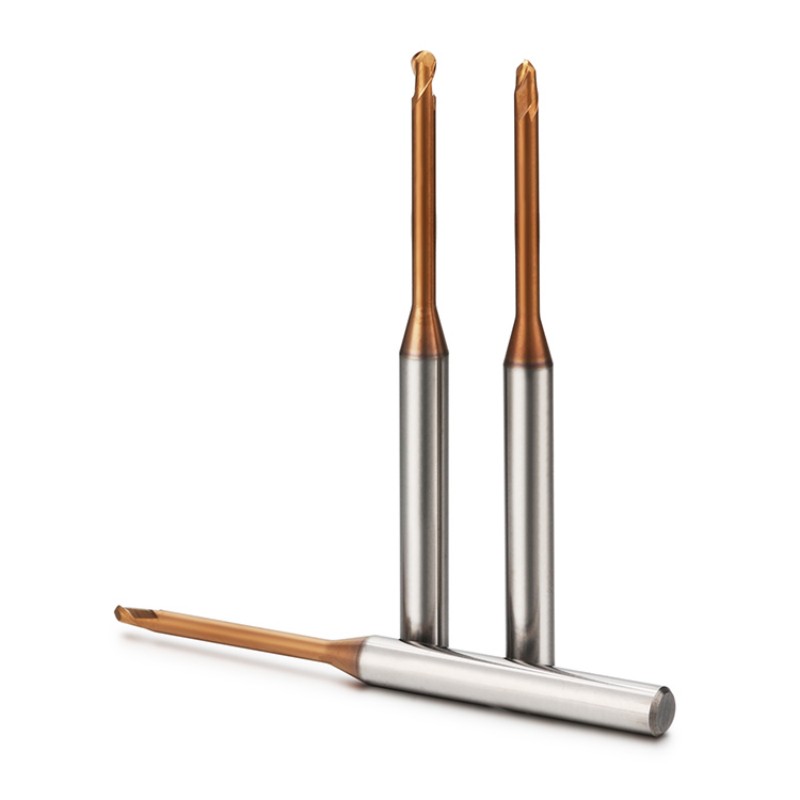
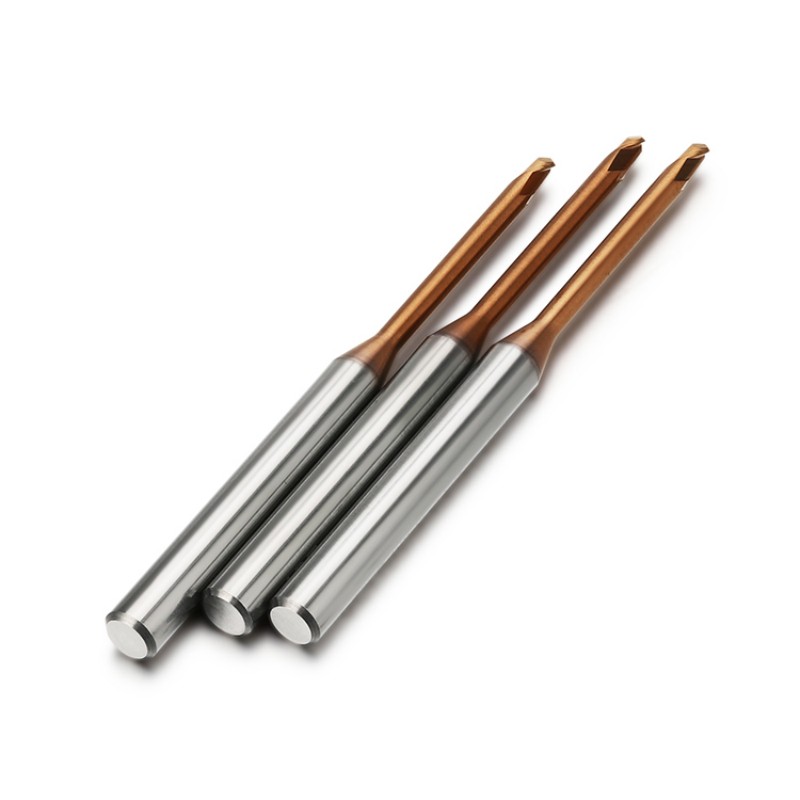
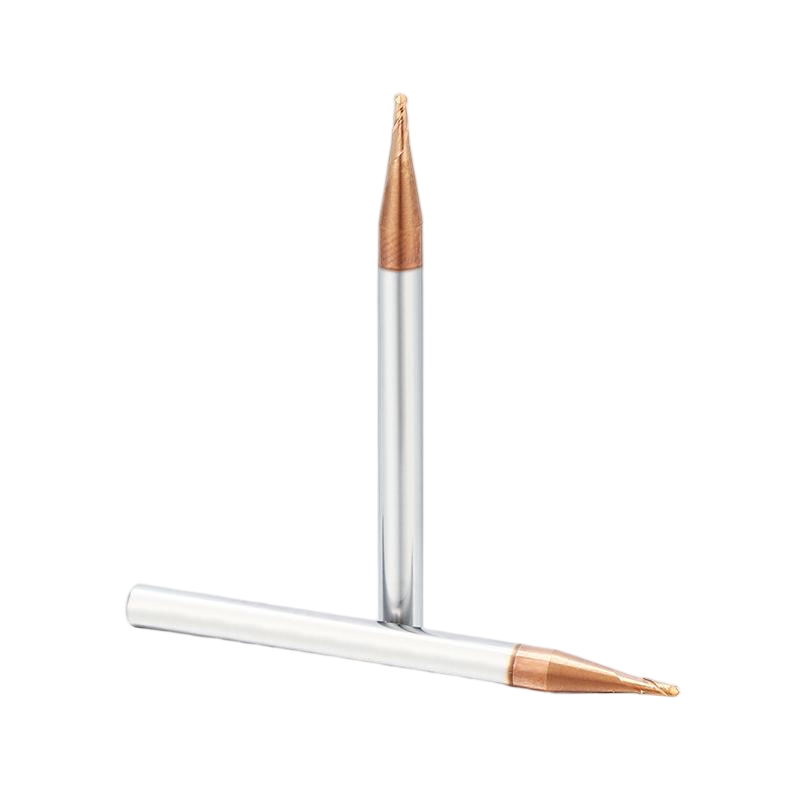
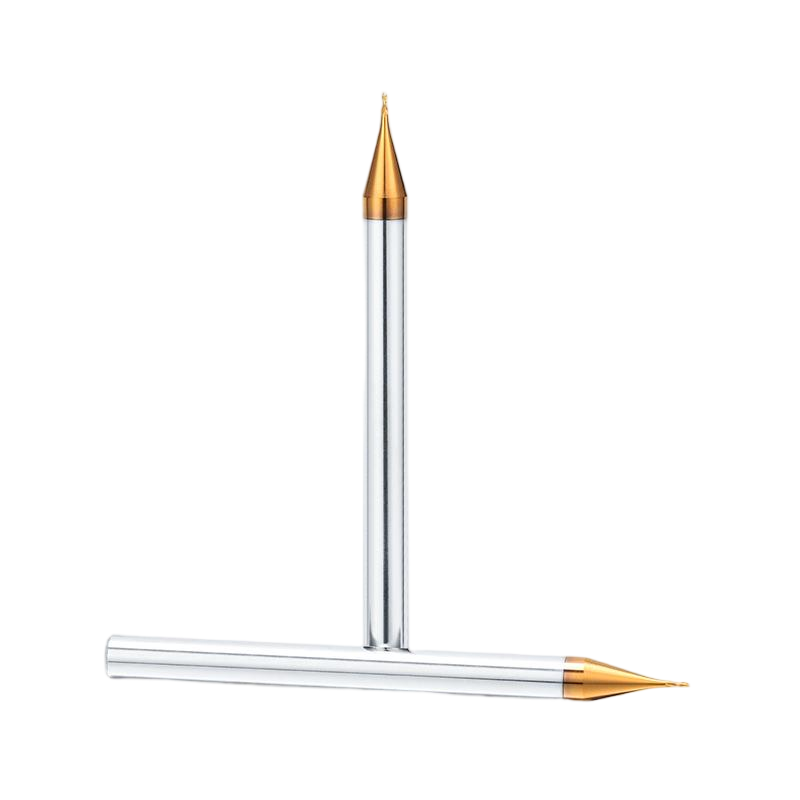
Solid Carbide Long Neck Ball Nose End Mill for Deep Cavity Machining

Solid Carbide Long Neck Ball Nose End Mill for Deep Cavity Machining

• Long neck ball nose end mill for deep cavities and restricted machining areas
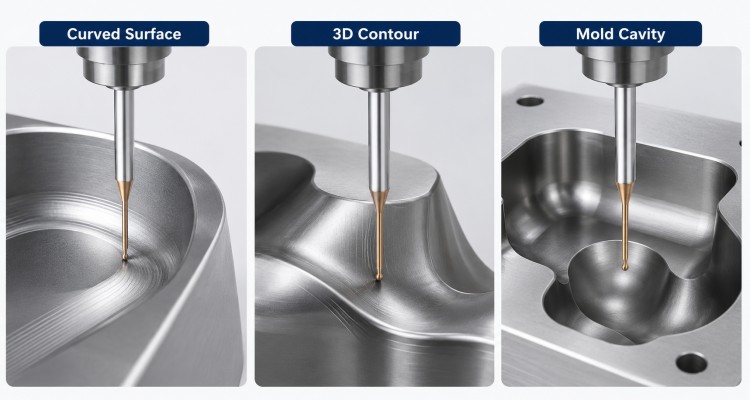
• Ball nose geometry for 3D contours, mold profiles, and curved-surface finishing
• Extended neck design provides additional holder and workpiece clearance
• Solid carbide construction supports stable precision machining
• Custom ball radius, neck length, coating, and overall dimensions available

workpiece material

  • Steel & Mold Steel
  • stainless steel
  • Aluminum & Copper Alloy
  • Graphite & Abrasive Materials
  • Hardened steel

application type

  • Deep Cavity Machining
  • 3D Contour Machining
  • Mold Profile Finishing
  • Semi-Finishing

Coating

  • Material-Specific Coating
  • Custom Coating Available

Product Description

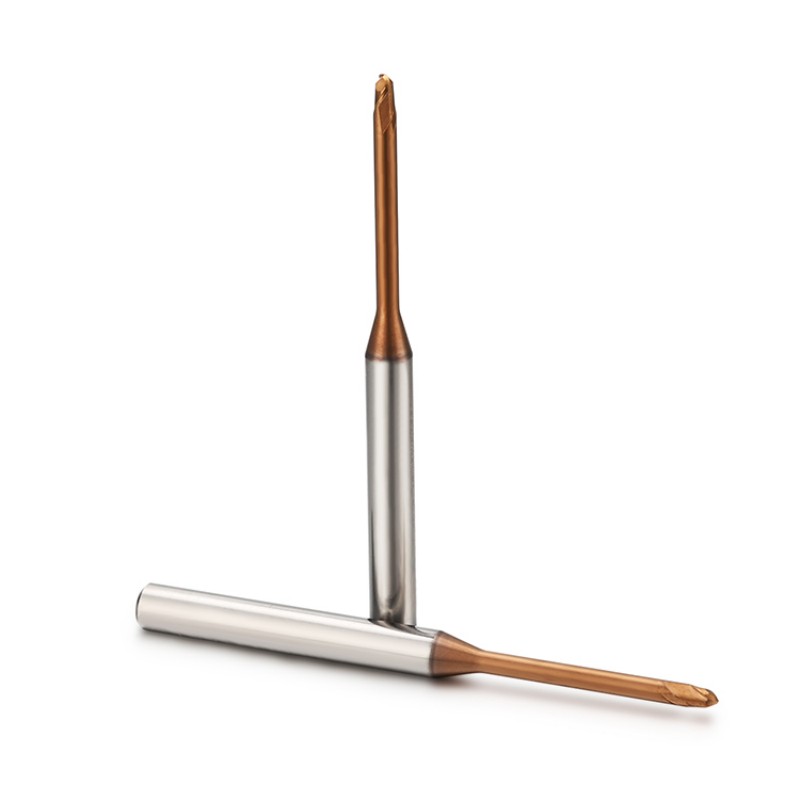
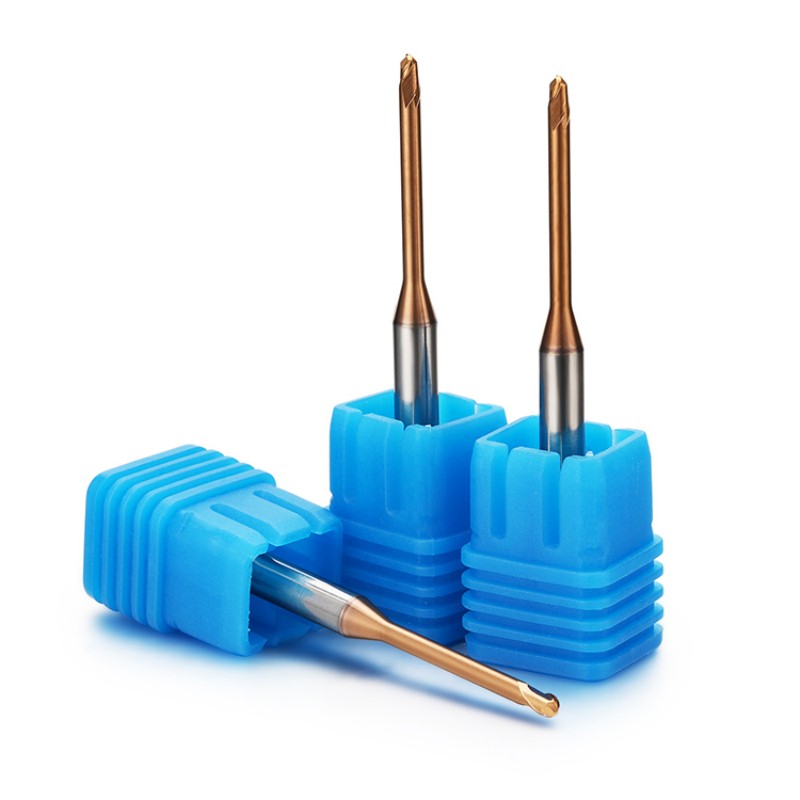
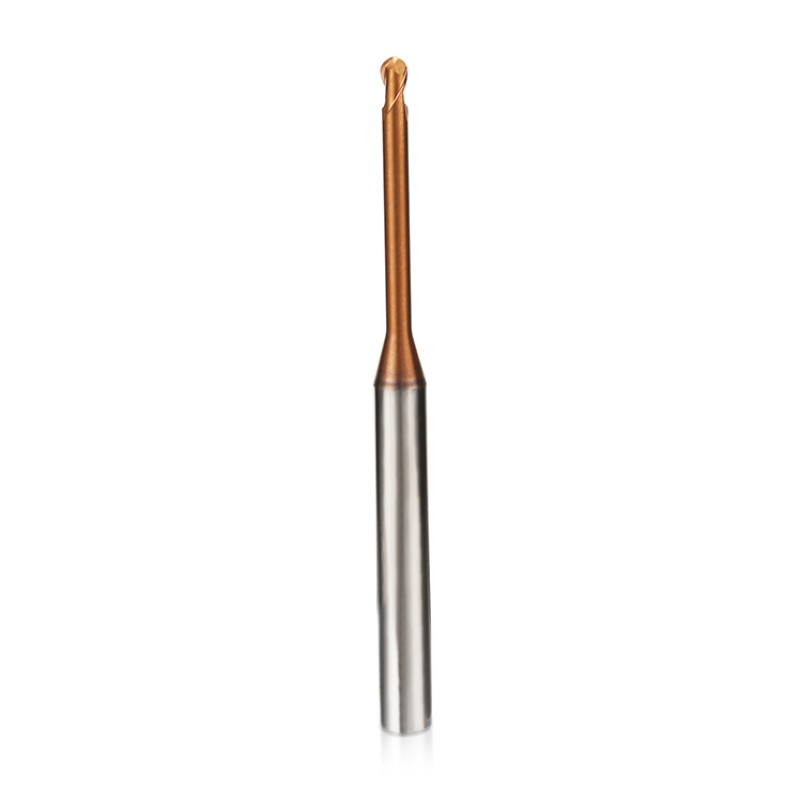
The Dohre solid carbide long neck ball nose end mill is designed for deep cavity machining, narrow areas, mold contours, curved surfaces, and three-dimensional features where a standard ball nose end mill cannot provide sufficient reach or holder clearance.

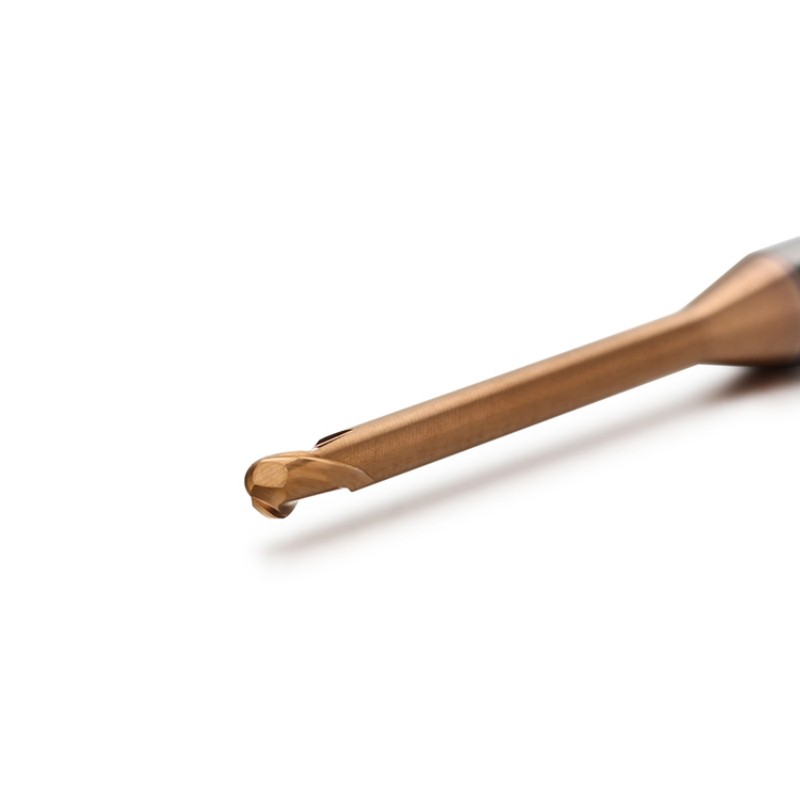
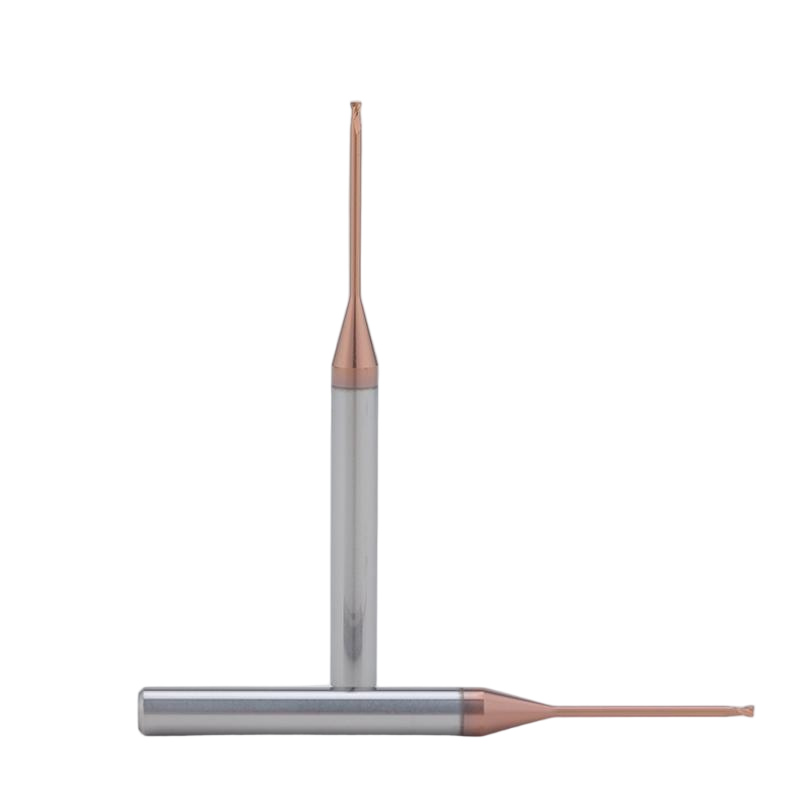
The tool combines a ball nose cutting end with an extended reduced-neck section. The ball nose geometry supports continuous cutting on curved and freeform surfaces, while the long neck provides additional clearance between the toolholder, workpiece wall, and surrounding features.

Compared with an ordinary long-flute end mill, a long neck design can use a relatively compact cutting section with an extended neck behind the flutes. This helps maintain cutting-section rigidity while allowing the tool to reach deeper or more restricted machining areas.

Long neck ball nose end mills are suitable for deep mold cavities, detailed profiles, small-radius transitions, recessed surfaces, complex contours, and precision finishing operations. They are especially useful when toolholder interference limits the use of a standard ball nose cutter.

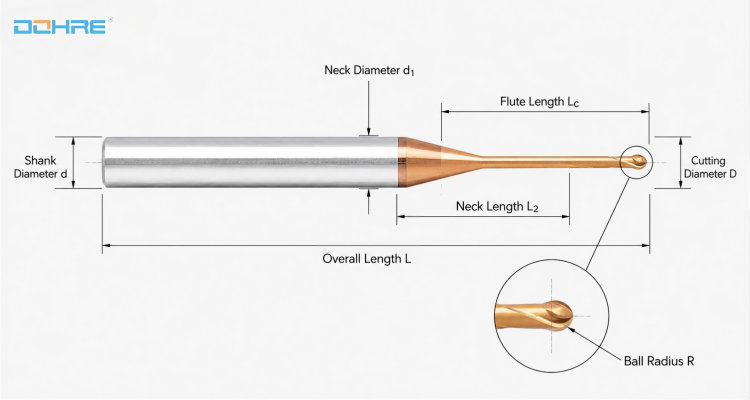
Dohre provides selected standard sizes and custom long neck ball nose end mills. Ball radius, cutting diameter, flute length, neck diameter, neck length, shank diameter, overall length, coating, carbide grade, and cutting-edge geometry can be adjusted according to the workpiece material and machining requirements.

long neck ball nose end mill dimensions.png

Main Tool Configuration

ParameterAvailable Option
Tool MaterialSolid Carbide
Cutting GeometryBall Nose
Neck TypeLong Neck / Reduced Neck
Flute OptionsStandard and Custom Flute Options
CoatingSelected According to Workpiece Material
Size AvailabilitySelected Standard Sizes and Custom Dimensions

Custom Dimension Support

Custom cutting diameter, ball radius, flute length, neck diameter, neck length, shank diameter, overall length, coating, flute number, and application-specific geometry are available according to customer drawings and machining requirements.

Product Features

Dohre long neck ball nose end mills are designed around the reach, clearance, profile accuracy, cutting stability, and tool rigidity required in deep cavity and restricted-area machining.

Extended Neck for Deep and Restricted Areas

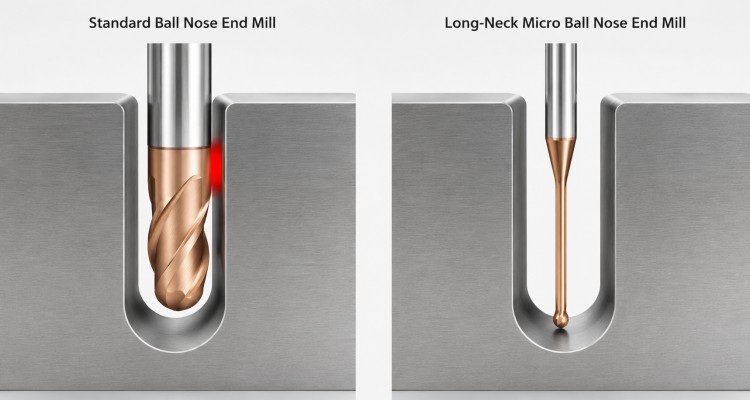
The reduced-neck section provides additional clearance between the tool, toolholder, workpiece wall, and surrounding features. This allows the cutting edge to reach recessed surfaces and deep cavities where a standard ball nose end mill may cause interference.

standard and long neck ball nose end mill reach comparison.jpg

Ball Nose Geometry for 3D Contour Machining

The hemispherical cutting end is suitable for curved surfaces, mold profiles, freeform contours, small-radius transitions, and three-dimensional finishing. Continuous cutting contact helps produce smoother transitions across changing surface angles.

ball nose end mill for curved surface and 3D contour machining.jpg

Compact Cutting Section for Improved Rigidity

A long neck tool does not require the full neck length to be ground as a cutting flute. A relatively short cutting section can help maintain rigidity and reduce cutting-edge deflection while the extended neck provides the required machining reach.

Controlled Neck Diameter and Clearance

The neck diameter can be selected according to the cavity opening, wall angle, machining depth, and required clearance. A suitable neck-to-cutting-diameter relationship helps reduce workpiece interference while maintaining sufficient tool strength.

Precision-Ground Ball Radius

The ball radius and transition profile are precision ground to support stable contour accuracy. Consistent ball geometry helps reduce profile variation during mold finishing, recessed-surface machining, and repeated production runs.

Material-Specific Carbide and Coating Options

Carbide grade, coating, cutting-edge preparation, and flute geometry can be selected according to the workpiece material. Different configurations can be developed for steel, mold steel, stainless steel, aluminum, copper alloys, graphite, hardened steel, and other precision-machining materials.

Custom Long Neck Tool Design

Tool dimensions can be designed according to the cavity depth, wall shape, minimum opening, required reach, surface-finish target, and machine condition. Drawing-based long neck ball nose end mills and OEM production are available.

Applications for Deep Cavity and Contour Machining

Solid carbide long neck ball nose end mills are suitable for deep and restricted machining areas containing curved surfaces, three-dimensional contours, mold profiles, recessed features, and small-radius transitions.

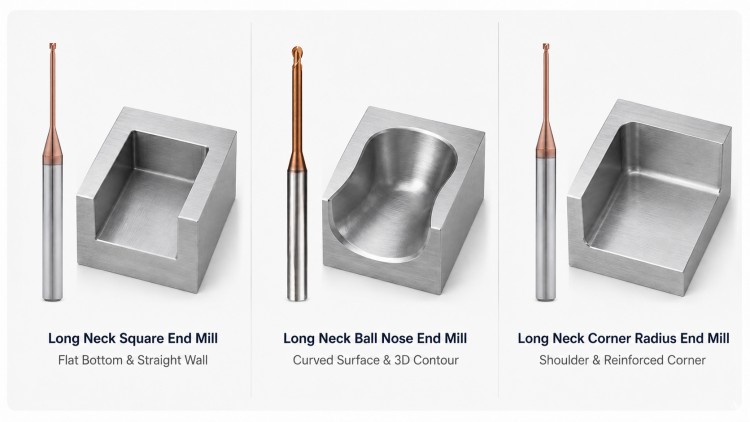
square ball nose and corner radius long neck end mill comparison.jpg

Typical Machining Features

  • • Deep mold cavities and recessed surfaces

  • • Narrow openings and restricted machining areas

  • • Three-dimensional contours and freeform profiles

  • • Curved side walls and arc transition surfaces

  • • Small-radius mold details

  • • Deep pocket contour finishing

  • • Electrode and insert profile machining

  • • Precision semi-finishing and finishing

Typical Industries and Components

Application AreaTypical Features
Mold & DieDeep cavities, mold inserts, curved profiles, recessed surfaces, and detailed transition areas
Graphite ElectrodesDeep electrode cavities, narrow recessed contours, and complex three-dimensional profiles with suitable tool configuration
Automotive MoldsDeep mold surfaces, internal contours, freeform profiles, and restricted finishing areas
Aerospace ComponentsRecessed curved features, deep pockets, complex contours, and hard-to-access precision surfaces
Medical & Precision PartsSmall deep cavities, curved instrument features, miniature components, and restricted contour areas
Custom Precision ComponentsDeep recessed profiles, narrow access areas, prototype features, and drawing-specific machining requirements

Choosing the Correct Long Neck Geometry

Choose a long neck ball nose end mill for curved surfaces, deep three-dimensional contours, mold cavities, arc transitions, and freeform finishing.

Choose a long neck flat end mill when the machining feature requires a flat bottom, straight side wall, narrow deep groove, or clear bottom-to-wall transition.

Choose a long neck corner radius end mill for deep side-wall, shoulder, step, and profile machining where additional corner strength and edge protection are required.

The neck length should be only as long as required for workpiece clearance. Excessive neck length increases tool deflection and vibration, so the shortest practical neck length is generally recommended.

Manufacturing & Quality Control

Long neck ball nose end mills require precise control of the ball radius, cutting diameter, neck diameter, neck length, flute symmetry, radial runout, and transition between the cutting section and reduced neck. Dohre combines precision CNC grinding, optical measurement, and high-magnification inspection to support stable production quality.

German Walter 5-Axis Precision Grinding

Long neck ball nose end mills are produced using German Walter 5-axis CNC grinding equipment. Precision-controlled grinding supports consistent ball geometry, flute profile, neck dimensions, cutting-edge shape, and tool symmetry.

Ball Radius and Profile Grinding Control

The ball radius, ball-to-flute transition, and profile geometry are precision ground to support stable three-dimensional contour accuracy. Consistent ball geometry helps reduce variation during mold finishing and repeated machining operations.

Neck Diameter and Neck Length Control

The reduced-neck diameter and neck length are controlled according to the tool specification. Stable neck dimensions are important for achieving the required workpiece clearance while maintaining sufficient tool strength.

Walter HELICHECK PLUS Inspection

Walter HELICHECK PLUS measuring equipment is used to inspect ball profile, cutting diameter, flute geometry, neck dimensions, and other critical features. Optical measurement supports repeatable geometry and stable batch production.

High-Magnification Cutting Edge Inspection

High-magnification inspection is used to check ball-tip condition, visible edge chipping, grinding marks, coating appearance, and surface defects. Small cutting-edge defects can significantly affect tool life and contour quality during deep machining.

Runout and Batch Consistency

Stable shank dimensions, flute symmetry, controlled neck geometry, and consistent grinding processes help reduce variation between individual tools and production batches. Final machining performance also depends on spindle condition, toolholder accuracy, tool overhang, and cutting parameters.

Custom Development and OEM Production

Dohre supports selected standard tools, drawing-based custom long neck ball nose end mills, sample production, OEM orders, private-label requirements, and stable batch supply for industrial customers.

FAQ & Contact Us

What is a long neck ball nose end mill used for?

A long neck ball nose end mill is used for deep cavities, recessed curved surfaces, three-dimensional contours, mold profiles, arc transitions, and restricted machining areas where additional tool clearance is required.

What is the difference between a long neck and a long-flute end mill?

A long neck end mill has an extended reduced-neck section behind a relatively compact cutting length. A long-flute end mill has cutting flutes extending along a larger portion of the tool. The long neck design provides clearance without requiring the entire reach length to act as a cutting edge.

Is a deep groove ball nose end mill the same as a long neck ball nose end mill?

These terms are often used for similar extended-reach ball nose tools. “Long neck ball nose end mill” is the more common professional product name, while “deep groove ball nose end mill” describes the intended deep or restricted machining application.

How should the neck length be selected?

Select the shortest neck length that provides sufficient workpiece and toolholder clearance. Excessive neck length reduces tool rigidity and can increase vibration, deflection, surface marks, and the risk of tool breakage.

How should the neck diameter be selected?

The neck diameter must provide sufficient clearance for the cavity opening and wall profile while maintaining enough tool strength. A smaller neck provides more clearance but also reduces rigidity, so the dimension should be selected according to the actual workpiece geometry.

What materials can long neck ball nose end mills machine?

Long neck ball nose end mills can be designed for steel, mold steel, stainless steel, aluminum, copper alloys, graphite, hardened steel, and other precision-machining materials. Carbide grade, coating, flute geometry, and cutting parameters should be selected according to the workpiece material.

Why do long neck end mills vibrate or break?

Extended-reach tools are more sensitive to deflection and vibration. Common causes include excessive neck length, excessive tool overhang, high radial engagement, unstable toolpaths, toolholder runout, chip congestion, and unsuitable cutting parameters.

  • • Use the shortest practical neck length

  • • Keep tool overhang as short as possible

  • • Use a high-precision toolholder with low runout

  • • Reduce radial engagement and cutting depth

  • • Use stable ramping or progressive entry toolpaths

  • • Maintain effective chip or dust evacuation

Can Dohre customize long neck ball nose end mills?

Yes. Dohre can customize cutting diameter, ball radius, flute length, neck diameter, neck length, shank diameter, overall length, flute number, carbide grade, coating, and application-specific cutting-edge geometry.

What information is required for a quotation?

Please provide the required cutting diameter or ball radius, flute length, neck diameter, neck length, shank diameter, overall length, workpiece material, cavity depth, minimum opening, required quantity, coating preference, and any available drawing or sample information.

Get In Touch

Need Long Neck Ball Nose End Mills for Deep Cavity Machining?

Contact us for custom long neck ball nose end mills, sample tools, OEM production, and stable batch supply.

captcha

Related Products

×

Contact Us

captcha

*We respect your privacy. When you submit your contact information, we agree to only contact you in accordance with our Privacy Policy.

×

By continuing to use the site you agree to our privacy policy Terms and Conditions.

I agree