


Get In Touch
Do you have a questions or an issues we can help you with?
Let’s talk about your project and how Dohre can help get your tools designed, manufactured and ready for the market.


Reading volume: 132

Release time :2026-08-18
Estimated reading time:
Discover how PEX end mills optimize carbon steel machining. Boost material removal rates, prevent thermal shock, and extend tool life. Contact Dohre today!
Machining carbon steel often feels like balancing on a tightrope. Modern machine shops face constant pressure to achieve high material removal rates without burning through tooling budgets or risking unexpected spindle downtime.
While carbon steel is often considered an easily accessible material, its inherent ductility and tendency to smear create persistent friction, rapid heat accumulation, and premature tool wear that quietly ruins profitability.
To overcome these shop floor challenges, engineers must look beyond generic milling tools and evaluate cutters engineered for specific material behaviors. The following technical deep dive explores how optimized tool geometries, substrate selection, and proper cutting parameters come together in PEX end mills to deliver repeatable precision and higher productivity in steel machining operations.
Before choosing a cutter, taking a closer look at how carbon steel behaves under heavy loads helps explain why general purpose tools fail early. Different hardness levels and thermal properties dictate exact tool requirements.
Machining low to medium carbon steels, such as AISI 1018 or 1045, presents distinct mechanical behavior during metal removal. Although these materials lack the extreme hardness of exotic alloys, their high ductility causes chips to smear across the tool face. This continuous shearing action generates intense localized heat that concentrates at the cutting zone rather than escaping cleanly within the chips.
The hardness of general steel components usually ranges between 150 and 300 Brinell Hardness (HB), which translates up to HRC55 depending on heat treatment. Machining within this hardness envelope requires a careful balance between substrate toughness and surface protection to prevent common failure modes:
Substrate Selection: Ultra fine solid carbide with 10 percent cobalt content provides superior resistance against edge chipping under variable cutting loads.
Surface Coating: AlTiN nano composite coating forms a tough thermal barrier, preserving edge sharpness when cutting temperatures rise.
Cutting Geometry: A 6 degree positive rake angle reduces cutting forces, while a 35 degree helix angle ensures continuous chip evacuation.
With a clear understanding of material behavior, the next logical step is to optimize the cutting conditions on your CNC machine.
Getting the most out of your tooling involves more than just plugging in standard catalog numbers. Matching feed rates, speeds, and tool styles to your specific toolpath ensures reliable output.
Achieving maximum performance from solid carbide end mills requires aligning feed rates and speeds with the specific cutting strategy. Traditional slotting operations demand conservative surface speeds to handle high radial engagement, while high efficiency machining paths allow faster feeds by utilizing light radial engagement combined with full axial depth.
Selecting the appropriate flute style is equally critical for chip clearance and structural stability across different part geometries:
| End Mill Type | Primary Application Area | Core Geometry Benefit |
|---|---|---|
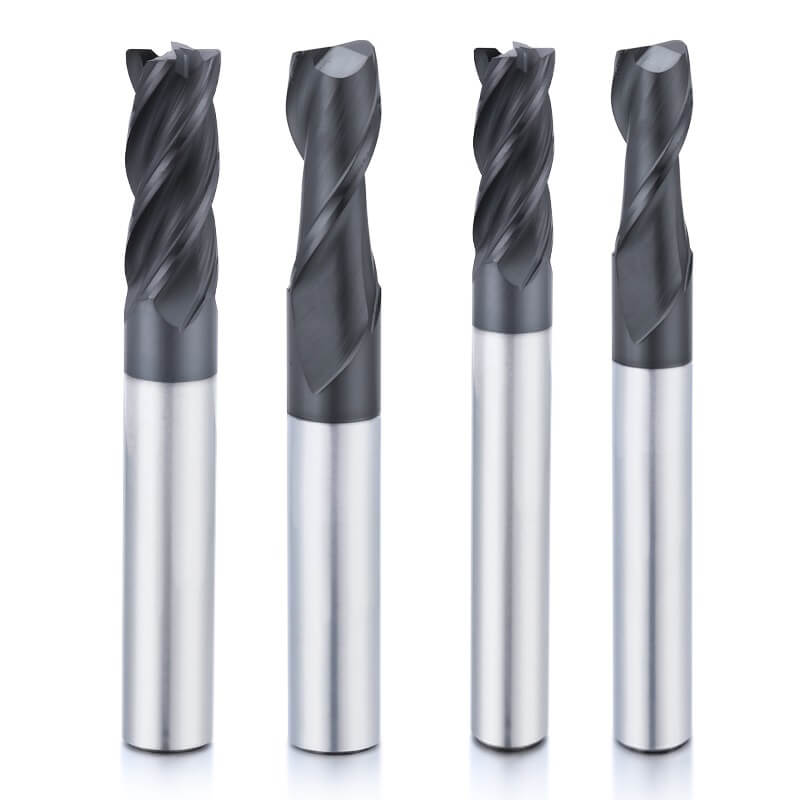
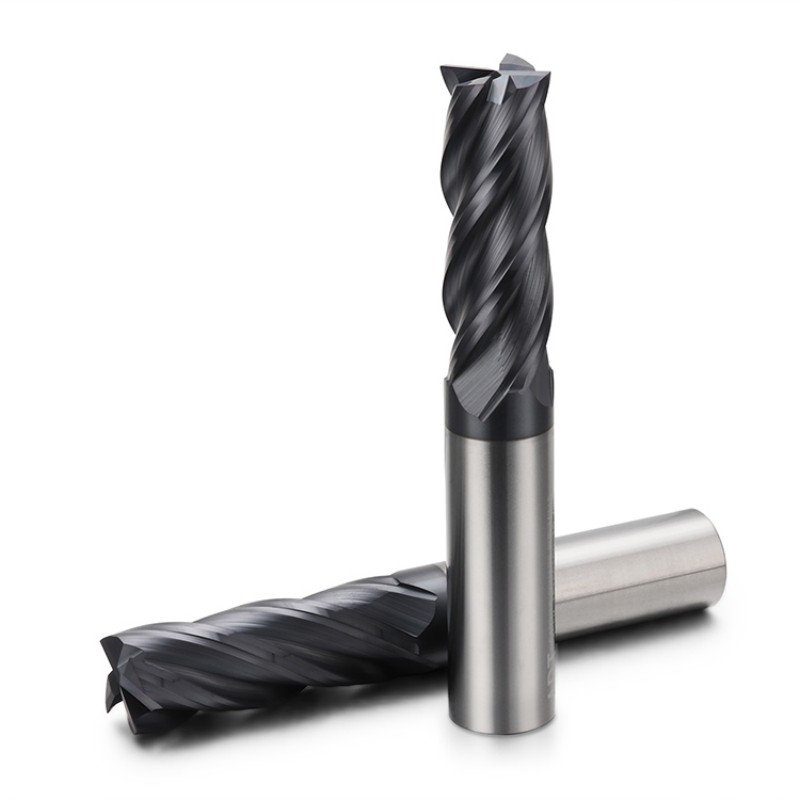
| PEX Square End Mill | Flat surfaces, slotting, shoulder milling | Maximum core strength and side wall stability |
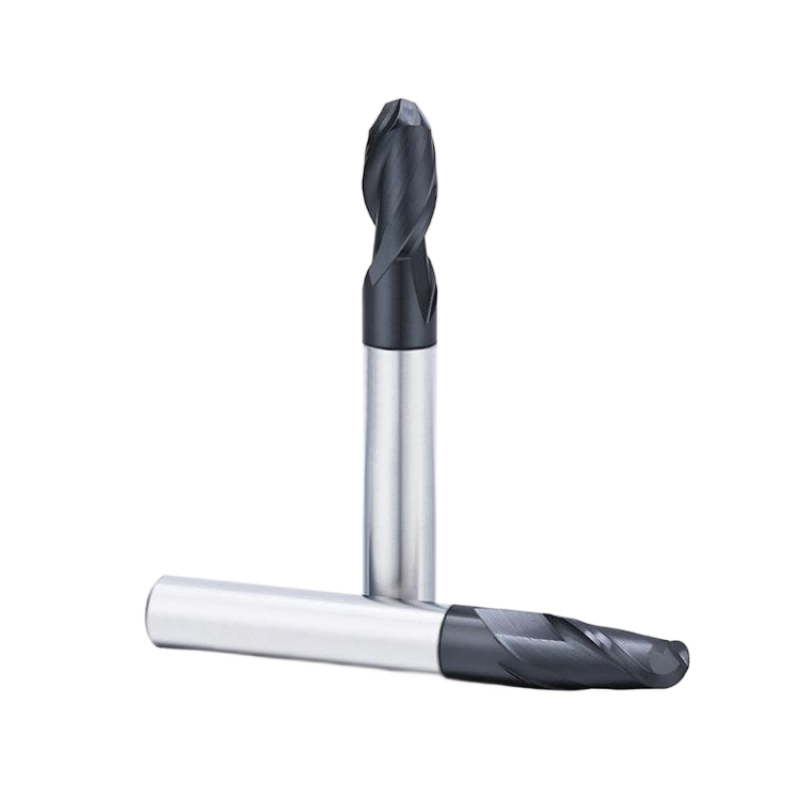
| PEX Ball Nose End Mill | Curved profiles, mold transitions | Smooth 3D surface finish and reduced profile friction |
| PEX Corner Radius End Mill | Deep shoulder milling, side wall finishing | Stronger corner protection to prevent edge chipping |
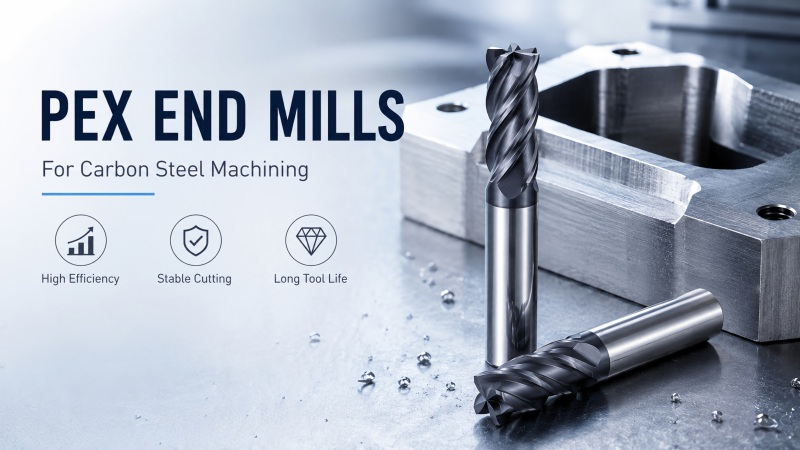
When setting up your workpiece, using PEX square mills on flat surfaces ensures maximum rigidity and long tool life.
Coolant selection directly impacts tool longevity. While liquid coolant works well for slow speed slotting in soft steel, applying flood coolant during high speed dry milling creates thermal cycling.
Using high pressure air blast instead prevents thermal cracking and keeps chips moving out of deep cavities.
Now that operational parameters are established, we can analyze how specialized steel cutters compare directly to standard alternatives.
Upgrading your shop floor from general purpose cutters to dedicated steel tooling produces immediate, measurable gains in daily production.
Standard carbide end mills often struggle to maintain consistency in continuous steel production runs. Standard tools typically rely on general purpose substrates and basic coatings, which break down quickly when exposed to the continuous friction generated by carbon steel.
By contrast, tools designed specifically for steel machining deliver measurable advantages across critical production metrics:
Higher Material Removal Rates: Optimized rake and helix angles reduce spindle load, allowing operators to run higher feeds without chatter.
Extended Tool Life: Switching to the PEX series doubles usable cutting hours compared to conventional TiN coated cutters.
Lower Production Cost: Less frequent tool changes keep CNC machines running longer, directly lowering the overall cost per finished part.
Investing in purpose built tooling eliminates the hidden expenses associated with unexpected tool failure, secondary deburring, and frequent setup adjustments.
Beyond speed and wear comparisons, avoiding common operational errors is essential to realizing the full value of your cutting tools.
Even the best cutters will fail prematurely if basic operational errors go unchecked. Identifying these roots saves hours of frustration and wasted material.
One frequent error in steel milling is exposing tools to thermal shock. When an end mill constantly transitions between hot cutting zones and cold liquid coolant, micro cracks form perpendicular to the cutting edge. These thermal cracks quickly expand, causing catastrophic edge failure that can ruin both tool and workpiece.
Another common issue is built up edge when machining soft, untempered steels. Soft steel tends to weld itself to the tool edge under high pressure, tearing away micro carbide grains as chips break off. Raising surface speeds and utilizing tools with positive shear angles prevents this material adhesion, ensuring a smooth surface finish.
Managing tool replacement cycles based on machine downtime is vital. Calculating the true cost of tool wear includes accounting for idle machine time during tool changes. Extending tool life directly reduces these costly production pauses, delivering a clear return on investment for busy production facilities.
Custom tool pricing depends on raw material selection, tool complexity, specialized coatings, and batch quantities. Non standard geometries, special corner radiuses, and tight tolerances require extra setup time and specialized grinding wheels. For accurate pricing based on your specific machining requirements, contact our engineering team directly to get a tailored quote.
A frequent mistake is choosing standard TiN or bright uncoated tools for high speed operations. Soft carbon steel generates high friction that quickly strips thin coatings, leading to material welding and rapid flank wear. High thermal limit coatings like AlTiN are necessary to maintain a reliable heat shield.
Excessive tool overhang reduces rigidity, causing tool deflection and chatter during heavy cuts. This vibration unevenly loads the cutting edges, leading to micro chipping along the flutes. Keeping tool extension as short as possible preserves rigidity and dramatically extends edge life.
Achieving high efficiency carbon steel machining requires matching material behavior with precise cutter design. By combining ultra fine carbide substrates, optimized positive rake geometries, and heat resistant AlTiN coatings, production shops can overcome sticky chip formation, prevent thermal shock, and maximize material removal rates across all general steel applications.
At Dohre CNC Tools, we leverage over two decades of manufacturing expertise to provide high performance cutting solutions tailored to your operational goals. Explore our full range of solid carbide end mills, drills, and reamers, or contact our engineering team today to optimize your machining parameters and request a custom quote.
Do you have a questions or an issues we can help you with?
Let’s talk about your project and how Dohre can help get your tools designed, manufactured and ready for the market.
By continuing to use the site you agree to our privacy policy Terms and Conditions.