


Get In Touch
Do you have a questions or an issues we can help you with?
Let’s talk about your project and how Dohre can help get your tools designed, manufactured and ready for the market.


Reading volume: 146

Release time :2026-08-20
Estimated reading time:
Learn how to choose a reliable CNC tool manufacturer from China. Audit factories, verify carbide quality, and avoid hidden costs. Contact Dohre today!
Sourcing high precision cutting tools from overseas requires balancing initial purchasing costs against long term operational reliability. Machine shops and manufacturing procurement managers frequently look to Chinese vendors to reduce tooling expenses across high volume milling, drilling, and boring operations.
However, navigating international suppliers introduces specific risks regarding material quality, batch consistency, and supplier legitimacy.Selecting a dependable partner involves looking past superficial price quotes to evaluate core manufacturing capabilities, quality inspection protocols, and material standards. A structured evaluation strategy ensures that overseas tool procurement yields genuine cost savings while maintaining strict tolerances and predictable tool life on the shop floor.
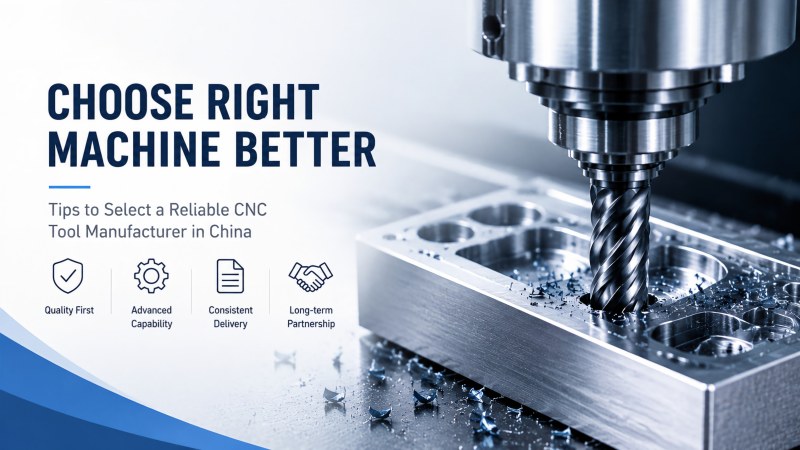
Working directly with an original equipment manufacturer provides significant engineering and financial benefits compared to dealing with trading companies.
Direct manufacturers possess dedicated production lines equipped with multi axis CNC tool grinders, maintaining immediate control over cutter geometries, edge preparation, and lead times.
Intermediaries often lack technical depth, leading to delayed communication when requesting custom tool modifications or troubleshooting application failures.
To verify supplier legitimacy, procurement teams should request virtual factory tours, equipment inventory lists, and live demonstrations of active grinding operations.
Partnering with an established producer like Dohre CNC Tools ensures direct access to engineering teams capable of providing application analysis, technical support, and custom tool designs tailored to specific machining goals.
Having verified the manufacturing setup of a prospective supplier, evaluating their physical machinery and grinding precision forms the next critical step.
The precision of a finished end mill or drill bit depends directly on the quality of the CNC grinding machinery used during production.
Leading tool manufacturers invest in advanced five axis CNC tool grinders from recognized global builders such as ANCA, Walter, or Rollomatic. These machines maintain tight wheel dressing tolerances and precise thermal stabilization during long grinding cycles.
Achieving consistent cutter performance requires strict adherence to dimensional parameters:
Shank Tolerance Standards: Maintaining an h6 shank tolerance guarantees secure clamping in high precision hydraulic or shrink fit tool holders
Runout Parameters: Total indicator reading runout must remain at or below five microns to prevent uneven tooth load and premature chipping
Edge Honing Profiles: Controlled edge preparation removes micro burrs to stabilize cutting edges under high feed conditions
Tool longevity depends heavily on the internal structure of the tungsten carbide substrate. High performance cutting tools utilize micro grain or ultra fine grain carbide powder bonded with cobalt.
Fine grain structures provide an optimal balance of high Rockwell hardness and superior transverse rupture strength, resisting impact forces during interrupted cuts.
Substandard tool manufacturers sometimes blend recycled carbide scrap or low grade powder into substrate rods, introducing internal voids and structural inconsistencies. Premium manufacturers insist on using pure virgin raw materials to ensure consistent density and fracture toughness across every production batch.
Modern Physical Vapor Deposition coatings act as thermal and chemical barriers between the workpiece and the carbide substrate. Selecting the correct coating chemistry prevents thermal oxidation, lowers friction coefficients, and inhibits built up edge formation.
Matching coating formulations to specific metal groups significantly extends tool life:
| Workpiece Material | Recommended Tool Solution | Key Coating / Design Feature |
|---|---|---|
| Carbon Steel | PEX Series | Wear resistant TiAlN coating with smooth flute polish |
| Hardened Steel | HEX Series | High hardness TiSiN silicon coating resisting extreme heat |
| Aluminum Alloys | AEX Series | Mirror polished flutes with friction reducing DLC coatings |
With technical specifications and material standards established, reviewing supplier quality control protocols provides additional risk mitigation.
A trustworthy manufacturer maintains an in-house quality inspection laboratory equipped with advanced optical and contact measurement systems. Manual calipers and micrometers are insufficient for verifying complex cutter geometries, micro prep radii, or coating thicknesses.
Suppliers should utilize automated inspection machines such as Zoller Genius or Keyence optical systems to measure flute profiles, helix angles, and relief clearances. Requesting First Article Inspection reports with exported optical data ensures that production tooling matches original drawing specifications before bulk shipping.
Maintaining consistent dimensions across thousands of units requires strict statistical process control. During continuous grinding operations, grinding wheel wear and ambient shop temperature shifts can cause subtle dimensional drift.
Experienced manufacturers implement automatic wheel dressing cycles and laser in process measurement to correct wheel wear dynamically.
Ordering from a reliable supplier ensures rigorous process monitoring so tools ordered months apart deliver identical wear rates, tool life, and surface finish results on automated shop floors.
Once quality inspection capabilities are confirmed, examining the true financial impact of tooling procurement ensures long term profitability.
Selecting cutting tools based solely on low purchase price often leads to higher overall manufacturing costs. A low cost end mill that suffers from rapid flank wear forces machine operators to lower cutting speeds, perform frequent tool changes, and manage higher scrap rates.
Calculating the total cost of ownership involves evaluating tool life against machine hour rates and downtime costs. Investing in high quality tooling reduces tool change frequency, maintains faster feed rates, and protects high value workpieces from dimensional errors.
Unexpected expenses can arise when reviewing vague commercial proposals. Buyers should watch for hidden costs related to custom tool setup fees, specialized export packaging, and high Minimum Order Quantities.
Transparent vendors provide clear itemized quotes specifying raw material origins, coating types, tolerance classes, and delivery terms. For specialized production requirements, evaluating options for solid carbide end mills with clear warranty guidelines ensures financial protection before issuing purchase orders.
To ensure long term supply chain security, applying a systematic audit framework helps verify vendor credentials effectively.
Requesting raw material Mill Test Reports ensures that tungsten carbide rods originate from verified material suppliers. Certified substrate records confirm cobalt content percentages, grain size classifications, and density measurements.
Before approving high volume production orders, conduct standardized cutting tests using defined parameters:
Establish Standardized Cutting Parameters: Define fixed cutting speed, feed per tooth, axial depth, and radial depth based on workpiece material properties to validate baseline cutting performance.
Measure Flank Wear Metrics: Inspect cutting edge wear under microscopic magnification at fixed time intervals until flank wear reaches target limits to monitor edge wear progression.
Inspect Workpiece Surface Finish: Measure surface roughness and dimensional tolerances across machined test parts to confirm consistent machining quality stability.
Protecting proprietary tool designs, step drill profiles, and specialized chip breaker patterns requires signed non disclosure agreements before sharing CAD drawings. Legitimate manufacturing partners respect intellectual property rights and maintain secure drawing management systems for OEM clients.
Precision ground cutting edges and thin tool coatings require specialized protective packaging during international transit. Verifying that the supplier applies anti rust oil coatings, secures tools within individual plastic tubes, and utilizes foam padded outer cartons prevents costly handling damage during ocean or air freight.
A legitimate manufacturer provides ongoing technical collaboration long after the initial shipment arrives. Evaluating whether the vendor offers application analysis, custom step mill development, and clear reconditioning guidelines ensures long term operational success for complex machining projects.
Once the supplier credentials pass inspection, establishing smooth transportation and after sales technical support guarantees continuous shop floor production.
Precision ground cutting edges and thin tool coatings require specialized protective packaging during international transit. Reliable suppliers apply anti rust oil coatings, secure tools within individual plastic tubes, and utilize foam padded outer cartons to prevent handling damage during ocean or air freight.
As manufacturing requirements evolve, machine shops frequently encounter specialized materials or complex workpiece geometries requiring custom tooling designs. Leading producers offer comprehensive engineering services, assisting clients with application analysis, custom step mill development, and tool reconditioning guides.
For high volume production needs, selecting reliable carbide drill bits and specialized Non standard Milling Tools ensures optimized machining strategies designed specifically for complex component challenges.
Custom tool costs depend on raw carbide grain selection, complex flute geometries, specialized PVD coatings, and multi axis CNC grinding setups. Non standard corner radii, extended neck lengths, and tight tolerance requirements increase production time. Custom tooling projects typically require two to three weeks from final drawing approval to completed packaging.
A frequent mistake is using standard carbon steel cutters that lack appropriate helix angles or heat resistant coatings. Machining stainless steel requires specialized cutters designed with sharp rake angles and heat dissipating coatings to prevent built up edge formation and work hardening.
Procurement teams can request material test certificates from raw rod suppliers and perform density or hardness testing on sample batches. Reputable manufacturers provide complete batch traceability, proving that substrates consist of pure virgin powder without recycled scrap content.
Minimum order quantities for custom tooling depend on cutter dimensions and raw rod availability. Standard custom profiles often start at small batch sizes of 10 to 20 pieces, while highly specialized custom geometries or unique coating formulations may require larger production runs to offset machine setup costs.
Choosing a reliable CNC tool manufacturer from China requires evaluating factory grinding capabilities, raw material purity, inspection infrastructure, and total cost of ownership. By looking past initial unit pricing and conducting thorough technical audits, machine shops can establish dependable supply chain partnerships that deliver consistent tool life and tight tolerances.
Partnering with an experienced manufacturer ensures direct access to high performance tooling and tailored application support. Contact the engineering team at Dohre CNC Tools today to request detailed product specifications, evaluate technical solutions, or discuss custom tooling requirements for your machining operations.
Do you have a questions or an issues we can help you with?
Let’s talk about your project and how Dohre can help get your tools designed, manufactured and ready for the market.
By continuing to use the site you agree to our privacy policy Terms and Conditions.