


Get In Touch
Do you have a questions or an issues we can help you with?
Let’s talk about your project and how Dohre can help get your tools designed, manufactured and ready for the market.


Reading volume: 147

Release time :2026-09-08
Estimated reading time:
Troubleshoot common carbon steel surface finish issues like chatter, built-up edge, and tool marks. Learn how DOHRE PEX solid carbide end mills improve surface quality.
Carbon steel can produce an inconsistent surface finish when cutting conditions, tool geometry, or tool stability are not properly matched. Common problems include chatter marks, built up edge, surface tearing, burrs, and uneven tool marks.
The right combination of cutting parameters, carbide end mill geometry, tool rigidity, and chip evacuation can improve surface consistency. This guide explains common carbon steel surface finish problems and practical ways to correct them during milling.
Surface roughness Ra describes the average deviation of a machined surface from its mean profile. It is commonly used to evaluate surface quality and determine whether a finished carbon steel part meets its functional requirements. Setting the Ra requirement according to the actual application can also help avoid unnecessary finishing operations and production costs.
Carbon content affects cutting resistance, chip formation, hardness, and tool wear, which can influence surface finish. Low carbon steel is relatively ductile and may be more prone to dragging, tearing, burrs, or built up edge when cutting conditions are unsuitable.
As carbon content and hardness increase, cutting forces and thermal loads can also rise. Tool geometry, cutting speed, feed rate, and workpiece stability should therefore be matched to the material when targeting a consistent surface finish.
| Carbon Steel Type | Typical Machining Behavior | Surface Finish Concern | Tooling Focus |
|---|---|---|---|
| Low carbon steel | More ductile cutting behavior | Tearing, burrs, built up edge | Sharp cutting edge, stable feed |
| Medium carbon steel | Higher cutting resistance | Tool wear, heat, feed marks | Cutting stability, wear resistance |
| High carbon steel | Higher hardness and cutting load | Tool wear, vibration, roughness | Suitable carbide grade, stable cutting conditions |
Chatter marks appear as visible wave patterns on the machined surface. They are commonly caused by insufficient rigidity, excessive tool overhang, or unsuitable cutting conditions.
Excessive deflection can lead to uneven cutting and repeated surface marks. A suitable carbide end mill and rigid tool setup can improve cutting stability.
For carbon steel, PEX end mills for steel use a 35 degree helix angle to support chip evacuation and stable cutting. The PEX Series is designed for carbon steel and general steel applications up to HRC55.
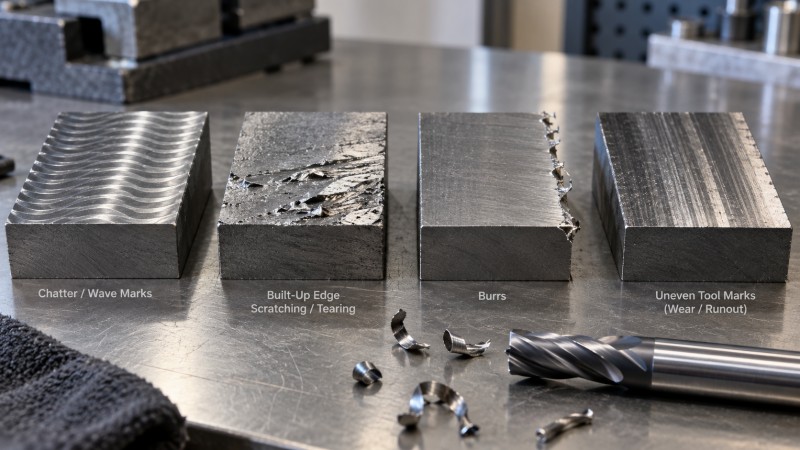
Built up edge occurs when workpiece material adheres to the cutting edge. It can change the cutting edge geometry and cause scratches, tearing, and inconsistent surface texture.
A sharp cutting edge, suitable positive rake geometry, and properly adjusted cutting speed can help reduce material adhesion. Stable feed per tooth also helps prevent excessive rubbing.
Tool wear changes the cutting edge geometry and can increase cutting forces, tool marks, and surface roughness.
When surface quality deteriorates during production, inspect the cutting edge and check for excessive flank wear or edge damage. Timely tool replacement helps maintain consistent surface quality.
Cutting speed and feed rate affect chip formation, cutting forces, and tool engagement. Unsuitable settings can increase rubbing, vibration, heat, or feed marks.
Reducing feed per tooth during finishing can lower cutter mark height, but excessively low feed can cause rubbing. Settings should match the steel grade, tool diameter, geometry, and machine rigidity.
End mill geometry affects cutting resistance, chip flow, heat generation, and surface texture. Positive rake geometry can support cleaner cutting in ductile carbon steels.
DOHRE's PEX Series uses an ultra fine carbide substrate with 10 percent cobalt, an AlTiN nano composite coating, a 6 degree positive rake angle, and a 35 degree helix angle. It is designed for carbon steel and general steel applications up to HRC55.
Excessive tool runout can cause uneven flute engagement, vibration, and inconsistent surface marks.
When unexpected finish variation occurs, check the toolholder, spindle, clamping, and tool extension. Keeping the setup short and rigid helps maintain more uniform cutting engagement.
Chips left in the cutting zone can be recut and dragged across the finished surface, especially in slots and pockets.
Proper coolant delivery can help control heat and improve chip removal. An appropriate cutting strategy can also reduce chip recutting and maintain a cleaner cutting zone.
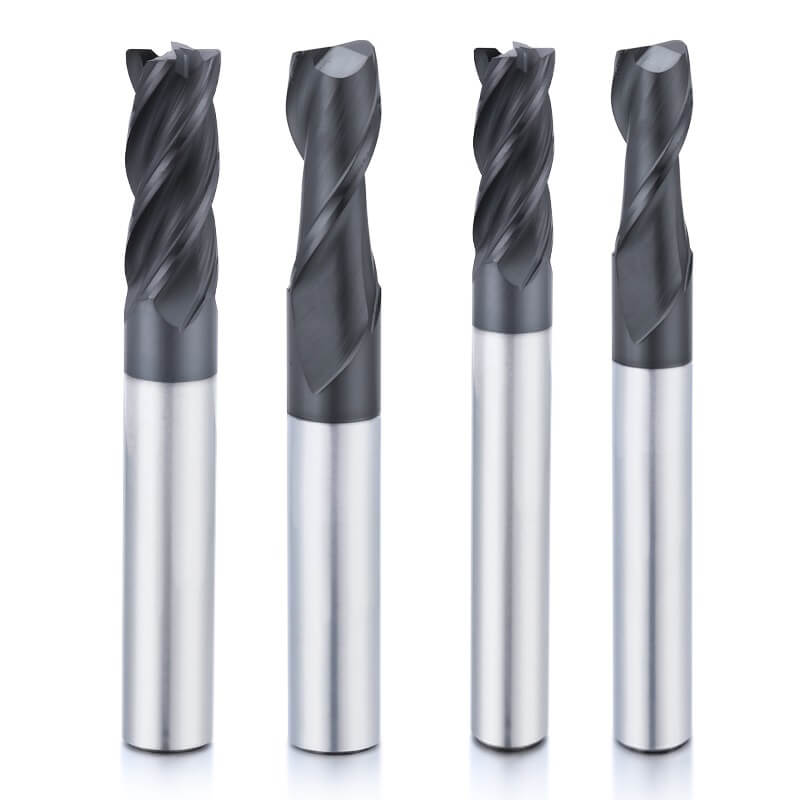
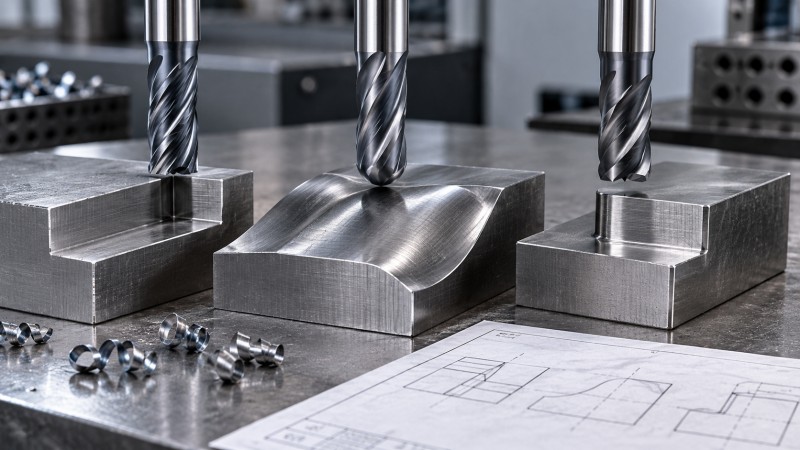
Square end mills are suitable for flat surfaces, shoulders, steps, and straight slotting. For carbon steel applications, solid carbide carbon steel square end mills from the PEX Series are designed for materials up to HRC55.
The tool uses an ultra fine carbide substrate with 10 percent cobalt, a 6 degree positive rake angle, and an AlTiN nano composite coating. The 35 degree helix angle supports chip evacuation during cutting. These characteristics make the geometry suitable for general steel finishing and other common milling operations.
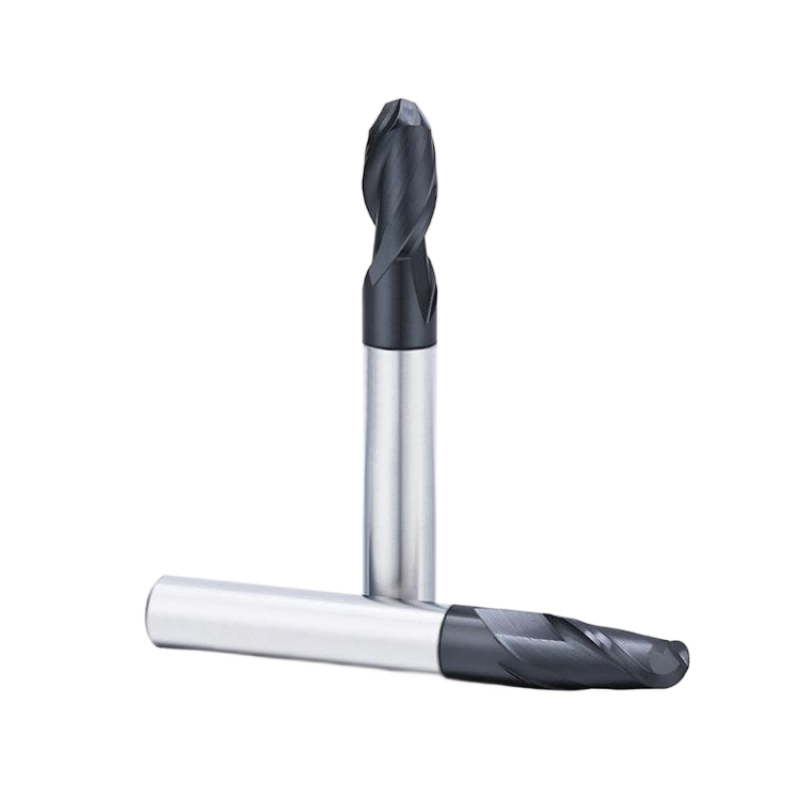
Ball nose end mills are commonly used for curved surfaces, three dimensional profiles, mold features, and other applications where a rounded cutting edge is required.
The contact area changes as the cutter moves across the workpiece, so toolpath direction, step over, cutting speed, and feed rate all affect the final surface texture.
Smaller step overs can reduce visible scallop height during finishing, while stable tool engagement helps prevent vibration and uneven marks. Tool selection should also consider the required surface profile and the hardness of the carbon steel being machined.
A rounded cutting corner provides greater edge strength than a sharp corner and can reduce the risk of edge chipping during shoulder and profile machining.
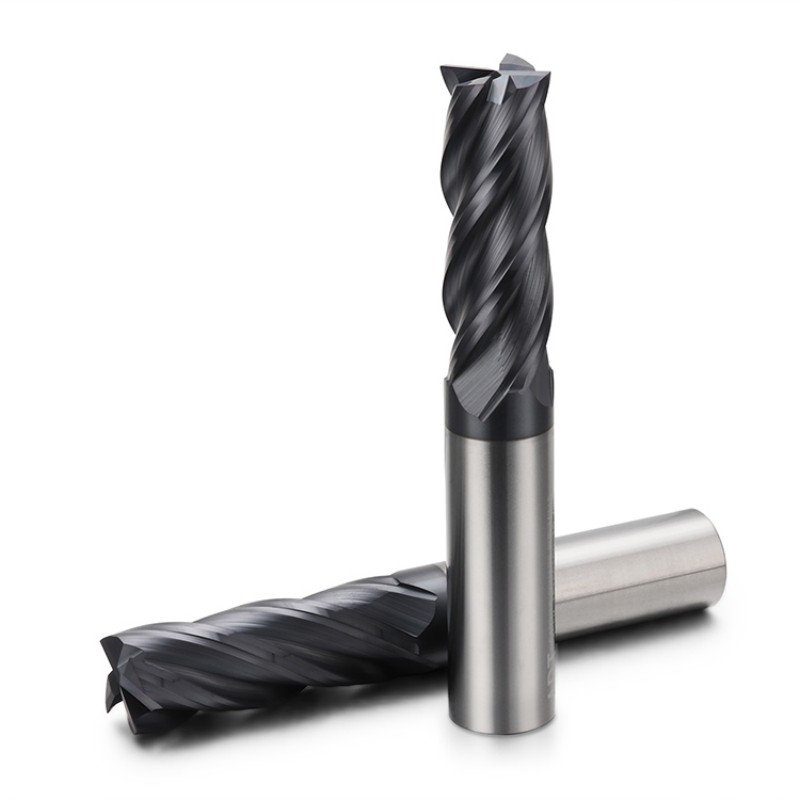
DOHRE's corner radius end mills are designed for carbon steel and other general steel applications up to HRC55. They are suitable for shoulder milling, step machining, side wall finishing, and profile work.
The PEX design combines an ultra fine carbide substrate, 10 percent cobalt, an AlTiN nano composite coating, a 6 degree positive rake angle, and a 35 degree helix angle.
Tighter surface finish requirements generally require more controlled machining conditions and may increase cycle time. Mating surfaces, sealing areas, and bearing locations may require tighter roughness specifications than clearance pockets or non functional exterior surfaces.
Engineers should therefore define surface roughness according to the actual function of each feature. Avoiding unnecessarily tight specifications can reduce finishing operations without affecting the performance of the finished component.
Every additional finishing pass adds machining time and increases tool usage. If the required surface finish can be achieved through an appropriate end mill geometry and stable cutting conditions, unnecessary secondary operations can often be avoided.
Tool diameter, cutter geometry, step over, feed per tooth, and machine rigidity should be considered together when developing the finishing process. A controlled process is generally more useful than simply adding more finishing passes.
Running a tool after excessive wear can increase cutting forces and make surface roughness less consistent. Replacing a tool too early, however, can increase tooling consumption without providing a meaningful improvement in part quality.
Monitoring tool condition and surface finish together provides a more practical basis for determining tool replacement intervals. For additional information on diagnosing chatter, tool wear, runout, and other steel milling surface problems, see this guide to steel milling surface finish.
A rough surface is usually caused by tool wear, vibration, built up edge, excessive feed, or poor chip evacuation. Check the cutting tool, cutting parameters, tool overhang, runout, and chip removal to identify the cause.
A solid carbide end mill with suitable geometry and coating is a good choice for carbon steel up to HRC55. Square end mills suit flat surfaces and slots, ball nose end mills suit curved profiles, and corner radius end mills suit shoulders and profiles.
Tool runout can cause uneven flute engagement, vibration, and visible tool marks. Checking the toolholder, spindle, and clamping condition can help reduce finish variation.
Tool geometry affects cutting resistance, chip evacuation, and edge strength. Choosing the right square, ball nose, or corner radius geometry for the machining feature can improve surface consistency.
A consistent carbon steel surface finish depends on the right tool geometry, cutting parameters, tool stability, and chip control. Addressing the causes of chatter, built up edge, tool wear, and uneven marks can improve surface quality without unnecessary finishing operations.
DOHRE is a professional carbide cutting tool manufacturer offering solid carbide end mills for carbon steel and general steel applications up to HRC55. Contact DOHRE to discuss the right cutting tool for your carbon steel milling requirements.
Do you have a questions or an issues we can help you with?
Let’s talk about your project and how Dohre can help get your tools designed, manufactured and ready for the market.
By continuing to use the site you agree to our privacy policy Terms and Conditions.