


Get In Touch
Do you have a questions or an issues we can help you with?
Let’s talk about your project and how Dohre can help get your tools designed, manufactured and ready for the market.


Reading volume: 134

Release time :2026-09-10
Estimated reading time:
Maximize carbide end mill life in carbon steel milling. Discover how controlling heat, cutting parameters, tool geometry, and PEX coatings reduces wear and chipping.
Extending tool life in carbon steel milling requires control over cutting parameters, tool material, geometry, and machining stability.
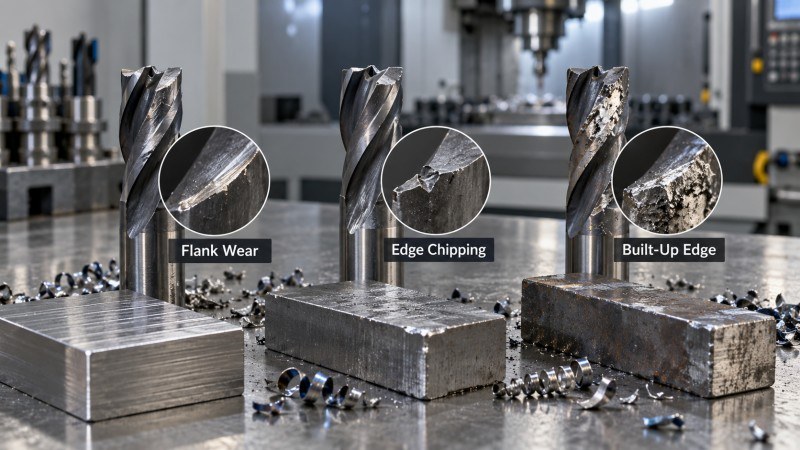
Carbon steel can cause flank wear, edge chipping, built up edge, and premature tool failure when cutting conditions are not properly matched to the material and tool.
Selecting the right carbide tool and maintaining stable cutting conditions can help reduce unnecessary wear and improve tool life.
Cutting heat is one of the main factors affecting tool life during carbon steel milling. Friction between the cutting edge and workpiece generates heat in the cutting zone. Excessive cutting speed can increase thermal load and accelerate wear on the cutting edge.
Heat can also affect coating performance and carbide edge stability. Controlling cutting speed, maintaining effective chip evacuation, and selecting a tool with suitable heat resistance can help manage thermal stress during machining.
Cutting forces increase when the tool engages too much material or when the machining conditions are not suitable for the workpiece. Excessive radial engagement, deep cuts, or unstable cutting conditions can place additional stress on the cutting edge.
A suitable combination of tool diameter, depth of cut, feed rate, and radial engagement helps maintain a more consistent cutting load. Stable mechanical loading reduces the risk of edge chipping and premature tool failure.
Built up edge occurs when workpiece material adheres to the cutting edge during machining. This can change the effective geometry of the cutter and affect both cutting performance and surface finish.
If the built up material breaks away, it can damage the cutting edge and accelerate wear. Suitable cutting parameters, effective chip evacuation, and an appropriate tool geometry can help reduce the conditions that promote material adhesion.
Cutting speed has a direct effect on cutting temperature and tool wear. Excessive speed can increase heat generation, while an unsuitable low speed can affect cutting efficiency and chip formation.
The appropriate cutting speed depends on factors such as workpiece material, tool diameter, carbide grade, coating, machining operation, and machine capability. Cutting speed should therefore be selected according to the complete machining setup rather than treated as a fixed value for all carbon steel applications.
Feed per tooth affects chip thickness and cutting force. If the feed is too low, the cutting edge may rub against the workpiece instead of producing an effective chip. This increases friction and can accelerate edge wear.
An excessive feed can create high mechanical loading and increase the risk of chipping. Maintaining a suitable feed per tooth helps the cutting edge remove material consistently while keeping cutting forces within a manageable range.
Depth of cut affects both cutting force and material removal. Excessive engagement can overload the cutter, particularly during heavy milling operations.
For longer tool life, axial and radial engagement should match the tool diameter, flute length, machine rigidity, and machining operation. Reducing unnecessary engagement can help maintain a more stable cutting load and reduce localized stress on the cutting edge.
The carbide substrate provides the foundation for cutting edge strength, hardness, and wear resistance. The appropriate carbide grade should balance resistance to wear with sufficient toughness for the intended machining conditions.
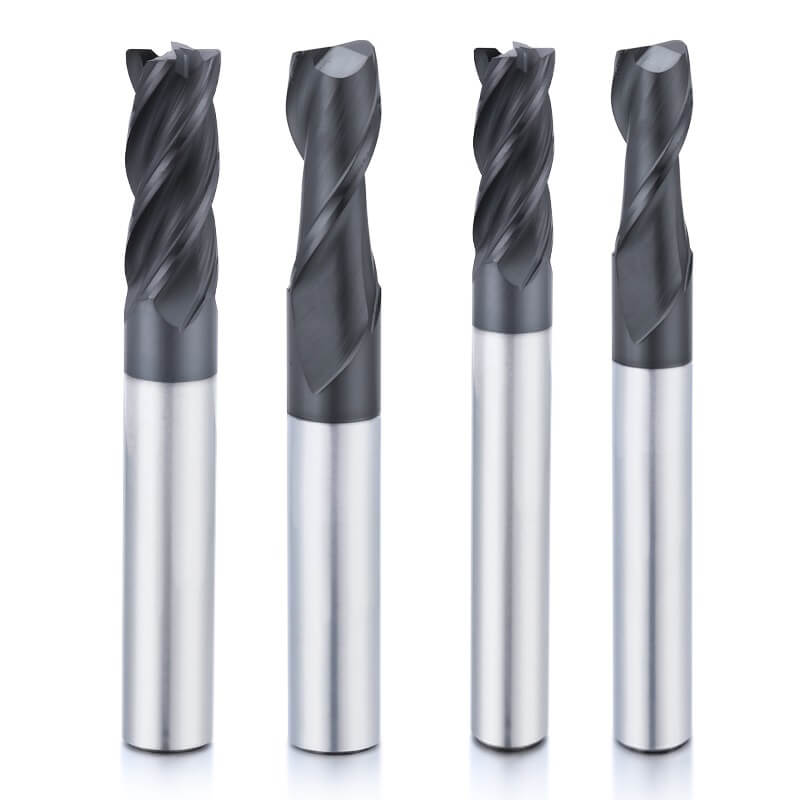
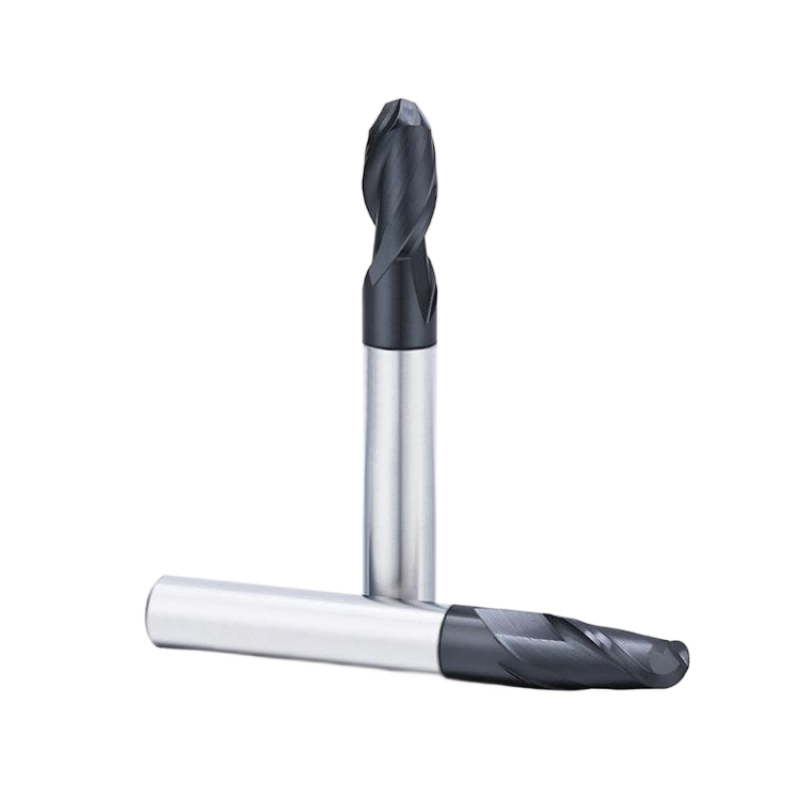
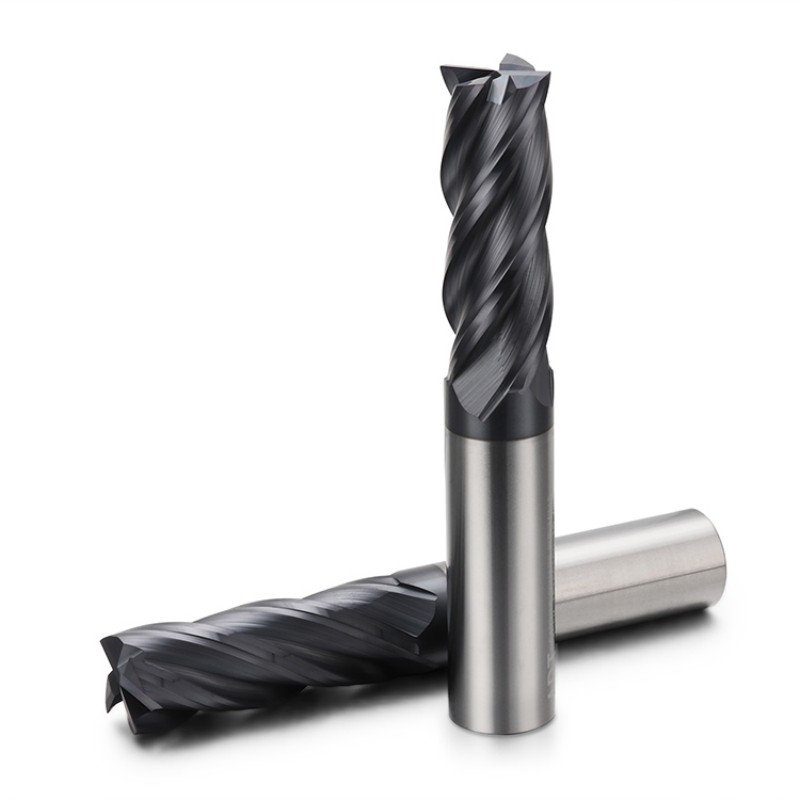
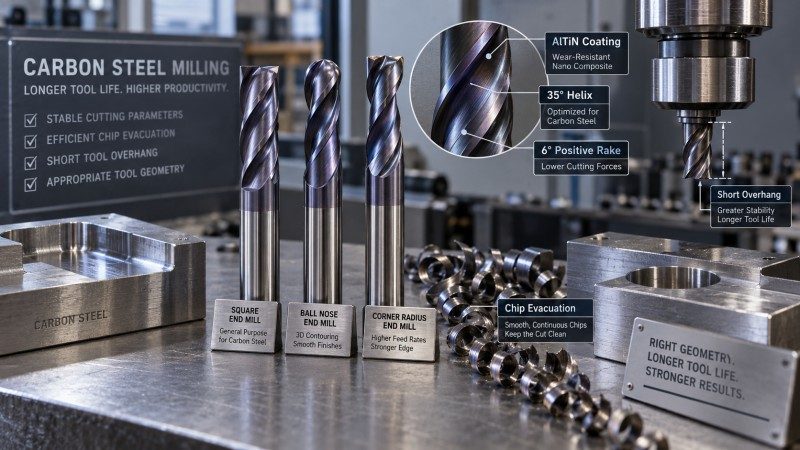
For carbon steel milling, selecting suitable carbide end mills allows the tool type, carbide substrate, geometry, and coating to be matched to the workpiece and machining operation. Different milling operations may require different end mill designs, including square end mills, ball nose end mills, and corner radius end mills.
Coating can improve resistance to wear and heat during steel machining. Its effectiveness depends on the workpiece material, cutting conditions, tool geometry, and machining operation.
For carbon steel and general steel up to HRC55, the PEX Series uses an AlTiN nano composite coating. According to the manufacturer, the coating is designed to improve wear resistance and heat resistance during steel machining, helping protect the cutting edge under higher cutting temperatures.
Rake angle influences cutting resistance and the way the cutting edge enters the workpiece. A suitable positive rake angle can help reduce cutting resistance and support smoother cutting.
The PEX Series uses a 6° positive rake angle for carbon steel and general steel applications up to HRC55. This geometry is designed to support lower cutting resistance and stable cutting performance.
Helix angle affects chip evacuation and cutting stability. An appropriate helix design can help move chips away from the cutting zone while supporting smoother engagement between the tool and workpiece.
The PEX Series uses a 35° helix angle. Dohre states that this geometry helps improve chip evacuation, reduce vibration, and maintain stable machining performance in carbon steel and other general steel applications up to HRC55.
A sharp cutting corner can experience concentrated mechanical stress during shoulder milling, step machining, and profile operations. A corner radius can provide additional edge support and distribute cutting forces over a larger area.
A corner radius end mill for steel machining is designed for steel materials up to HRC55, including carbon steel, alloy steel, cast iron, and general steel. Its corner radius geometry helps reduce sharp corner chipping while the carbide substrate and AlTiN nano composite coating support wear resistance.
Tool overhang affects rigidity and cutting stability. A longer unsupported tool length increases the potential for deflection and vibration, particularly during deep cavity or narrow feature machining.
Using the shortest practical tool length helps maintain rigidity. The required reach should be considered when selecting the tool so that unnecessary overhang does not introduce additional mechanical stress.
Efficient chip evacuation helps prevent removed material from remaining in the cutting zone. Recutting chips can increase friction, raise cutting temperature, and place additional stress on the cutting edge.
Tool geometry, helix angle, flute design, radial engagement, and coolant or air delivery can all influence chip evacuation. Maintaining a clear cutting zone helps support consistent cutting conditions and reduces unnecessary wear.
Complex profiles may require cutter geometry that is difficult to achieve with a standard end mill. Special profiles, narrow features, and undercuts can limit tool access and cutting stability.
A custom tool can be designed around the actual workpiece geometry when a standard cutter cannot achieve the required profile or machining performance.
Deep cavities and narrow features may require additional tool reach, which can increase deflection and vibration. Simply using a longer standard tool may reduce cutting stability.
Custom tooling allows the cutting length, neck design, shank dimensions, and overall geometry to be adjusted to the required reach. This can provide better access to deep features while limiting unnecessary tool flexibility.
For applications where standard tools cannot meet the required profile, reach, or dimensions, custom milling tools can be developed around the specific machining requirements. Dohre manufactures solid carbide cutting tools and provides nonstandard tooling for applications that require specialized tool geometry or dimensions.
Solid carbide is commonly used for carbon steel milling because it provides a combination of hardness, wear resistance, and cutting edge strength. The appropriate carbide grade should still be selected according to the workpiece condition, machining operation, cutting parameters, and required tool performance.
Yes. Rake angle, helix angle, corner radius, flute geometry, and cutting edge design all influence cutting resistance, chip evacuation, mechanical loading, and cutting stability. Matching the geometry to the machining operation can help reduce unnecessary stress on the cutting edge.
Coating can improve resistance to wear and heat during steel machining. The appropriate coating depends on the workpiece material, cutting conditions, and tool design. For example, the PEX Series uses an AlTiN nano composite coating for carbon steel and general steel machining up to HRC55.
Custom tooling can be considered when a standard cutter cannot provide the required profile, reach, dimensions, or machining stability. A custom tool can be designed around the actual workpiece and machining requirements rather than forcing the application to fit a standard tool.
Extending tool life in carbon steel milling requires control over cutting parameters, carbide material, tool geometry, and machining stability. Matching the tool to the steel grade and machining operation can help reduce unnecessary wear and maintain consistent cutting performance.
For specific carbon steel applications, contact Dohre to discuss the required tool geometry, dimensions, coating, and machining conditions with a cutting tool manufacturer.
Do you have a questions or an issues we can help you with?
Let’s talk about your project and how Dohre can help get your tools designed, manufactured and ready for the market.
By continuing to use the site you agree to our privacy policy Terms and Conditions.