


Prevent work hardening in stainless steel machining with effective feed rates, heat control, chip evacuation, and Dohre TEX high-performance end mills.


Reading volume: 43

Release time :2026-09-13
Estimated reading time:
Prevent work hardening in stainless steel machining with effective feed rates, heat control, chip evacuation, and Dohre TEX high-performance end mills.
Work hardening is a common challenge when cutting stainless steel, especially during repeated passes or unstable cutting conditions. Once the surface becomes hardened, the cutting edge may encounter higher resistance, making subsequent cutting more difficult and accelerating tool wear.
Understanding how work hardening develops is the first step to preventing it. The following sections explain the main causes of work hardening, practical ways to reduce it, and the tool features that support more stable stainless steel cutting.
Stainless steel has relatively low thermal conductivity, so cutting heat can remain concentrated near the cutting zone. This can increase tool wear and contribute to built up edge when cutting conditions are not properly controlled.
Heat alone does not cause work hardening. The main concern is the combination of plastic deformation, friction, and repeated cutting at the tool workpiece interface. Stable cutting conditions and effective chip evacuation help control heat and reduce unnecessary friction.
Tool rubbing is a major cause of surface deformation during stainless steel machining. When the cutting edge passes over the workpiece without removing enough material, it can compress the surface instead of producing a clean chip.
Insufficient feed per tooth, excessive tool wear, and unstable tool engagement can increase rubbing. Once the surface becomes harder, the next cutting edge must remove a more resistant layer, increasing cutting forces and accelerating tool wear.
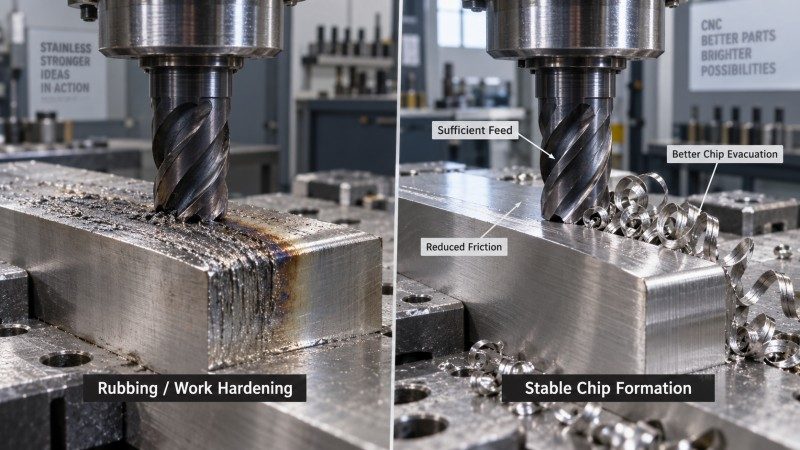
Different stainless steel grades have different machining characteristics. Austenitic grades such as 304 and 316 are particularly susceptible to work hardening, making stable cutting conditions important.
Material grade should be considered when selecting cutting parameters and tooling. The tool should match the material, machining operation, cutting engagement, and surface finish requirements. Choosing suitable end mills for stainless steel can provide the appropriate geometry and cutting characteristics for these applications.
Use sufficient feed per tooth to form a stable chip and prevent the cutting edge from rubbing against the workpiece. Extremely light feeds can increase rubbing, especially with small radial engagement or a worn tool.
Select feed according to tool diameter, flute count, stainless steel grade, radial engagement, axial depth of cut, and machine rigidity. Avoid unnecessary dwell during entry, pocketing, or tool repositioning.
Cutting speed directly affects cutting temperature and tool wear. Excessive speed can increase heat and accelerate edge or coating wear, while low speed combined with insufficient feed can promote rubbing.
Start with the tool manufacturer's recommended cutting data and adjust the speed according to material grade, tool diameter, cutting engagement, machine rigidity, and coolant conditions.
Repeatedly cutting the same surface layer can cause the tool to encounter a work hardened zone, particularly when using light radial engagement or following the same depth line.
Where possible, distribute tool engagement along the cutting edge. Proper axial and radial engagement can help reduce localized wear and maintain a more consistent cutting load.
A suitable positive rake angle helps the cutting edge shear the material more efficiently, reducing cutting resistance and unnecessary friction. The edge should remain sharp enough to cut rather than deform the workpiece surface.
Tool geometry should match the stainless steel grade and machining operation to maintain stable chip formation.
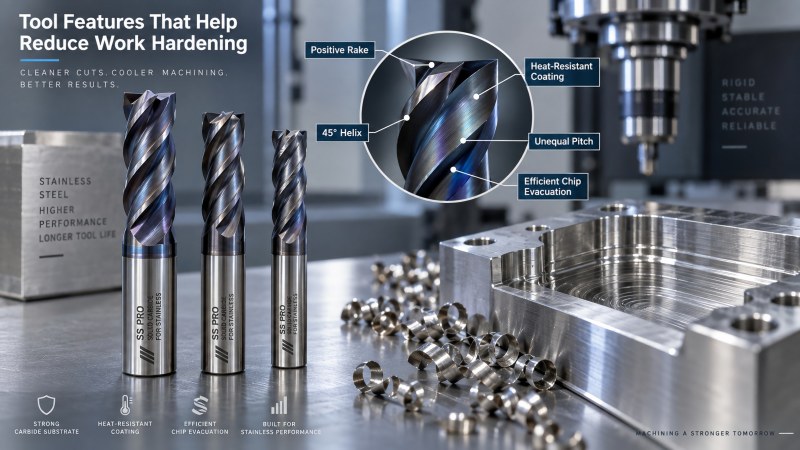
Stainless steel generates relatively high cutting forces, requiring a suitable balance of hardness and toughness. An overly fragile edge can chip, while unsuitable edge geometry can increase cutting resistance.
Dohre's TEX Series uses ultra fine micro grain carbide below 0.6 μm with 12 percent cobalt, providing a balance of edge strength, wear resistance, and cutting stability for stainless steel machining.
A heat resistant coating can improve resistance to thermal load, wear, and oxidation during stainless steel cutting. However, coating performance still depends on appropriate cutting parameters and tool engagement.
For stainless steel milling, the TEX square end mill combines a strong carbide substrate, 45 degree helix, unequal pitch geometry, and heat resistant coating to support stable cutting and chip evacuation.
Poor chip evacuation can leave hot chips around the cutting zone and increase the risk of recutting. Recutting chips adds friction, cutting heat, and mechanical stress to the tool and workpiece.
Flute geometry, tool engagement, and coolant delivery should work together to move chips away from the cutting area. This becomes particularly important in slots, pockets, and deeper features where chips have fewer escape paths.
An unexpected increase in spindle load can indicate higher cutting resistance. If the machining parameters remain unchanged, the increase may be related to tool wear, built up edge, unstable engagement, or repeated cutting through a hardened surface.
Monitoring cutting load together with tool condition and surface finish can help identify problems before they cause severe edge damage or dimensional errors.
Notch wear can occur when the same section of the cutting edge repeatedly contacts a hardened surface or consistent depth line. Localized wear can weaken the edge and eventually lead to chipping.
Changes in surface finish can also indicate tool wear, vibration, built up edge, or unstable chip formation. When these symptoms appear, check feed per tooth, cutting speed, tool condition, tool runout, workholding, and chip evacuation before changing a single parameter.
For applications where standard tooling cannot provide the required engagement, reach, or cutting geometry, custom cutting tools can be considered to meet specific stainless steel machining requirements.
Yes, climb milling can help reduce rubbing and work hardening under stable machining conditions. However, the choice also depends on machine rigidity, tool holding, workpiece geometry, and the machining operation.
A sufficient feed per tooth can help prevent rubbing and reduce work hardening. Excessive feed, however, can increase cutting load, edge chipping, and tool deflection.
Yes, a work hardened layer can be removed by machining below the affected surface. Preventing excessive work hardening is generally preferable to removing the hardened layer afterward.
A dedicated stainless steel end mill with suitable geometry, strong carbide, heat resistant coating, and effective chip evacuation is generally preferred. The specific tool should match the stainless steel grade and machining operation.
Preventing work hardening when cutting stainless steel starts with maintaining stable shearing action. Use sufficient feed per tooth, control cutting speed, avoid repeated surface engagement, and maintain effective chip evacuation. Suitable tool geometry, carbide substrate, coating, and machining stability also help reduce rubbing and premature edge wear.
For demanding stainless steel applications, selecting tooling designed for the material and machining operation can provide more consistent cutting performance. When standard tooling cannot meet specific requirements, custom cutting tools can provide a more suitable geometry. Contact Dohre to discuss your stainless steel cutting tool requirements.
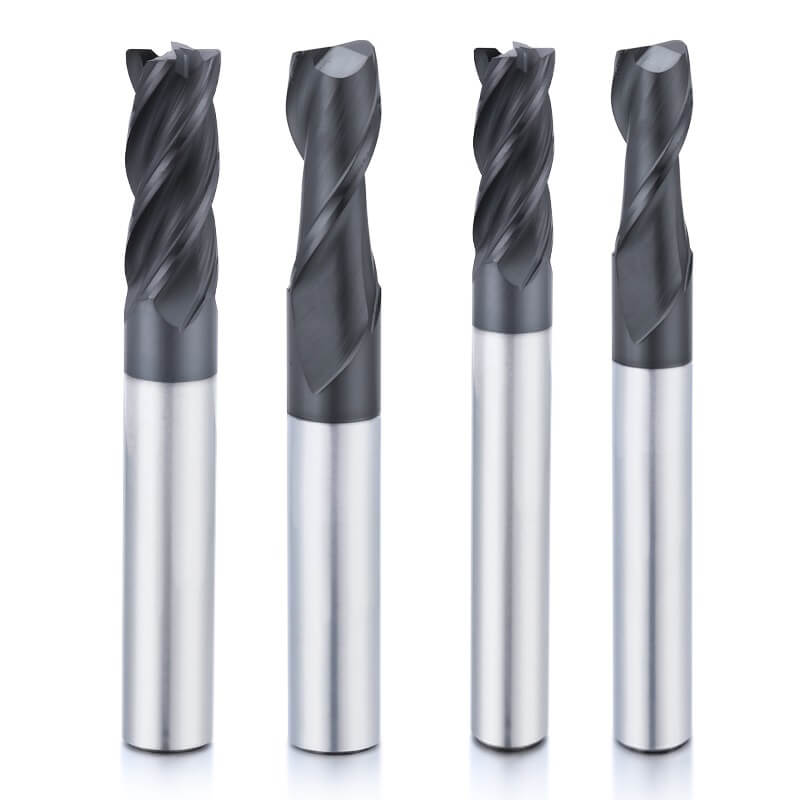
• Carbide corner radius end mill for steel machining up to HRC55 • Suitable for carbon steel, alloy steel, cast iron, and general steel • Designed for side-wall finishing, shoulder milling, step machining, and profile finishing • Corner radius design helps reduce sharp-corner chipping • Ultra-fine carbide substrate with 10% cobalt content • AlTiN nano composite coating for wear and heat resistance • 6° positive rake angle helps reduce cutting resistance • 35° helix angle supports smoother cutting and chip evacuation
Learn More>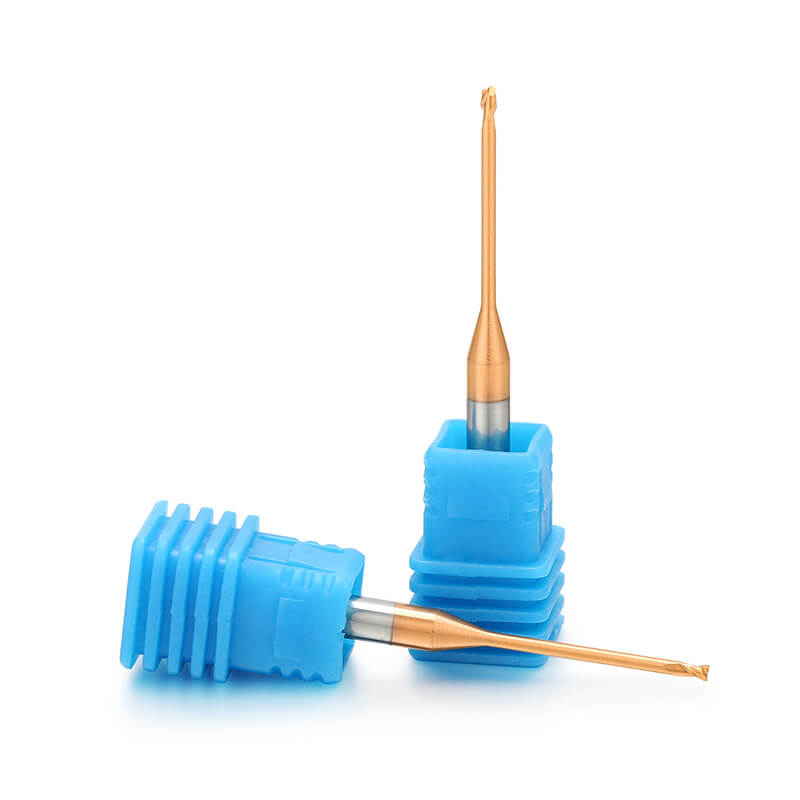
stainless steel,under hrc55. For semi-finishing&roughing(±5 μm).
Learn More>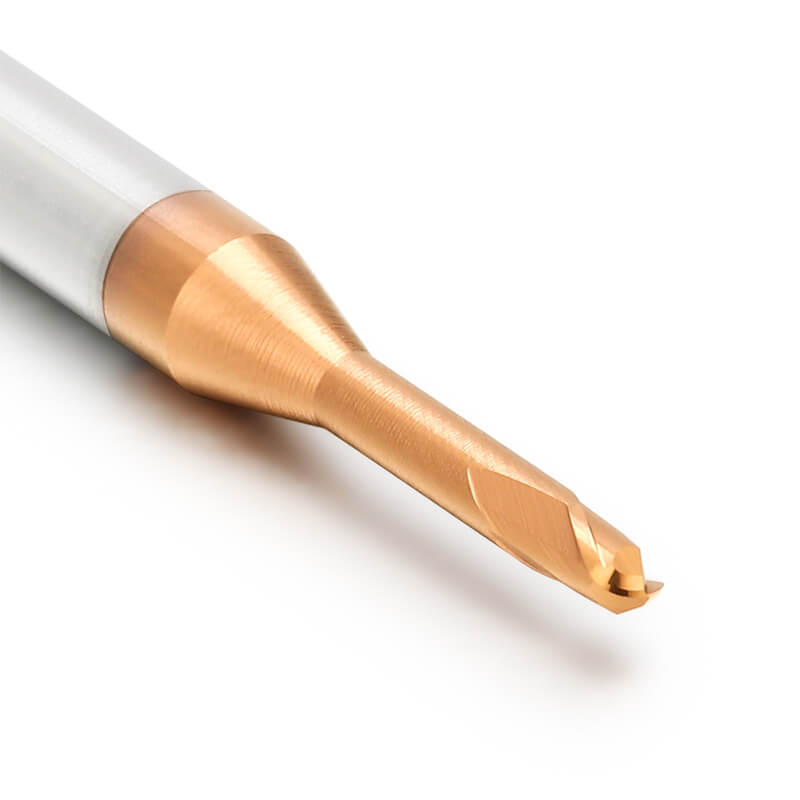
stainless steel,under hrc55. For semi-finishing&roughing(±5 μm).
Learn More>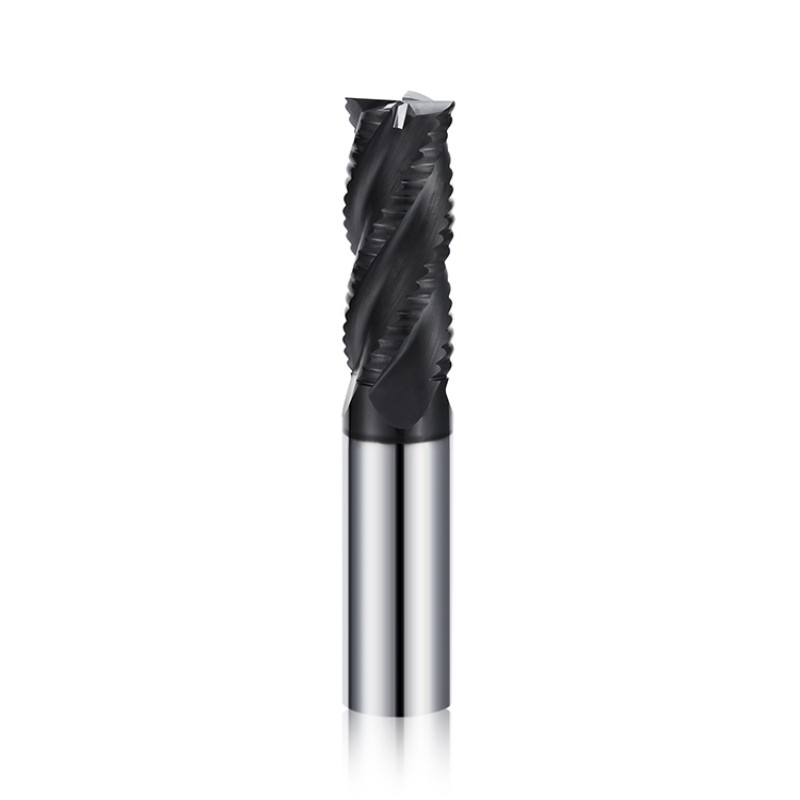
• High efficiency rough machining • Excellent chip evacuation • Strong cutting edge design • Suitable for steel, stainless steel and aluminum • Optional color coating available • Custom roughing end mills supported
Learn More>By continuing to use the site you agree to our privacy policy Terms and Conditions.