


Master carbon steel milling with our technical guide. Learn how to balance RPM, feed rates, chip loads, and advanced tool selections to optimize CNC machining efficiency.


Reading volume: 174

Release time :2026-08-14
Estimated reading time:
Master carbon steel milling with our technical guide. Learn how to balance RPM, feed rates, chip loads, and advanced tool selections to optimize CNC machining efficiency.
Achieving optimal efficiency in CNC carbon steel machining often feels like walking a tightrope. Programmers and machine operators frequently struggle with premature tool wear, excessive vibration, and unpredictable surface finishes when shifting between roughing and finishing passes. Standard lookup charts rarely account for real world workpiece hardness variations or complex tool paths, leaving workshops to absorb the high costs of scrapped parts and broken carbide end mills.
To solve these recurring shop floor challenges, mastering cutting parameters and selecting application-specific tooling engineered by a qualified carbide tool manufacturer is essential.
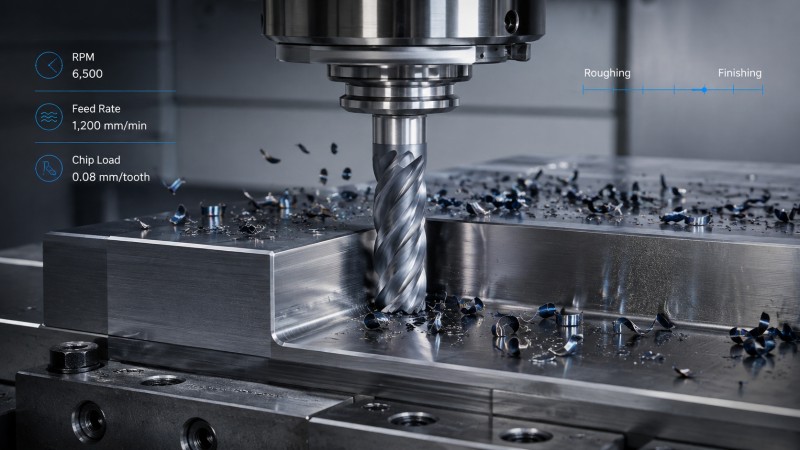
Low carbon steels offer high ductility yet tend to form troublesome built up edges. Medium to high carbon variants increase thermal and mechanical loads on the cutting edge. Operators tackling these structural materials often rely on a specialized PEX Series End mill for carbon steel to maintain stable edge integrity during demanding cuts.
Translating surface speed into rotational speed prevents excessive thermal buildup. Instead of guessing values, calculate spindle speed using surface feet or cutting speed metrics divided by tool diameter constants. Getting this baseline right prevents excessive friction and protects the workpiece from premature thermal damage.
Maintaining a proper feed rate prevents the tool from rubbing against the workpiece. Adequate chip loads ensure heat is evacuated through the chip rather than the tool body. When feed rates drop too low, the cutting edge simply burnishes the metal instead of shearing it cleanly.
Having established the foundational mathematics of cutting mechanics, let us look at how to optimize these parameters across different operational stages.
Heavy roughing requires prioritizing structural rigidity and high material removal rates. Increase axial depth of cut while keeping radial engagement conservative. Utilize robust multi flute tools to distribute mechanical stress evenly across the cutting structure.
Finishing operations demand a complete shift in parameter strategy. Increase spindle speed while dramatically reducing radial step over. Minimize cutting forces to eliminate chatter and achieve superior surface roughness values without requiring manual polishing.
Having reviewed roughing and finishing workflows, let us examine how physical tool characteristics influence overall performance.
Different machining features require specific tool configurations. Square end mills suit flat bottoms and deep side walls, while ball nose variants excel in complex three dimensional contours. Choosing the correct flute count ensures proper chip evacuation in confined pockets.
Uncoated substrates degrade rapidly under continuous thermal friction. AlTiN nano composite layers provide an effective thermal shield against high cutting temperatures. Sourcing reliable tools from a trusted carbide end mill manufacturer ensures stable batch production and predictable tool wear.
Building upon tool selection principles, complex multi axis geometries introduce unique dynamic challenges that standard charts fail to address.
Multi axis toolpaths constantly alter effective radial engagement. Chip thickness drops significantly in tight corners or shallow contour passes. CAM systems must apply automatic feed rate scaling to prevent tool rubbing and sudden edge chipping.
Deep cavities trap heat and recirculate metal chips. Reduce feed rates by up to twenty percent in deep pockets to prevent chip packing. Employ trochoidal toolpaths to open up necessary chip clearance and protect the cutter from thermal shock.
With tool path dynamics accounted for, managing thermal energy and fluid delivery remains vital for production stability.
Effective thermal management depends on delivery methods. High pressure systems evacuate long stringy chips instantly from the cutting zone. Minimum quantity lubrication suits environmental compliance and light finishing passes where thermal shock must be avoided.
Consistent fluid application protects the cutting edge from micro cracking. Avoid sudden temperature fluctuations during continuous cutting cycles. Partnering with an experienced carbide cutting tool supplier helps maintain smooth chip flow and prevents material welding onto the rake face.
| Operation Type | Primary Focus | Recommended Engagement | Tool Preference |
|---|---|---|---|
| Roughing | High Material Removal Rate | High Depth, Low Width | Robust Multi Flute Carbide |
| Finishing | Surface Roughness and Tolerance | Low Depth, High RPM | Precision Coated End Mill |
| Slotting | Chip Evacuation and Wall Stability | Moderate Depth | Center Cutting Square Mill |
Having evaluated fluid and thermal controls, let us examine common machining defects and their physical remedies.
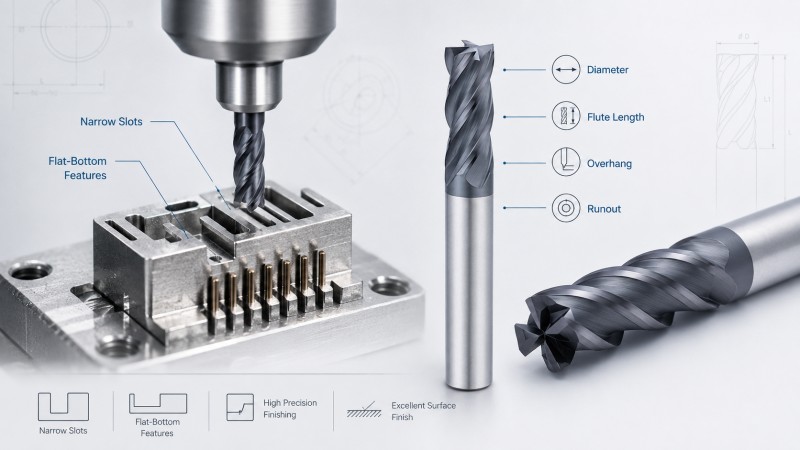
Harmonic resonances between machine spindles and workpieces ruin surface finishes. Variable helix designs disrupt vibrational frequencies effectively. Unequal flute spacing dampens chatter during heavy cuts and extends overall spindle life.
Premature tool degradation signals underlying parameter mismatches. Lower cutting speeds slightly to reduce thermal stress on the rake face. Sourcing high performance tools from an established cutting tool supplier ensures consistent hardness grades across long production runs.
Tool pricing is driven by raw material grades, specialized geometry complexity, custom coating requirements, and order volume. For accurate pricing based on your specific machining requirements, contact the engineering team at Dohre Cutting Tools directly.
Operators often use general purpose tooling designed for soft mild steel on high hardness carbon alloys, which causes rapid edge failure due to insufficient substrate toughness.
Technicians must verify toolholder runout is under three microns, ensure secure collet clamping to prevent pull out, and check that coolant nozzles align directly with the cutting zone.
Mastering carbon steel milling requires a balanced approach to cutting speeds, feed control, thermal management, and robust tool selection. By fine tuning operational parameters and deploying reliable tooling engineered for structural steel, manufacturing facilities can significantly reduce downtime and control per part production costs.
Dohre is a specialized manufacturer of high-performance carbide end mills and cutting tools. All process recommendations in this guide are designed to help you get the most out of Dohre tooling in your own shop floor operations. To explore high-performance carbide end mills tailored to your machining goals, contact Dohre Tooling to connect with our tool design team for expert technical support.
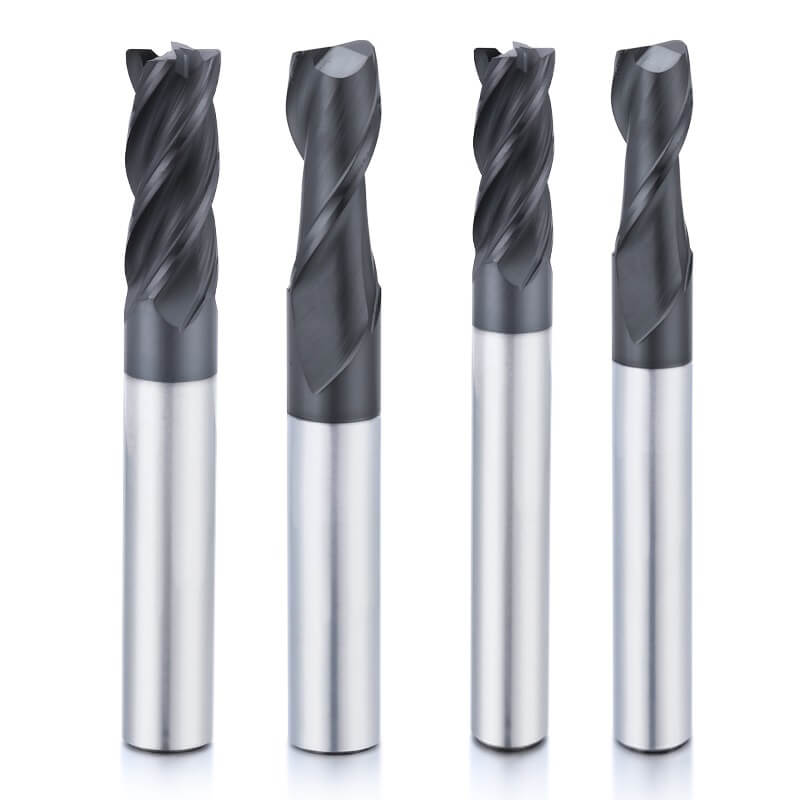
• Carbide corner radius end mill for steel machining up to HRC55 • Suitable for carbon steel, alloy steel, cast iron, and general steel • Designed for side-wall finishing, shoulder milling, step machining, and profile finishing • Corner radius design helps reduce sharp-corner chipping • Ultra-fine carbide substrate with 10% cobalt content • AlTiN nano composite coating for wear and heat resistance • 6° positive rake angle helps reduce cutting resistance • 35° helix angle supports smoother cutting and chip evacuation
Learn More>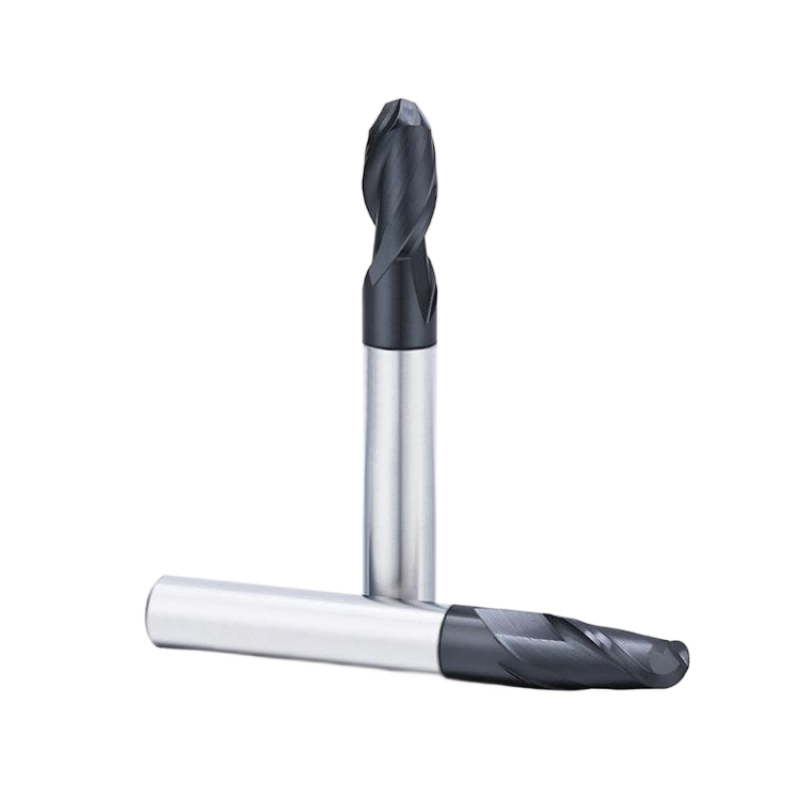
•Ball nose end mill for steel machining up to HRC55 •Suitable for carbon steel, alloy steel, cast iron, and general steel •Designed for curved surface, 3D contour, and mold profile finishing •Ultra-fine carbide substrate with 10% cobalt content •AlTiN nano composite coating for wear and heat resistance •6° positive rake angle helps reduce cutting resistance •35° helix angle supports smoother cutting and chip evacuation
Learn More>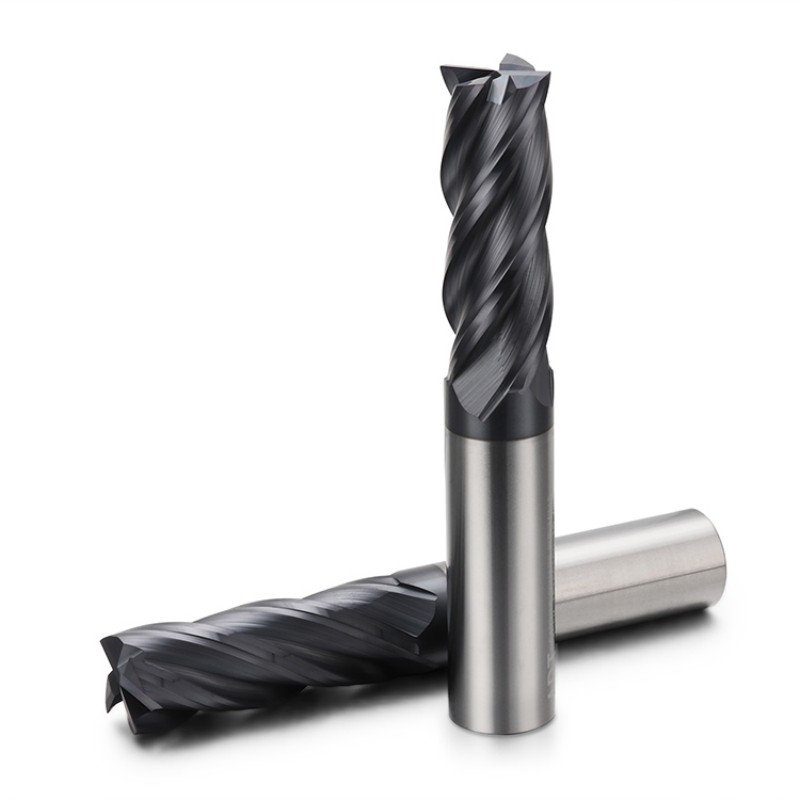
• Solid carbide square end mill for carbon steel and general steel • Suitable for HRC55 and below materials • Designed for flat surface, slotting, shoulder, side milling, and step machining • Ultra-fine carbide substrate with 10% cobalt content • AlTiN nano composite coating for wear and heat resistance • 6° positive rake angle helps reduce cutting resistance • 35° helix angle supports smooth chip evacuation
Learn More>By continuing to use the site you agree to our privacy policy Terms and Conditions.