


Get In Touch
Do you have a questions or an issues we can help you with?
Let’s talk about your project and how Dohre can help get your tools designed, manufactured and ready for the market.


Reading volume: 181

Release time :2026-08-16
Estimated reading time:
Discover when to choose custom CNC tools over standard catalog items. Learn how tailored geometries, optimized coatings, and specialized designs eliminate manufacturing bottlenecks.
Every machinist knows the frustration of watching a brand new catalog tool chatter, wear down prematurely, or fail to achieve the required surface finish on a complex part.
Standard off the shelf tooling handles general machining tasks efficiently. However, when production demands push past conventional limits, standard inventory creates operational bottlenecks.
Recognizing the precise operational tipping point is essential to avoid wasted machine time and excessive scrap rates.
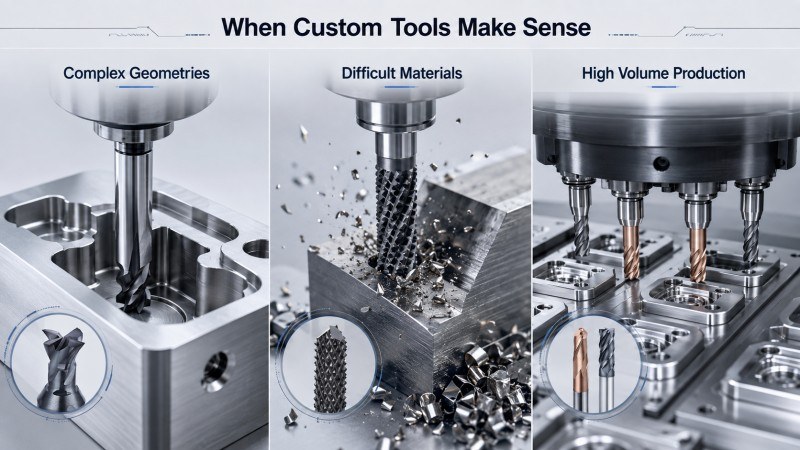
Standard catalog tools are engineered for broad compatibility across average workshop conditions. Because they must suit a wide variety of generic applications, their geometry, substrate grade, and coating profiles are inherently compromised. This general purpose design often translates to excessive tool deflection when tackling deep pockets or unstable material behavior.
Substrate limitations: Standard carbide grades frequently lack the thermal resistance required for continuous high speed cutting.
Geometry clashes: Standard relief and rake angles cannot simultaneously optimize chip evacuation and edge strength.
Setup inefficiencies: Multiple tool changes introduce cumulative positional errors and extended cycle times.
Having established why standard options break down under pressure, let us examine the specific operational environments where these limitations demand a dedicated approach. Knowing when to switch from off the shelf items to specialized designs saves both time and budget.
Certain industrial production environments expose the absolute boundaries of catalog inventory. Identifying these specific scenarios prevents costly trial and error on the shop floor.
| Scenario | Primary Industrial Sector | Core Machining Challenge | Recommended Tooling Strategy |
|---|---|---|---|
| Complex Geometries | Aerospace & Mold Making | Deep cavities, multi-step profiles, and risk of tool clearance interference | Custom profile cutters or extended reach stepped end mills |
| Difficult Materials | Hardened Steel & Titanium | Rapid thermal degradation, abrasive wear, and difficult chip evacuation | Tailored substrate grades with specific specialized coatings |
| High Volume Production | Automotive & 3C Electronics | Strict micron level tolerances and high cycle time pressures | Multi-feature composite tools to combine sequential operations |
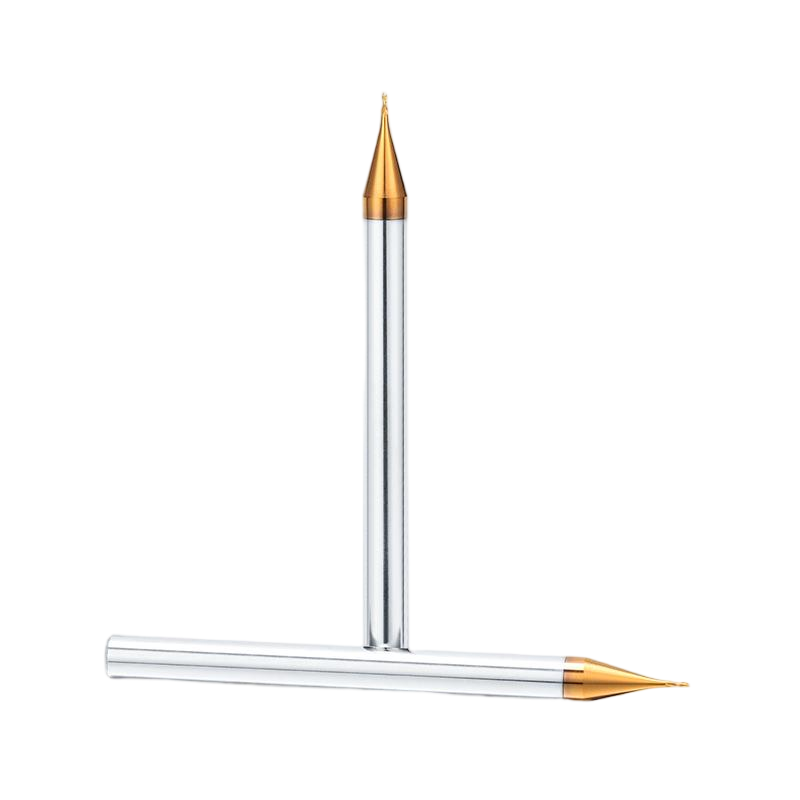
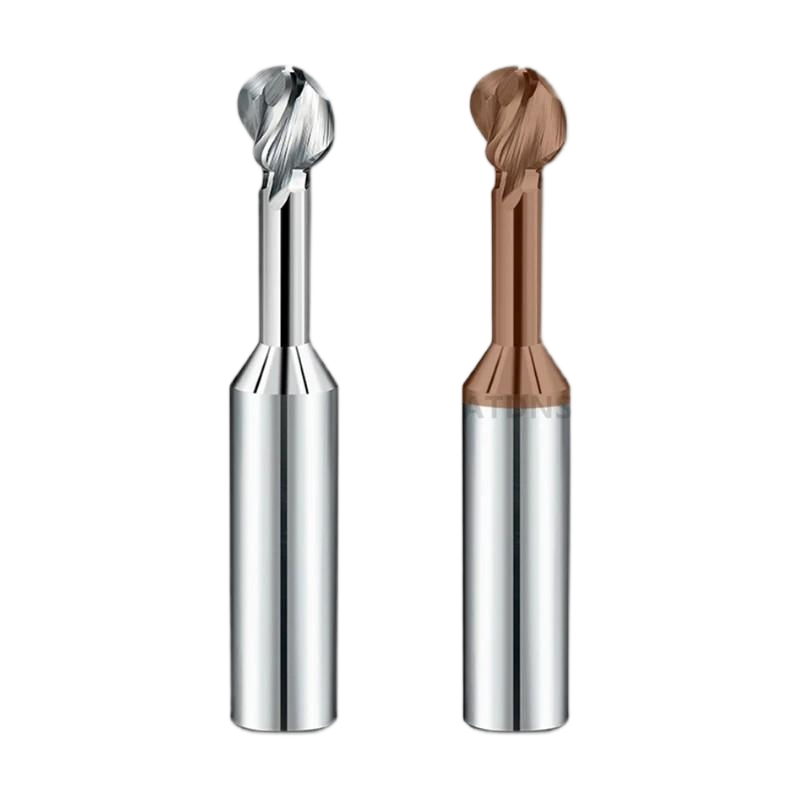
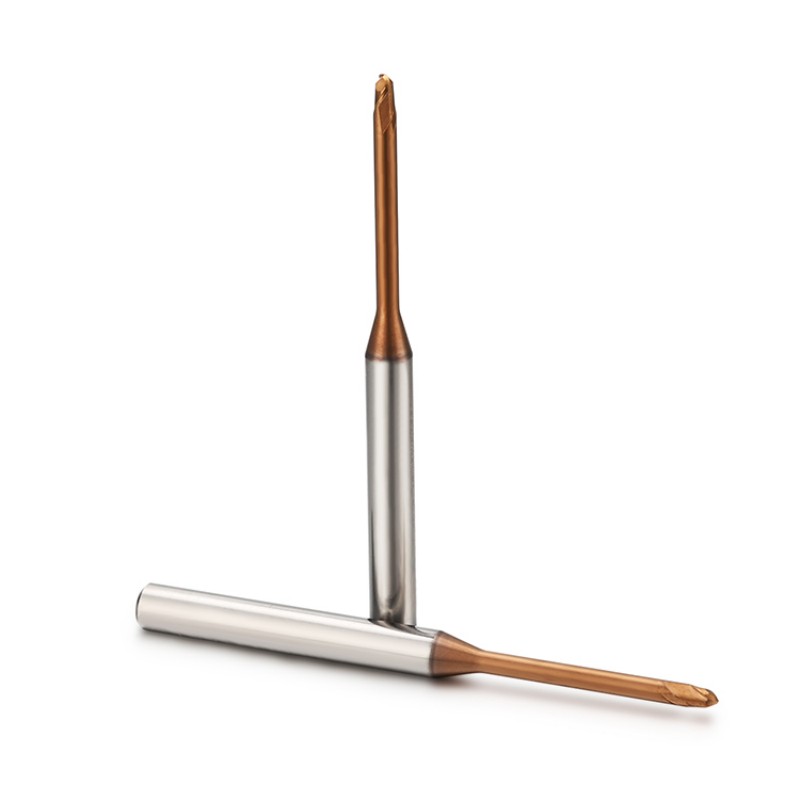
The first scenario involves complex part geometries and deep cavities commonly found in aerospace components and mold making. Standard end mills often suffer from severe clearance issues or lack the required rigidity, forcing shops to perform secondary manual polishing operations.
The second scenario centers on difficult to machine materials. While standard options exist for common metals, high nickel alloys and hardened steels often demand tailored edge preps and proprietary PVD coatings to prevent catastrophic chipping.
The third scenario occurs in high volume sectors like automotive production and electronics manufacturing. Here, cycle time reduction is paramount, making single pass multi feature tools necessary to bypass sequential tool changes. For complex profiling jobs, shops frequently upgrade to specialized Milling Tools for Aerospace to achieve higher metal removal rates.
Having reviewed these operational scenarios, we must now look at the underlying engineering parameters that make tailored geometries effective.
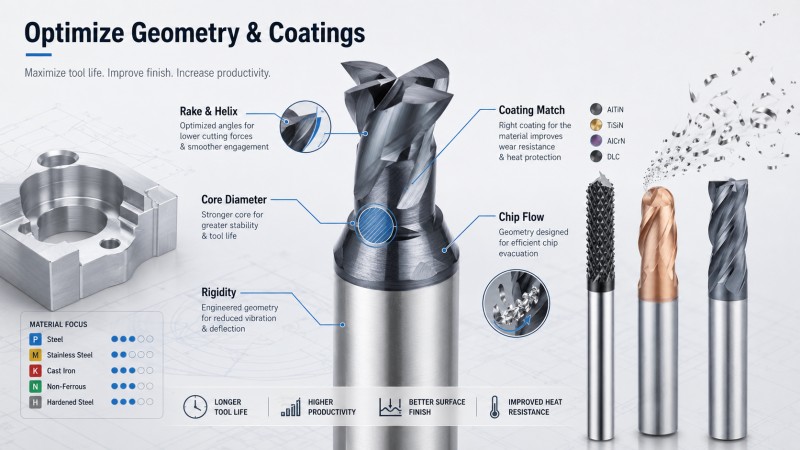
Designing a custom cutting tool requires precise alignment between the physical workpiece and the cutter mechanics. Small adjustments to internal flute parameters can dramatically alter chip formation and thermal transfer rates.
Rake and helix tuning: Modifying shear angles reduces cutting forces and minimizes workpiece distortion in thin walled parts.
Coating matching: Selecting targeted chemical vapor deposition or physical vapor deposition layers prevents chemical wear at elevated temperatures.
Core diameter adjustment: Enlarging the central web thickness enhances torsional rigidity during aggressive roughing passes.
With these mechanical variables properly balanced, the next step involves avoiding common miscalculations during the design phase. Fine tuning these details ensures your shop gets the most out of every run. When machining tough mold components, operators often rely on an advanced UEX Series End mill for mold steel to maintain dimensional stability under heavy thermal loads.
Even experienced engineers occasionally miscalculate the variables required for specialized tool design. Avoiding these frequent missteps protects initial tooling budgets and ensures smooth shop floor integration.
Over-engineering length: Designing excessive tool overhang sacrifices dynamic rigidity and invites destructive chatter.
Ignoring spindle specs: Failing to match tool design with available spindle horsepower and coolant pressure limits performance.
Isolating CAM strategies: Developing custom geometries without coordinating with CAM software leads to premature edge failure.
Having addressed potential design pitfalls, we can now evaluate the financial return on investment associated with tailored tooling solutions. Making smart choices here keeps production running smoothly. For operations requiring extreme wear resistance in abrasive environments, deploying a high precision PCD diamond end mill prevents rapid edge degradation.
Upfront costs for specialized cutting solutions are undeniably higher than standard catalog items. However, evaluating tooling expenses solely by unit price obscures the broader economic reality of modern manufacturing efficiency.
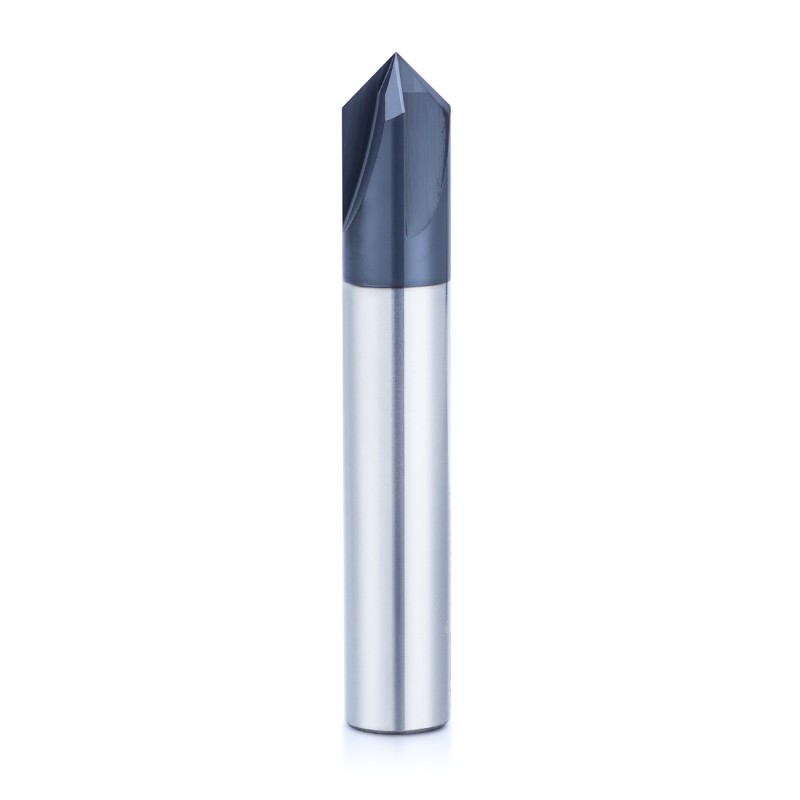
Consolidated operations: Combining drilling, boring, and chamfering into one custom profile eliminates several tool change delays.
Extended tool life: Tailored wear resistance directly lowers the frequency of machine downtime and inserts changes.
Scrap reduction: Improved dimensional stability prevents costly component rejections during finishing passes.
When you factor in reduced cycle times and fewer machine stoppages, specialized tooling often pays for itself much faster than expected. To secure deep holes without wandering or poor surface finish, integrating a dedicated Carbide drill bits into the machining sequence ensures maximum hole straightness.
The cost depends heavily on the complexity of the custom geometry, the specific carbide substrate grade required, specialized coating applications, and the total production batch volume. For accurate pricing based on your specific machining requirements, contact our engineering team directly.
Engineering design sign off, specialized grinding, and rigorous quality inspection typically require between two to four weeks depending on geometry complexity.
Chatter can be minimized by optimizing the helix angle configuration, utilizing variable pitch flute designs, and keeping the axial depth of cut within stable rigidity limits.
Standard tooling remains a reliable baseline for general workshop tasks, but advanced manufacturing demands targeted solutions when facing complex geometries and tough materials. At DOHRE, our experienced tooling specialists work closely with your engineering team to design, test, and deliver precision custom solutions tailored to your unique production requirements. Contact our technical team today through DOHRE Official Website to discuss your specific component requirements and start optimizing your CNC workflow.
Do you have a questions or an issues we can help you with?
Let’s talk about your project and how Dohre can help get your tools designed, manufactured and ready for the market.
By continuing to use the site you agree to our privacy policy Terms and Conditions.