How to Choose Flat, Corner Radius, and Ball Nose End Mills for Graphite Machining
Introduction
Graphite machining requires more than choosing a diamond-coated cutter. The end mill shape also affects surface finish, edge quality, tool life, and machining accuracy. For graphite electrodes and mold-related graphite parts, flat end mills, corner radius end mills, and ball nose end mills should be selected according to the part feature and machining stage.
Graphite is widely used for electrodes, molds, and precision machining applications, but choosing the right cutter is not only about coating. Tool shape also plays an important role in surface quality, edge stability, machining efficiency, and tool life.
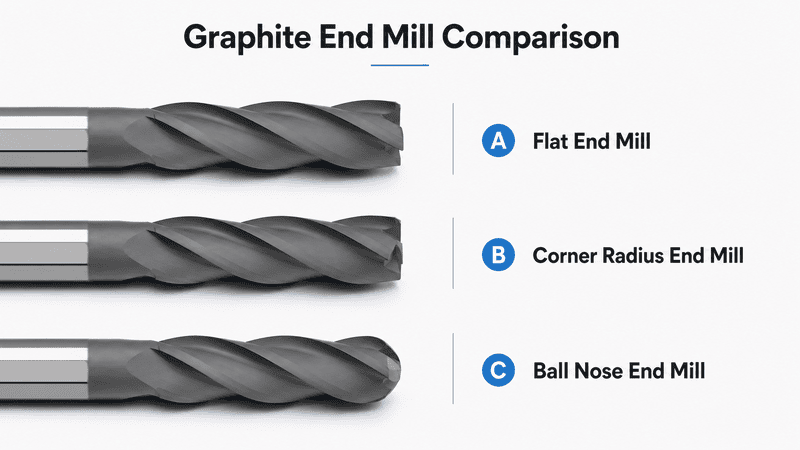
Flat end mills, corner radius end mills, and ball nose end mills are used for different graphite features. A flat surface, a sharp corner, a curved electrode area, and a deep cavity do not place the same demand on the cutting edge. Selecting the right tool shape helps reduce edge wear, improve surface finish, and keep the graphite electrode more accurate.
Why End Mill Shape Matters in Graphite Machining
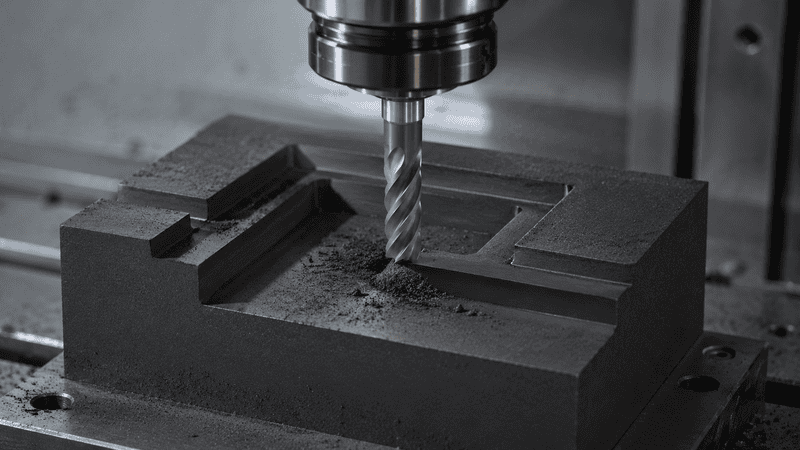
Graphite is abrasive and brittle. During milling, the cutting edge is exposed to continuous wear, while the workpiece edge can chip if the tool is not suitable for the feature being machined. This is why graphite milling tools need both wear resistance and the right cutting shape.
A flat end mill can produce clean bottom surfaces and sidewalls. A corner radius end mill can improve corner strength when edge wear is a concern. A ball nose end mill is better for curved surfaces and 3D contour finishing. The best choice depends on the electrode structure, machining stage, and surface requirement.
Coating is still important because graphite wears tools quickly. For more details about coating selection, our guide on diamond-coated end mills for graphite machining explains why coating quality matters in abrasive graphite cutting.
Flat End Mills for Graphite: When to Use Them
Flat end mills are commonly used when the graphite part requires a flat bottom, a straight sidewall, or a defined edge. They are suitable for machining electrode flat areas, pockets, slots, and surfaces where a clear bottom profile is needed.
For graphite machining, the cutting edge should be sharp enough to cut cleanly, but stable enough to resist wear. If the edge wears too quickly, the bottom surface may become uneven and the electrode size may change during longer machining cycles.
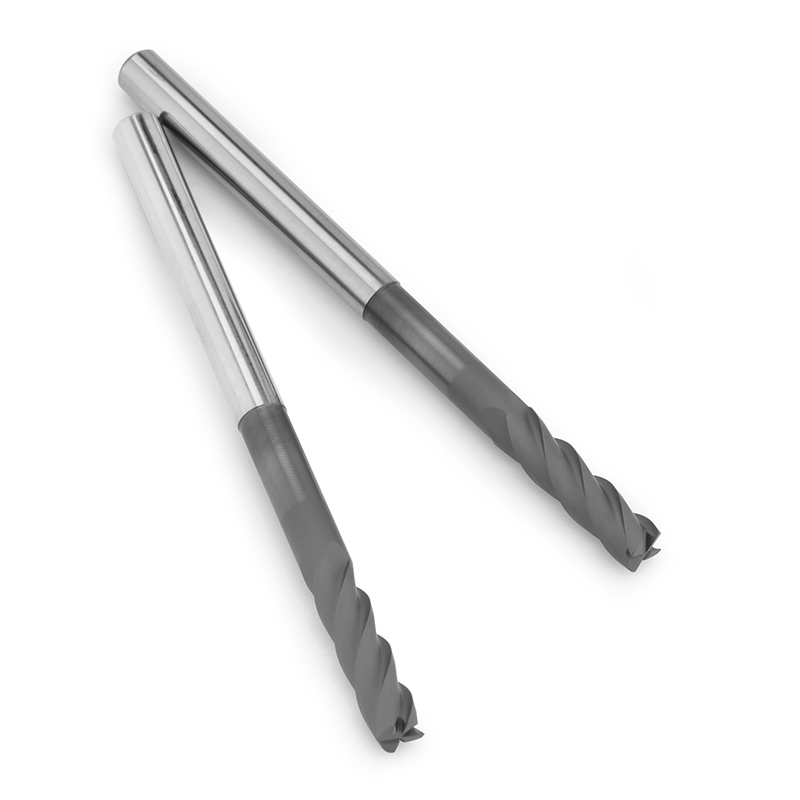
For flat surfaces, sidewalls, and pocket bottoms, a graphite square end mill is often used when the part requires clean bottom surfaces and stable edge machining.
Corner Radius End Mills for Graphite: Better Edge Strength
A corner radius end mill has a small radius at the cutting corner. Compared with a sharp-corner flat end mill, this design can provide better corner support and reduce the risk of corner wear or small edge damage during graphite milling.
This type of cutter is useful when the graphite part has sidewalls, cavities, or areas where the tool corner carries more load. It is also suitable for semi-finishing operations where tool life and edge stability are more important than producing a sharp internal corner.
When corner strength is important, a graphite corner radius end mill can help improve edge stability and reduce corner wear during graphite milling.
Ball Nose End Mills for Graphite: 3D Contour and Electrode Finishing
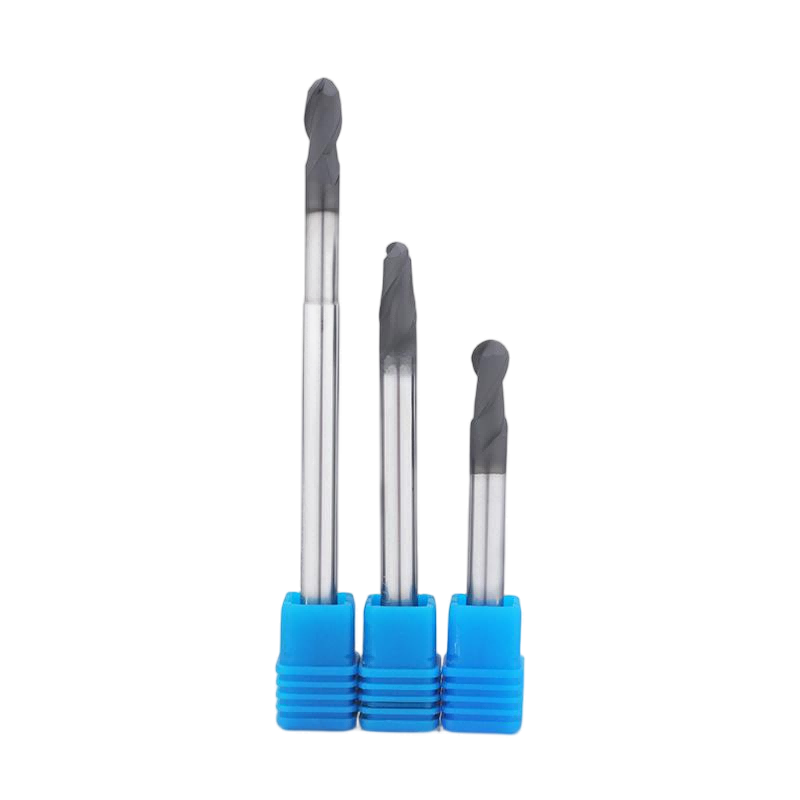
Ball nose end mills are mainly used for curved surfaces, 3D contours, and complex graphite electrode shapes. The rounded cutting end helps create smoother transitions on curved features and is often used in finishing operations.
For graphite electrodes with curved surfaces or detailed mold-related profiles, a ball nose tool can help improve surface consistency. However, step-over, tool diameter, and tool wear should still be controlled carefully, because these factors can affect the final surface texture.
For curved graphite electrodes and 3D contour finishing, a graphite ball nose end mill is commonly used to create smoother transitions and more consistent surface quality.
How to Choose by Graphite Electrode Feature
The shape of the graphite electrode or graphite part should guide the tool selection. In many cases, one part may require more than one cutter type. A flat end mill may be used for the bottom and sidewalls, while a ball nose end mill may be used later for curved finishing.
| Graphite Feature | Recommended Tool Type | Reason |
|---|
| Flat bottom | Flat end mill | Creates flat surfaces and clear bottom features |
| Sidewall | Flat or corner radius end mill | Depends on edge strength and surface requirement |
| Corner wear risk | Corner radius end mill | Improves corner support and reduces edge wear |
| Curved surface | Ball nose end mill | Better for 3D contour finishing and smooth transitions |
| Fine electrode detail | Small diameter tool | Supports detailed graphite electrode machining |
Tool Shape Selection for Roughing, Semi-Finishing, and Finishing
Graphite machining often includes several stages. Roughing, semi-finishing, and finishing do not always require the same tool shape. The tool should match the cutting load, remaining allowance, and final surface requirement.
| Machining Stage | Main Goal | Tool Selection |
|---|
| Roughing | Remove material efficiently | Flat or corner radius end mill, depending on feature and edge load |
| Semi-finishing | Leave stable allowance for the final pass | Corner radius end mill can improve edge stability |
| Finishing | Improve surface quality and accuracy | Ball nose for 3D contours, flat end mill for flat areas |
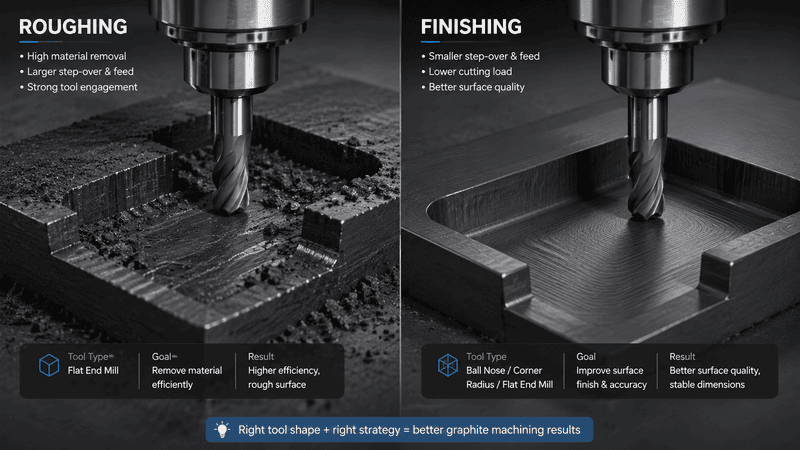
For graphite electrode finishing, tool wear should be checked before the final operation. A worn tool may still cut, but it can leave stronger marks, reduce dimensional accuracy, or make the electrode surface less consistent.
Coating and Geometry Still Matter
Tool shape is only one part of graphite end mill selection. Because graphite is abrasive, coating quality, edge preparation, flute design, and runout control still affect tool life and machining accuracy.
A suitable graphite end mill should maintain edge sharpness while resisting abrasive wear. If the coating wears too fast or the cutting edge becomes rounded, the surface finish and electrode accuracy may become unstable during longer machining cycles.
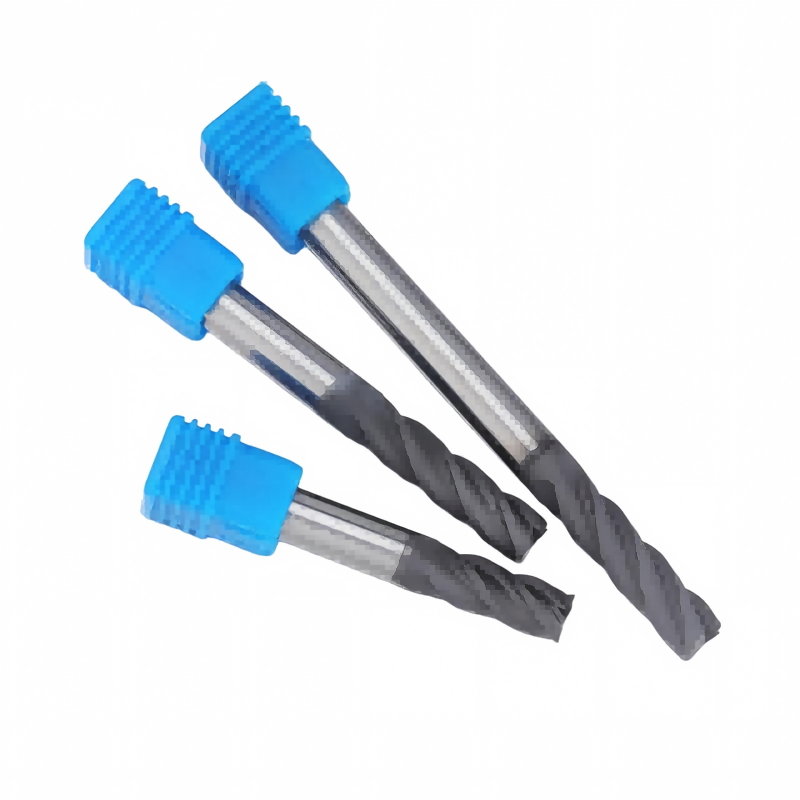
For graphite electrode machining, Dohre’s MEX series graphite end mills are designed for graphite applications where wear resistance and stable cutting are important.
Practical Checklist for Graphite End Mill Selection
• Confirm whether the part is a graphite electrode, mold graphite, or another graphite component.
• Use flat end mills for flat surfaces, sidewalls, and pocket bottoms.
• Use corner radius end mills when corner strength and tool life are important.
• Use ball nose end mills for 3D contours and curved electrode surfaces.
• Consider diamond coating for abrasive graphite machining.
• Check tool wear before finishing precision electrode features.
• Keep dust evacuation stable to protect surface quality and machine accuracy.
• Match tool diameter, flute design, and cutting parameters to the electrode feature.
FAQ
Which end mill is best for graphite machining?
There is no single best tool for every graphite part. Flat end mills are suitable for flat surfaces and sidewalls, corner radius end mills improve corner strength, and ball nose end mills are commonly used for 3D contours and curved electrode surfaces.
When should I use a flat end mill for graphite?
A flat end mill is often used for flat surfaces, pocket bottoms, sidewalls, and graphite electrode areas that require a clean bottom surface or defined edge.
Why use a corner radius end mill for graphite?
A corner radius end mill provides stronger corner support than a sharp-corner tool. It can help reduce corner wear and improve tool life in graphite milling.
Is a ball nose end mill suitable for graphite electrodes?
Yes. Ball nose end mills are commonly used for curved graphite electrodes, 3D contour machining, and finishing surfaces that require smooth transitions.
Do graphite end mills need diamond coating?
Graphite is highly abrasive, so diamond coating is commonly used to improve wear resistance and maintain machining accuracy. Tool geometry, edge quality, and dust control are also important for stable graphite milling.
Conclusion
Choosing an end mill for graphite machining should start with the part feature. Flat end mills are used for flat surfaces and sidewalls, corner radius end mills help improve corner strength, and ball nose end mills are suitable for curved surfaces and 3D electrode finishing.
Tool shape should also be considered together with coating quality, edge preparation, dust evacuation, tool wear, and machining accuracy. In graphite electrode machining, the right cutter can help improve surface consistency and maintain more stable dimensions.
Dohre provides MEX series graphite end mills, including graphite square end mills, corner radius end mills, and ball nose end mills for different graphite machining requirements. Contact us for graphite end mill recommendations or custom tool solutions.