


Get In Touch
Do you have a questions or an issues we can help you with?
Let’s talk about your project and how Dohre can help get your tools designed, manufactured and ready for the market.


Reading volume: 46

Release time :2026-10-12
Estimated reading time:
Learn how to select titanium end mills based on flute geometry, carbide substrate, coating, and machining applications with the DEX Series.
Titanium components often involve demanding cutting conditions and complex machining features, making end mill selection an important part of the machining process.
The suitable tool can vary significantly depending on whether the operation involves roughing, slotting, side milling, or 3D contouring. This guide examines the main selection factors and shows how the DEX Series is configured for different titanium alloy milling applications.
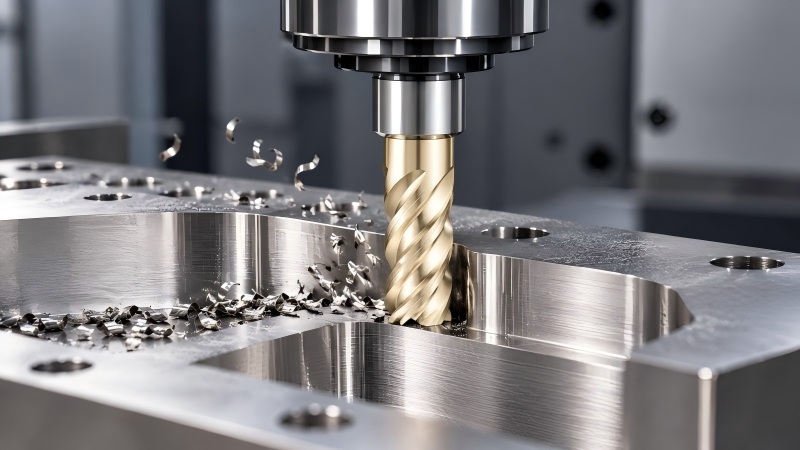
Titanium alloys have relatively low thermal conductivity, which makes heat management important during milling. Heat can remain concentrated around the cutting edge instead of being efficiently transferred away from the cutting zone.
This makes tool geometry, cutting conditions, coolant delivery, and radial engagement important considerations when selecting an end mill for titanium alloy.
For more background on the machining characteristics of titanium, see why titanium alloy is difficult to machine.
Titanium can adhere to the cutting edge under unsuitable machining conditions. Built up edge can interfere with chip flow, increase cutting instability, and accelerate edge wear.
Rake angle, flute design, edge preparation, and coating can all affect how effectively the tool manages adhesion during cutting.
A 43 degree helix angle helps improve chip evacuation and reduce cutting resistance. It is particularly relevant to titanium roughing and dynamic milling, where stable chip removal is important.
The helix angle should be considered together with tool diameter, flute length, radial engagement, axial depth, and tool overhang rather than as an isolated parameter.
The DEX Series uses an 8 degree positive rake angle to support smooth cutting action and reduce cutting resistance.
Positive rake geometry can help maintain efficient cutting when machining titanium, while the actual cutting conditions should still be matched to the workpiece and machining strategy.
The DEX Series uses an unequal helix U shaped flute design with 87 degree and 93 degree flute angles. The unequal geometry helps suppress vibration and supports stable cutting.
The U shaped flute also provides larger chip space, making the design suitable for roughing and dynamic milling where chip evacuation is important.
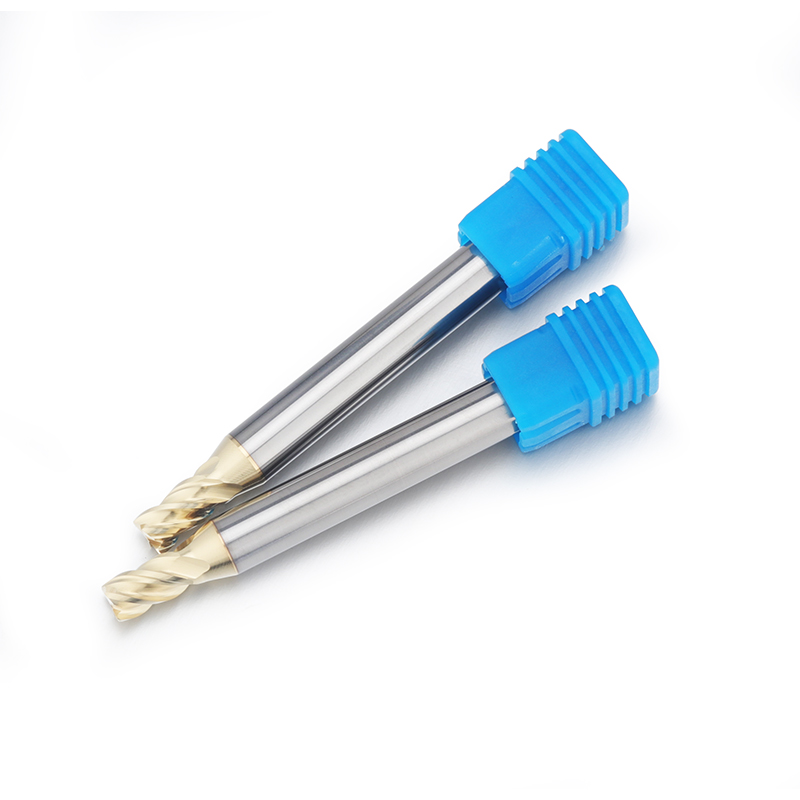
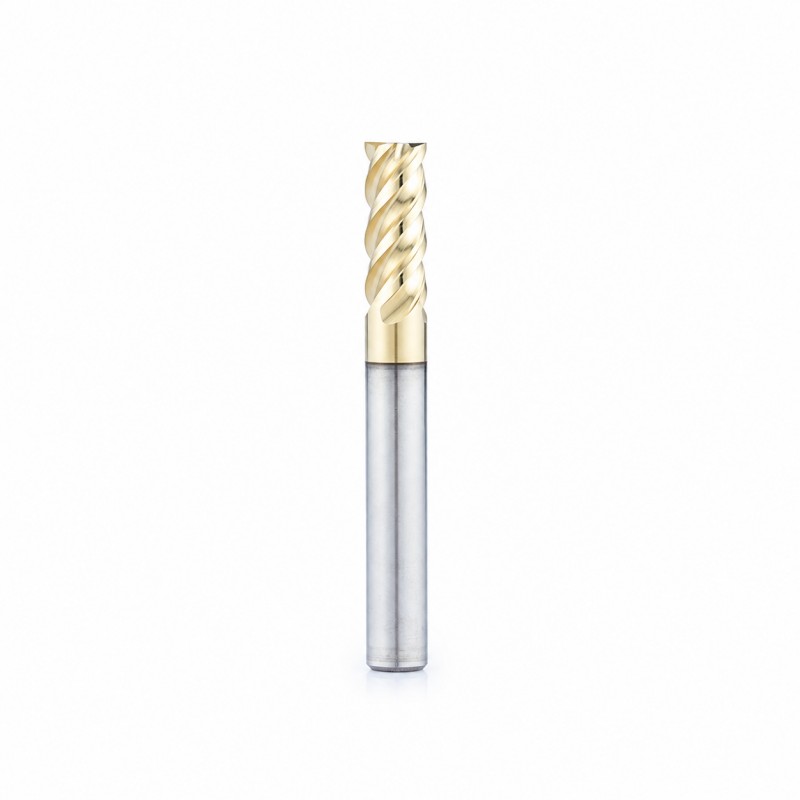
Flat end mills are suitable for slots, side walls, shoulders, step faces, and flat surfaces. The square cutting end provides a defined corner for applications that require clear shoulders and straight walls.
The DEX Flat End Mill is designed for slotting, side milling, shoulder machining, flat surface machining, and dynamic milling.
Corner radius end mills provide stronger corner support than sharp square end mills. They are suitable for roughing, dynamic milling, and applications where the cutting corner experiences higher loads.
The DEX Corner Radius End Mill is available with R0.2, R0.5, or customized radius options. Its larger chip pocket also supports roughing and dynamic milling.
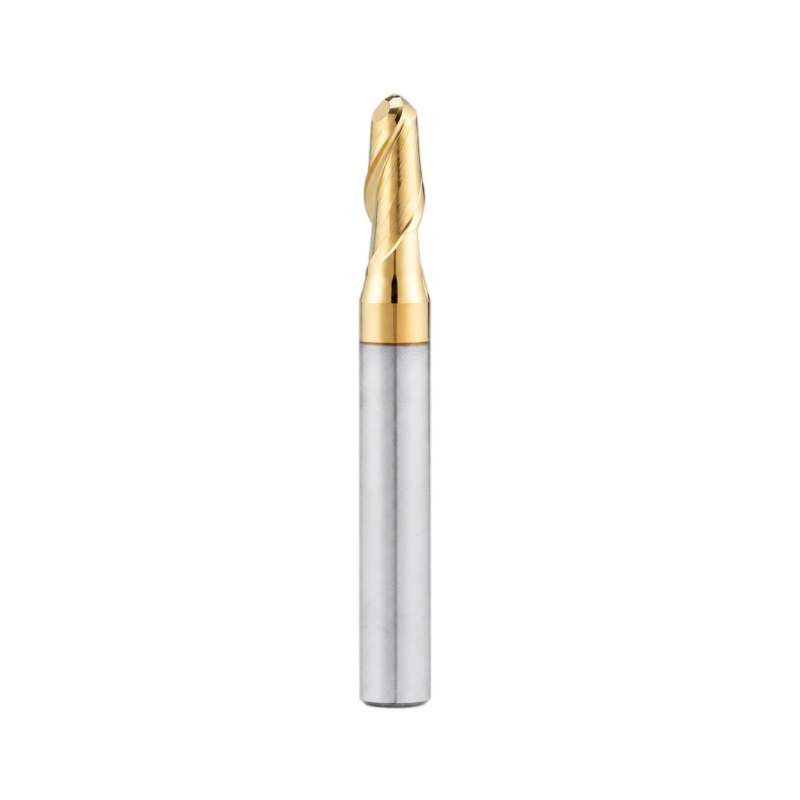
Ball nose end mills are designed for 3D contours, curved surfaces, cavity profiles, and arc transitions.
The DEX Ball Nose End Mill is suitable for 3D contour machining, cavity profiling, and curved surface semi finishing and finishing applications.
| Tool Geometry | Typical Application | Main Advantage |
|---|---|---|
| Flat End Mill | Slots, side walls, shoulders, flat surfaces | Defined cutting corners |
| Corner Radius End Mill | Roughing, dynamic milling, high load cutting | Stronger corner support |
| Ball Nose End Mill | 3D contours, cavities, curved surfaces | Suitable for complex profiles |
The DEX Series uses ultra fine micro grain carbide with a grain size below 0.6 μm and 12 percent cobalt content.
This substrate provides a balance of hardness, toughness, and wear resistance for demanding cutting conditions. The carbide grade is important when the tool is exposed to repeated cutting loads.
The DEX Series uses HSR118 coating, benchmarked against JZR coating. The coating provides high hot hardness and thermal stability below 1200°C, together with anti adhesion performance for titanium and other difficult to machine materials.
Coating selection should still be considered alongside the workpiece material, cutting conditions, coolant strategy, and machining operation.
Consistent edge preparation helps maintain predictable cutting behavior. Excessive sharpness can make an edge more vulnerable to damage, while excessive rounding can affect cutting efficiency.
The DEX manufacturing process uses automated edge preparation and controls the cutting edge radius within ±3 μm, supporting consistent edge quality between tools.
Titanium roughing requires sufficient chip space and stable edge support. The unequal helix U shaped flute provides larger chip space and supports vibration control during demanding cutting operations.
Flat end mills are suitable for general slotting and side milling, while corner radius tools provide additional corner support when the cutting load is higher.
For titanium roughing and dynamic milling applications, the DEX Corner Radius End Mill for Titanium Alloy is available with R0.2, R0.5, or customized radius options.
Thin wall titanium components require careful control of tool deflection, radial engagement, cutting force, and tool overhang.
The tool should be selected according to the feature being machined and the available clearance. Keeping tool overhang as short as practical can also improve cutting stability.
Complex curved surfaces and cavity profiles require a tool that can follow changing surface geometry.
A ball nose end mill is generally suitable for these applications because its rounded cutting profile supports 3D contouring, cavity profiling, and curved surface machining.
The DEX Series titanium alloy end mills includes configurations developed for different titanium milling requirements, allowing the tool geometry to be matched to the specific machining feature.
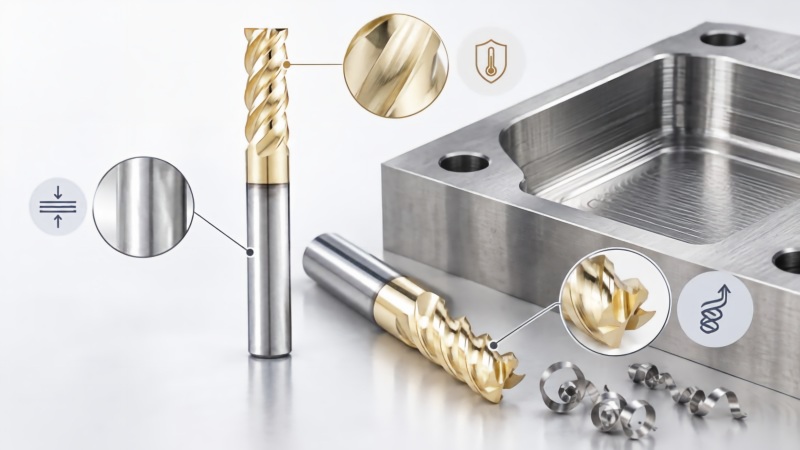
Custom tooling can be useful when standard diameter, flute length, overall length, shank size, or corner radius does not match the component requirements.
Customized dimensions can also address clearance limitations in deep cavities or other difficult tool access conditions.
Some applications require changes to flute number, helix angle, cutting length, or other geometric features.
When a standard configuration does not meet a specific machining requirement, custom carbide tooling can be developed according to the required tool geometry and application.
The DEX Series uses ultra fine micro grain carbide with a grain size below 0.6 μm and 12 percent cobalt content. The substrate is designed to balance hardness, toughness, and wear resistance.
The DEX Series uses HSR118 coating. DOHRE specifies thermal stability below 1200°C and anti adhesion performance for titanium and other difficult to machine materials.
Flat and corner radius end mills can both be used for titanium roughing. Flat end mills are suitable for general slotting and side milling, while corner radius tools provide stronger corner support for higher load applications.
Selecting a titanium end mill starts with the machining feature and continues with the appropriate flute geometry, end configuration, carbide substrate, and coating.
For titanium roughing, side milling, and 3D contouring, the appropriate tool configuration should be matched to the workpiece geometry and machining conditions. If you need help selecting a suitable titanium end mill or require customized tooling, contact Dohre to discuss your application and tooling requirements.
Do you have a questions or an issues we can help you with?
Let’s talk about your project and how Dohre can help get your tools designed, manufactured and ready for the market.
By continuing to use the site you agree to our privacy policy Terms and Conditions.