+86 18068787495
[email protected]
English
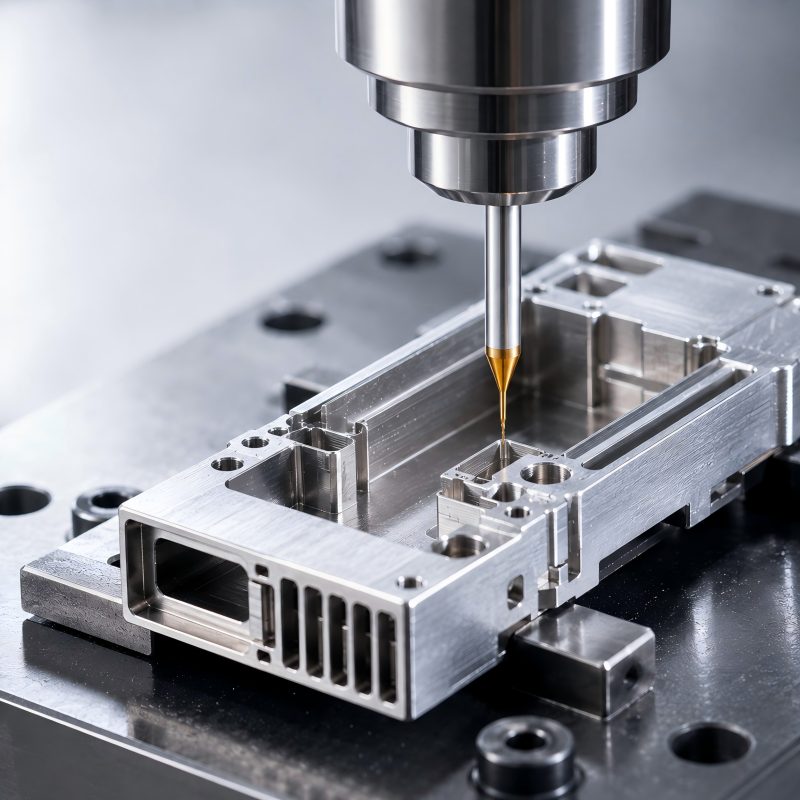
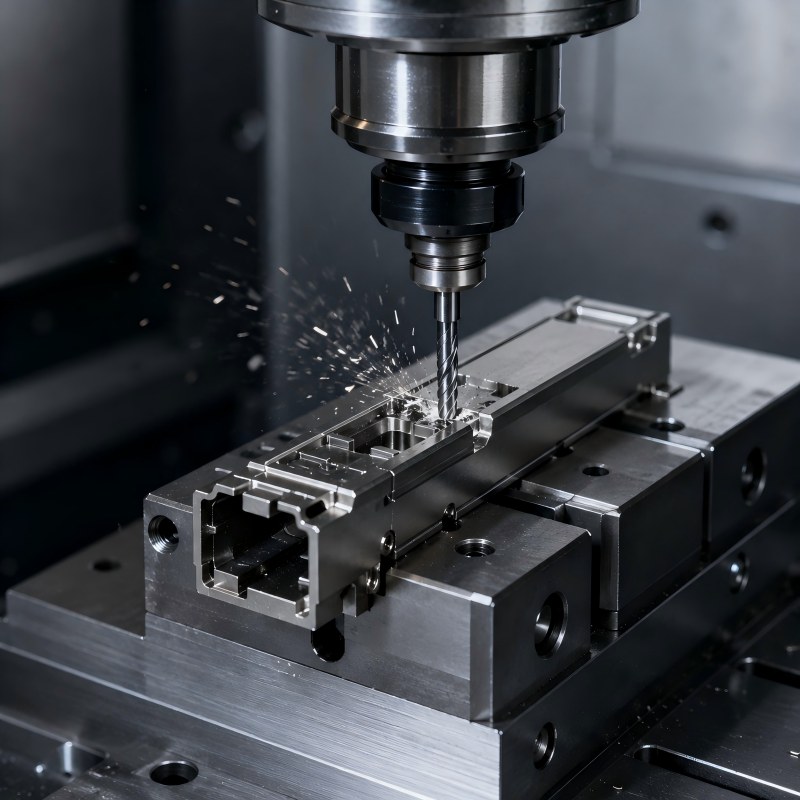
Optical transceiver housings often contain narrow slots, compact cavities, connector openings, positioning shoulders, thin walls, and thermal contact surfaces. Machining these features requires careful control of cutter diameter, runout, tool reach, chip evacuation, burr formation, and finishing allowance.
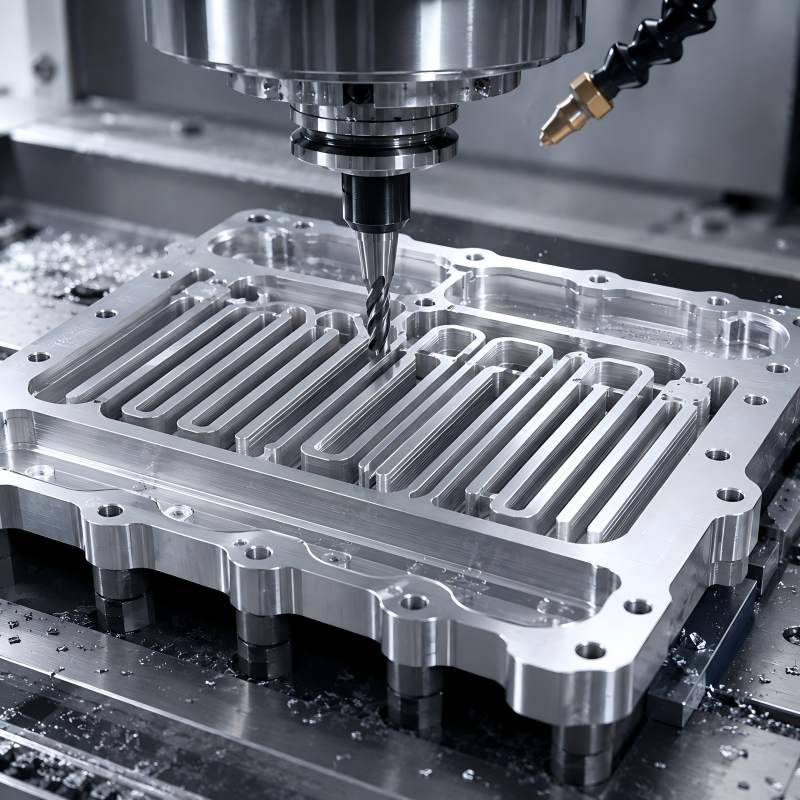
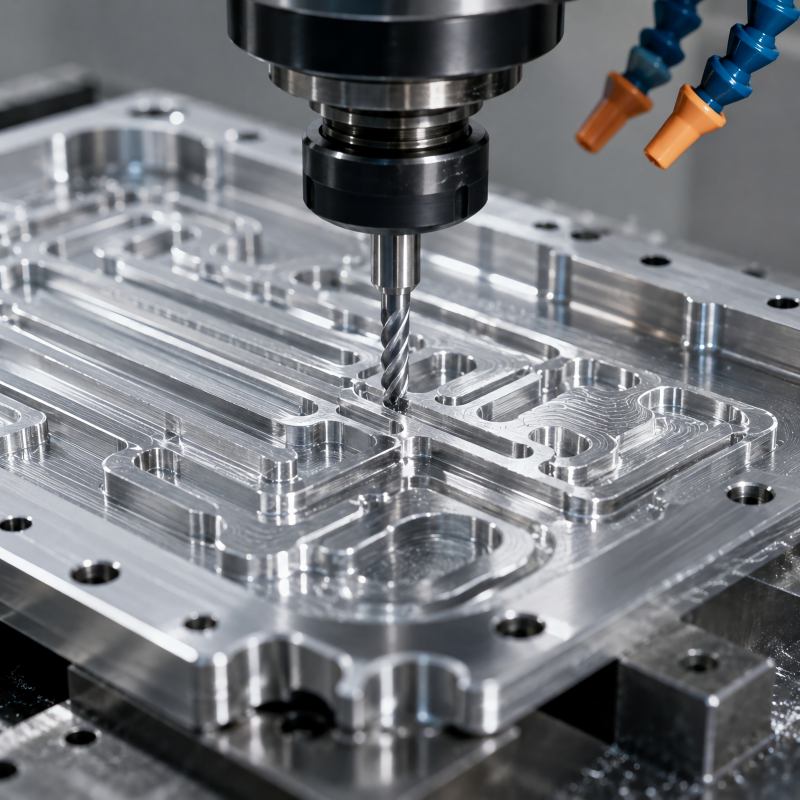
Cold plates often combine narrow flow channels, thin separating walls, precision edges, and sealing surfaces in one component. Burr formation and wall deformation can affect channel dimensions, plate flatness, assembly, cleaning, and sealing reliability. This guide explains how tool condition, cutting direction, engagement, workholding, and machining sequence influence these problems.
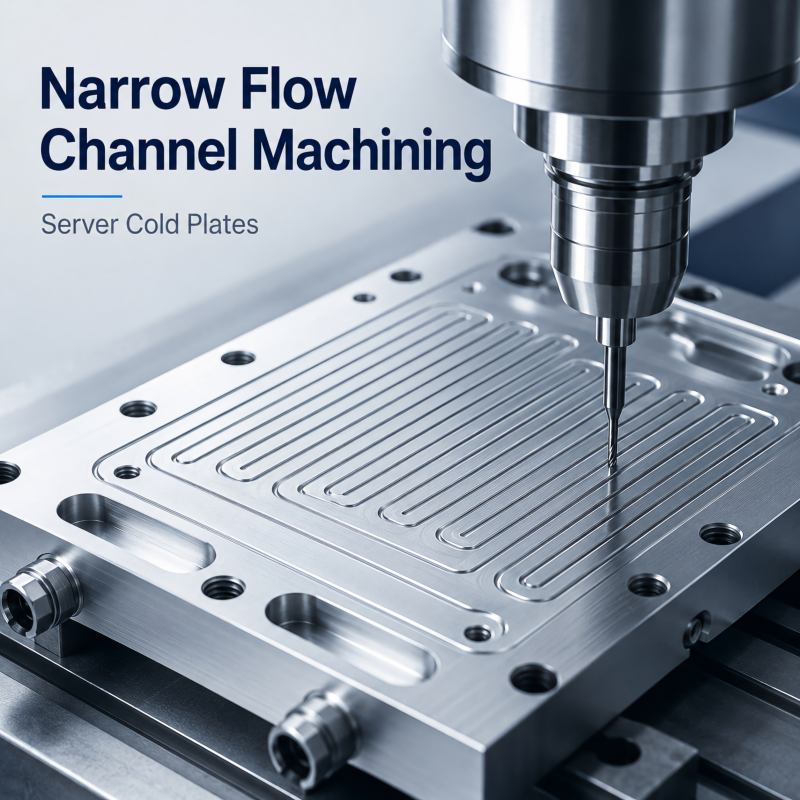
Narrow flow channels place high demands on end mill rigidity, chip evacuation, runout control, and cutting stability. The correct tool should be selected according to the channel width, depth, corner radius, workpiece material, wall thickness, and required surface quality.
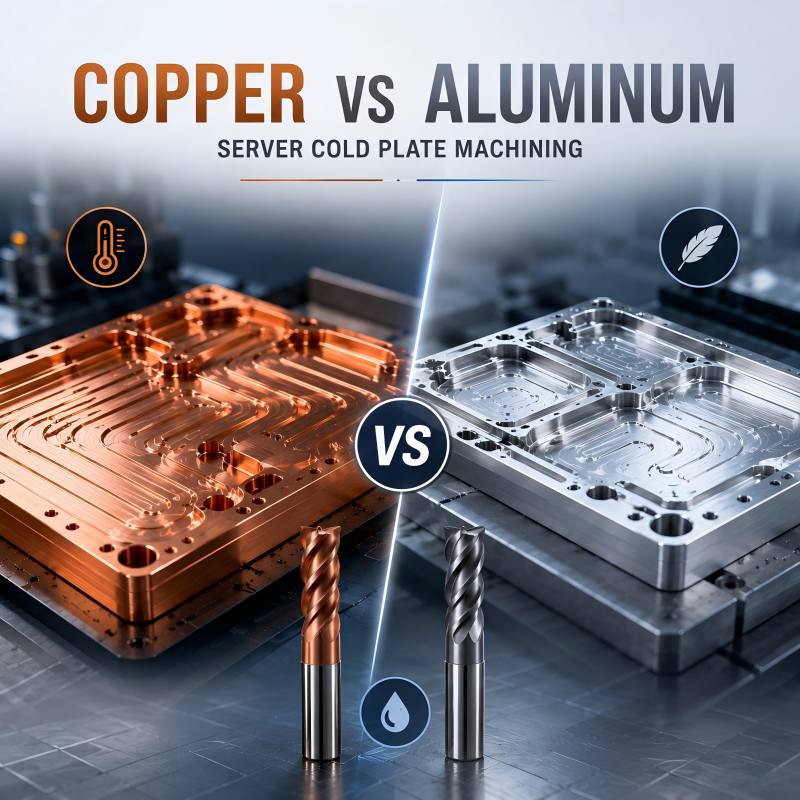
Copper and aluminum are both used in server liquid cooling components, but they behave differently during milling. Tool geometry, chip evacuation, edge sharpness, runout, cutting engagement, and finishing strategy should be selected according to the actual material, channel design, wall thickness, and surface requirements.
Optical transceiver components often contain compact metal structures, narrow slots, precision cavities, thin walls, connector openings, and thermal contact surfaces. End mill selection affects dimensional accuracy, burr control, surface quality, assembly consistency, and the stability of small-feature machining.
Server liquid cooling components require more than efficient material removal. Flow-channel accuracy, burr control, thin-wall stability, sealing-surface quality, and batch consistency all depend on the end mill, toolpath, workpiece material, and machining setup. This guide explains how to choose milling tools for cold plates, manifolds, distribution blocks, and related precision cooling parts.
Cutting speed, feed rate, and depth of cut for end mills on P20, 718H, NAK80, and H13 mold steel. Includes calculation examples and coolant guidance.
End mill tool life in mold steel machining is governed by thermal load, cutting dynamics, and coating-substrate interaction. Extending tool life requires systematic adjustments to cutting parameters, tool selection, coolant delivery, and process strategy rather than isolated parameter tweaks.
In mold steel machining, the choice of end mill coating plays a crucial role in determining tool life, cutting stability, and final surface finish quality. Different coatings such as TiAlN, AlTiN, and TiSiN offer varying levels of heat resistance, wear protection, and oxidation resistance, making them suitable for different grades and hardness levels of mold steel.
This article breaks down the most common milling problems in mold steel and shows practical ways to solve them, helping you achieve more stable cutting performance, longer tool life, and better surface quality in real production environments.
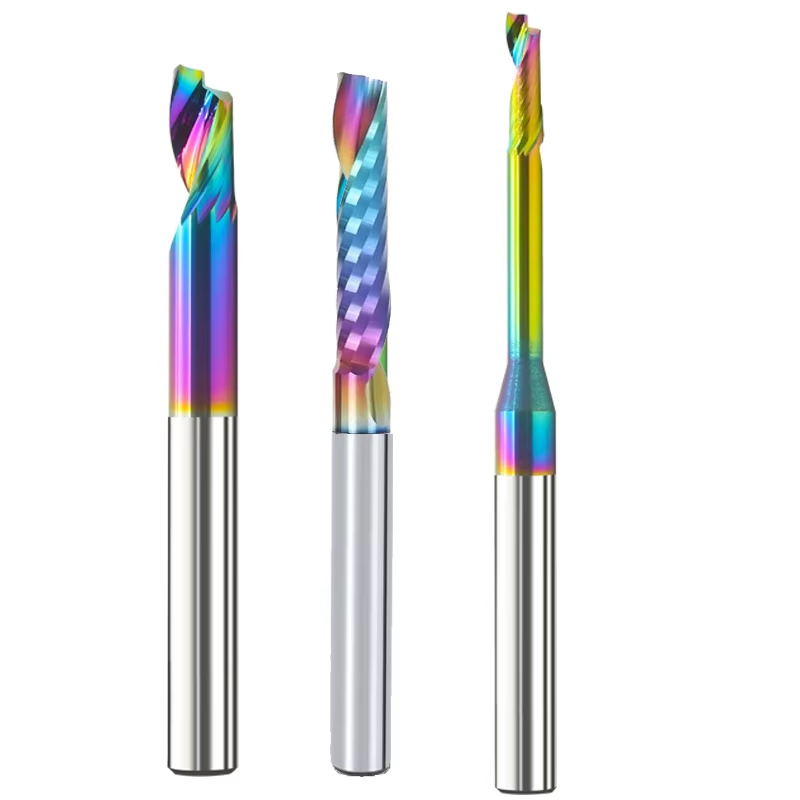
Achieving a mirror surface on 6061 aluminum is often hindered by built-up edges and chatter. This guide details how the AEX single-flute end mill enables one-step high-gloss machining, offering process optimization and tool maintenance standards to eliminate costly manual polishing in 3C manufacturing.
For engineers in high-volume 3C manufacturing, stainless steel burrs are a major bottleneck. This guide explores how to eliminate exit and roll-over burrs at the source by optimizing cutting geometry, tool paths, and parameters with the TEX series end mill, helping you reduce manual deburring costs and increase throughput.
Contact Us
*We respect your privacy. When you submit your contact information, we agree to only contact you in accordance with our Privacy Policy.
By continuing to use the site you agree to our privacy policy Terms and Conditions.